
Strumigenys actis
- Sci. Name
- Strumigenys actis
- Tribe
- Attini
- Subfamily
- Myrmicinae
- Author
- Fisher, 2000
- Distribution
- Found in 1 countries
Introduction
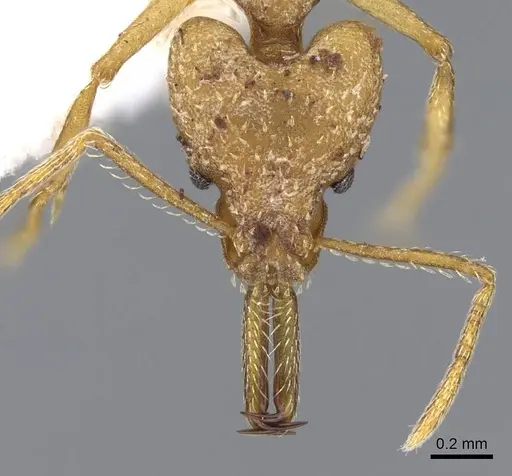
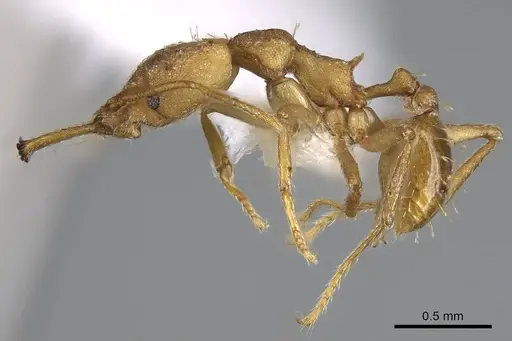
Strumigenys actis is a small ant from Madagascar, with workers measuring 3.3-3.9mm in total length . They are dull yellow to light medium brown and covered with spoon-shaped hairs. This species belongs to the Strumigenys grandidieri group and has specialized trap-jaw mandibles for hunting . These ants are found in rainforest and forest habitats, living in leaf litter, rotten wood, under moss, rocks, and even on low vegetation .
Quick Summary
- Difficulty: Hard
- Origin & Habitat: Madagascar, humid forests, leaf litter, rotten wood, moss, and rocks [1][2]
- Colony Type: Unknown, only the worker has been described, queen and colony structure not documented [1]
- Size & Growth:
- Queen: Unknown, queen not described [1]
- Worker: 3.3-3.9mm total length [1]
- Colony: Unknown, no colony size data available
- Growth: Unknown, likely slow due to specialized diet
- Development: Unknown, no development data available (Temperate and development timelines not studied, expect slow growth if kept)
- Antkeeping:
- Temperature: Unknown, likely warm, similar to tropical forest floor. Start around 22-26°C and adjust based on activity [2]
- Humidity: High, keep substrate moist but not waterlogged. These ants inhabit humid leaf litter and rotten wood [1][2]
- Diapause: Unknown, no data. Madagascar has varied climates, likely no true diapause, but reduced activity in cooler periods possible
- Nesting: Keep nest humid and dark. In the wild they live in rotten wood, leaf litter, moss, and under rocks [1]. Test tubes or plaster nests with fine, damp substrate work well.
- Behavior: Shy and non-aggressive. Workers forage individually, using trap-jaw mandibles to catch tiny prey [1]. They are not defensive and rarely sting. Due to their tiny size (under 4mm), escape prevention is critical, use fine mesh and barriers.
- Common Issues: specialized diet requires a constant supply of live springtails or similar micro-prey, high humidity necessary but can cause mold if ventilation is poor, very little is known about this species in captivity, expect trial and error, tiny workers can easily escape through standard gaps, use extra precautions, slowing of activity or brood decline if diet or humidity is inadequate
Housing and Nest Setup
Because so little is known about this species, start with a simple test tube setup with a water reservoir and cotton plug. Once the colony grows, you can move them to a plaster or Y-tong nest that holds humidity well. Ensure the nest has fine, dark chambers, these ants are used to living in narrow spaces in rotten wood and leaf litter [1]. Escape prevention is critical: workers are only 3.3-3.9mm and can squeeze through tiny gaps. Use very fine mesh over any ventilation and apply fluon or PTFE barriers to the outworld edges. Keep the nest area dim and avoid vibrations.
Feeding and Diet
Strumigenys actis is a specialized predator. In the wild they likely hunt tiny arthropods like springtails [1]. Offer live springtails as a staple. You can also try small fruit flies or micro-crickets. They are strictly carnivorous, do not offer sugar water, honey, or seeds, they will not eat them. Feed small amounts every few days, and remove any uneaten prey after 24 hours. Since their exact diet is not documented, watch to see if they accept the prey and adjust accordingly.
Temperature and Humidity
Maintain a warm, humid environment. While exact preferences are unknown, their natural habitat in Madagascar is humid forest [2]. Aim for 22-26°C and keep the nest substrate consistently moist (but not waterlogged). Use a hygrometer to monitor, if the substrate dries out, add water slowly to the reservoir. Avoid sudden changes. If you use a heating cable, place it on one side to create a gradient so the ants can choose their preferred spot.
Behavior and Colony Dynamics
Workers are timid and tend to flee rather than fight. They forage alone, using their trap-jaw mandibles to capture tiny prey at lightning speed [1]. There is no data on colony founding or queen behavior. Based on related species, the queen likely cares for the first brood alone, but this is speculation. Colonies probably remain small. Observe them mostly at night as they may be more active in darkness. Do not disturb the nest often, stress can slow development.
Frequently Asked Questions
What do Strumigenys actis ants eat?
They are specialized predators and likely eat live springtails and other tiny arthropods. Offer live springtails as the main food. They will not accept sugar water or honey. Carnivorous only [1].
How long does it take for Strumigenys actis to raise first workers?
Unknown. No development data exists for this species. From related ants, it may take 8-12 weeks, but this is not confirmed.
Can I keep Strumigenys actis in a test tube?
Yes. A test tube with a water reservoir and cotton plug works well, especially for a small colony. Ensure high humidity and excellent escape prevention, these 3.3-3.9mm ants can squeeze through tiny gaps [1].
Why is my Strumigenys colony dying?
Most likely causes: wrong diet (they need live springtails, not sugar), low humidity, or unknown parasites. This species is poorly studied in captivity, so sudden decline is possible. Keep conditions stable and provide their natural food.
Are Strumigenys actis good for beginners?
No. This species has specialized requirements and many unknowns. Only experienced keepers willing to maintain a steady supply of live springtails and high humidity should attempt them.
How big do Strumigenys actis colonies get?
Unknown. No colony size data exists. Related Strumigenys often remain small (under 500 workers), but this is speculation.
Do Strumigenys actis need hibernation?
Unknown. Madagascar has diverse climates, some populations may experience a cool dry season. Without data, it is safest not to hibernate them, but you can reduce feeding slightly in winter if activity drops. Do not cool them dramatically.
When should I move Strumigenys actis to a formicarium?
There is no set rule. Wait until the colony outgrows its test tube (e.g., more than 20-30 workers). Strumigenys prefer small, confined spaces, so even a small formicarium will do. Ensure the new nest maintains high humidity and has dark chambers.
Can I keep multiple Strumigenys actis queens together?
Unknown. No data on queen number. As a precaution, keep only one queen per colony until proven otherwise.
Report an Issue
The current care sheet is based fully on literature. See inconsistencies, or something that's incorrect? Please , it will be resolved after review from an admin. Contributing to the blogs tab also helps providing information, to make us be able to further improve the caresheets. Thank you for your support!
References

This caresheet is licensed under CC BY-SA 4.0 .
Community Blogs
CASENT0005467
View on AntWeb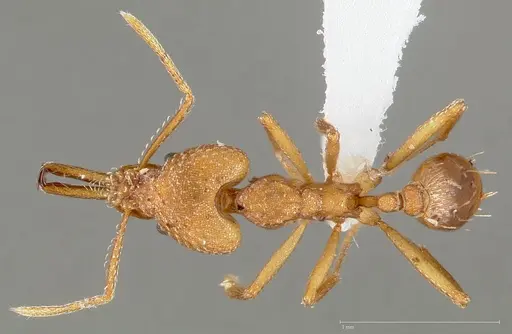
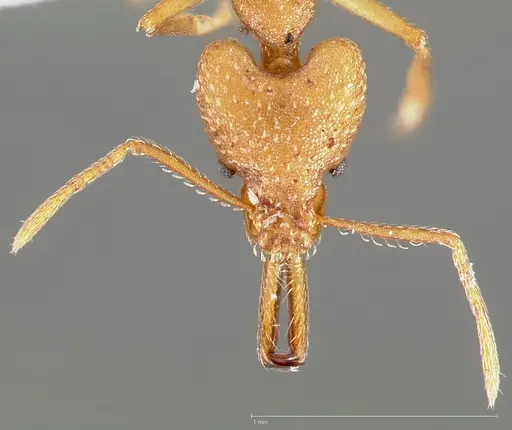
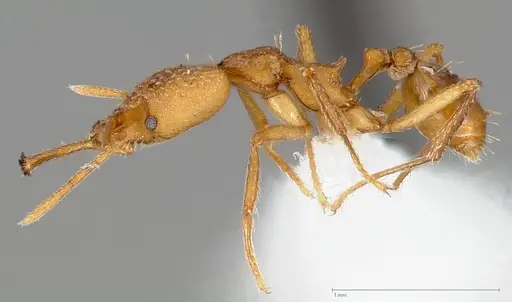
CASENT0914759
View on AntWeb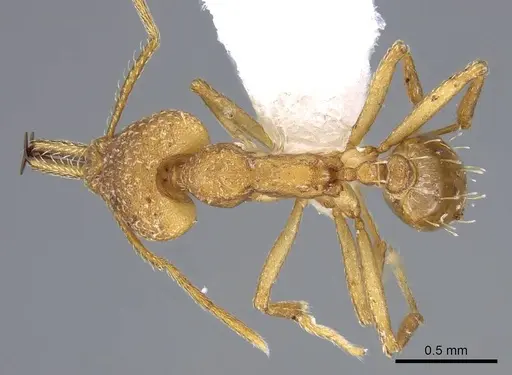
Literature
Loading distribution map...Loading products...