
Strongylognathus silvestrii
- Sci. Name
- Strongylognathus silvestrii
- Tribe
- Crematogastrini
- Subfamily
- Myrmicinae
- Author
- Menozzi, 1936
- Distribution
- Found in 1 countries
Introduction
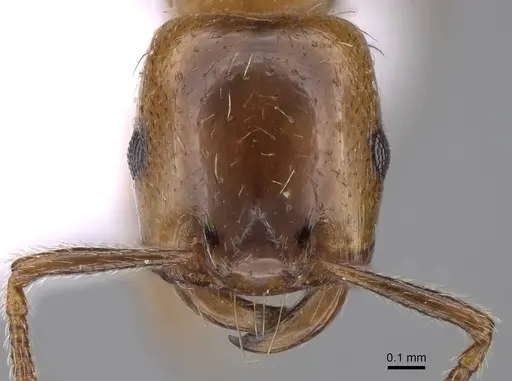
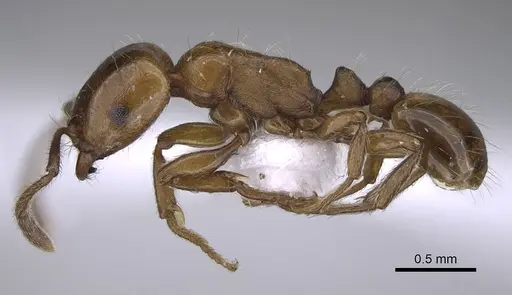
Strongylognathus silvestrii is a small myrmicine ant native to the eastern Mediterranean, found in Greece (Rhodes, Crete, Dodecanese) and Turkey . Workers are tiny, about 2.5-3mm long (inferred from related species), with a slim build, relatively small propodeal spines, and smooth, shiny petiole and postpetiole . The head has only faint striae, giving it a mostly smooth appearance . This species is a social parasite - a slave-maker that invades nests of Tetramorium ants (such as T. semilaeve and T. diomedeum) and uses the host workers to raise its own brood . Described from Rhodes in 1936,it shows considerable variation across its limited range .
Quick Summary
- Difficulty: Expert
- Origin & Habitat: Eastern Mediterranean, Greece (Rhodes, Crete, Dodecanese) and Turkey. Found in dry, rocky Mediterranean habitats from sea level to 1100m elevation [2][7].
- Colony Type: Social parasite (dulosis/slave-making). This species cannot found colonies on its own, it needs a host Tetramorium colony. The parasite queen invades a host nest, kills or replaces the host queen, and uses the host workers to raise her brood [5].
- Size & Growth:
- Queen: Unconfirmed, estimated 4-5mm based on genus patterns (no direct measurements available)
- Worker: Approximately 2.5-3mm (inferred from related species, exact total length not documented)
- Colony: Unknown, likely small due to parasitic lifestyle
- Growth: Unknown
- Development: Unconfirmed, no direct data available (Development depends entirely on host colony resources. Strongylognathus workers emerge alongside host workers.)
- Antkeeping:
- Temperature: Temperature needs are not documented, provide a warm environment typical of Mediterranean conditions (around 22-26°C) with a gradient so the colony can self-regulate.
- Humidity: Low to moderate, keep nest substrate mostly dry, matching Mediterranean conditions.
- Diapause: Likely yes, as a Mediterranean species, both S. silvestrii and its host benefit from a mild winter rest of 2-3 months at 10-15°C.
- Nesting: This parasitic species must be kept with a host Tetramorium colony. Connect the two nests via tubing so host workers can move freely. Use test tubes or small Y-tong/plaster nests scaled to the tiny worker size. Never use acrylic nests.
- Behavior: Slave-maker. S. silvestrii workers cannot survive without host workers, they rely on them for food and brood care [5]. The parasite colony is usually smaller than the host colony. Workers are not aggressive by themselves, but the colony depends entirely on the parasitic relationship. Escape risk is high due to their tiny size, use fine mesh or tight seals.
- Common Issues: cannot establish colony without a live host, you must maintain both S. silvestrii and a Tetramorium host colony simultaneously., host colony health is critical, if the Tetramorium colony dies, the parasite colony dies too., finding a legal host species, T. semilaeve or similar may not be readily available in captivity., colony balance, the parasite component is typically smaller and could be outcompeted if the host colony grows too large., specialized care, this is an expert-level species requiring understanding of parasitic ant biology., legal considerations, Strongylognathus silvestrii is listed on the IUCN Red List and may be protected in Greece and Turkey, check local laws before acquiring.
Understanding the Parasitic Lifestyle
Strongylognathus silvestrii is a dulotic ant, a slave-maker that cannot survive alone. Unlike typical ants, the workers do not forage or care for their own brood. Instead, they rely entirely on workers from host species like Tetramorium semilaeve or T. diomedeum [5][6]. The parasite queen enters a host nest, kills or displaces the host queen, and then uses the host workers to raise her own young. This means keeping S. silvestrii means keeping two colonies that must coexist. The parasite workers cannot feed themselves and depend on host workers for nutrition and brood care. This relationship is evolutionarily stable but makes captive husbandry much harder than for most ant species [5].
Housing Requirements - The Dual Colony System
Keeping S. silvestrii requires maintaining both the parasite colony and a healthy host Tetramorium colony. Connect the two nests with tubing that lets host workers move freely, this mimics the natural shared nest. For the host, use a standard myrmicine setup: test tubes with water reservoirs or small Y-tong/plaster nests. The S. silvestrii portion can be in a separate connected chamber, but they usually stay within the host nest area. Both need low to moderate humidity and warm conditions (around 22-26°C). Always put the host colony's needs first, if the host thrives, the parasite will too. Never separate the colonies permanently, as S. silvestrii workers cannot survive alone. [6][7]
Feeding and Nutrition
You feed the host Tetramorium colony, and the host workers then feed the parasite workers and brood. Offer the host standard foods: small protein (fruit flies, small crickets, mealworms) and sugar sources (honey water, sugar water). The host workers will share food with both colonies through trophallaxis. Don’t expect to see S. silvestrii workers foraging, they usually stay in the nest while host workers do all outside work. Make sure the host always has a sugar source available [5].
Temperature and Seasonal Care
Both S. silvestrii and its host come from the Mediterranean, so they like warm, relatively dry conditions. Keep the setup at around 22-26°C with a slight gradient. In winter (roughly November to February), give both colonies a cooling period at 10-15°C to mimic Mediterranean winter. This diapause helps keep them healthy. Reduce feeding during this time and disturb them as little as possible. In summer, avoid direct sunlight or extreme heat that could dry out the nests [7][1].
Obtaining and Establishing a Colony
S. silvestrii colonies are not common in the hobby because of their parasitic nature. If you can get them, they usually come as an already established mixed colony with host workers. To start new, you need both the parasite queen and a healthy Tetramorium host colony. Introduce the parasite queen to an established host colony (not the other way). She may need to kill the host queen to take over, this can be stressful and success is not guaranteed. In the wild, S. silvestrii is rare and localized, so collecting is difficult and often illegal (IUCN listed). Always check local laws and only buy from ethical sources. [5][7]
Frequently Asked Questions
Can I keep Strongylognathus silvestrii without a host colony?
No. S. silvestrii is an obligate social parasite, it cannot survive without a host Tetramorium colony. The parasite workers cannot forage or care for brood, they depend entirely on host workers. If you only keep S. silvestrii alone, the colony will die. You must keep both species together [5].
What species makes a good host for Strongylognathus silvestrii?
Natural hosts are Tetramorium semilaeve and related species like T. diomedeum and T. lucidulum [5][6]. In captivity, T. semilaeve is the best documented host. Other common Tetramorium species might work, but success is uncertain.
How do I feed Strongylognathus silvestrii?
Feed the host Tetramorium colony, not the parasite directly. Offer small protein prey (fruit flies, pinhead crickets, small mealworms) and constant sugar sources (honey water, sugar water) to the host nest. The host workers will distribute food to both colonies through trophallaxis. S. silvestrii workers rarely leave the nest, host workers handle all food gathering [5].
Are Strongylognathus silvestrii good for beginners?
No. This is an expert-level species because of its obligate parasitic lifestyle. You need to keep two colonies (parasite and host), understand their relationship, and constantly ensure the host colony stays healthy. Most keepers should start with non-parasitic species. Only experienced keepers who can maintain both long-term should try this species.
Do Strongylognathus silvestrii ants sting?
S. silvestrii belongs to the subfamily Myrmicinae, tribe Crematogastrini. Like other members of this tribe, it has a modified, spatulate stinger used to smear venom onto enemies rather than piercing flesh. Due to its parasitic lifestyle, the workers rarely need to defend themselves directly, so stinging is not a significant concern for keepers. The main challenge is the specialized care requirements, not defensive behavior.
How big do Strongylognathus silvestrii colonies get?
Colony size is not well documented. As a parasitic species, the S. silvestrii component is typically smaller than the host component. The combined colony (parasite + host workers) might reach a few hundred workers at most, similar to other Strongylognathus species. Growth is constrained by host colony resources [5].
Do Strongylognathus silvestrii need hibernation?
Yes, a mild winter rest is recommended. Both S. silvestrii and its host benefit from a cooling period of 2-3 months during winter (roughly November-February) at 10-15°C. Reduce feeding and minimize disturbance. This matches their Mediterranean seasonal cycle.
Where can I find Strongylognathus silvestrii in the wild?
S. silvestrii is found in Greece (Rhodes, Crete, Dodecanese) and Turkey, from sea level to 1100m [1][2][7]. It is rare and localized, usually found only in nests of Tetramorium hosts. Collecting requires finding active mixed colonies, which is uncommon. Always check local regulations, this species is on the IUCN Red List and may be protected. For most keepers, buying from a specialized breeder is the better option.
Report an Issue
The current care sheet is based fully on literature. See inconsistencies, or something that's incorrect? Please , it will be resolved after review from an admin. Contributing to the blogs tab also helps providing information, to make us be able to further improve the caresheets. Thank you for your support!
References

This caresheet is licensed under CC BY-SA 4.0 .
Community Blogs
CASENT0914247
View on AntWeb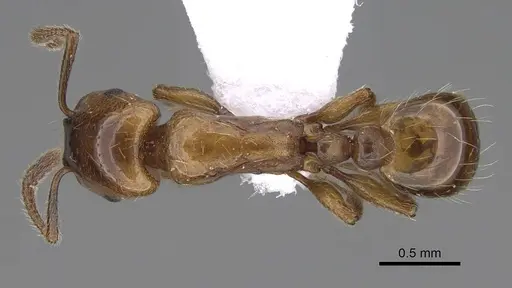
Literature
Loading distribution map...Loading products...