
Strongylognathus kervillei
- Sci. Name
- Strongylognathus kervillei
- Tribe
- Crematogastrini
- Subfamily
- Myrmicinae
- Author
- Santschi, 1921
- Distribution
- Found in 1 countries
Introduction
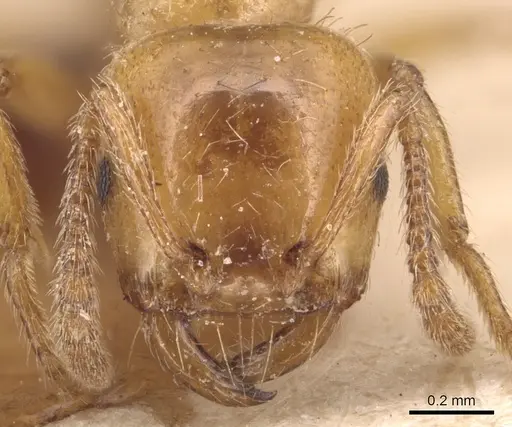
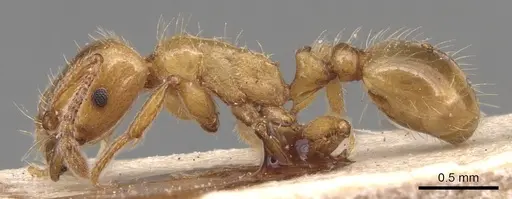
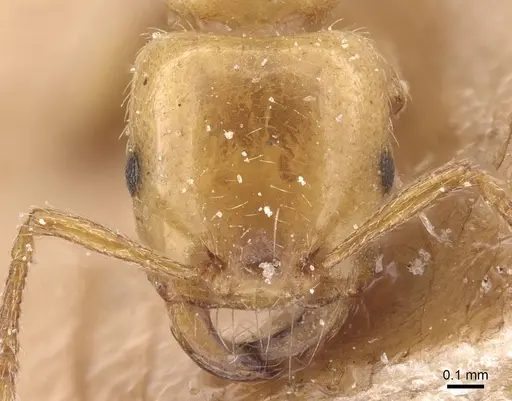
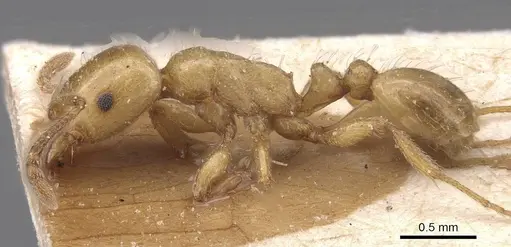
Strongylognathus kervillei is a small ant from the Myrmicinae subfamily, first described from Ankara, Turkey in 1921 . Workers have bulky heads and a distinctively angled pronotum. The queen caste was not documented until 2002,when it was rediscovered in several Turkish provinces . Very little is known about its natural history. Based on its genus, it is a socially parasitic ant that likely raids host colonies to steal brood, relying on host workers to survive.
Quick Summary
- Difficulty: Expert
- Origin & Habitat: Recorded in central Anatolia and the eastern Mediterranean coast of Turkey, at elevations from 500 m to 1600 m [1]. Specific habitat details are not recorded, but it has been found in areas with mixed vegetation.
- Colony Type: Social parasite, likely dulotic (slave‑making) based on related Strongylognathus species. The colony depends on a host species for workers. Queen number is unclear, probable monogyne.
- Size & Growth:
- Queen: Size data unavailable, inferred from genus (~5-7 mm)
- Worker: Size data unavailable, inferred from genus (~3-5 mm)
- Colony: Unknown, likely small, typical of social parasites
- Growth: Unknown
- Development: Unknown, estimated 6-10 weeks based on related Myrmicinae (Direct development data are absent, estimates are based on general myrmicine patterns.)
- Antkeeping:
- Temperature: Based on its temperate distribution, keep the nest around 20-24°C. A gradient is helpful, but precise requirements are unknown.
- Humidity: Provide a humid nest chamber (keep the substrate moist but not waterlogged). Specific humidity levels are not documented.
- Diapause: A winter diapause is likely due to the cold winters in its native range. Suggested 4-6 weeks at 10-15°C, but exact needs are not confirmed.
- Nesting: Y‑tong (AAC) or plaster nests work well. A dual‑setup connected to a host colony is essential for long‑term keeping.
- Behavior: These ants are not aggressive toward keepers, but they will fight host workers during raids. Escape risk is moderate, standard barriers are sufficient. Queens are ergatoid (wingless) based on genus patterns. Their specialized parasitic lifestyle makes them challenging to keep.
- Common Issues: requires a host colony to survive, cannot be kept alone, colony establishment is difficult and raids often fail, very little species‑specific care information is available, most advice is inferred from related species
Understanding This Species
Strongylognathus kervillei is a socially parasitic ant known only from a handful of Turkish localities [1]. The original description in 1921 was based on workers alone, the queen was not described until 2002 [1]. Workers are easily recognised by their bulky heads and strongly angled pronotum [1]. Despite being placed in the huberi group, its relationships with other Middle Eastern Strongylognathus species are still unclear [1]. No detailed ecological studies exist, host species, founding behaviour, and colony dynamics remain undocumented.
Housing Requirements
Because S. kervillei depends on a host colony, a dual‑setup is necessary: one nest for the parasite and one for the host, connected via tubing. The parasite nest can be any standard design (Y‑tong, plaster, or 3D‑printed). Keep the nest at room temperature (20-24°C) with moderate moisture in the substrate. Specific humidity preferences are not known, provide a gradient from dry to slightly damp. Escape prevention is standard, workers are not tiny but can be active during raids. [1]
Feeding and Nutrition
No species‑specific feeding data exist. In captivity, the host colony should receive a standard diet: protein (small insects, e.g., fruit flies or small crickets) and carbohydrates (sugar water or honey water). The parasite workers likely obtain food via trophallaxis from host workers. Remove uneaten prey after 24 hours to prevent mould. Keep sugar water available in both nests. [1]
Raid and Colony Establishment
The most challenging part is establishing the colony. Based on related Strongylognathus species, the parasite workers are expected to raid the host nest, stealing brood and fighting host workers. However, no published observations of S. kervillei raids exist. If a raid fails, the parasite colony may lose workers without gaining new brood. Some keepers recommend cooling both colonies slightly to reduce aggression during introduction, but this is not proven. Success is uncertain. [1]
Seasonal Care and Overwintering
The species' distribution in Turkey (cold winters, snowy at higher elevations) suggests a winter diapause is needed. Mimic natural conditions by gradually lowering the temperature to 10-15°C for 4-6 weeks. Reduce feeding and maintain slightly drier conditions in both nests during this period. Keep the parasite and host colonies connected throughout. After diapause, slowly warm them up and resume normal feeding. [1]
Frequently Asked Questions
Can I keep Strongylognathus kervillei without a host colony?
No. This species is a social parasite and cannot survive without a host colony. As a dulotic ant, it relies on stealing brood from host ants to maintain a workforce. Without a host, the colony will die out as workers age.
What host species do I need for Strongylognathus kervillei?
The specific host is unknown. Based on related Strongylognathus species, a Tetramorium species (e.g., T. caespitum) is likely used. The host colony should be well‑established (at least 50 workers) before introducing the parasites.
How do I introduce Strongylognathus kervillei to a host colony?
Connect the parasite nest to the host nest via tubing and let the parasites discover the host. They will likely attempt a raid, fighting host workers and carrying brood back. Expect losses on both sides. Cooling both colonies slightly (to around 18°C) might reduce aggression, but this is not proven. A successful raid results in host brood being raised by the parasite colony.
Are Strongylognathus kervillei ants aggressive?
They aggressive toward host ants during raids, but they are not typically aggressive toward keepers. Standard handling precautions are sufficient. Their sting is modified for smearing venom rather than piercing, so they pose little threat to humans.
How long does it take for the first slave workers to emerge?
There is no specific data for this species. Based on typical myrmicine development, stolen brood likely take 6-10 weeks from egg to worker. The emerged workers are of the host species but will serve the parasite colony.
Do Strongylognathus kervillei need hibernation?
Yes, a winter diapause is strongly recommended given the cold winters in its native Turkey. A period of 4-6 weeks at 10-15°C is suggested, but the exact requirements are not confirmed. Keep both parasite and host colonies connected during hibernation.
Can I keep multiple Strongylognathus kervillei queens together?
This is not recommended. Most Strongylognathus species are monogyne, and there is no evidence that S. kervillei can tolerate multiple queens. Unrelated queens would likely fight. Keep only one queen per colony.
Is Strongylognathus kervillei good for beginners?
No. This species is rated Expert due to its obligate parasitic lifestyle, the need for a host colony, and the difficulty of establishing a functional colony. Beginners should start with easier species like Lasius niger or Camponotus species.
What happens if a raid fails?
If a raid fails, the parasite colony may lose workers without gaining host brood. You can try again after the colony recovers, or provide additional host brood manually (if available). There is no guarantee of success.
Where does Strongylognathus kervillei live in the wild?
It is endemic to Turkey, recorded from central Anatolia and the eastern Mediterranean coast. Specific localities include provinces of Ankara, Elazig, Gaziantep, Antakya, and Adana, at elevations from 500 m to 1600 m [1]. It probably also occurs in Syria, Lebanon, and Palestine.
Report an Issue
The current care sheet is based fully on literature. See inconsistencies, or something that's incorrect? Please , it will be resolved after review from an admin. Contributing to the blogs tab also helps providing information, to make us be able to further improve the caresheets. Thank you for your support!
References

This caresheet is licensed under CC BY-SA 4.0 .
Community Blogs
CASENT0904870
View on AntWeb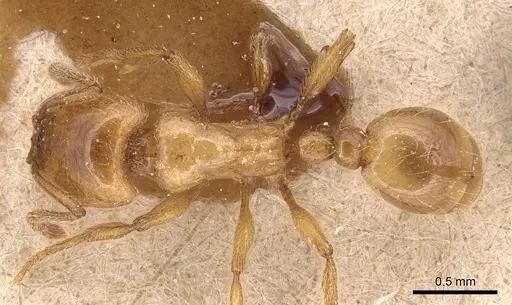
CASENT0913976
View on AntWeb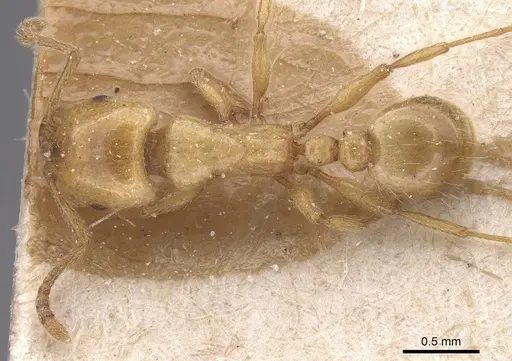
Literature
Loading distribution map...Loading products...