
Strongylognathus karawajewi
- Sci. Name
- Strongylognathus karawajewi
- Tribe
- Crematogastrini
- Subfamily
- Myrmicinae
- Author
- Pisarski, 1966
- Distribution
- Found in 1 countries
Introduction
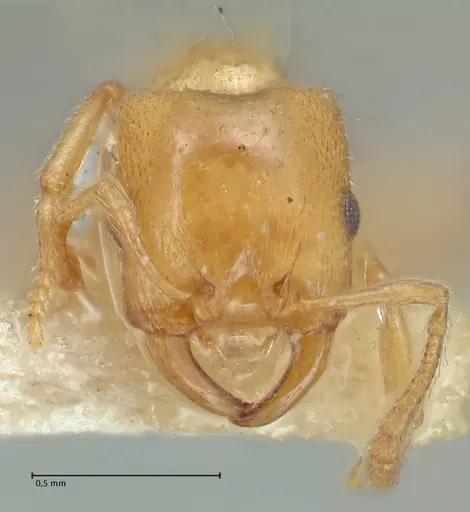
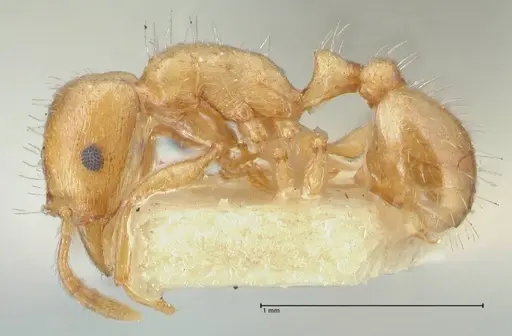
Strongylognathus karawajewi is a small myrmicine ant measuring 2.2-2.6mm with a yellowish-brown body and reddish-brown head and gaster . The body is shiny with relatively abundant yellow straight hairs, and the head is rectangular with straight sides and occipital corners extending backward . This species belongs to the testaceus species-group, characterized by reduced body sculpture . This ant is a permanent social parasite (inquiline) that lives exclusively in the nests of various Tetramorium species, particularly Tetramorium hungaricum and T. caespitum . Unlike slave-making ants that raid other colonies, S. karawajewi is a queen-tolerant inquiline - the parasite queen is accepted by the host colony and lives alongside the host queen, with both producing workers . This species is listed as Vulnerable D2 on the IUCN Red List, and care should be taken to avoid impacting wild populations .
Quick Summary
- Difficulty: Expert
- Origin & Habitat: Native to Crimea, Transcaucasia, Kazakhstan, Central Asia, Armenia, Bulgaria, Greece, and Türkiye [2][4]. Inhabits extremely xerothermic (hot and dry) sites at altitudes below 660m, including steppe-like calcareous ridges in the Thracian plain and southern foothills of mountain ranges [3].
- Colony Type: Permanent social parasite (inquiline), lives permanently in host Tetramorium colonies. Queen-tolerant inquilinism means the parasite queen coexists with the host queen [5][6]. The parasite colony produces its own workers rather than relying on host workers.
- Size & Growth:
- Antkeeping:
- Temperature: Keep at 22-26°C, they naturally occur in warm, xerothermic habitats [3]. Provide a temperature gradient allowing them to move between warmer and cooler areas.
- Humidity: Low to moderate, they inhabit dry, steppe-like environments. Keep the nest relatively dry with some moisture areas available. [3]
- Diapause: Likely, based on temperate distribution and host species behavior. Provide a cool period (10-15°C) during winter months.
- Nesting: Must be kept with a host Tetramorium colony. A naturalistic setup with both species or a divided formicarium allowing host-parasite interaction works best. They cannot survive without their host species. [3]
- Behavior: Generally peaceful and non-aggressive, as they rely on host acceptance. They do not raid or conduct slave raids like some related species, instead they integrate peacefully into the host colony [5]. Workers are small at 2.2-2.6mm [1] and relatively inactive. Escape risk is low due to their small size but they can still climb smooth surfaces. They are primarily nest-dwelling and rarely forage in the open. Defense: smear venom using a flattened stinger (subfamily Myrmicinae, tribe Crematogastrini).
- Common Issues: host colony requirement is the biggest challenge, you must keep both the parasite and a healthy Tetramorium host colony., without a host colony, S. karawajewi cannot survive as they depend on host workers for nest maintenance and foraging., finding a proper host species (T. hungaricum, T. caespitum, T. chefketi) can be difficult outside their natural range., colonies remain small and slow-growing due to inquiline lifestyle., this species is listed as Vulnerable D2 on the IUCN Red List [3][7], captive breeding should be done responsibly, and wild collection may be illegal in some countries.
Understanding Strongylognathus karawajewi as a Social Parasite
Strongylognathus karawajewi is a permanent social parasite, meaning it cannot establish its own colony and must live within a host Tetramorium colony throughout its entire life cycle [5]. This is different from temporary parasites that only use host workers temporarily. As a queen-tolerant inquiline, the parasite queen is accepted by the host colony and lives alongside the host queen, with both laying eggs [6].
The host workers care for the parasite brood as if it were their own, and both species coexist peacefully within the same nest. The parasite colony produces its own workers, which are smaller than host workers, creating a mixed workforce [3].
Known host species include Tetramorium caespitum, T. hungaricum, T. chefketi, T. ferox, T. inerme, and T. sulcinode [3][4]. In Bulgaria, S. karawajewi has been found primarily in nests of T. hungaricum and T. chefketi at elevations below 660m [3]. This species evolved from slave-making ancestors through a degeneration of raiding behavior [5].
Housing and Nest Setup
Keeping S. karawajewi requires keeping TWO colonies: the parasite and a healthy host Tetramorium colony. This is the fundamental challenge in cultivating this species. You cannot keep S. karawajewi alone, they will not survive.
The best approach is a naturalistic or formicarium setup that houses both species in proximity, either in a divided nest or in separate nests connected by tubing. The host colony handles all foraging and nest maintenance, while the parasite colony lives within or adjacent to the host nest. Some keepers successfully maintain them in a single large naturalistic setup with multiple chambers housing both species.
The nest should be kept warm (22-26°C) and relatively dry, matching their xerothermic natural habitat [3]. A small water tube for moisture is sufficient, avoid overly damp conditions. Provide a temperature gradient so both colonies can regulate their preferred conditions.
Feeding the Colony
The host Tetramorium colony does all the foraging, so the parasite colony relies on whatever the host workers bring back. In captivity, you should feed the host colony directly. Tetramorium species are generalist foragers that accept proteins (dead insects, mealworms), sugars (honey water, sugar water), and seeds.
Feed the host colony small amounts of protein 2-3 times per week and provide a constant sugar source. The host workers will share food with the parasite colony through trophallaxis (mouth-to-mouth food sharing), which is how the parasites get their nutrition. Do not expect to see S. karawajewi workers foraging actively, they are primarily nest-dwelling and rely on host workers for food.
Temperature and Seasonal Care
S. karawajewi naturally inhabits warm, dry habitats in the Mediterranean and Central Asian regions. Keep the nest at 22-26°C, with a slight gradient if possible [3]. They can tolerate higher temperatures briefly but should not be exposed to temperatures below 15°C for extended periods.
Based on their temperate distribution and the behavior of related species, they likely require a winter diapause period. During winter (roughly November to March in the Northern Hemisphere), reduce temperatures to 10-15°C and reduce feeding. Do not feed during the cold period. The host colony will also slow down during this time, which is natural.
Behavior and Interactions
Unlike their close relatives in the testaceus group that engage in slave-making (dulosis), S. karawajewi is a peaceful inquiline that does not raid other colonies [5]. The parasite queen is accepted by the host colony through a process that is not fully understood, she is not attacked or killed, and instead integrates into the social structure.
Workers of S. karawajewi are smaller than host workers and are rarely seen outside the nest area. They are not aggressive and cannot defend themselves against threats. The host colony provides all nest protection and territory defense. This means your main concern is keeping the host colony healthy, if the host dies, the parasites will not survive.
Frequently Asked Questions
Can I keep Strongylognathus karawajewi in a test tube?
You cannot keep S. karawajewi in a test tube alone, they are social parasites that require a host Tetramorium colony to survive. You would need a setup housing both species, such as a naturalistic terrarium or connected formicarium system.
What do Strongylognathus karawajewi eat?
S. karawajewi does not forage for itself, it relies on food brought by host Tetramorium workers. You should feed the host colony protein (insects, mealworms) 2-3 times weekly and provide constant sugar water. The host workers will share food with the parasites through trophallaxis.
How long until first workers in Strongylognathus karawajewi?
The development timeline for S. karawajewi has not been specifically documented. Based on related Tetramorium species, expect 6-10 weeks from egg to worker at optimal temperature. However, since they are parasites living within a host colony, their reproduction is tied to host colony health.
Are Strongylognathus karawajewi good for beginners?
No. This is an expert-level species because you must keep TWO colonies (the parasite AND a host Tetramorium species) for the parasite to survive. Finding a proper host species can also be difficult. This species is recommended only for experienced antkeepers who understand social parasitism.
Do Strongylognathus karawajewi ants sting?
S. karawajewi is a Myrmicinae ant, and most Myrmicinae have functional stingers. However, these ants are small (2.2-2.6mm) and non-aggressive, living peacefully within host colonies. They are not considered dangerous to keepers.
Can I keep multiple queens together?
S. karawajewi is naturally a queen-tolerant inquiline, meaning the parasite queen coexists with the host queen in the same colony. However, combining unrelated foundresses has not been documented and is not recommended. The natural relationship involves one parasite queen living with one host queen.
How big do Strongylognathus karawajewi colonies get?
Colony size data is not well documented. Based on the inquiline lifestyle, they likely remain small, with relatively few workers compared to the host colony. Exact numbers are unknown.
Do Strongylognathus karawajewi need hibernation?
Based on their temperate distribution, a winter diapause is likely beneficial. Reduce temperatures to 10-15°C during winter months (roughly November to March) and reduce feeding. The host Tetramorium colony will also slow down during this period.
Why are my Strongylognathus karawajewi dying?
The most likely cause is that the host Tetramorium colony is unhealthy or has died. S. karawajewi cannot survive without their host, they depend entirely on host workers for food, nest maintenance, and protection. Always prioritize keeping the host colony healthy.
What is the best nest type for Strongylognathus karawajewi?
A naturalistic setup or connected formicarium system that houses both the parasite and host colony is essential. The nests should be connected to allow interaction between species. Keep the nest warm (22-26°C) and relatively dry, matching their xerothermic habitat [3].
Report an Issue
The current care sheet is based fully on literature. See inconsistencies, or something that's incorrect? Please , it will be resolved after review from an admin. Contributing to the blogs tab also helps providing information, to make us be able to further improve the caresheets. Thank you for your support!
References

This caresheet is licensed under CC BY-SA 4.0 .
Community Blogs
FOCOL2022
View on AntWeb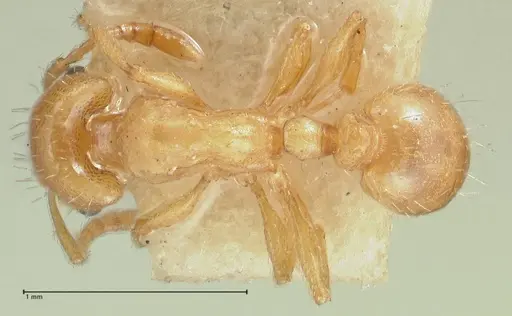
Literature
Loading distribution map...Loading products...