
Strongylognathus christophi
- Sci. Name
- Strongylognathus christophi
- Tribe
- Crematogastrini
- Subfamily
- Myrmicinae
- Author
- Emery, 1889
- Distribution
- Found in 1 countries
Introduction
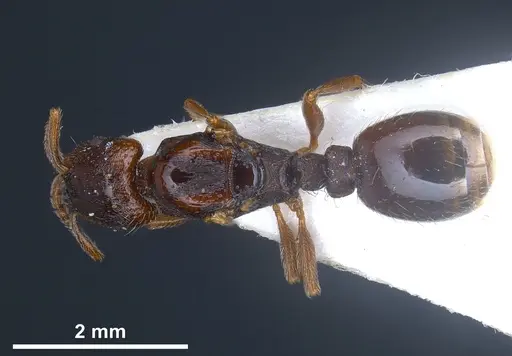
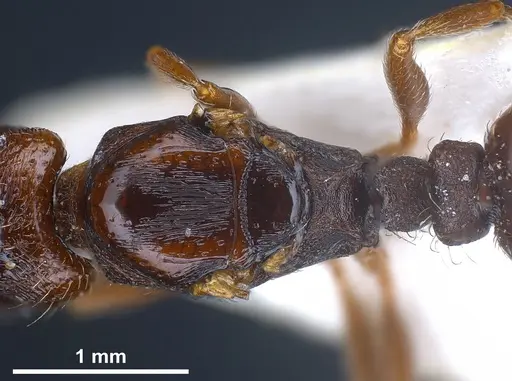
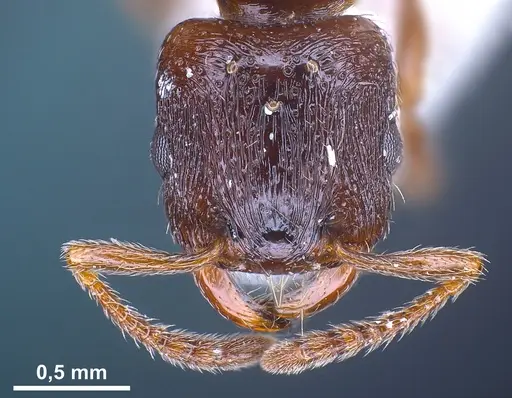
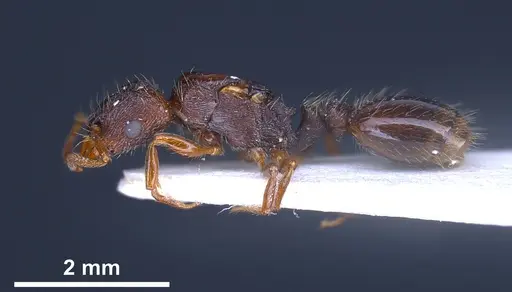
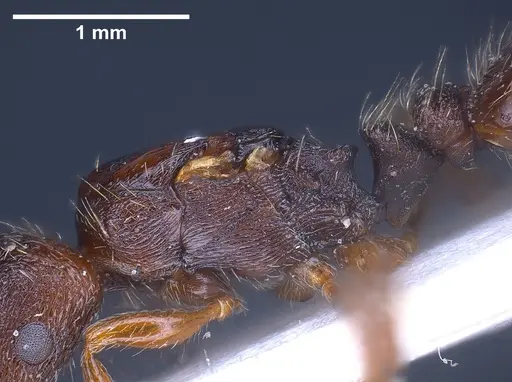
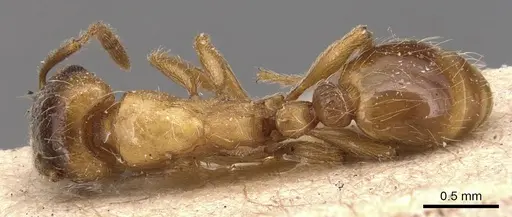
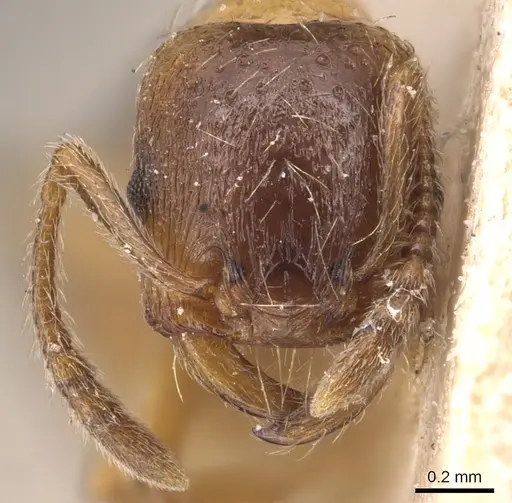
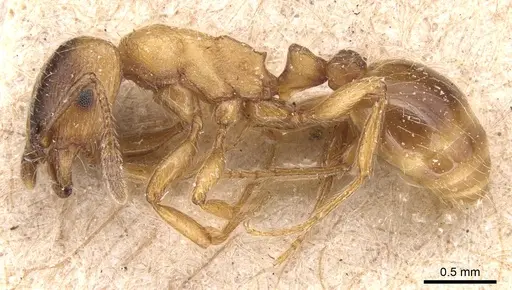
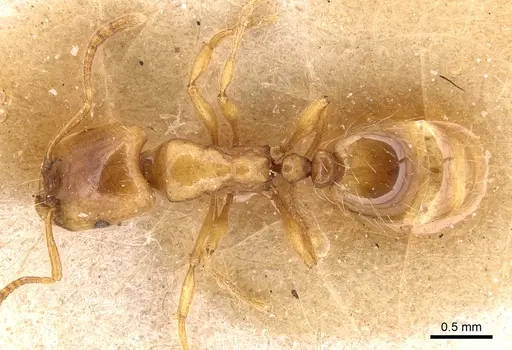
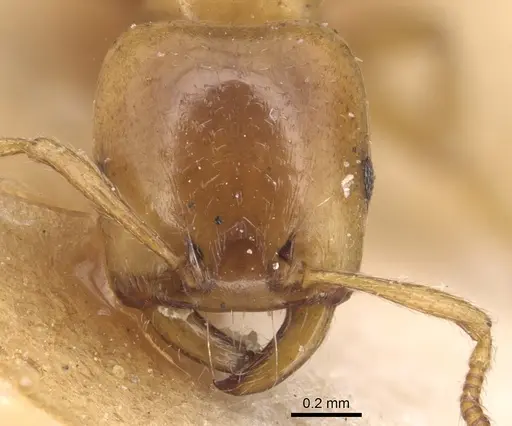
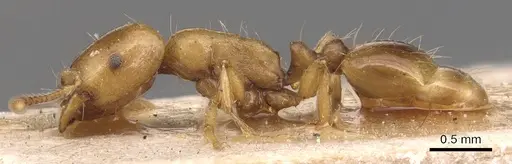
Strongylognathus christophi is a small myrmicine ant in the tribe Crematogastrini. It is an obligate social parasite - the queen cannot start a colony alone. Instead, she invades nests of Tetramorium species (particularly Tetramorium caespitum and Tetramorium cf. impurum), kills or replaces the host queen, and uses the host workers to raise her own brood. This is a form of dulosis, or slave‑making: Strongylognathus christophi workers raid other Tetramorium colonies for pupae, which emerge as slaves that handle all colony tasks . Precise body size measurements are unavailable, but the species is similar in size to others in the huberi group. The range stretches from southern Ukraine through Russia, the Caucasus, Kazakhstan, Kyrgyzstan, and into Iran and Bulgaria, typically in steppe or Caspian moist littoral habitats . As a myrmicine it uses a specialised spatulate stinger to smear venom onto enemies rather than piercing them - this is a general trait of the tribe Crematogastrini.
Quick Summary
- Difficulty: Expert
- Origin & Habitat: Palaearctic steppes (Ukraine, Russia, Kazakhstan) and Caspian moist littoral areas in Iran [2][7][5]. This species lives where its Tetramorium hosts are abundant, open, warm, moderately dry grasslands.
- Colony Type: Obligate social parasite, cannot survive without a Tetramorium host colony. The queen invades, eliminates the host queen, and uses host workers to rear her brood [1]. The Strongylognathus workers themselves are poorly equipped for basic tasks and rely entirely on slave workers.
- Size & Growth:
- Queen: Size data unavailable (no total length measurements in the literature). Inferred to be slightly larger than workers based on related species.
- Worker: Size data unavailable (no total length measurements in the literature).
- Colony: Depends entirely on the host colony, typically not large, with parasite workers forming a minority.
- Growth: Tied entirely to host colony success, very slow and unpredictable in captivity.
- Development: Unconfirmed, development occurs inside the host nest and is controlled by host workers. Standard timelines do not apply. (This species relies on host workers for all brood care, so normal antkeeping timelines are irrelevant.)
- Antkeeping:
- Temperature: Warm conditions matching Tetramorium hosts, typically 22-26°C. Inferred from steppe habitat and host preferences.
- Humidity: Moderate to low, steppe species prefer dry air, avoid condensation. Provide a moisture gradient with a dry nest chamber.
- Diapause: Likely required. Both host and parasite come from temperate regions, a winter dormancy of 3-4 months at 5-10°C is probable (inferred from distribution).
- Nesting: Cannot be kept without an established Tetramorium host colony. In nature the parasite occupies the host's underground nest. Any setup must accommodate the host colony first.
- Behavior: Dulotic slave‑maker. Workers are aggressive toward Tetramorium colonies during raids but ignore humans. Escape risk is moderate, workers are active but not exceptionally fast. The species is extremely difficult to keep and not recommended for any keeper without expert experience in social parasites.
- Common Issues: this species cannot be kept independently, it requires a living Tetramorium host colony., introducing a queen to a host colony usually fails, the host rejects or kills her., slave raids can weaken or destroy the host colony, leading to collapse of the mixed nest., if the host colony dies, the Strongylognathus colony dies too, there is no backup plan., very few keepers have ever succeeded long‑term, expect repeated failures., may be listed on the IUCN Red List, check local laws before collecting or importing.
Social Parasitism - How This Ant Works
Strongylognathus christophi is an obligate social parasite: the queen cannot found a colony alone and must take over an established Tetramorium nest. She enters the host nest, kills or displaces the host queen, and uses chemical cues to integrate with the host workers. These host workers then rear the parasite brood as their own [1][2]. The Strongylognathus workers that emerge are specialised for raiding: they attack other Tetramorium colonies, steal pupae, and bring them back. Those stolen pupae eclose into slave workers that perform all normal colony chores, foraging, nursing, nest maintenance, while the parasite workers focus on slave‑raiding. This system means the colony cannot survive if the host workers die out [3].
The Reality of Keeping This Species
Very few antkeepers have successfully maintained Strongylognathus christophi because the odds are heavily stacked against you. The first hurdle is acquiring a fertile parasite queen, they are rarely caught and almost never sold. The second hurdle is introducing her to a healthy Tetramorium colony. In nature, the queen uses chemical mimicry and subterfuge, in a captive nest, the host workers usually detect the intruder and kill her. Even if integration succeeds, the host colony may weaken over time from the parasitic load, triggering a collapse. There is no way to 'rescue' the parasite without a fresh host colony. This species should only be attempted by researchers or very experienced keepers who are prepared for repeated failure [1].
Housing and Care - Working with Hosts
If you decide to attempt keeping this species, you must first establish a robust Tetramorium host colony. The host colony should have at least a few hundred workers and a healthy queen. The parasite queen should be introduced inside a test‑tube or small chamber attached to the host nest, ideally after the host colony has been chilled to reduce aggression. Success is rare. Once the parasite is accepted, the mixed colony needs conditions that suit the Tetramorium host: warm temperatures (22-26°C), a dry nest chamber with a small moist area (avoid wet substrate), and a winter dormancy period (3-4 months at 5-10°C, as inferred from temperate distribution). Feed both parasite and host workers with sugar water and protein, Tetramorium accepts seeds, insects, and soft protein. The Strongylognathus workers will raid for slave pupae if you link a second Tetramorium nest, but this is extremely difficult to manage. [1][2]
Legal and Ethical Notes
Strongylognathus christophi appears on the IUCN Red List category (status unclear), so collecting wild queens may be restricted in some countries (e.g., Ukraine, Russia, Bulgaria). Check local regulations before attempting to obtain this species. Ethically, captive breeding is nearly impossible, so most specimens come from wild collection. Given the extreme difficulty and low success rates, think carefully whether you can provide the necessary host colonies and experience. [8][2]
Frequently Asked Questions
Can I keep Strongylognathus christophi in a test tube like other ants?
No, this species cannot survive independently. The queen would die without host workers. It requires an established Tetramorium colony, which itself needs a proper nest setup [1].
How do I start a Strongylognathus christophi colony?
You cannot start a colony from scratch. The queen must invade an existing Tetramorium nest. This is very difficult and usually fails. Most keepers never succeed [1].
What do Strongylognathus christophi eat?
They eat the same foods as their Tetramorium hosts, sugar water, honey, and protein (insects, seeds). But they rely on host workers to process and distribute food. You must feed the host colony adequately [8].
Are Strongylognathus christophi good for beginners?
Absolutely not. This is one of the hardest ant species to keep. Only experienced keepers who have successfully kept Tetramorium and other social parasites should even consider it [1].
Do Strongylognathus christophi sting?
As a myrmicine ant, it has a stinger. But instead of piercing, it smears venom, a trait of the tribe Crematogastrini. The venom is not potent to humans, and the ants are not aggressive toward people.
How big do Strongylognathus christophi colonies get?
Colony size depends on the host Tetramorium colony. The parasite workers are never numerous, typically a few dozen at most, supported by hundreds of host workers [1].
Do they need hibernation?
Yes, both parasite and host come from temperate regions. They need a winter dormancy of about 3-4 months at 5-10°C. Skipping dormancy may weaken both species [2].
Why are they called slave-making ants?
Because Strongylognathus christophi workers raid Tetramorium nests and steal pupae. Those pupae grow into slave workers that do all the work for the parasite colony. The Strongylognathus workers cannot feed or care for brood themselves [1][3].
Can I keep multiple queens together?
Not documented. In nature, only one parasite queen occupies a host nest. Multiple queens would likely fight or be rejected. It is strongly discouraged [8].
What is the natural habitat of Strongylognathus christophi?
Steppes in Ukraine, Russia, Kazakhstan, and Kyrgyzstan, plus Caspian moist littoral areas in Iran. These are warm, dry to moderately humid grasslands where Tetramorium hosts are abundant [2][7][5].
Are these ants dangerous or aggressive?
They are not dangerous to humans. They are aggressive only toward other Tetramorium colonies during slave raids. They pose no threat to keepers beyond normal ant handling [8].
Where can I get Strongylognathus christophi?
This species is barely available in the hobby. You may find it through specialist social‑parasite breeders, but expect very limited supply and high cost. Most specimens come from wild collection, check legality first.
Report an Issue
The current care sheet is based fully on literature. See inconsistencies, or something that's incorrect? Please , it will be resolved after review from an admin. Contributing to the blogs tab also helps providing information, to make us be able to further improve the caresheets. Thank you for your support!
References

This caresheet is licensed under CC BY-SA 4.0 .
Community Blogs
Literature
Loading distribution map...Loading products...