
Eastern Smooth Ringbum ant
Streblognathus aethiopicus
- Sci. Name
- Streblognathus aethiopicus
- Tribe
- Ponerini
- Subfamily
- Ponerinae
- Author
- Smith, 1858
- Common Name
- Eastern Smooth Ringbum ant
- Distribution
- Found in 2 countries
Introduction
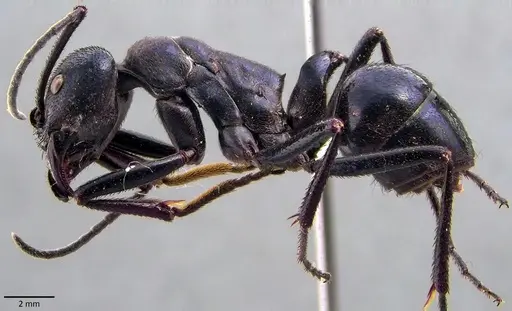
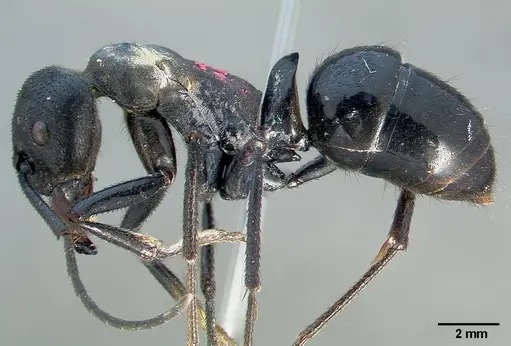
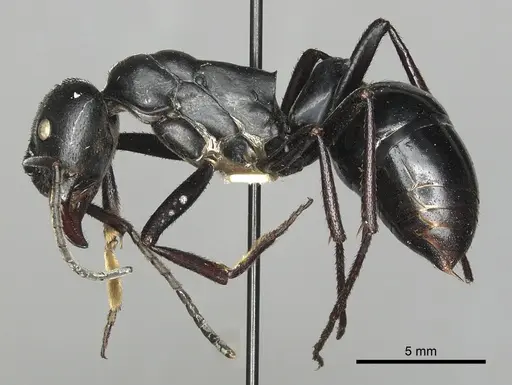
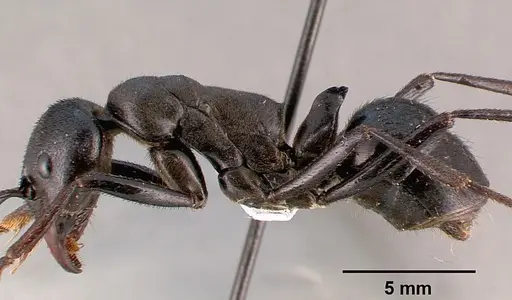
Streblognathus aethiopicus is the largest ant species in Africa, with workers reaching up to 2.5 cm in length . These ants are native to the Nama Karoo region of South Africa's Eastern Cape, found between 33-34°S latitude from Willowmore in the west to Grahamstown and Port Alfred in the east . They live in open, arid habitats and nest in the ground, building distinctive nests with large flanged entrances constructed above ground level . This species has completely lost its queen caste - reproduction is carried out by gamergates, which are mated workers that take on the reproductive role . Colonies are small, typically containing 9 to 51 workers, and exist in isolated populations following a metapopulation structure . Workers can make audible sounds (stridulation) by rubbing body parts together, which serves as an alarm signal .
Quick Summary
- Difficulty: Expert
- Origin & Habitat: Nama Karoo open habitats in South Africa's Eastern Cape, between 33-34°S latitude [2][1]
- Colony Type: Queenless, no distinct queen caste, reproduction by gamergates (reproductive workers).
- Queen Status: Queenless Colony
- Special: Gamergates
- Size & Growth:
- Queen: Queenless species, reproduction by gamergate (reproductive worker) instead of a distinct queen caste.
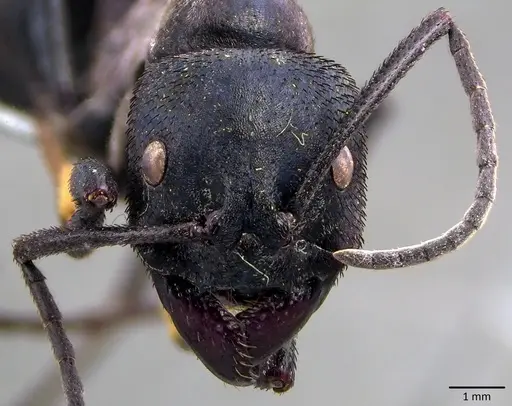
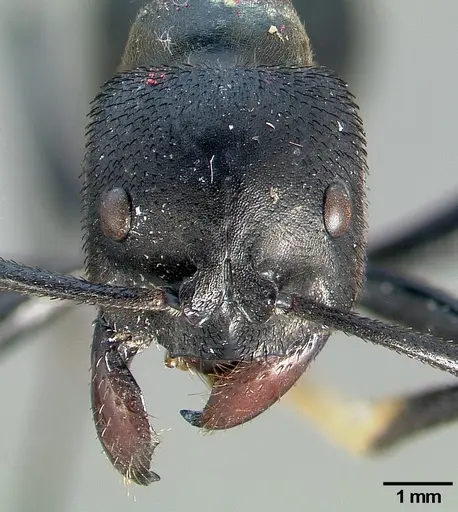
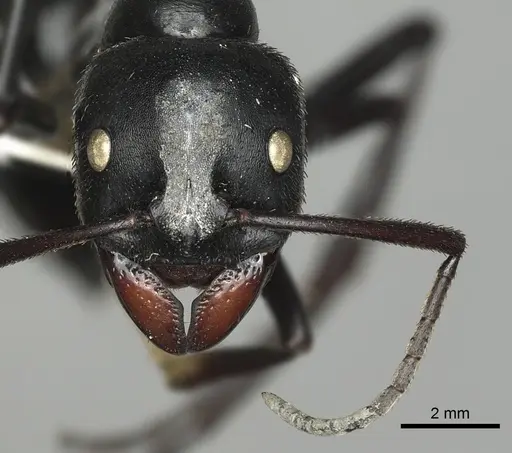
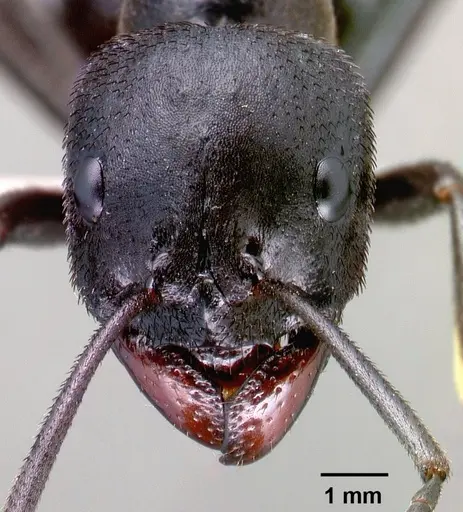
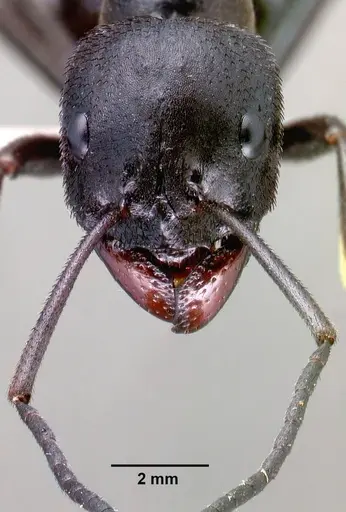
- Worker: Up to 25 mm (largest ant in Africa) [1]. Mandibles are reddish-brown with black border [2].
- Colony: 9-51 workers (average 35) [3][2]
- Growth: Slow, small colony size with limited growth potential
- Development: Unknown, no direct studies on development time. Likely slower than typical Ponerinae given small colony sizes [2] (Development timeline unconfirmed. Related Ponerines typically take 2-3 months for egg-to-worker at warm temperatures.)
- Antkeeping:
- Temperature: Based on South African temperate-to-warm habitat (33-34°S latitude), keep nest at 22-26°C [2]. Provide a gentle gradient so workers can self-regulate. Avoid temperatures below 18°C or above 30°C.
- Humidity: Nama Karoo is arid to semi-arid. Keep nest substrate moderately dry, damp but not wet. Provide a small water source in the outworld. Avoid constant moisture [2].
- Diapause: Likely requires a winter rest period (3-4 months at 10-15°C) given the temperate latitude range [2]. Reduce feeding and maintain cool temperatures from autumn through early spring.
- Nesting: Large ants need spacious nest chambers. Use Y-tong (AAC) or plaster nests with large chambers. Provide deep substrate (at least 5 cm) for nesting. Natural setups with soil and stones also work well.
- Behavior: Workers are moderately aggressive and have functional stingers (Ponerinae subfamily). They will sting if threatened, expect painful stings similar to other large Ponerines. They make audible sounds (stridulation) when disturbed, which serves as alarm communication [1]. Tandem-running is used for nest relocation [1]. Workers are active foragers and likely hunt prey. Escape risk is low due to large size, but ensure the enclosure is escape-proof.
- Common Issues: small colony size makes them vulnerable, even minor losses can hurt the colony., queenless reproduction means no replacement if the gamergate dies, the colony will eventually decline., slow growth and small ultimate colony size may disappoint keepers expecting large colonies., stinging pain, handle with care as Ponerine stings are painful., establishing a colony is difficult, you cannot start from a founding queen, need an established group.
The Gamergate System
Streblognathus aethiopicus is one of the few ant species that has completely lost its queen caste. Instead, reproduction is carried out by gamergates, workers that have mated and developed functional ovaries [1]. Each colony contains only a single gamergate, which looks identical to other workers except for its developed ovaries [3]. The gamergate holds the top rank in a dominance hierarchy and mates with males from other colonies [2]. This means there is no queen to replace if the gamergate dies, the colony will eventually fail. For keepers, you cannot start a colony the traditional way (founding queen). Instead, you must obtain an established colony, and its lifespan is finite.
Size and Identification
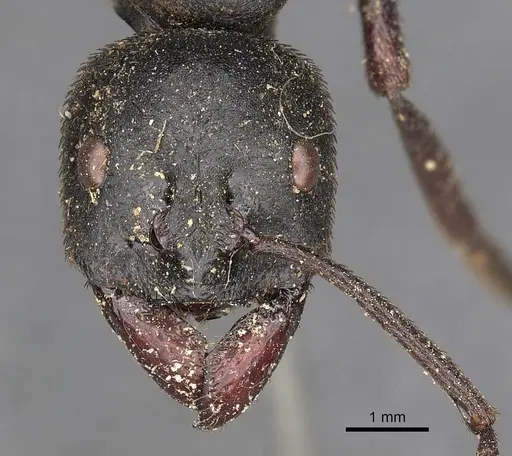
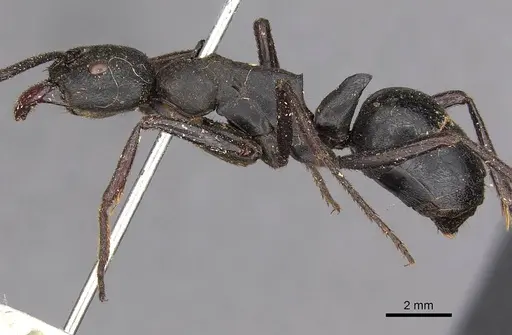
S. aethiopicus is the largest ant species in Africa, with workers up to 2.5 cm in total length [1]. Their mandibles are reddish-brown with a black border [2]. The species can be told apart from its relative S. peetersi by its longer scapes, S. aethiopicus has scape length 4.32-5.11 mm, while S. peetersi has 3.28-4.12 mm [2]. Males are much smaller, with a head width of 2.55-2.99 mm and very large compound eyes [2]. These ants are genuinely impressive in size and build.
Nesting and Habitat
In the wild, S. aethiopicus lives in the open habitats of the Nama Karoo, a semi-arid region [2]. Nests near Grahamstown have a large flanged entrance built above ground, without the pebble mounds seen in some other ants [2]. Workers have been seen carrying small balls of mud and sticking them onto the entrance flange during rainy weather, likely to maintain the nest structure [2]. They occur in small isolated populations that follow a metapopulation structure, meaning discrete colonies are separated from each other geographically [2]. For captive care, provide a spacious nest with a deep chamber and moderate substrate depth. The large size of these ants requires roomy enclosures.
Defense and Communication
Workers of S. aethiopicus have a well-developed sting, like other Ponerinae ants. They can deliver a painful sting if provoked. Additionally, they produce audible sounds (stridulation) by rubbing a ridged segment against the first gastral segment, which serves as an alarm signal [1]. They also use tandem-running to lead nestmates to food or new nest sites [1]. Handle them gently and provide escape-proof housing to minimize defensive responses.
Feeding and Diet
As a Ponerine ant, S. aethiopicus is predatory and hunts small invertebrates. Their large size allows them to take down substantial prey. In captivity, offer a varied diet: live insects (crickets, mealworms, roaches) and occasional sugar sources like honey water or sugar water. Feed protein-rich foods 2-3 times per week, and keep sugar available continuously. Remove uneaten prey after 24-48 hours to prevent mold. Due to their small colony size, they eat less than you might expect from such large ants.
Seasonal Care
Their natural range in South Africa's Eastern Cape (33-34°S latitude) experiences seasonal temperature changes [2]. In captivity, provide a winter rest period: reduce temperature to 10-15°C for 3-4 months during winter. Reduce feeding frequency during this time but keep a small water source available. In summer, keep them at room temperature (22-26°C). The small colony size makes them sensitive to environmental stress, avoid sudden temperature changes and maintain stability.
Frequently Asked Questions
How do I start a Streblognathus aethiopicus colony?
Unlike most ants, you cannot start a colony from a founding queen because S. aethiopicus has lost its queen caste entirely. You must obtain an established colony containing a gamergate (mated reproductive worker). These are rarely available in the antkeeping hobby. Once established, the colony will grow slowly to its maximum of about 50 workers. Remember that when the gamergate dies, the colony will eventually fail as there is no replacement queen.
Do Streblognathus aethiopicus ants sting?
Yes, they can and will sting. As members of the Ponerinae subfamily, they have functional stingers. Given their large size (up to 2.5 cm), stings can be quite painful. Handle them with care. If stung, expect localized pain and possibly swelling, treat it like other insect stings.
How big do Streblognathus aethiopicus colonies get?
Colonies are small, typically 9-51 workers with an average of 35 [3]. This is much smaller than most ant species kept in captivity. The small colony size is due to their gamergate reproductive system and queenless biology. Do not expect large, impressive colonies, these ants are valued for their unique biology, not colony size.
Are Streblognathus aethiopicus good for beginners?
No, this species is not recommended for beginners. Rated as Expert difficulty due to several challenges: they require established colonies (not founding queens), have small colony sizes that are vulnerable to losses, need specific temperature and humidity matching their Nama Karoo habitat, and can deliver painful stings. Additionally, their unique gamergate system means colonies have a limited lifespan.
What do Streblognathus aethiopicus eat?
They are predatory Ponerine ants. Feed them live insects such as crickets, mealworms, and small roaches. Given their large size, they can take down prey bigger than what smaller ants can handle. Offer protein 2-3 times per week and provide a constant sugar source (honey water or sugar water). Remove uneaten prey after 24-48 hours.
Do Streblognathus aethiopicus need hibernation?
Yes, they likely require a winter rest period. Based on their native range in South Africa's temperate Eastern Cape (33-34°S latitude), they experience seasonal temperature changes [2]. Provide a 3-4 month cool period at 10-15°C during winter months. Reduce feeding during this time but maintain access to water.
Why are they called queenless ants?
S. aethiopicus has completely lost its queen caste through evolution. Instead of a morphologically distinct queen, reproduction is carried out by gamergates, regular workers that have mated and developed functional ovaries [1]. Only one gamergate exists per colony, and it maintains dominance over other workers. This is a rare system in ants and makes S. aethiopicus interesting for studying alternative reproductive strategies.
How long do Streblognathus aethiopicus live?
The exact lifespan is unknown, but colony longevity is tied to the gamergate's lifespan. Since there is no replacement if the gamergate dies, the colony will eventually decline and die out. Expect a colony lifespan of several years under good conditions, but not the indefinite lifespan typical of queenright colonies.
Can I keep multiple Streblognathus aethiopicus colonies together?
This is not recommended. In the wild, colonies exist in isolated populations with a metapopulation structure [2]. While they may tolerate some proximity, combining unrelated colonies would likely result in aggression. Each established colony contains only one reproductive, and introducing another gamergate would probably cause conflict.
What makes Streblognathus aethiopicus special?
Several things make this species unique: they are the largest ant species in Africa (up to 2.5 cm), they have completely lost their queen caste and reproduce via gamergates (mated workers), they produce audible sounds (stridulation) for communication, they build distinctive nests with flanged entrances, and they exist in small isolated populations. For ant enthusiasts, they represent a fascinating case study in alternative social structure.
Report an Issue
The current care sheet is based fully on literature. See inconsistencies, or something that's incorrect? Please , it will be resolved after review from an admin. Contributing to the blogs tab also helps providing information, to make us be able to further improve the caresheets. Thank you for your support!
References

This caresheet is licensed under CC BY-SA 4.0 .
Community Blogs
ANTWEB1041875
View on AntWeb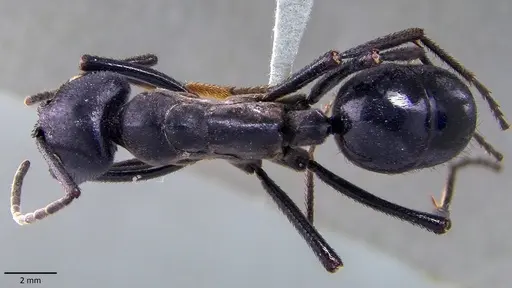
CASENT0005444
View on AntWeb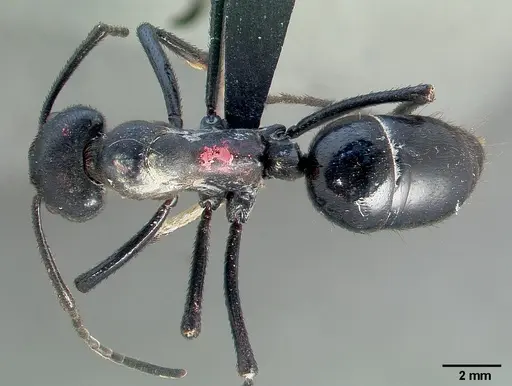
CASENT0249249
View on AntWeb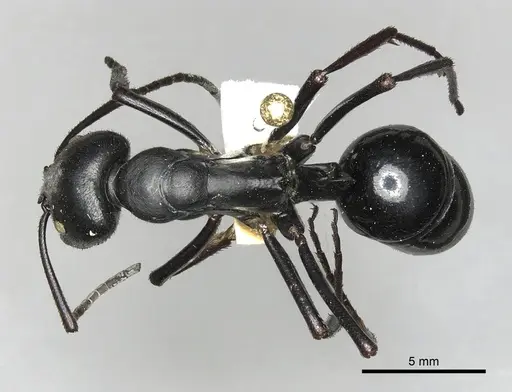
CASENT0900675
View on AntWeb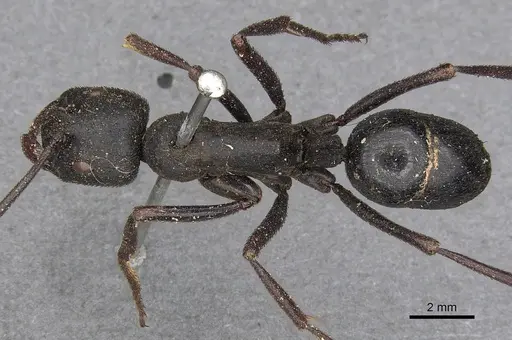
SAM-HYM-C000015A
View on AntWeb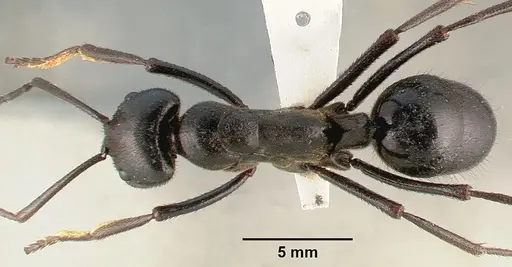
Literature
Loading distribution map...Loading products...