
Stigmatomma pluto
- Sci. Name
- Stigmatomma pluto
- Tribe
- Amblyoponini
- Subfamily
- Amblyoponinae
- Author
- Gotwald & Lévieux, 1972
- Distribution
- Found in 1 countries
Introduction
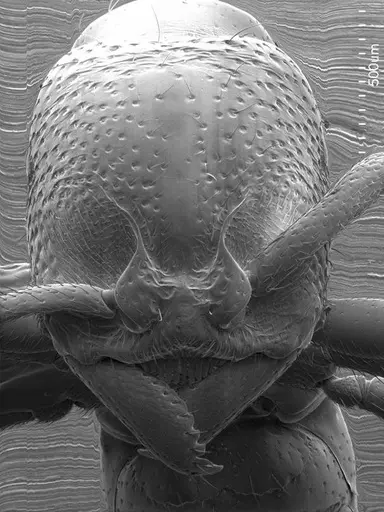
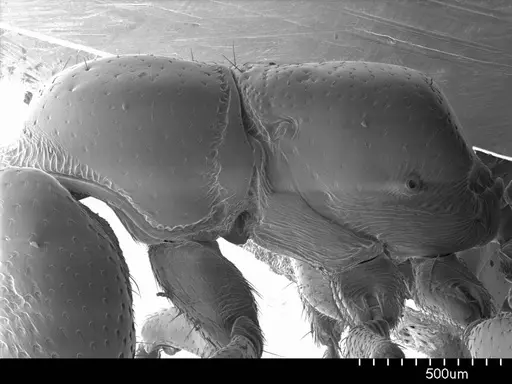
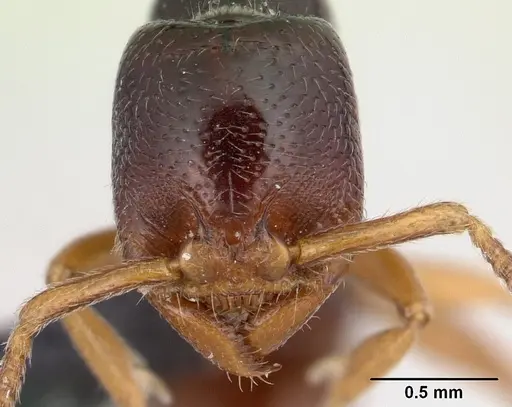
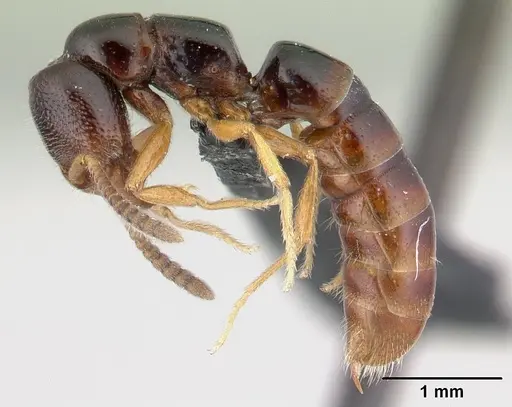
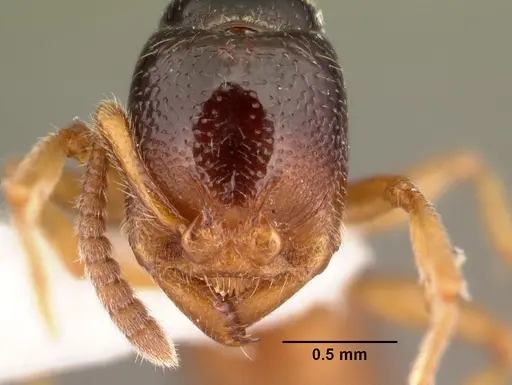
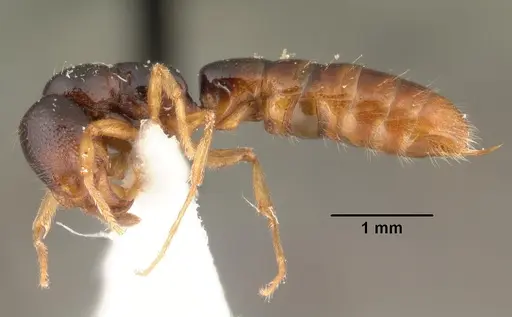
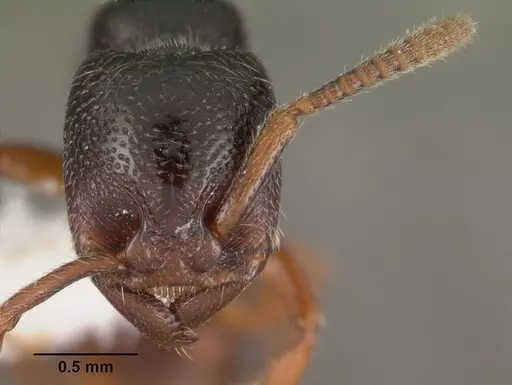
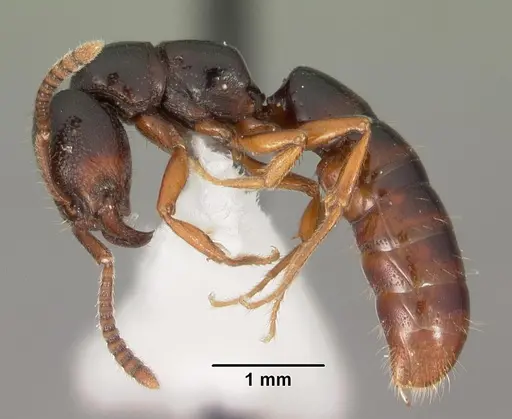
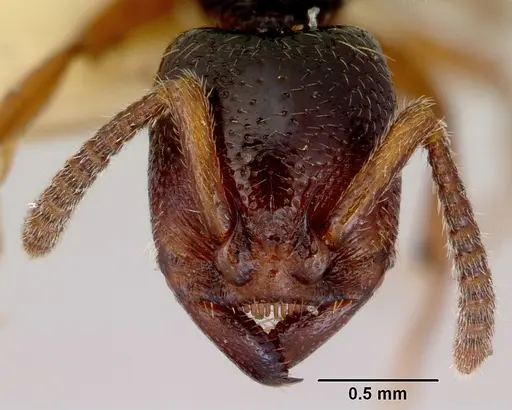
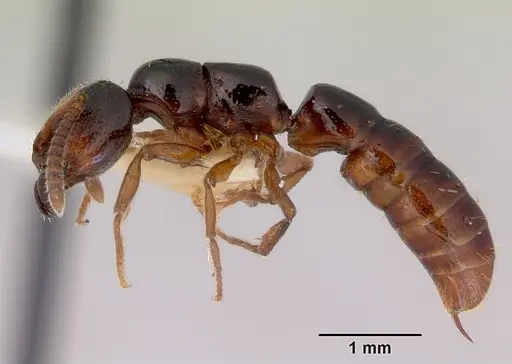
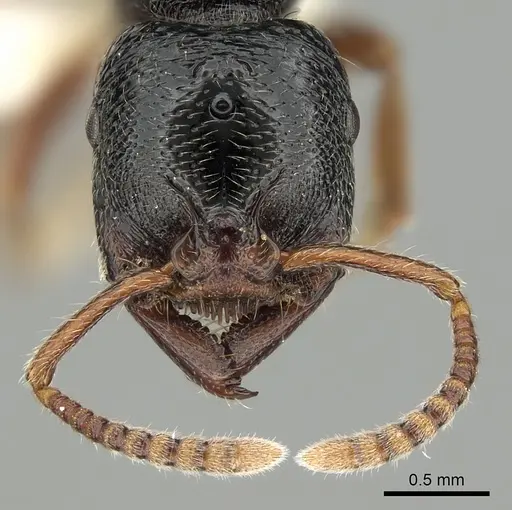
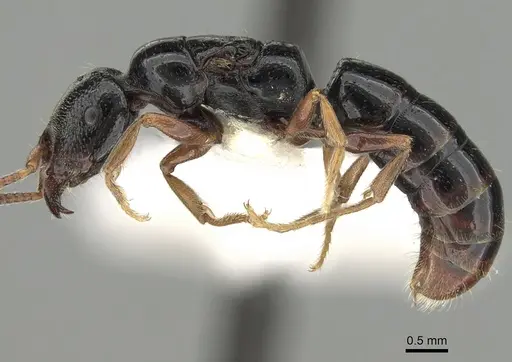
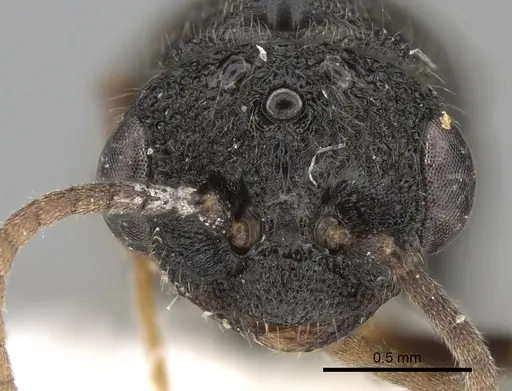
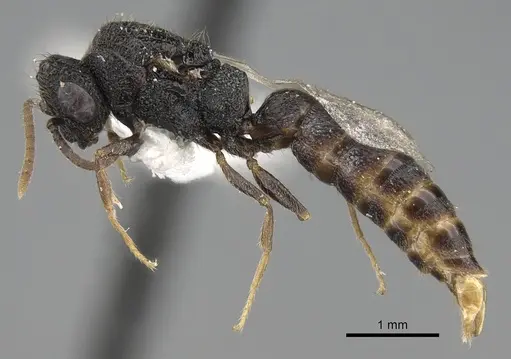
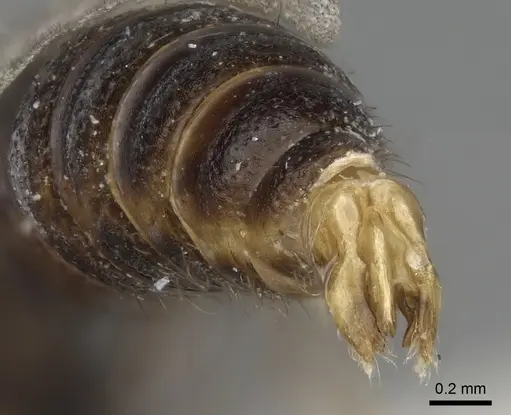
Stigmatomma pluto is a small predatory ant from the Amblyoponinae subfamily, found only in West Africa (Ivory Coast) . Workers are 5.66–6.38 mm and queens are slightly larger at 6.43–6.78 mm, with very little size variation among workers . They have enlarged tooth-like hairs on the face (hypertrophied dentiform clypeal setae) used to grab prey . These ants specialize in hunting centipedes, hunting alone instead of in groups . Colonies are small, typically with 18–35 workers and a simple nest made of a single vertical tunnel in soil . Originally described as Amblyopone pluto in 1972,it was later moved to the genus Stigmatomma.
Quick Summary
- Difficulty: Hard
- Origin & Habitat: Ivory Coast, West Africa, specifically the Lamto savanna–forest transition zone. They live in warm, humid soil and leaf litter where centipedes are common [1].
- Colony Type: Unconfirmed – likely single-queen based on small colony size (18–35 workers), but no direct observation of monogyny has been documented [6].
- Size & Growth:
- Antkeeping:
- Temperature: Keep at 24–27°C (warm tropical conditions). Provide a temperature gradient so workers can move to cooler or warmer spots. Avoid temperatures below 22°C.
- Humidity: High – keep the substrate consistently damp but not waterlogged. Aim for a thin layer of condensation on the nest walls. Mist regularly if needed.
- Diapause: No diapause required. As a tropical species, maintain the same warm conditions year-round.
- Nesting: In the wild they dig a single vertical tunnel in soil [6]. In captivity use deep moist soil (at least 5–8 cm), a Y‑tong (AAC) nest, or a plaster nest that holds humidity well.
- Behavior: Solitary hunters that specialize in catching centipedes (lithobiomorph and geophilomorph) [4][5]. They use their enlarged clypeal teeth to hold prey while delivering venom. Like other Amblyoponinae, they have a functional sting but rarely attack humans. Workers are medium‑sized (5–6 mm) and can climb smooth surfaces, so use a tight lid or fluon barrier. They are most active in low light and during the night.
- Common Issues: specialized diet – they need live centipedes or similar small arthropods, which are hard to obtain regularly., small colony size – growth is slow and only a few workers forage at a time., high humidity requirements – poor ventilation can lead to mold., tropical species – cannot tolerate cool temperatures or drafts., founding behavior is unknown, making starting a colony from a queen difficult.
Housing and Nest Setup
Stigmatomma pluto needs a humid, naturalistic setup that mimics its soil‑dwelling lifestyle. A deep substrate (5–8 cm) of moist soil mixed with sand (70:30) works well, because they dig a single vertical tunnel in nature [6]. A Y‑tong (AAC) nest with a water reservoir or a plaster nest also works, as long as it stays damp. Provide a shallow water dish, though most moisture comes from prey and high air humidity. Because colonies are small (under 40 workers), a 10–15 litre container is enough. Add a few stones or leaf litter on the surface for cover. Keep the enclosure in low light – they are more active in dim conditions.
Feeding and Diet
This is the most demanding part of keeping this ant. In the wild they eat only lithobiomorph and geophilomorph centipedes [5]. In captivity you must provide live prey that moves. Small centipedes (1–2 cm) are ideal but rarely available. Alternatives include small isopods, springtails, tiny mealworms, fruit flies, or pinhead crickets. Offer food 2–3 times a week and remove leftovers after 24 hours to avoid mold. They do not accept sugar or honey – this is a purely carnivorous species. Always have fresh water available.
Temperature and Humidity
As a tropical species from Ivory Coast, Stigmatomma pluto needs steady warmth between 24 and 27°C. Use a heating mat on one side to create a gentle gradient. Never let the temperature drop below 22°C, and keep the enclosure away from drafts. Humidity is crucial – aim for 70–80% relative humidity. Keep the substrate damp (not soggy) and mist if the nest walls lose condensation. Watch for mold if ventilation is poor.
Colony Care and Maintenance
Colonies are small (18–35 workers in the wild [6]) and grow slowly. Expect a founding queen to need a year or more to reach 20–30 workers. All workers are about the same size (5.66–6.38 mm) [2]. Only one or two workers forage at a time [4] – this is normal, not a sign of trouble. Queens (6.43–6.78 mm) stay inside the nest once the colony is established [2]. Change the water dish regularly and remove dead prey. These ants produce little waste, but you may need to replace some substrate if mold appears.
Behavior and Defense
Workers hunt alone, using their enlarged clypeal teeth to grab centipedes and inject venom [4][3]. As an Amblyoponinae ant, they have a functional stinger and can deliver a painful sting if handled, but they are not aggressive. Workers are 5–6 mm and can climb smooth surfaces, so use a tight lid or fluon barrier. They are most active at night, when their centipede prey is also active. Disturb the colony as little as possible – these are shy ants that prefer quiet.
Frequently Asked Questions
What do Stigmatomma pluto ants eat?
They are specialized centipede predators, feeding on lithobiomorph and geophilomorph centipedes in the wild [5]. In captivity offer live small prey like isopods, springtails, small mealworms, or fruit flies. They do not accept sugar or honey – protein from prey is their only food source.
How long does it take for Stigmatomma pluto to develop from egg to worker?
The exact time is unconfirmed for this species. Based on related Amblyoponinae ants, expect roughly 8–12 weeks at 24–27°C. Growth is slow overall due to small colony size.
Can I keep multiple queens together?
Unlikely – wild colonies are small (18–35 workers) and no evidence of polygyny exists [6]. Keeping multiple queens together would probably cause aggression. Best to stick with one queen per colony.
Do Stigmatomma pluto ants sting?
Yes. As a member of the Amblyoponinae subfamily, they have a functional stinger and can deliver a painful sting if handled, but they are not aggressive and sting only when threatened.
What size colony do Stigmatomma pluto reach?
Wild colonies contain 18–35 workers [6]. This is a small‑colony species – do not expect colonies of hundreds or thousands. Captive colonies are likely to stay in this range.
Do Stigmatomma pluto need hibernation?
No. As a tropical species from Ivory Coast, they do not require diapause or hibernation [1]. Keep them warm (24–27°C) all year. Cool temperatures below 22°C can harm them.
Are Stigmatomma pluto good for beginners?
No. This species is difficult because of its specialized diet (live centipedes or similar prey), high humidity needs, and slow growth. It is best for keepers with some experience who can provide consistent care and appropriate prey.
What nest type is best for Stigmatomma pluto?
A naturalistic setup with deep moist soil (5–8 cm) works best, reflecting their single vertical tunnel nesting [6]. Alternatively, a Y‑tong (AAC) or plaster nest with a water reservoir holds humidity well. Avoid dry setups.
Why are my Stigmatomma pluto not eating?
They may not recognize unfamiliar prey. Try smaller live prey that moves like a centipede. Also check that temperatures are 24–27°C and humidity is high – cold or dry conditions suppress activity. Only one or two workers forage at a time, so food may not be taken immediately [4].
Report an Issue
The current care sheet is based fully on literature. See inconsistencies, or something that's incorrect? Please , it will be resolved after review from an admin. Contributing to the blogs tab also helps providing information, to make us be able to further improve the caresheets. Thank you for your support!
References

This caresheet is licensed under CC BY-SA 4.0 .
Community Blogs
ANTWEB1008502
View on AntWeb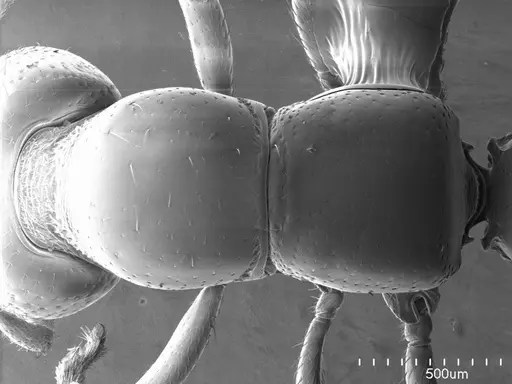
CASENT0006947
View on AntWeb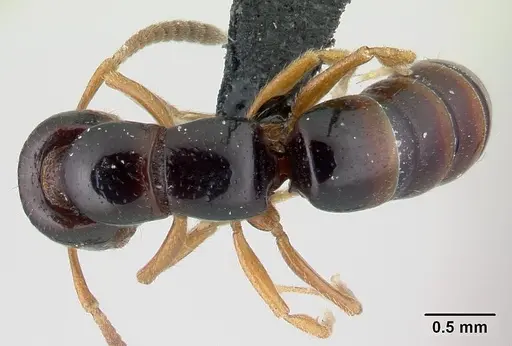
CASENT0101443
View on AntWeb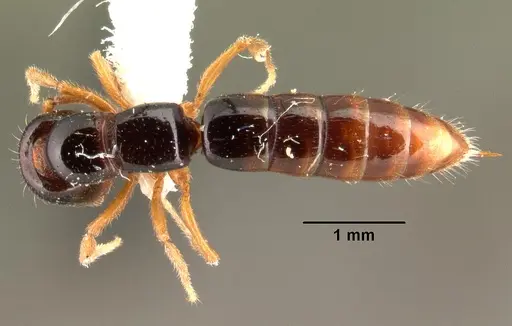
CASENT0102207
View on AntWeb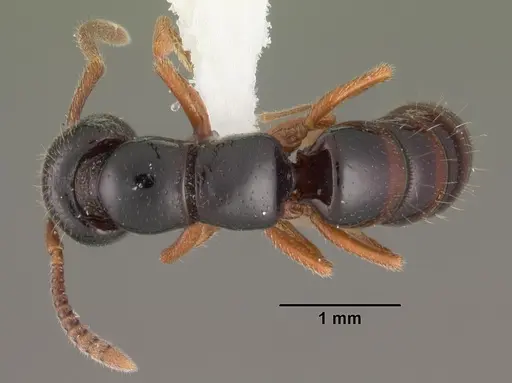
CASENT0172227
View on AntWeb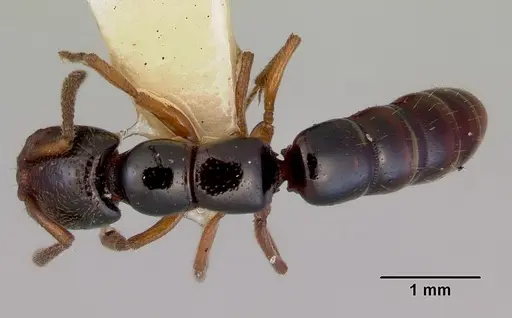
CASENT0280652
View on AntWeb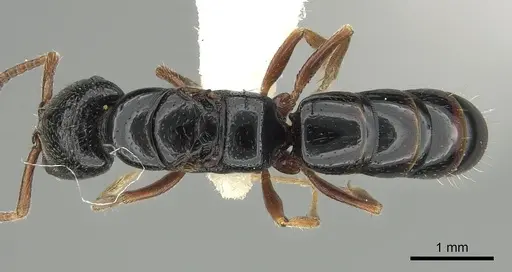
CASENT0906001
View on AntWeb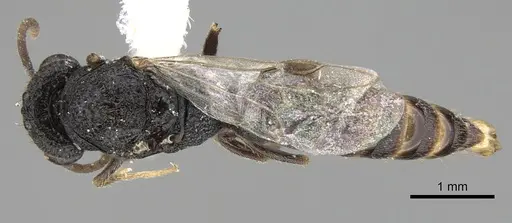
Literature
Loading distribution map...Loading products...