
Stigmatomma boltoni
- Sci. Name
- Stigmatomma boltoni
- Tribe
- Amblyoponini
- Subfamily
- Amblyoponinae
- Author
- Bharti & Wachkoo, 2011
- Distribution
- Found in 1 countries
Introduction
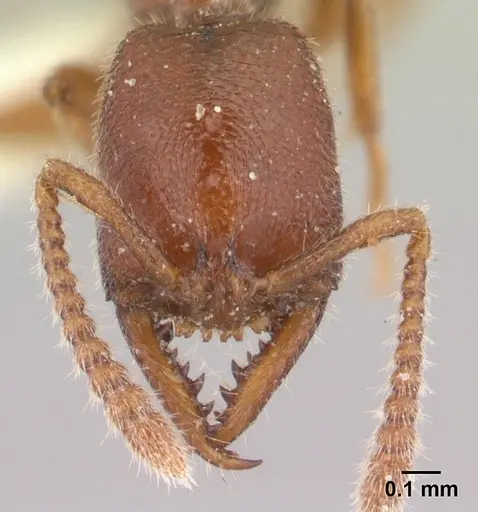
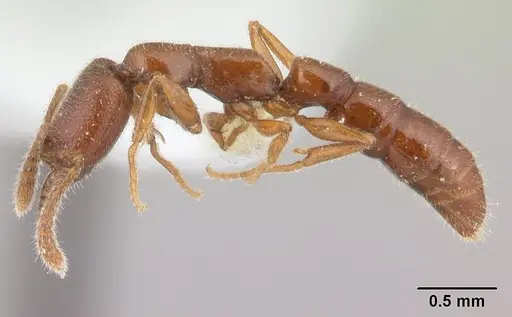
Stigmatomma boltoni is a tiny, cryptic ant endemic to the Shivalik range of Northwest Himalaya in Himachal Pradesh, India. Workers are 3.2-3.4 mm long, with a nearly trapezoidal head,12-segmented antennae, and seven clypeal teeth arranged in a unique pattern . Their eyes are rudimentary - just tiny black dots without distinct facets . The body is reddish‑yellow to brown with pale antennae and legs, and they have an exerted sting . This was the first Amblyoponinae reported from the Northwest Himalaya, and only the worker caste is known . They nest in soil and forage under leaf litter, so they are rarely collected except by soil cores or winkler extraction .
Quick Summary
- Difficulty: Expert
- Origin & Habitat: Endemic to the Shivalik range of Northwest Himalaya in Himachal Pradesh, India, at 400-450 m elevation, in well‑developed lowland subtropical, semi‑evergreen forests with a strong dry season [1][2][3].
- Colony Type: Unknown, only the worker caste has been described, colony structure (monogyne/polygyne) is not documented.
- Size & Growth:
- Queen: Unknown, queen caste has not been described [1]
- Worker: 3.2-3.4 mm [1][2]
- Colony: Unknown, no colony size data exist
- Growth: Unknown, development timeline not studied
- Development: Unknown, no direct observations exist (Based on typical Amblyoponinae patterns, expect development to take several months, but this is an estimate.)
- Antkeeping:
- Temperature: Based on their subtropical Himalayan habitat (400-450 m elevation), aim for warm conditions around 22-26°C. Provide a temperature gradient so workers can self‑regulate.
- Humidity: Keep substrate moderately moist, they live on forest floors with some humidity. Offer a damp soil layer in the outworld and ensure the nest area doesn't dry out completely.
- Diapause: Unknown, no documented overwintering behavior. Given their Himalayan origin, they likely experience cooler winters, a slight temperature reduction in winter may be beneficial but is not confirmed.
- Nesting: Soil‑nesting species that builds nests in soil and forages under leaf litter. A naturalistic setup with a deep soil layer or a test tube with moist substrate works. Avoid dry conditions.
- Behavior: Cryptic, ground‑dwelling ants that forage mainly in soil and under leaf litter. They have a functional sting and are predatory, typical of Amblyoponinae. Workers are tiny (3.2-3.4 mm), so escape prevention must be excellent, use fine mesh barriers. Their behavior in captivity is undocumented, related species are secretive and spend most time underground.
- Common Issues: very small size means escapes are likely without fine mesh barriers, only the worker caste is known, no information on queen founding or colony establishment, predatory diet may be difficult to replicate in captivity, cryptic nature means they may be stressed by excessive disturbance or bright light, no documented captive breeding success, this is an expert‑level species
Discovery and Distribution
Stigmatomma boltoni was first described in 2011 by Bharti and Wachkoo, making it the fourth Stigmatomma species from India at that time, alongside Stigmatomma bellii, Stigmatomma pertinax, and Stigmatomma rothneyi [1]. It is the first Amblyoponinae reported from the Northwest Himalaya [1]. The species is uncommon and has been found only in three adjacent localities in Himachal Pradesh: Terrace (430 m), Ghati Bilwan (400 m), and Khatiar (450 m) [1][2]. All specimens were collected by soil core or winkler extraction, reflecting their cryptic, ground‑dwelling nature [1][2]. The species is named after Barry Bolton [1]. Type specimens are held in collections in India and the California Academy of Sciences [2].
Identification and Distinguishing Features
Workers of Stigmatomma boltoni have 12‑segmented antennae, which separates them from Stigmatomma pertinax (11 segments) [1]. Their eyes are extremely reduced, tiny black dots without distinct facets, so they are effectively blind [1]. The clypeus has seven teeth: three median teeth bordered by a fused pair on each side [1]. The head is nearly trapezoidal, wider toward the front, and longer than broad [1]. Mandibles are narrow and slender with eight teeth: the apical tooth is long and projecting, the basal tooth is broad and subquadrate [1]. Body color ranges from reddish‑yellow to brown, with pale antennae and legs, and the sting is exerted (visible protruding from the abdomen) [1].
Natural Habitat and Ecology
In the wild, Stigmatomma boltoni lives in well‑developed lowland subtropical, semi‑evergreen forests in the Shivalik range [1][2]. This area has a strong dry season, so the ants are adapted to seasonal moisture changes [1]. They build nests in soil and forage within the soil and under leaf litter [1][2]. Their extremely reduced eyes suit a dark, confined lifestyle, a common trait among cryptic soil‑dwelling ants [1]. Their small size, reduced eyes, and ground‑nesting habits make them very hard to find in the field, they have only been collected by specialized extraction methods [1].
Feeding and Predatory Behavior
No specific feeding observations exist for Stigmatomma boltoni, but the subfamily Amblyoponinae is known for being predatory. These ants are sometimes called 'dracula ants' because adults puncture the larvae of other insects and feed on their hemolymph (body fluid) rather than eating the whole prey. In captivity, offer small live prey like springtails, fruit flies, or other tiny arthropods scaled for 3.2-3.4 mm workers. Some Amblyoponinae accept sugar sources, but start with live prey and watch what they take. The biggest challenge will be establishing a reliable feeding regimen since their exact dietary needs are unknown.
Housing and Nesting in Captivity
Since Stigmatomma boltoni nests in soil and forages under leaf litter, a naturalistic setup with a deep soil layer is best [1]. A test tube with a moist cotton ball and a layer of soil in the outworld can work, but keep the soil from drying out. These ants prefer dark, humid conditions and will stay hidden most of the time. Avoid bright lights and too much disturbance. Because workers are only 3.2-3.4 mm, use extremely fine mesh on ventilation holes and seal all connections to prevent escapes. Keep the nest area consistently moist but not waterlogged.
Temperature and Seasonal Care
Based on their natural habitat in the Himalayan foothills at 400-450 m elevation, Stigmatomma boltoni probably experiences warm summers and cooler winters. Aim for 22-26°C with a temperature gradient so the ants can choose. During winter, consider a slight temperature drop to mimic seasonal changes, though exact needs are unknown. The strong dry season in their range suggests they tolerate some dryness, but the forest floor environment means they prefer consistent moisture. Water based on substrate condition, moist but not soggy, rather than a fixed schedule. [1]
Frequently Asked Questions
How long does it take for Stigmatomma boltoni to develop from egg to worker?
The development timeline has not been documented for this species. Based on typical Amblyoponinae patterns and related Stigmatomma species, expect development to take several months. This is an estimate since no direct observations exist.
Can I keep Stigmatomma boltoni in a test tube setup?
A test tube can work as a founding chamber, but you will need to add a soil layer or small container with moist substrate for foraging, since they naturally nest in soil and forage under leaf litter. Make sure escape prevention is perfect, they are only 3.2-3.4 mm and can slip through tiny gaps.
What do Stigmatomma boltoni ants eat?
No specific studies exist, but Amblyoponinae ants are predatory. Offer small live prey such as springtails, fruit flies, or tiny arthropods sized for 3.2-3.4 mm workers. Some species in this subfamily may accept sugar sources, but start with live prey and watch what they accept.
Do Stigmatomma boltoni ants sting?
Yes, they have a functional sting that is exerted (visible protruding from the abdomen) [1]. Their small size means the sting is not medically significant to humans, but they might use it defensively. Handle with care.
Are Stigmatomma boltoni good for beginners?
No, this species is rated Expert difficulty. It is one of the least studied ant species in captivity, with no documented colony establishment or breeding success. Only the worker caste has ever been described, and specific care requirements are unknown. This species is recommended only for experienced antkeepers who can handle uncertain conditions.
How big do Stigmatomma boltoni colonies get?
Colony size is unknown, no data exist in scientific literature. Based on their small worker size (3.2-3.4 mm) and related Amblyoponinae species, colonies likely remain relatively small, possibly under 100 workers, but this is an estimate.
Do Stigmatomma boltoni need hibernation?
Diapause requirements are unconfirmed. Given their Himalayan origin in the Shivalik range (400-450 m elevation), they likely experience seasonal temperature changes. You might provide a slight temperature reduction during winter months, but specific requirements are unknown.
Why are my Stigmatomma boltoni dying?
Common issues include: stress from excessive disturbance (they are cryptic and prefer dark conditions), incorrect humidity (too dry or too wet), unsuitable prey (they need tiny live prey), escape (they are very small and can slip through minute gaps), and simply the challenges of keeping a very poorly studied species. This is an expert‑level species where captive success has not been documented.
Can I keep multiple queens together in one colony?
Colony structure is unknown, no documentation exists on whether they are monogyne (single queen) or polygyne (multiple queens). The queen caste has never been described. Combining unrelated queens is not recommended since this has not been studied for this species.
What makes Stigmatomma boltoni different from other ants?
This is the first Amblyoponinae reported from the Northwest Himalaya and one of the rarest ant species kept. They have extremely reduced eyes (essentially blind), a unique 7‑toothed clypeus, and are known only from worker specimens. Their cryptic soil‑dwelling lifestyle and complete lack of captive breeding documentation make them a truly challenging species for advanced antkeepers.
Report an Issue
The current care sheet is based fully on literature. See inconsistencies, or something that's incorrect? Please , it will be resolved after review from an admin. Contributing to the blogs tab also helps providing information, to make us be able to further improve the caresheets. Thank you for your support!
References

This caresheet is licensed under CC BY-SA 4.0 .
Community Blogs
CASENT0179570
View on AntWeb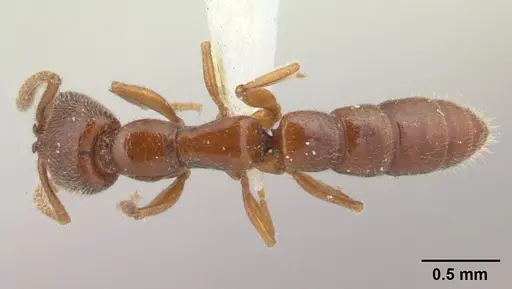
Literature
Loading distribution map...Loading products...