
Stigmatomma bellii
- Sci. Name
- Stigmatomma bellii
- Tribe
- Amblyoponini
- Subfamily
- Amblyoponinae
- Author
- Forel, 1900
- Distribution
- Found in 2 countries
Introduction
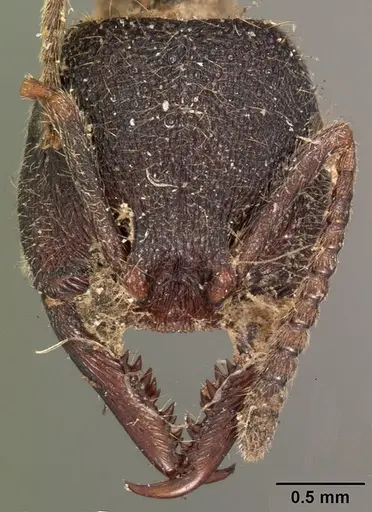
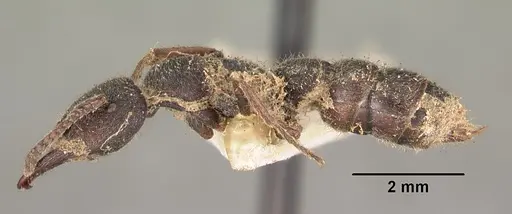
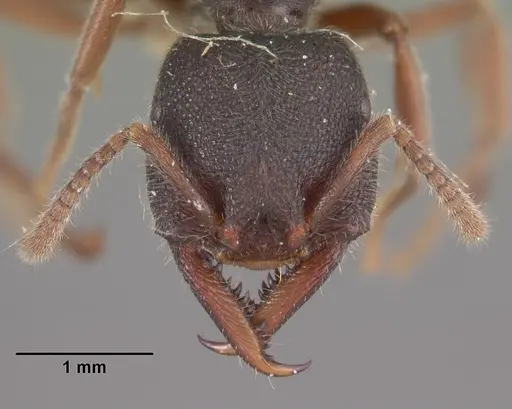
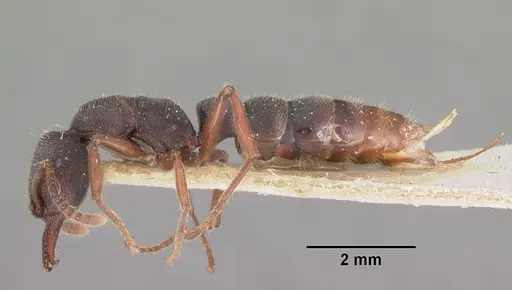
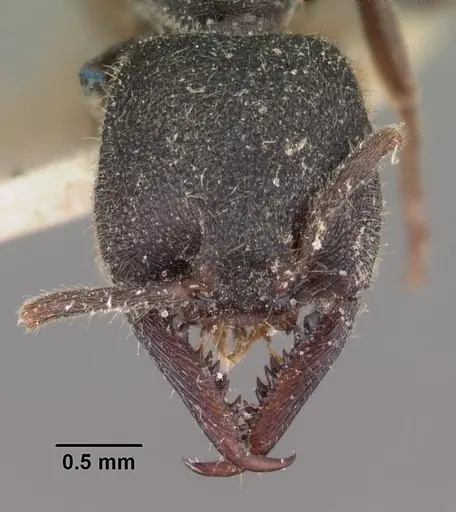
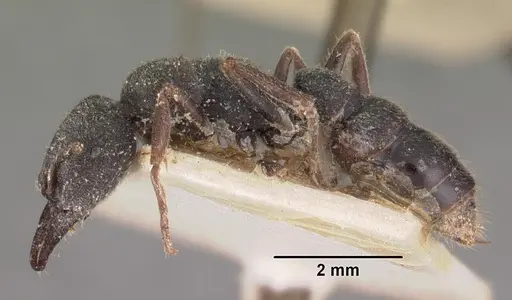
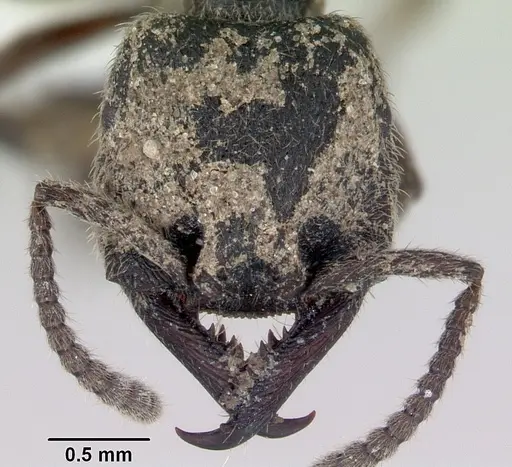
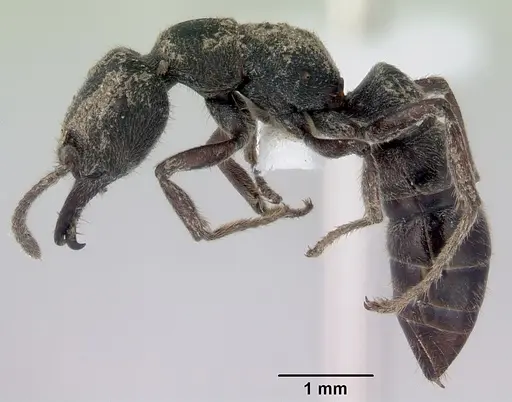
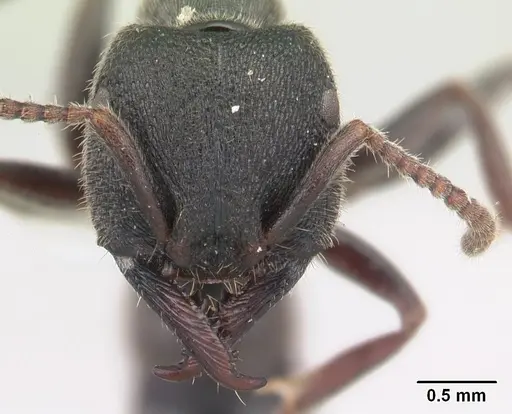
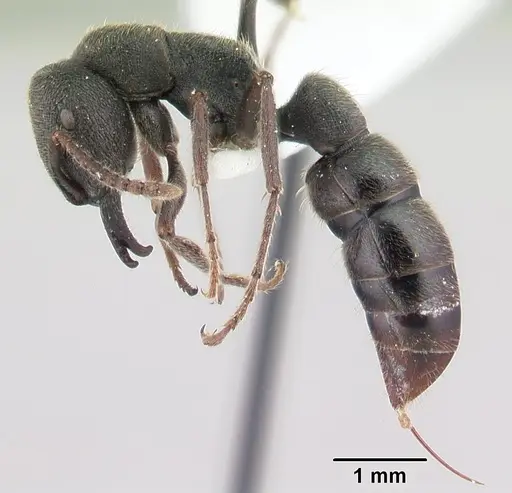
Stigmatomma bellii is a small, secretive ant native to India and Sri Lanka. Workers are blackish with a nearly square head,12-segmented antennae, and a row of minute denticles along the front edge of the clypeus. Their eyes have distinct facets . They belong to the subfamily Amblyoponinae, whose members are known as “dracula ants” for their habit of drinking hemolymph from larvae of other ants, though this specific behavior hasn’t been confirmed for this species. Stigmatomma bellii is a subterranean predator that uses a potent sting to paralyze hard‑bodied prey like centipedes.
Quick Summary
- Difficulty: Expert
- Origin & Habitat: India and Sri Lanka in the Indomalayan region. Found in the Western Ghats and Eastern Himalayas, recorded from Karnataka, Kerala, Tamil Nadu, and West Bengal [3][4]. They live in tropical evergreen forests and forage on the ground.
- Colony Type: Colony structure is poorly studied. Based on related species, likely monogyne (single queen) with small colonies.
- Size & Growth:
- Queen: Size data unavailable, inferred from worker size, likely similar or slightly larger.
- Worker: Size data unavailable, no body length measurements found in the available literature.
- Colony: Likely under 100 workers (typical for Amblyoponinae).
- Growth: Slow
- Development: Estimated 8-12 weeks at warm temperatures, based on related Amblyoponinae species. (Development is slow. Temperature significantly affects speed.)
- Antkeeping:
- Temperature: Keep warm and stable, roughly 24-28°C, based on their tropical origin. Avoid temperatures below 20°C for long periods.
- Humidity: Keep the nest substrate consistently moist but not waterlogged, mimic a damp forest floor. High humidity is essential.
- Diapause: Likely minimal or no true diapause given the tropical distribution. Activity may drop during cooler months, reduce feeding then.
- Nesting: Natural nesting: soil or rotting wood in shaded forest areas. In captivity, use a plaster or soil‑based nest with dark, humid chambers. Do not use acrylic nests.
- Behavior: Stigmatomma bellii is a subterranean predator that uses a powerful sting to subdue hard‑bodied prey (e.g., centipedes). Workers are rarely seen above ground. They are not aggressive to humans but will sting if handled. Because workers are tiny, escape prevention is critical, use fine mesh on vents and fluon on barriers.
- Common Issues: specialized diet makes feeding challenging, they need live prey such as centipedes or beetle larvae, not sugar water., slow growth tests keeper patience, colonies may take months to establish., escape prevention is critical due to small worker size., high humidity is essential, too dry kills them, too wet causes mold., parasites from wild‑caught colonies can devastate captive populations.
Housing and Nest Setup
Stigmatomma bellii needs a humid, naturalistic setup that mimics a forest floor. Use a plaster nest or a soil‑based terrarium with moist substrate, leaf litter, and hiding spots. Cover the nest with dark material to keep it shaded. The foraging area (outworld) should be small. Because workers are tiny, use fine mesh on all ventilation holes and apply fluon to barrier edges. Never use an acrylic nest, they don’t hold moisture well for this species [1][2].
Feeding and Diet
Stigmatomma bellii is a specialized predator of hard‑bodied arthropods, likely including centipedes, beetle larvae, and other small soil invertebrates. In captivity, provide live prey such as small centipedes, isopods, or pinhead crickets. They do not rely on sugar sources. Remove uneaten prey after 24 hours to prevent mold. Feed every 2-3 days, adjusting for colony size. Note: the “dracula ant” behavior of drinking larval hemolymph has not been confirmed for this species, so don’t rely on that for feeding.
Temperature and Seasonal Care
Keep the colony at a stable 24-28°C, matching their tropical origin. Use a heating cable on one side of the nest to create a gradient. Avoid prolonged temperatures below 20°C. Since they come from a climate with little seasonal change, they likely do not need a true hibernation (diapause). You may see reduced activity during cooler months, that’s normal, reduce feeding accordingly.
Colony Founding and Growth
Founding behavior is unconfirmed for Stigmatomma bellii. Based on the subfamily, queens may need to hunt for live prey during the founding stage, but this is not certain. If a queen is caught, provide a small chamber with moist substrate and offer tiny live prey (e.g., small centipedes). Expect the first workers to appear after 8-12 weeks under warm conditions (estimated from related species). Growth will be slow, a mature colony may only hold 30-100 workers after several years. Disturb the founding chamber as little as possible.
Behavior and Defense
Stigmatomma bellii is a shy, subterranean predator. Workers stay mostly underground, emerging only to hunt or when the nest is flooded. They use a functional sting to paralyze prey, the sting can also be used in defense, but they are not aggressive toward humans. Their small size and secretive nature make them difficult to observe. They forage alone or in small groups, searching for hard‑bodied prey in the soil.
Frequently Asked Questions
How long does it take for Stigmatomma bellii to raise first workers?
Expect 8-12 weeks from egg to first worker at optimal temperatures (24-28°C). This is slower than many common ant species. The first workers (nanitics) will be smaller than mature workers, but actual sizes are unknown for this species.
Can I keep Stigmatomma bellii in a test tube?
Test tubes can work for founding colonies if you maintain high humidity, but a naturalistic setup with moist substrate is better long‑term. If using test tubes, use a second tube with water as a reservoir and wrap the nest portion in dark material.
What do Stigmatomma bellii eat?
They are specialized predators of hard‑bodied arthropods. Provide live prey such as small centipedes, beetle larvae, or isopods. They do not accept sugar water or honey. Springtails are too small to sustain a colony, use larger prey.
Do Stigmatomma bellii ants sting?
Yes, they have functional stingers like other Amblyoponinae. However, they are not aggressive and stings are rare. If stung, the pain is typically mild.
Are Stigmatomma bellii good for beginners?
No, this is an expert‑level species. Their specialized diet (hard‑bodied live prey), high humidity needs, slow growth, and tiny size make them very challenging. Suitable only for keepers with experience raising predatory ants.
How big do Stigmatomma bellii colonies get?
Colonies remain small, likely under 100 workers even at maturity. This is typical for Amblyoponinae species.
Do Stigmatomma bellii need hibernation?
No, they come from tropical regions in India and Sri Lanka and do not require hibernation. Keep them warm year‑round at 24-28°C.
Why are my Stigmatomma bellii dying?
Common causes: too dry (they need damp conditions), lack of live prey (they cannot survive on sugar alone), temperatures below 20°C, escape through tiny gaps, or parasites from wild‑caught colonies. Ensure proper humidity, provide live prey regularly, and use fine‑mesh barriers.
Can I keep multiple queens together?
Not recommended. Colony structure is not well studied, but combining unrelated queens of this species has not been documented and may result in fighting. Keep one queen per colony.
When should I move them to a formicarium?
Wait until the colony has at least 10-20 workers before moving. Moving too early can stress the colony. A naturalistic setup with substrate is usually better than a bare formicarium for this species.
Report an Issue
The current care sheet is based fully on literature. See inconsistencies, or something that's incorrect? Please , it will be resolved after review from an admin. Contributing to the blogs tab also helps providing information, to make us be able to further improve the caresheets. Thank you for your support!
References

This caresheet is licensed under CC BY-SA 4.0 .
Community Blogs
CASENT0102187
View on AntWeb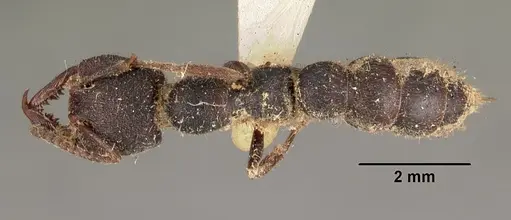
CASENT0102487
View on AntWeb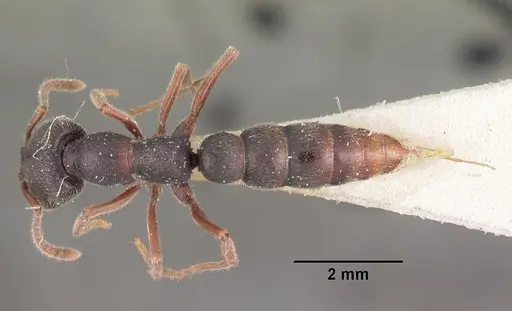
CASENT0102510
View on AntWeb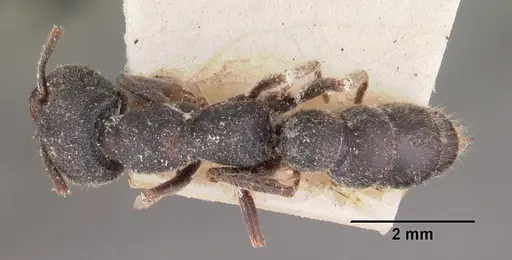
CASENT0172186
View on AntWeb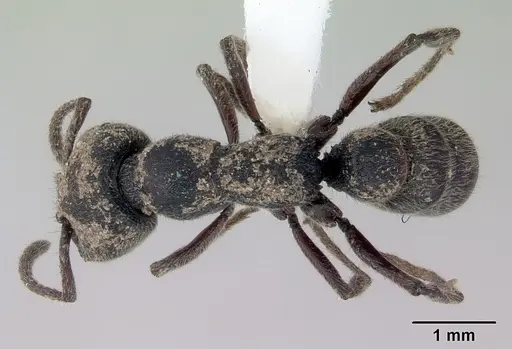
CASENT0179569
View on AntWeb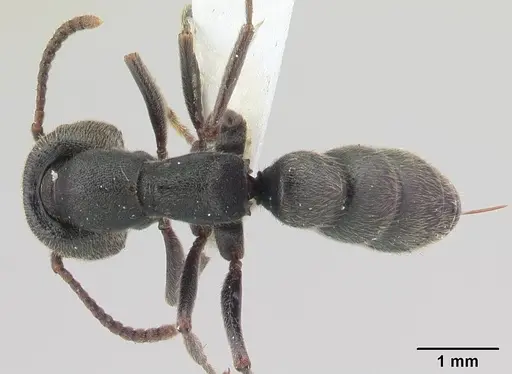
Literature
Loading distribution map...Loading products...