
Stigmacros termitoxena
- Sci. Name
- Stigmacros termitoxena
- Tribe
- Melophorini
- Subfamily
- Formicinae
- Author
- Wheeler, 1936
- Distribution
- Found in 1 countries
Introduction
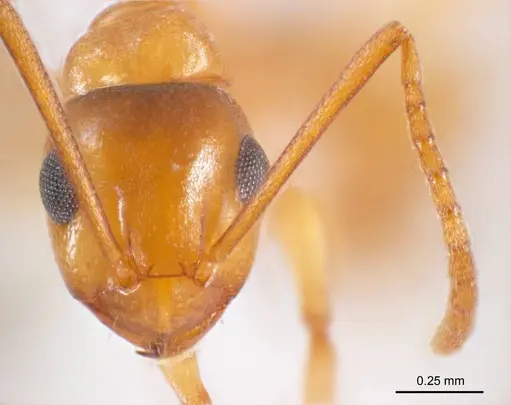
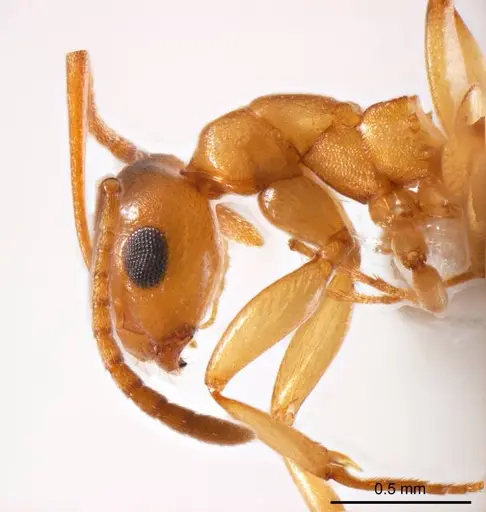
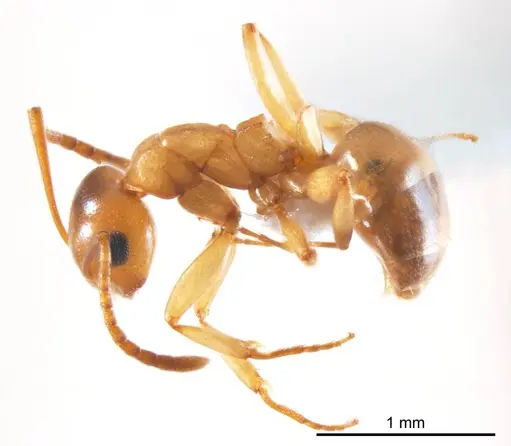
Stigmacros termitoxena is a large species in the ant genus Stigmacros, native to Western Australia. These ants belong to the Formicinae subfamily and the Melophorini tribe . The species was originally discovered associated with a termite mound, which is how it got its name 'termitoxena' . Workers have 11 antennal segments including the scape . This species is found in the more northern parts of the Southwest Australian Floristic Region as well as regions north of the Province .
Quick Summary
- Difficulty: Unknown, no data available
- Origin & Habitat: Western Australia, particularly the northern parts of the Southwest Australian Floristic Region and areas north of the Province [2][3]. Originally discovered associated with a termite mound [2].
- Colony Type: Colony structure is unconfirmed. No data on queen number or social organization.
- Size & Growth:
- Queen: Size data unavailable, no measurements recorded in the literature.
- Worker: Size data unavailable, no measurements recorded in the literature.
- Colony: Unknown, no data available.
- Growth: Unknown, no data available.
- Development: Unknown, no data available. (Direct development data unavailable for this species.)
- Antkeeping:
- Temperature: Unknown, no data available. Start at room temperature (around 20-24°C) and observe colony behavior. Avoid extremes.
- Humidity: Unknown, no data available. Provide a water source and allow the ants to self-regulate by moving between moist and dry areas.
- Diapause: Unknown, no data on seasonal activity. If colony is from a region with cool winters, a winter rest period may be beneficial, but it's not confirmed. Monitor activity and adjust if needed.
- Nesting: Natural nesting is unknown. The original colony was found associated with a termite mound [2], but this may not be typical. In captivity, start with a standard test tube setup. For established colonies, a formicarium with soil or sand substrate would likely work.
- Behavior: Behavior is poorly documented. As Formicinae ants, workers can spray formic acid for defense instead of stinging [1]. Temperament and escape risk are unknown due to lack of observations. Use standard escape prevention measures.
- Common Issues: very limited scientific data makes care recommendations uncertain, colony founding may be slow due to limited documented breeding behavior, wild-caught colonies may have parasites or health issues, temperature and humidity requirements are unknown rather than confirmed needs, diapause requirements are unknown and not studied for this species
Origin and Distribution
Stigmacros termitoxena is endemic to Western Australia. It is recorded from the northern parts of the Southwest Australian Floristic Region and areas north of the Province [2][3]. The species was originally described by W.M. Wheeler in 1936 based on a colony found in association with a termite mound, which is reflected in its name 'termitoxena' [2]. It has also been recorded on Barrow Island, off the coast of Western Australia [4].
Taxonomy and Identification
Stigmacros termitoxena belongs to the Formicinae subfamily and the Melophorini tribe [1]. Workers have 11 antennal segments including the scape, a key diagnostic feature for ants in this subfamily [1]. As a Formicine, it lacks a functional stinger and instead can spray formic acid as a defensive mechanism [1].
Housing and Nesting
Captive care recommendations are unproven due to limited data. Start with a standard test tube setup for founding. The original colony was found associated with a termite mound [2], but whether this species typically nests near termites is unknown. For established colonies, a formicarium with a soil or sand substrate may be suitable. Provide a moisture gradient and avoid waterlogging. Use standard escape prevention measures, as lack of escape behavior data means ants should be considered capable of squeezing through small gaps.
Feeding and Diet
The specific diet of Stigmacros termitoxena has not been documented. In captivity, offer sugar water or honey as an energy source, and protein in the form of small insects like fruit flies, pinhead crickets, or mealworms. Provide a constant sugar source and offer protein 2-3 times per week, then adjust based on colony acceptance.
Temperature and Seasonal Care
No specific temperature or seasonal requirements have been recorded for this species. Start by maintaining a general room temperature of around 20-24°C. If the colony appears less active in cooler months, a slight temperature drop may be natural, but this is purely speculative. Do not force hibernation without evidence of need. Provide a temperature gradient to allow ants to self-regulate.
Behavior and Temperament
Direct behavioral observations for Stigmacros termitoxena are absent from the literature. As Formicinae ants, they likely use formic acid for defense [1]. The species was originally collected from a termite mound, but this may be incidental. There is no information on aggression levels, foraging, or colony dynamics. Handle with care and avoid disturbing the nest frequently, especially during founding.
Frequently Asked Questions
How long does it take for Stigmacros termitoxena to raise first workers?
The development timeline is unknown. No specific data exists for this species. Patience is required, and any timescale would be guesswork.
What do Stigmacros termitoxena ants eat?
Their diet is unconfirmed. Offer sugar water or honey as a constant energy source, and protein like small insects 2-3 times per week. Adjust based on colony acceptance.
Can I keep multiple Stigmacros termitoxena queens together?
No data exists on queen number or colony structure. It is safest to assume single-queen colonies, but this is not confirmed. Do not combine unrelated foundress queens as fighting is likely.
Do Stigmacros termitoxena need hibernation?
Hibernation requirements are unknown. If you keep them in a region with cool winters, a gradual temperature drop may be natural, but this is unstudied. Monitor the colony's activity and do not force diapause unless you know the ants' origin.
How big do Stigmacros termitoxena colonies get?
Colony size is unknown. No data exists in the literature. Expect a modest colony size, but this is speculation.
Are Stigmacros termitoxena good for beginners?
This species is not recommended for beginners due to the complete lack of documented captive care information. Even experienced keepers would face uncertainty.
What temperature should I keep Stigmacros termitoxena at?
Room temperature (20-24°C) is a reasonable starting point, but specific temperature needs are unknown. Provide a gradient so ants can choose their preferred zone.
Where is Stigmacros termitoxena found?
This species is found in Western Australia, particularly in the northern parts of the Southwest Australian Floristic Region and areas north of the Province [2][3].
Why is it called Stigmacros termitoxena?
The name 'termitoxena' means 'guest of termites' in Latin. Wheeler named the species after the original colony was discovered associated with a termite mound [2].
Report an Issue
The current care sheet is based fully on literature. See inconsistencies, or something that's incorrect? Please , it will be resolved after review from an admin. Contributing to the blogs tab also helps providing information, to make us be able to further improve the caresheets. Thank you for your support!
References

This caresheet is licensed under CC BY-SA 4.0 .
Community Blogs
ANTWEB1008719
View on AntWeb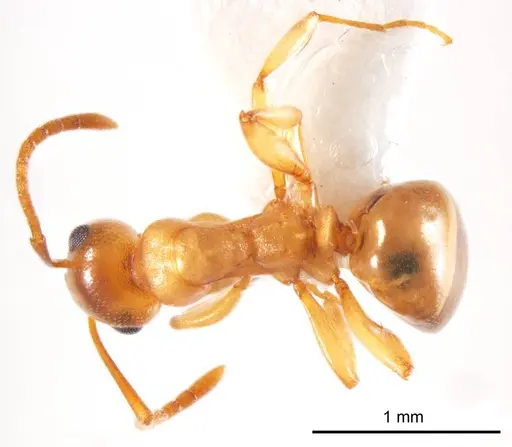
Literature
Loading distribution map...Loading products...