
Stictoponera pertusa
- Sci. Name
- Stictoponera pertusa
- Tribe
- Ectatommini
- Subfamily
- Ectatomminae
- Author
- Lattke, 2004
- Distribution
- Found in 1 countries
Introduction
Stictoponera pertusa is a small ectatommine ant native to Southeast Asia, originally described from Borneo (Sabah) and now confirmed from Sumatra Island . The species is recognized by its swollen mandibular base, translucent clypeal lamella with broadly convex anterior margin, and sharply defined propodeal crests . It inhabits leaf-litter in lowland disturbed forests at elevations of 10-380 m . The dealate queen was described only in 2024,making this one of the most poorly documented ant species in the hobby .
Quick Summary
- Difficulty: Expert
- Origin & Habitat: Southeast Asia, Borneo (Malaysia: Sabah, Sandakan) and Sumatra Island (Indonesia: West Sumatra, Padang) at lowland elevations around 10-380 m [1]. Inhabits leaf-litter in lowland disturbed forests.
- Colony Type: Colony structure is unconfirmed. Only recently discovered as a dealate queen with workers (2024), suggesting small to moderate colony sizes. No data on queen number.
- Size & Growth:
- Queen: Total length not recorded, only head and mesosomal measurements are available (head width ~0.63 mm, mesosomal length ~1.31 mm) [1]. Exact body size unknown.
- Worker: Total length not recorded, only head and mesosomal measurements are available (head width ~0.53-0.55 mm, mesosomal length ~0.95-0.97 mm) [1]. Exact body size unknown.
- Colony: Unknown, no colony size data available.
- Growth: Unknown, no development data exists for this species.
- Development: Unknown, no development data exists. Estimates based on related Ectatomminae suggest 2-4 months at optimal temperature, but this is speculative. (Development timeline is unconfirmed. Related Stictoponera species typically show moderate development rates.)
- Antkeeping:
- Temperature: Based on lowland tropical habitat (10-380 m elevation), keep at 24-28 °C. Maintain stable warmth without temperature fluctuations [1].
- Humidity: Keep the nest substrate consistently moist but not waterlogged. Provide a humidity gradient with a moist nesting area and slightly drier foraging area, mimicking damp forest floor leaf-litter [1].
- Diapause: Unknown, a tropical species from lowland habitats likely does not require formal diapause, but may show reduced activity during cooler periods.
- Nesting: Wild colonies nest in leaf-litter and soil. For captive housing, use a naturalistic setup with moist soil-like substrate, or a well‑humidified plaster or Y‑tong (AAC) nest. Provide material for tunneling and a connected foraging area.
- Behavior: Behavior is undocumented in captivity. Based on the Ectatomminae subfamily, these ants likely have a functional sting used for prey capture and defense. They are expected to be active predatory foragers in the leaf-litter layer. Workers are small (head width ~0.55 mm) so use fine mesh or oil barriers to prevent escapes. Treat as potentially defensive.
- Common Issues: no captive husbandry information exists, this is one of the least‑documented species in the hobby, colony founding is completely unstudied, queen behavior during founding is unknown, diet preferences are unconfirmed, related species are predatory but specific prey acceptance is unknown, tropical origin means temperature control is critical, cannot tolerate cool conditions, queen was only described in 2024,meaning wild colonies are rarely available and virtually no captive breeding has been attempted
Species Background and Identification
Stictoponera pertusa was originally described as Stictoponera pertusa by Lattke in 2004 from specimens collected in Borneo, Malaysia (Sabah) [1]. The species was recently transferred to Stictoponera following phylogenetic revisions of the Ectatomminae subfamily [1]. The name 'pertusa' comes from the Latin word for 'perforated, ' referring to the distinctive foveolate (pitted) sculpturing on the ant's body [2].
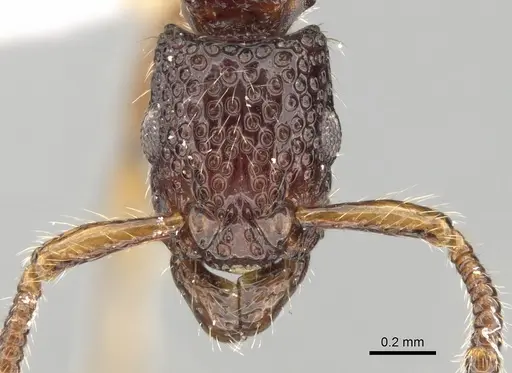
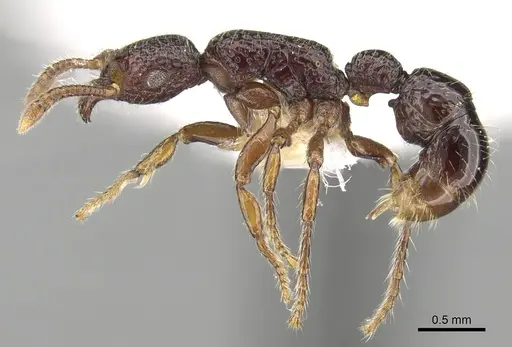
Workers are small ants with a dark brown body and reddish‑brown legs, antennae, and mandibles [1]. The most distinctive identification features include the swollen base of the mandible, a translucent clypeal lamella with broadly convex anterior margin, and a petiole with sharply defined lateral crests marking the propodeal declivity [1]. The subpetiolar process is subquadrate with a sharp posterior angle in lateral view [1].
The dealate queen was only described in 2024,making this one of the most recently documented ant species in the hobby [1]. The queen differs from workers in having a shorter mandible with reduced hair, deeper head sculpture, and a more swollen alitrunk [1]. Exact total length has not been recorded for either caste.
Distribution and Natural Habitat
Stictoponera pertusa is known from two main locations in Southeast Asia: Borneo (specifically Sabah, Malaysia near Sandakan at approximately 10 m elevation) and Sumatra Island, Indonesia (West Sumatra Province near Padang at approximately 380 m elevation) [1]. The Sumatra record represents a significant range extension of approximately 1,500 km from the known Borneo distribution [1].
The species has been collected from leaf‑litter in lowland disturbed forest environments [1]. The collection data from both locations suggests adaptation to warm, humid tropical conditions typical of Southeast Asian lowland rainforests [1].
Temperature and Care Requirements
Based on the species' lowland tropical origin (10-380 m elevation), maintain warm temperatures in the range of 24-28 °C [1]. This is consistent with other Stictoponera and related Ectatomminae species from Southeast Asian habitats. Temperature stability is important, avoid drafts and significant fluctuations.
Humidity should be kept high, mimicking the damp conditions of forest floor leaf‑litter environments [1]. Keep the nesting area consistently moist but not waterlogged, with some slightly drier areas available for the ants to regulate their own humidity preferences. A naturalistic setup with a moisture‑retaining substrate works well.
Since this is a tropical species, no formal diapause is required. However, you may observe reduced activity during periods that simulate cooler seasonal conditions. Maintain year‑round warmth if possible.
Feeding and Diet
The natural diet of Stictoponera pertusa has not been documented. Based on related Ectatomminae behavior, they are likely predatory on small invertebrates found in leaf‑litter. In captivity, offer small live prey such as fruit flies, small crickets, and mealworms. Sugar sources may or may not be accepted, some related species take honey or sugar water, while others are strictly predatory. Start with small live prey items and monitor acceptance. Remove uneaten prey after 24-48 hours to prevent mold in the humid enclosure.
Nesting Preferences
In the wild, Stictoponera pertusa has been collected from leaf‑litter in lowland forest floors [1]. This suggests they nest in soil or decaying organic material at the forest floor level. The dealate queen was found with workers in what appears to be an established colony structure, indicating ground‑nesting colonies.
For captive housing, a naturalistic setup with moist, soil‑like substrate works best. You can also use a well‑humidified plaster or Y‑tong (AAC) nest, but ensure the nesting chambers remain consistently damp. Provide a foraging area connected to the nest chamber. Given the small size of workers, ensure that all formicarium connections and chambers are appropriately scaled to prevent escapes. The colony will likely create tunnels and chambers within moist substrate if given the opportunity.
Behavior and Temperament
The behavior of Stictoponera pertusa in captivity has not been documented. However, you can expect typical ectatommine behavior: these ants are likely active foragers that hunt small prey, and they probably possess a functional sting for defense and subduing prey, as is characteristic of the Ectatomminae subfamily.
Ectatommine ants are generally more defensive than many Formicinae or Myrmicinae species, so approach with caution during colony maintenance. The sting of related species can be painful, though individual reactions vary.
Workers are small (head width ~0.55 mm) and can squeeze through tiny gaps. Use fine mesh, oil barriers, or other standard ant‑proofing methods to prevent escapes during feeding and cleaning.
Frequently Asked Questions
Is Stictoponera pertusa a good species for beginners?
No. Stictoponera pertusa is not recommended for beginners. This is one of the least‑documented ant species in the hobby, the queen was only described in 2024,and virtually no captive husbandry information exists. There are no established care protocols, and finding accurate advice is extremely difficult. Choose a better‑documented species first.
How big do Stictoponera pertusa colonies get?
The maximum colony size is unknown. Only small colony fragments (queen with 2 workers) have been documented from the wild [1]. Based on related Stictoponera species, colonies likely reach several hundred workers at most, but this is an estimate.
What do Stictoponera pertusa ants eat?
Their natural diet is unconfirmed, but based on related Ectatomminae, they are predatory on small invertebrates. In captivity, offer small live prey such as fruit flies, small crickets, and mealworms. Sugar acceptance is uncertain, some related species take it, others do not. Start with live prey and experiment.
Do Stictoponera pertusa ants sting?
Yes, they likely can sting. Stictoponera belongs to the subfamily Ectatomminae, which is part of the Poneroid clade known for having functional stingers. While specific sting potency for this species is undocumented, treat them as potentially capable of stinging and handle with caution.
What temperature do Stictoponera pertusa ants need?
Keep them warm at 24-28°C based on their lowland tropical origin (10-380 m elevation in Borneo and Sumatra) [1]. Temperature stability is important, avoid drafts and significant fluctuations.
How long does it take for Stictoponera pertusa to go from egg to worker?
The development timeline is unconfirmed for this species. Estimates based on related Ectatomminae suggest 2-4 months at optimal temperature, but this is speculative. No direct observations of captive development exist.
Can I keep multiple Stictoponera pertusa queens together?
This is unknown. The colony structure (monogyne vs polygyne) has not been documented in the wild. Combining unrelated queens is not recommended given the complete lack of information about their social structure.
Where is Stictoponera pertusa found in the wild?
They are native to Southeast Asia, specifically Borneo (Malaysia: Sabah) and Sumatra Island (Indonesia: West Sumatra Province) [1]. They live in lowland forest leaf‑litter at elevations from 10-380 m.
Is Stictoponera pertusa rare in the antkeeping hobby?
Extremely rare. This species was only recently described (2004) and the queen was only documented in 2024 [1]. Wild colonies are rarely collected, and virtually no captive breeding has been attempted. Finding a colony for sale would be exceptionally difficult.
Do Stictoponera pertusa ants need hibernation?
No formal diapause is required due to their tropical origin. However, they may show reduced activity during periods that simulate cooler seasonal conditions. Maintain year‑round warmth (24-28°C) for optimal colony health.
Report an Issue
The current care sheet is based fully on literature. See inconsistencies, or something that's incorrect? Please , it will be resolved after review from an admin. Contributing to the blogs tab also helps providing information, to make us be able to further improve the caresheets. Thank you for your support!
References

This caresheet is licensed under CC BY-SA 4.0 .
Community Blogs
CASENT0281849
View on AntWeb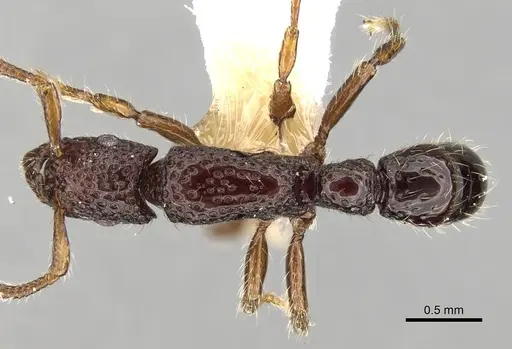
Literature
Loading distribution map...Loading products...