
Stictoponera menadensis
- Sci. Name
- Stictoponera menadensis
- Tribe
- Ectatommini
- Subfamily
- Ectatomminae
- Author
- Mayr, 1887
- Distribution
- Found in 4 countries
Introduction
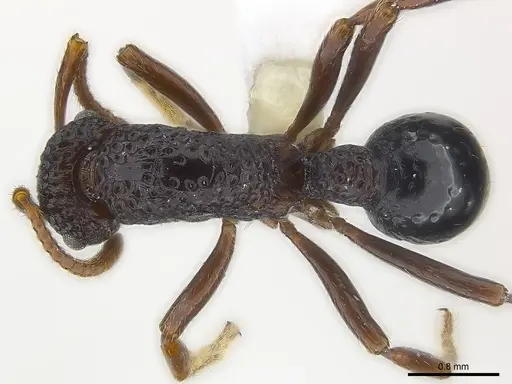
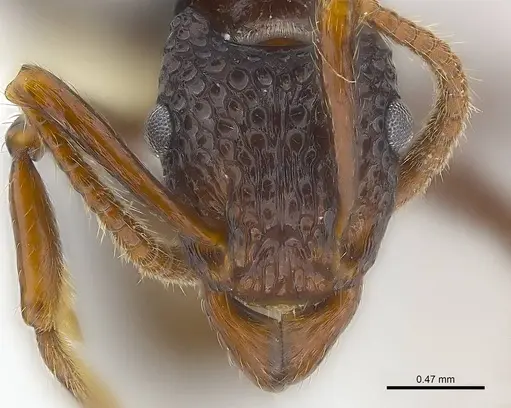
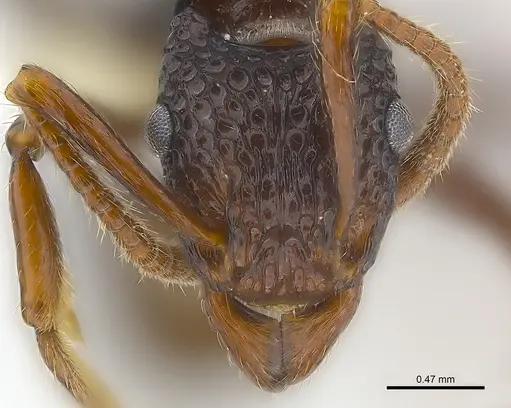
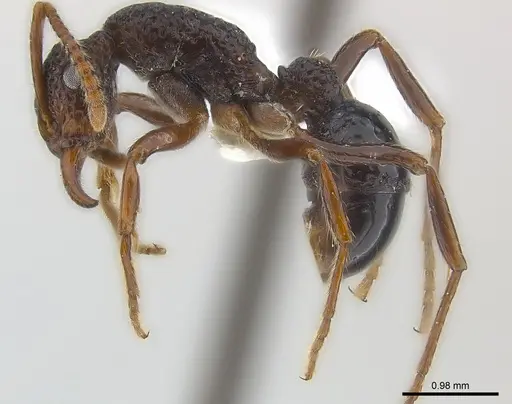
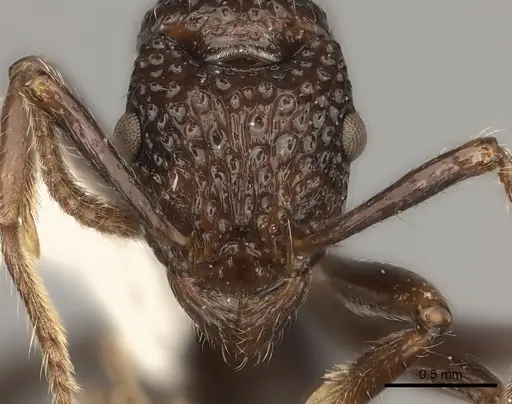
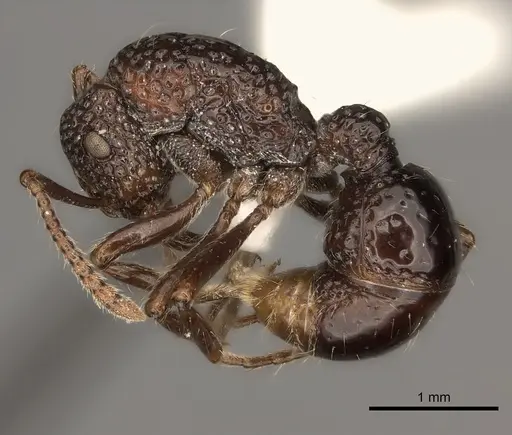
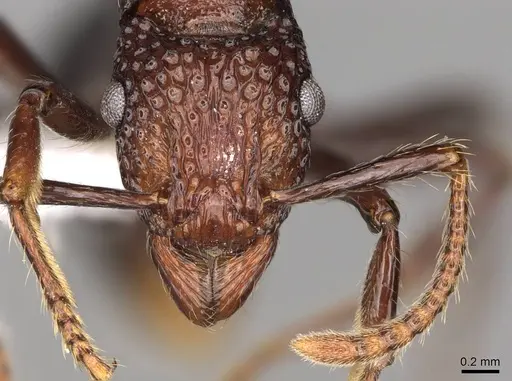
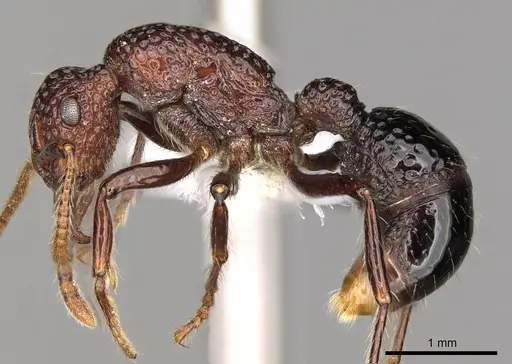
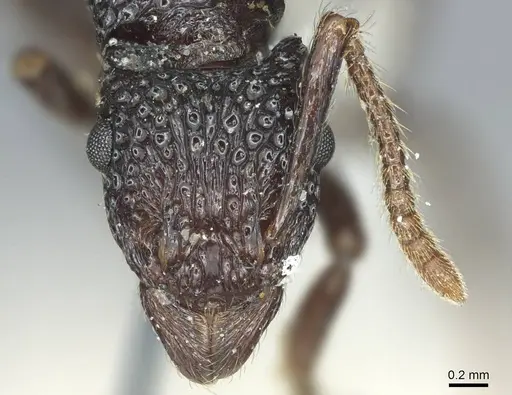
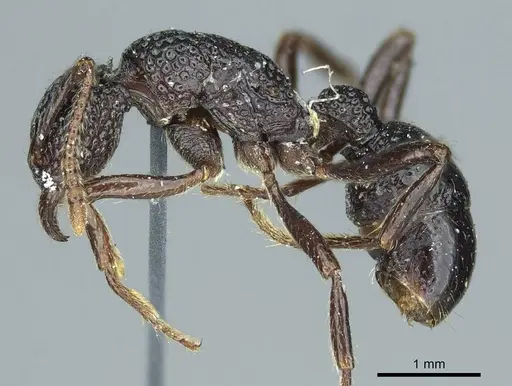
Stictoponera menadensis is a medium-sized ponerine ant native to Southeast Asia and Australasia, found across the Philippines, Indonesia, Malaysia, Thailand, and Papua New Guinea . Worker body length is not recorded in the literature but is inferred from related Stictoponera species at roughly 6-9 mm. They have a distinctive reddish-brown to brown coloration with dense foveolate (pitted) sculpturing on the body and a smooth median strip on the mesonotum . This species lives in mesic (damp) forests, where it forages on foliage and nests in rotting wood, tree fern stems, under moss on rocks, or in soil . What makes S. menadensis stand out is its unusual social structure: most colonies lack a queen and instead reproduce through gamergates, which are mated workers that take over egg-laying . Only about 5% of colonies have a traditional queen, and queenright colonies are monogynous . This makes it a great species to observe complex dominance hierarchies and worker reproduction.
Quick Summary
- Difficulty: Medium
- Origin & Habitat: Southeast Asia and Australasia, Philippines, Indonesia (Sulawesi, Sumatra, Kalimantan), Malaysia (Peninsula, Sabah, Sarawak), Papua New Guinea, Thailand, and parts of India (Assam, West Bengal) [7][2]. Inhabits mesic (damp) lowland dipterocarp forests and is commonly collected from foliage and rotting wood [1][8].
- Colony Type: Facultatively queenless, about 95% of colonies lack a dealate queen and instead have multiple mated workers (gamergates) that reproduce. In queenless colonies, several gamergates share egg-laying (average 5,range 1-14) [9]. When a queen is present, the colony is monogynous [6].
- Size & Growth:
- Queen: Size data unavailable, inferred from Stictoponera genus (~6-8 mm).
- Worker: Size data unavailable, inferred from Stictoponera genus (~6-9 mm).
- Colony: Up to 1153 workers [6], typical colonies average around 100-200 workers [5][9].
- Growth: Moderate
- Development: Not directly studied in this species, based on related Ectatomminae, estimated 6-10 weeks at 25°C. (Development time has not been measured for S. menadensis. Use 25-26°C for best results.)
- Antkeeping:
- Temperature: Keep at 24-28°C. Laboratory colonies were maintained successfully at 25.5±2°C [4].
- Humidity: Keep the nest substrate consistently moist but not waterlogged. Aim for high humidity (70-80%), this species comes from mesic forests. Good ventilation is important to prevent mold.
- Diapause: No, tropical species without a hibernation requirement. Keep warm and active year-round [4].
- Nesting: In the wild they nest in preexisting cavities in trees, rotting wood, tree fern stems, and under moss on rocks [3]. In captivity use a naturalistic setup with multiple chambers, plaster or soil nests work well. Provide vertical climbing surfaces and damp substrate.
- Behavior: Generally calm but defensive if threatened. They have a functional sting (subfamily Ectatomminae) and will use it on prey or to defend themselves. Foraging is opportunistic on vegetation, workers use chemical trails from the Dufour gland to recruit nestmates [10]. They are predatory and need live prey. Medium escape risk, use standard barriers like fluon or oil.
- Common Issues: colony can crash if too many gamergates die, ensure multiple mated workers remain, as the colony relies on them for reproduction., requires live prey regularly, fruit flies, small crickets, or termites must be offered every few days, they do not thrive on sugar alone., high humidity can lead to mold if ventilation is poor, balance moisture with airflow., social structure is complex, stress from frequent disturbance can disrupt egg-laying and dominance hierarchies., workers sometimes immobilize and kill nestmates that develop ovaries inappropriately, this is normal policing, not a sign of colony failure.
Social Structure and Gamergates
Stictoponera menadensis has one of the most unusual social structures among ants. Roughly 95% of colonies lack a queen and instead rely on gamergates, mated workers that take over egg-laying [5]. In these queenless colonies, multiple gamergates (usually 1-14,average 5) reproduce together [9]. Only about 5% of colonies have a dealate queen, these queenright colonies are monogynous (single queen), and she is often smaller than many workers [6].
Dominance hierarchies run deep in this species. Gamergates and virgin workers use antennal boxing to sort out ranks, gamergates box other dominants most of the time (61% of aggressive acts go toward other dominants) [9]. If gamergates are removed, virgin workers start intense dominance fights within 12 hours, and after a few weeks some start sexual calling (a pheromone-releasing posture) to attract foreign males [9][11]. Once mated, they become new gamergates.
For you as a keeper, this means your colony may never have a 'queen' you can point to. Instead, several workers will lay eggs. That is normal. The colony can split by budding when it gets large enough [3].
Feeding and Diet
These ants are predators. In the wild they hunt small invertebrates like termites, systematically searching leaves and branches [10]. In captivity, offer live prey 2-3 times per week, fruit flies, small crickets, or termites work well [4]. They also take sugar water or honey as a supplement, but protein is essential for brood development.
When a worker finds a pile of prey, she gaster-taps a trail from her Dufour gland (which contains 8-lactones and methyl 6-methylsalicylate [12]) to recruit others [10]. You may see many workers rushing out after you place food, that's normal recruitment behavior. They are also known to defend food sources aggressively against other ants [10].
Nesting Requirements
In nature, Stictoponera menadensis nests in preexisting cavities in trees, rotting wood, tree fern stems, under moss on rocks, and even in soil (depending on the population) [3]. They seal the nest entrance with a lining of organic material. Some populations (e.g., Ulu Gombak) nest in the ground, while Sulawesi populations are more arboreal [3].
For captive care, a plaster or soil nest with multiple chambers works well. Keep the substrate damp but not waterlogged. Because they are often arboreal in the wild, provide vertical structures like cork bark or twigs in the outworld. Colony growth happens by budding/fission, so your colony may naturally split into two groups over time [5].
Temperature and Humidity
As a tropical forest dweller, this species needs warmth and moisture. Laboratory colonies thrived at 25.5±2°C with 75±15% relative humidity [4]. In practice, keep the nest at 24-28°C and the substrate moist. Avoid letting the nest dry out, you can connect a small water reservoir or use a hydration system. Condensation on the nest walls is a good sign of proper humidity. No hibernation is needed, keep conditions stable all year [4].
Worker Reproduction and Trophic Eggs
One of the most interesting parts of this species' biology is how workers produce different kinds of eggs. Virgin workers (not mated) can lay eggs, but they are only trophic eggs, small, round, and without a micropyle, so they never develop [4]. These trophic eggs (0.5 × 0.5 mm) are fed to larvae as a nutritious supplement [4][11]. Only mated workers (gamergates) lay true reproductive eggs that are elongate (1.1 × 0.4 mm) and can develop [4].
Gamergates lay about five times more eggs per day than virgin workers (1.4 vs 0.3 eggs/day) [4]. The colony practices worker policing: sterile workers attack and immobilize any worker that starts developing ovaries too much or tries to lay reproductive eggs without being mated [11]. This keeps the reproductive system in check. If you see workers grabbing and holding another worker for hours or days, that's normal policing, not a fight.
Behavior and Colony Dynamics
The social life of S. menadensis is full of complex interactions. In queenless colonies, gamergates perform ritual antennal boxing to maintain their status, but they rarely box infertile workers [9]. When a gamergate stops laying eggs, she may be attacked and even killed by other workers [9]. If all gamergates are removed, virgin workers go through weeks of dominance fighting, after which some begin 'sexual calling', lifting the gaster and releasing pheromones to attract foreign males [9]. Males that mate with these callers become new gamergates, inbreeding is avoided because nest-mate males show no interest [9].
Egg brushing behavior has been observed, both gamergates and non-reproductive workers use a cluster of hairs on the abdomen tip to brush eggs, likely spreading a recognition chemical [13]. The species also has Wolbachia (A strain) infections in Sulawesi populations [14].
For keepers, expect to see regular dominance interactions. The colony is not dangerous (sting is mild to humans), but the internal politics are intense. This is a fascinating species to watch if you have some ant-keeping experience.
Frequently Asked Questions
Does Stictoponera menadensis have a queen?
Most colonies (about 95%) lack a traditional queen. Instead they use gamergates, mated workers that reproduce. Only about 5% of colonies have a dealate queen. Both situations are normal.
What are gamergates in ants?
Gamergates are mated workers that take over reproduction in place of a queen. In S. menadensis, they are workers that have mated with foreign males and developed functional ovaries. They lay eggs that develop into new workers or males. Usually 1-14 gamergates share egg-laying in a colony [9].
How long does it take for eggs to develop into workers?
This has not been studied for this species. Based on related Ectatomminae, expect 6-10 weeks from egg to worker at around 25°C. Monitor brood development in your own colony.
What do Stictoponera menadensis ants eat?
They are predators. In the wild they hunt termites and other small arthropods. In captivity, feed live fruit flies, small crickets, or termites 2-3 times per week. They also take sugar water or honey as a supplement [4][10].
Do Stictoponera menadensis ants sting?
Yes, they have a functional sting (subfamily Ectatomminae) and can inject venom. However, they are not aggressive toward humans unless handled roughly. The sting is not medically significant for most people.
How big do colonies get?
Colonies typically contain 100-200 workers, but can reach up to 1153 workers in some populations [6]. The number of gamergates ranges from 1 to 14,averaging 5 [9].
Do they need hibernation or diapause?
No, this is a tropical species. Maintain warm temperatures (24-28°C) and high humidity all year. They do not need a cooling period.
What temperature and humidity do they need?
Keep them at 24-28°C and 70-80% humidity. Laboratory colonies were kept at 25.5±2°C and 75±15% humidity [4]. Keep the nest substrate moist but well drained.
Can I keep multiple queens together?
In nature, queenright colonies are monogynous (one queen). Gamergate colonies are polygynous with multiple mated workers. Combining unrelated foundresses has not been studied and is not recommended. If you get a colony, it likely already contains several gamergates.
Why are workers attacking each other?
That is normal dominance behavior. Workers use antennal boxing to establish rank. They also practice worker policing, sterile workers attack any worker that develops ovaries too much or tries to lay reproductive eggs without being mated [11]. This is part of their social regulation.
What size nest do they need?
Start a new colony in a test tube setup. When it reaches about 30-50 workers, move to a small multi-chamber plaster or soil nest. Because they are arboreal in the wild, add vertical surfaces and damp substrate.
Are these ants good for beginners?
This is a medium-difficulty species. The complex social structure (gamergates instead of queens) and specific humidity/temperature needs make it better for keepers with some experience. They also require a steady supply of live prey.
Report an Issue
The current care sheet is based fully on literature. See inconsistencies, or something that's incorrect? Please , it will be resolved after review from an admin. Contributing to the blogs tab also helps providing information, to make us be able to further improve the caresheets. Thank you for your support!
References

This caresheet is licensed under CC BY-SA 4.0 .
Community Blogs
CASENT0179964
View on AntWeb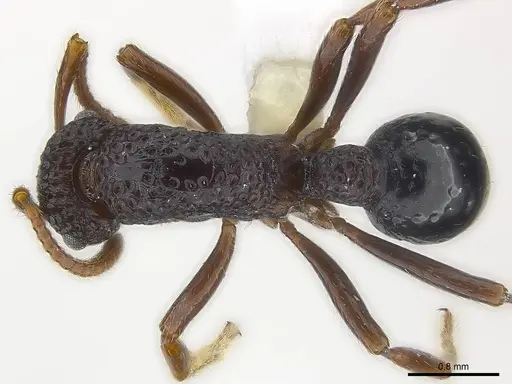
CASENT0217485
View on AntWeb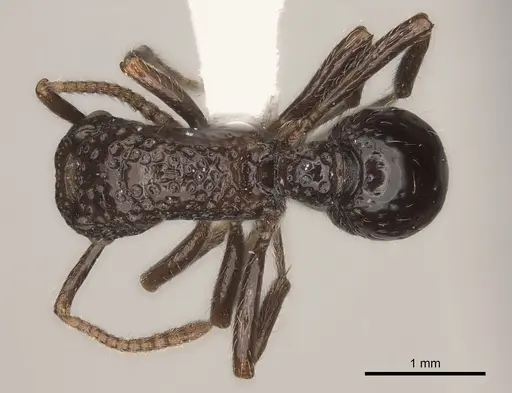
CASENT0281531
View on AntWeb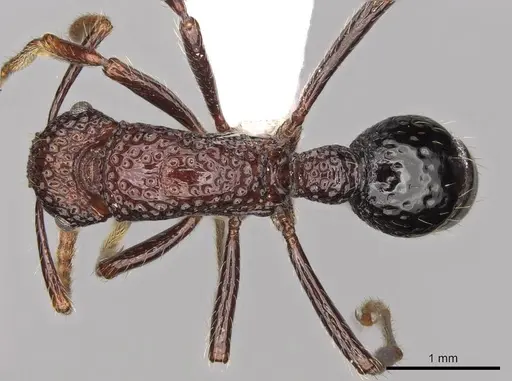
CASENT0915913
View on AntWeb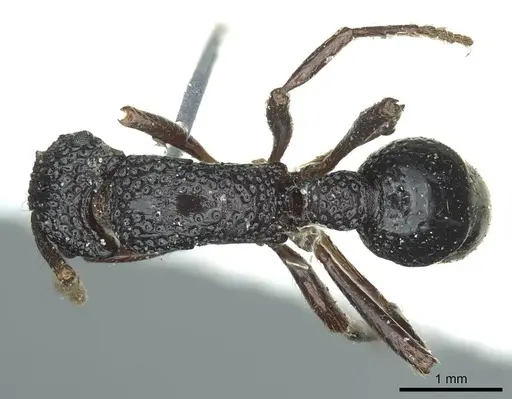
Literature
Loading distribution map...Loading products...