
Stictoponera chapmani
- Sci. Name
- Stictoponera chapmani
- Tribe
- Ectatommini
- Subfamily
- Ectatomminae
- Author
- Brown, 1958
- Distribution
- Found in 1 countries
Introduction
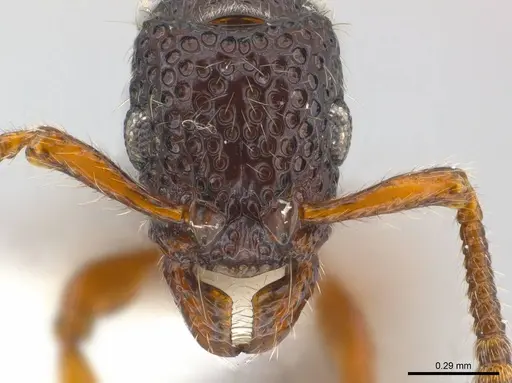
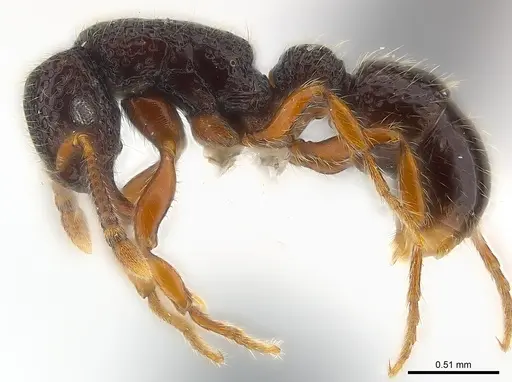
Stictoponera chapmani is a small ant from Southeast Asia, with a body color ranging from ferruginous brown to brown, and lighter legs and antennae. Workers have a head length of 0.60–0.84 mm (total length estimated around 4–7 mm from genus patterns). Queens are known but only slightly larger than workers. This species was originally described as Gnamptogenys chapmani and moved to Stictoponera in 2022 . Their colony structure, founding behavior, and natural history are largely unstudied, making them a mysterious species in the ant world. They are known from the Philippines, Indonesia, Malaysia, Thailand, and Vietnam, with the type locality being at around 600 m elevation in the Cuernos Mountains, Philippines . The genus Stictoponera is predatory, but specific hunting behavior for this species hasn't been documented.
Quick Summary
- Difficulty: Expert
- Origin & Habitat: Southeast Asia – Philippines, Indonesia, Malaysia, Thailand, Vietnam. Type locality at 600 m elevation in Cuernos Mountains, Negros Oriental, Philippines. Inhabits forested areas of the Indomalaya region [1].
- Colony Type: Colony structure is unconfirmed. Single-queen colonies are possible based on the queen description, but polygyny and colony size data are lacking [1].
- Size & Growth:
- Queen: Size data unavailable – only head length measurements exist (0.78 mm HL). Total length estimated ~7–9 mm inferred from genus patterns [1].
- Worker: Size data unavailable – only head length measurements exist (0.60–0.84 mm HL). Total length estimated ~4–7 mm inferred from genus patterns [1].
- Colony: Unknown. Based on the related species Holcoponera cribrata, colonies may reach several hundred workers [2].
- Growth: Unknown – no direct observations. Based on related Ectatomminae species, expect moderate growth.
- Development: Estimated 6–10 weeks based on related Ectatomminae species. No direct data for this species [2]. (Development speed depends heavily on temperature. No specific data for this species.)
- Antkeeping:
- Temperature: Since it comes from tropical Southeast Asia, keep at warm temperatures (roughly 24–28°C). Exact needs unknown – start around 25°C and adjust based on activity. Avoid drops below 20°C [1].
- Humidity: High humidity is needed – the natural habitat is humid tropical forest. Keep nest substrate moist but not waterlogged. Use a humidity gradient (one moist area, one drier area) [1].
- Diapause: Unlikely needed – tropical species without cold winters. A slight winter temperature drop (2–3°C) might be natural but is not required [1].
- Nesting: Natural nesting likely in rotting wood or soil in forests. In captivity, use a moist plaster or Y-tong nest, or a naturalistic setup with damp substrate. Ensure high ambient humidity and good ventilation [1].
- Behavior: Stictoponera chapmani belongs to the Ectatomminae subfamily, which has a functional sting used for prey capture and defense. No specific behavioral data exists for this species. Based on related species, they are likely solitary foragers hunting small invertebrates. Temperament is probably moderate – not aggressive unless disturbed. Workers are small (estimated 4–7 mm) and can escape through tiny gaps, so use fine mesh (under 0.5 mm) on all openings.
- Common Issues: limited availability – this species is rarely found in the hobby due to its restricted Southeast Asian distribution, escape prevention is critical – workers are small and can fit through standard mesh barriers, no established care guidelines – keepers must experiment and adapt husbandry from scratch, humidity control is essential – dry conditions will quickly kill the colony, predatory diet may be tricky – they likely need live micro-prey, but specific preferences are unknown, lack of captive breeding records means most care is speculative
Housing and Nest Setup
Since natural nesting preferences for Stictoponera chapmani are unstudied, you'll need to experiment with setups. Based on related species in the genus, a humid nest with moisture-retaining material (like plaster or Y-tong) is a good start. Provide a substrate that stays consistently moist but not waterlogged, and include a water source (e.g., a test tube with cotton) to boost humidity. Because workers are tiny (estimated 4–7 mm), your outworld and nest must be escape-proof – use fine mesh with gaps under 0.5 mm, or seal all joints with PTFE and oil barriers. Nest chambers should have a slight ventilation gradient: one side open to airflow, the other sealed to maintain high humidity. Avoid acrylic nests, instead, use plaster, Y-tong, or a soil setup [1].
Feeding and Diet
No specific feeding data exists for Stictoponera chapmani. As a member of the predatory Ectatomminae subfamily, it likely hunts small live invertebrates. Based on related species, try offering tiny prey like fruit flies, springtails, pinhead crickets, and small roach nymphs. They may also accept dead prey if movement triggers hunting, but live prey is more natural. Offer a drop of honey or sugar water occasionally, but don't rely on it as a staple. Feed every 2–3 days and remove uneaten food to prevent mold. The colony's small worker size means prey must be appropriately sized – very small insects only. Be prepared to experiment with different food sources [2].
Temperature and Seasonal Care
Keep your Stictoponera chapmani colony warm and stable, ideally between 24–28°C. Since this species comes from tropical Southeast Asia, it's adapted to year-round warmth. Use a low-wattage heat cable on one side of the nest to create a gradient – this lets the ants choose their preferred temperature. Avoid heating from underneath, which dries the nest. There's no evidence they need a winter diapause, but a slight temperature drop (2–3°C) during the cooler months might be natural. Never let temperatures fall below 20°C, as prolonged cool conditions can kill the colony. Monitor activity: if workers become sluggish, increase warmth [1].
Behavior and Colony Dynamics
Stictoponera chapmani likely uses its sting to subdue prey and defend the colony (as is typical for Ectatomminae). Workers probably forage individually rather than recruiting nestmates, as seen in related species. The colony structure is unknown – it may be monogyne or polygyne. Queens are described but appear to be barely larger than workers [1]. No males have been collected, suggesting either very seasonal production or rarity. Escape risk is high due to the small worker size, use fine mesh barriers. Temperament is probably not aggressive unless you disturb the nest directly. Overall, this is a hands-off species best observed through the nest walls [1].
Handling and Temperament
Do not handle this ant. Its small size makes it easy to accidentally crush, and they possess a functional sting that can cause mild irritation. Observe the colony without disturbing the nest. Use red light or a dark environment to reduce stress if the ants seem nervous. When maintaining the setup, work slowly and carefully – quick movements can alarm the colony. If you need to move the ants, wait until most workers are in the outworld and then gently transfer the nest pieces. Always keep a fine brush and aspirator handy for safe transfers [1].
Frequently Asked Questions
How long does it take for Stictoponera chapmani to develop from egg to worker?
The exact timeline isn't documented. Based on related Ectatomminae species, expect roughly 6–10 weeks from egg to worker at optimal temperatures (24–28°C). The first workers (nanitics) will likely be smaller than mature workers. Be patient – this species appears to grow slowly [2].
Can I keep Stictoponera chapmani in a test tube setup?
A test tube can work for a founding queen, but keeping humidity correct is tricky. The tiny workers can drown if water accumulates. Use a test tube with a damp cotton plug and a water reservoir at the far end. Once the colony has a few workers, move them to a proper plaster or Y-tong nest that can hold better humidity. High humidity (70–85%) is critical for this tropical species [1].
Do Stictoponera chapmani ants sting?
Yes, they have a functional sting, as is typical for the Ectatomminae subfamily. It's used for hunting and defense. The sting is not dangerous to humans but can cause mild, local irritation. This is a hands-off species – watch them, don't touch them.
What do Stictoponera chapmani eat?
They are predators. Offer small live prey like fruit flies, springtails, pinhead crickets, and tiny roach nymphs. They may also accept dead insects if moving, but live is better. A drop of honey or sugar water can be offered occasionally. Feed small amounts every 2–3 days and remove uneaten food to prevent mold [2].
Are Stictoponera chapmani good for beginners?
No. This species is not recommended for beginners. Limited availability, no established care guidelines, tiny size (escape risk), high humidity needs, and an unknown diet make it an expert-level species. Start with common, well-documented species like Lasius niger or Camponotus nicobarensis first [1].
How big do Stictoponera chapmani colonies get?
Colony size is unknown. Based on the related Holcoponera cribrata, colonies can reach several hundred workers. Expect slow growth – it may take 1–2 years to get a noticeable colony. Maximum colony size in the wild is unstudied [2].
Do Stictoponera chapmani need hibernation?
No, they come from tropical Southeast Asia and don't experience cold winters. A slight drop in temperature (2–3°C) during winter may be natural but isn't necessary. Keep temperatures above 20°C year-round [1].
Why are my Stictoponera chapmani dying?
The most likely causes are: low humidity (below 70%), temperatures outside 24–28°C, inadequate live food, escape through gaps, or mold from overwatering. Check humidity first – it's the most common killer. This species hasn't been widely kept, so you'll need to experiment. If workers are dying, review your setup and adjust gradually [1].
When will Stictoponera chapmani produce alates (reproductives)?
No alates have been documented in the wild – males are unknown. It may be seasonal or the colony needs to be old and large. In captivity, expect several years before any alate production, if it happens at all. Provide optimal conditions and hope for the best [1].
Can I keep multiple Stictoponera chapmani queens together?
We don't know if this species is monogyne or polygyne. It's safest to assume single-queen colonies until proven otherwise. If you have multiple foundresses, keep them separate. Do not add a second queen to an established colony [1].
Report an Issue
The current care sheet is based fully on literature. See inconsistencies, or something that's incorrect? Please , it will be resolved after review from an admin. Contributing to the blogs tab also helps providing information, to make us be able to further improve the caresheets. Thank you for your support!
References

This caresheet is licensed under CC BY-SA 4.0 .
Community Blogs
CASENT0179974
View on AntWeb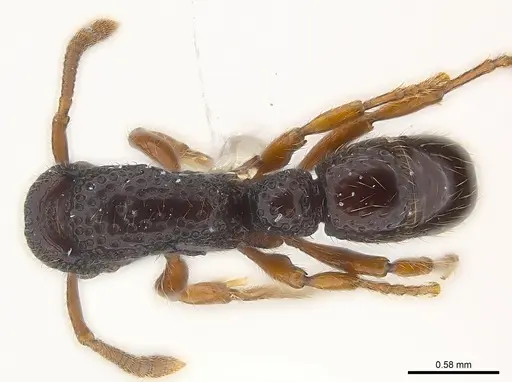
Literature
Loading distribution map...Loading products...