
Stictoponera binghamii
- Sci. Name
- Stictoponera binghamii
- Tribe
- Ectatommini
- Subfamily
- Ectatomminae
- Author
- Forel, 1900
- Distribution
- Found in 5 countries
Introduction
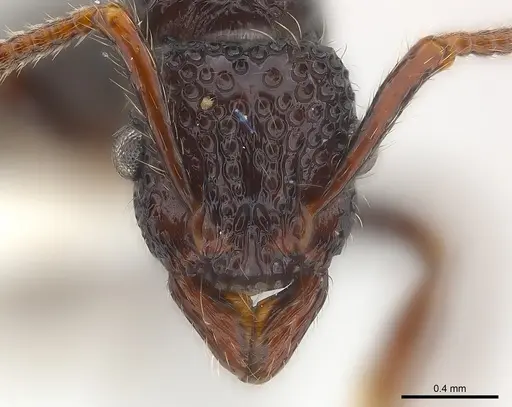
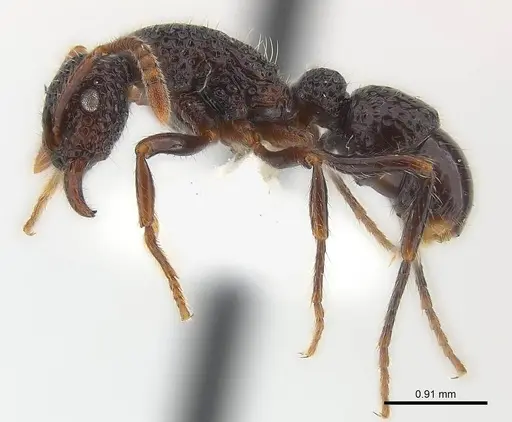
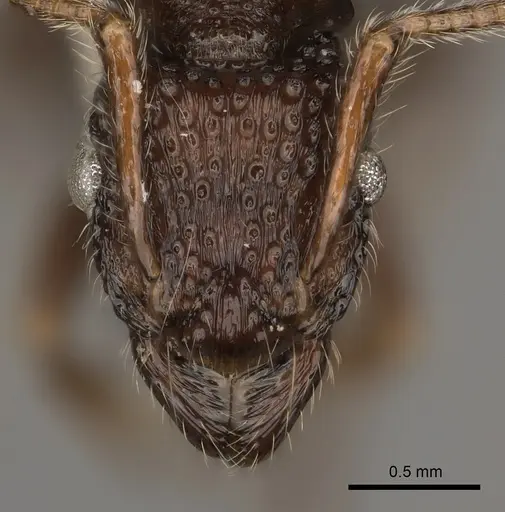
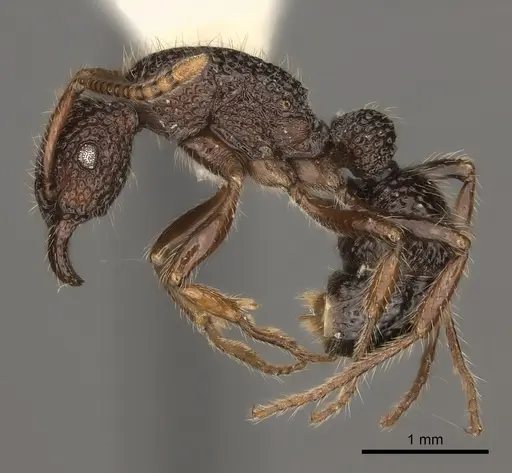
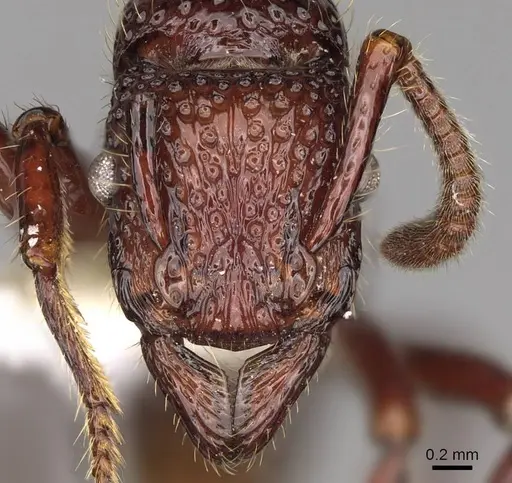
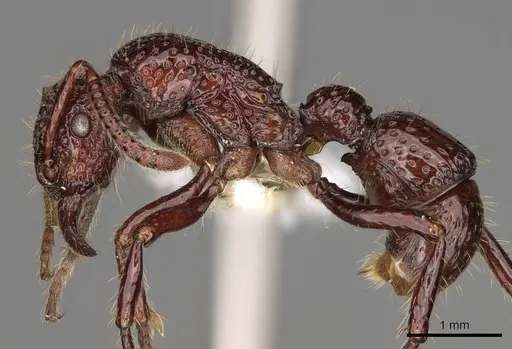
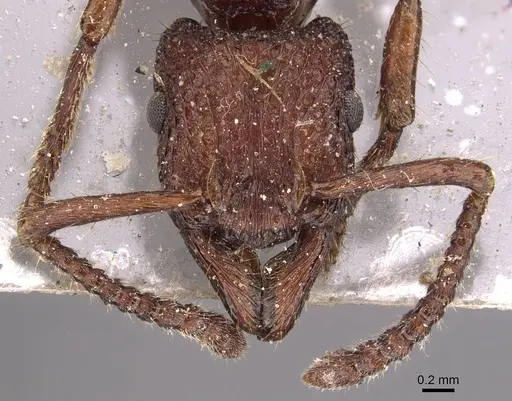
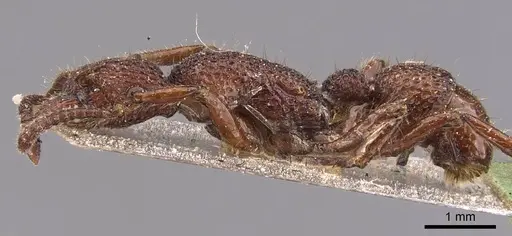
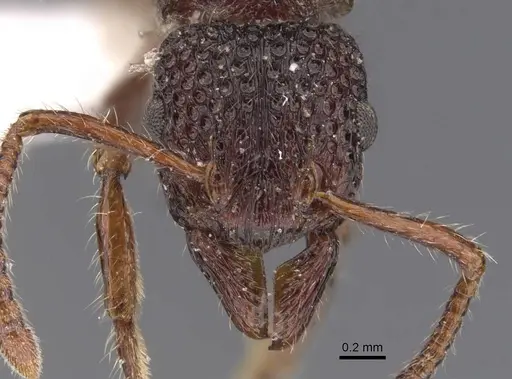
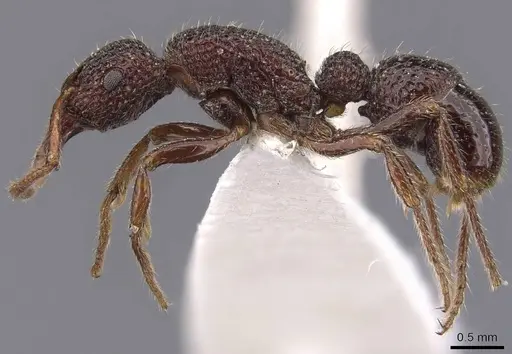
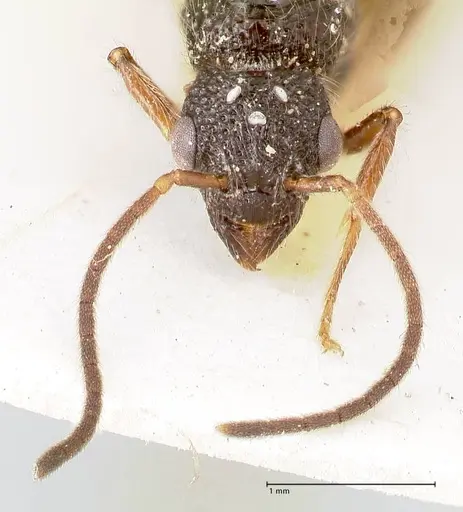
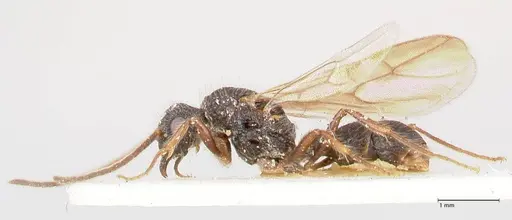
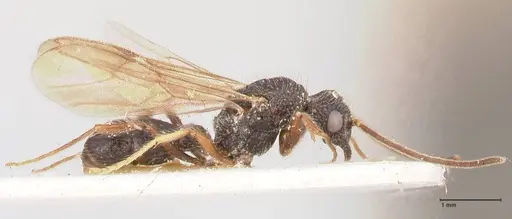
Stictoponera binghamii is a medium-sized ant from the subfamily Ectatomminae. Workers are around 4.1 mm in total length, with a dark brown to ferruginous body . The head is subquadrate with broadly convex and nearly parallel side margins, and the upper body has a broadly convex curve when viewed from the side . This species has the widest distribution of any Stictoponera, ranging from India through Southeast Asia to Papua New Guinea, including China, the Philippines, and many islands in between . These ants live in mesic (moderately damp) forests from lowlands up to about 1500 m elevation, including dipterocarp-mixed forests and pine-oak forests in northern Thailand . They nest in the ground and are often found in rotting wood, collected by sifting leaf litter . Across their range, two distinct morphotypes exist: larger specimens with more strigulae on the antennal scapes from western Malaysia to Borneo and the Philippines, and smaller forms similar to Indian specimens from India to Thailand .
Quick Summary
- Difficulty: Medium
- Origin & Habitat: Native from India to Papua New Guinea, including China, Thailand, Malaysia, Indonesia, Philippines, Laos, Vietnam, Myanmar, Singapore, and Papua New Guinea. Inhabits mesic forests from lowlands to 1500 m elevation, including dipterocarp-mixed and pine-oak forests [2].
- Colony Type: Colony structure is not documented. It is unknown whether colonies have one queen (monogyne) or multiple queens (polygyne). No ergatoid (wingless replacement queen) observations have been reported.
- Size & Growth:
- Queen: size data unavailable (total length not recorded)
- Worker: ~4.1 mm total length [1]
- Colony: Unknown, no colony size data available in research
- Growth: Unknown, development timeline not documented
- Development: Unconfirmed, no direct data. Based on related Ectatomminae species, expect 6-10 weeks at optimal temperatures. (Development timeline is not directly studied. Related species take roughly 6-10 weeks from egg to worker at tropical temperatures.)
- Antkeeping:
- Temperature: Keep at 24-28°C based on their tropical forest habitat. They come from mesic forests up to 1500 m elevation, so they prefer warm, stable conditions without major swings.
- Humidity: Moderate to high. These ants live in mesic forest environments. Keep the nest substrate consistently moist but not waterlogged, with some drier areas available for the ants to choose.
- Diapause: No, as a tropical species from Southeast Asia, they do not need hibernation or winter dormancy. Keep temperatures consistent year-round.
- Nesting: Ground-nesting species found in rotting wood and forest floor habitats [3][4]. In captivity, use a naturalistic setup with moist soil, or a Y-tong (AAC), plaster, or 3D-printed nest with moisture chambers. They prefer dark, tight chambers that mimic their natural rotting wood environment. Avoid dry, open nests.
- Behavior: Temperament is not well-documented, but Ectatomminae ants have functional stingers and may use them when disturbed. They are ground-nesting ants that forage in leaf litter. Escape risk is moderate, workers are about 4 mm, so they can fit through standard gaps, use standard escape barriers like fluon.
- Common Issues: lack of published captive care information makes husbandry uncertain, ground-nesting species may be sensitive to substrate moisture, avoid both drying out and waterlogging, tropical species need consistent warmth year-round, temperature drops can stress the colony, no documented colony size means keepers should not expect rapid growth, limited diet information, leaf litter foraging suggests they need small live prey, but exact preferences are unknown
Housing and Nest Preferences
Stictoponera binghamii nests in the ground, often in rotting wood on the forest floor [3][4]. In captivity, set up a naturalistic nest with moist soil or use a Y-tong (AAC), plaster, or 3D-printed nest that has chambers for holding moisture. The substrate should stay damp but not waterlogged, think forest floor, not swamp. These ants prefer dark, tight chambers that mimic their natural rotting wood habitat. Avoid tall, open spaces. Escape prevention is important: workers are about 4 mm, so they can squeeze through small gaps. Use fluon on test tube rims and make sure all connections are tight.
Feeding and Diet
Based on their habitat and related Ectatomminae species, Stictoponera binghamii is likely predatory or omnivorous, hunting small invertebrates like springtails, mites, and other micro-arthropods in leaf litter. They may also scavenge. In captivity, offer small live prey such as fruit flies, pinhead crickets, and mealworms. They might accept commercial protein ant food as well. Sugar sources like honey or sugar water can be offered but should not be the main food. Feed every 2-3 days with small prey, removing leftovers to prevent mold. Their exact preferences in captivity are unknown, so some experimentation is needed. [2]
Temperature and Care
As a tropical species, Stictoponera binghamii needs warm, stable temperatures. Keep the nest at 24-28°C, avoiding drops below 22°C or spikes above 30°C. Their natural habitat in mesic forests up to 1500 m elevation suggests they can handle some variation but prefer the warmer end. No hibernation is needed, keep temperatures consistent year-round. A heating cable on one side of the nest can create a gentle gradient. If workers cluster near heat, increase temperature slightly, if they avoid it, reduce heat. Humidity should be moderate to high (60-80%), similar to forest floor conditions. Keep the substrate moist but not saturated, and provide a drier area so the ants can choose. [2]
Behavior and Temperament
Stictoponera binghamii belongs to Ectatomminae, a subfamily of ants with functional stingers. Their exact temperament is undocumented, but related species can be defensive when their nest is disturbed. Handle with care and avoid unnecessary disturbance. These ants forage in leaf litter and are likely more active during cooler parts of the day. Their small size (about 4 mm) means they can escape through standard gaps, so use fluon barriers and tight lids. Chromosome number is n=22 (haploid) in Malaysian populations [5], and they have a subepithelial gland [6][7], though its function is not well understood.
Frequently Asked Questions
How long does it take for Stictoponera binghamii to go from egg to worker?
The exact development time has not been documented. Based on related Ectatomminae species, expect about 6-10 weeks from egg to first worker at optimal tropical temperatures (around 26°C). The first workers (nanitics) may be smaller than mature workers.
What do Stictoponera binghamii eat?
Based on their leaf litter habitat and related species, they are likely predatory or omnivorous, feeding on small invertebrates. In captivity, offer small live prey like fruit flies, pinhead crickets, and mealworms. They may also accept commercial protein foods.
Do Stictoponera binghamii sting?
Yes, they likely can sting. They belong to Ectatomminae, a subfamily with functional stingers. However, they are not aggressive toward humans and will only sting if threatened or handled roughly.
Are Stictoponera binghamii good for beginners?
This species is rated Medium difficulty. While not the hardest, there is little captive care information available, so you may need to experiment. They need tropical conditions (24-28°C) year-round and a naturalistic setup. If you have experience with ground-nesting tropical ants, this could work.
Can I keep multiple queens together?
Colony structure (monogyne vs polygyne) is unknown. Until more information is available, it is not recommended to house multiple unrelated queens together, as fighting is likely.
What size colony does Stictoponera binghamii reach?
Maximum colony size is unknown, no research documents wild colony sizes. Based on related Ectatomminae species, colonies likely reach at most a few hundred workers, but this is an estimate.
Do Stictoponera binghamii need hibernation?
No. As a tropical species, they need consistent warm temperatures year-round. Do not expose them to cold or attempt to cool them for winter.
What type of nest is best for Stictoponera binghamii?
A naturalistic setup with moist soil, or a Y-tong (AAC), plaster, or 3D-printed nest with moisture chambers works best. They are ground-nesting ants found in rotting wood, so they prefer dark, tight chambers. Keep the substrate consistently moist.
Why are my Stictoponera binghamii dying?
Since captive care is undocumented, we can only guess. Common problems likely include: temperature too low (below 22°C), substrate too dry, or stress from disturbance. Ensure warm, humid conditions and minimize nest disturbances. Wild-caught colonies may carry parasites that can cause mortality.
Where is Stictoponera binghamii found in the wild?
This species has the widest distribution of any Stictoponera, from India through Myanmar, Thailand, Laos, Vietnam, Malaysia (Peninsula, Sabah, Sarawak), Indonesia (Kalimantan, Sumatra, Sulawesi), the Philippines, China, and Papua New Guinea [2]. They inhabit mesic forests from lowlands to 1500 m elevation.
Report an Issue
The current care sheet is based fully on literature. See inconsistencies, or something that's incorrect? Please , it will be resolved after review from an admin. Contributing to the blogs tab also helps providing information, to make us be able to further improve the caresheets. Thank you for your support!
References

This caresheet is licensed under CC BY-SA 4.0 .
Community Blogs
CASENT0179977
View on AntWeb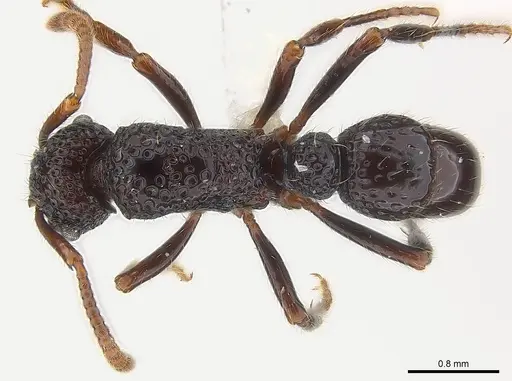
CASENT0217482
View on AntWeb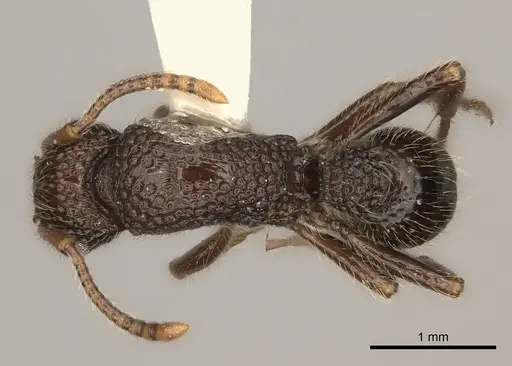
CASENT0281518
View on AntWeb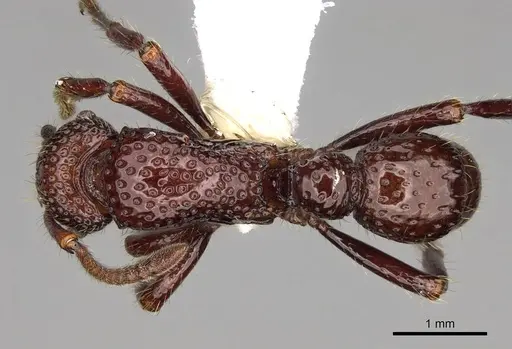
CASENT0905738
View on AntWeb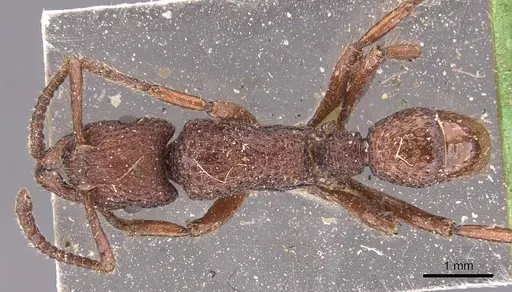
CASENT0907195
View on AntWeb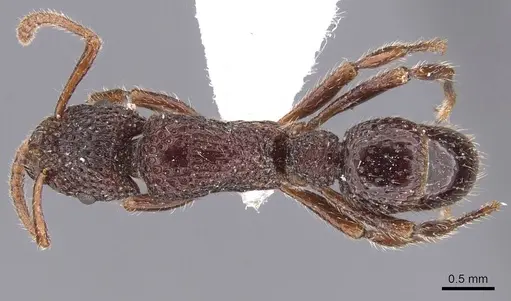
FOCOL0867
View on AntWeb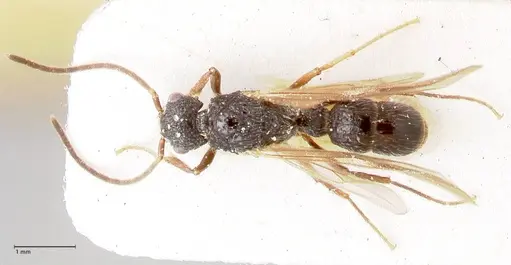
Literature
Loading distribution map...Loading products...