
Stenamma zanoni
- Sci. Name
- Stenamma zanoni
- Tribe
- Stenammini
- Subfamily
- Myrmicinae
- Author
- Rigato, 2011
- Distribution
- Found in 2 countries
Introduction
Stenamma zanoni is a medium-sized ant species from the southern Alps, found only in northern Italy and southern Switzerland . Workers are 4.2-4.7 mm and have a brown color with a rusty tinge, plus unusual standing hairs on the legs and antennae that stick out above the normal fuzz . The species was formally described in 2011,and queens have never been collected . Almost nothing is known about its colony structure, founding behavior, or captive care needs.
Quick Summary
- Difficulty: Expert
- Origin & Habitat: Known only from northern Italy (Friuli Venezia Giulia, Lombardy) and southern Switzerland (Canton Ticino), with a recent record from Corsica [1][2]. The Swiss site is at about 950 m elevation [1]. The region is an extratropical mountain area at roughly 44.50°N [3], with cold winters and moderate summers.
- Colony Type: Unknown, queens have never been collected, so social structure (single‑queen or multi‑queen) is unconfirmed [1]. Related European Stenamma species are thought to be monogyne, but this is not confirmed for S. zanoni.
- Size & Growth:
- Queen: Unknown, queens have never been collected or described [1]
- Worker: 4.2-4.7 mm [1]
- Colony: Unknown, no colony size data exists
- Growth: Unknown, probably slow, based on related species
- Development: Unknown, no development data exists. Based on related Stenamma species and temperate climate, roughly 8-12 weeks at optimal temperature. (This is a rough inference from genus‑level patterns. Direct data is needed for accurate guidance.)
- Antkeeping:
- Temperature: Unconfirmed, no thermal studies exist. Given the Alpine distribution (44.50°N), they likely tolerate cool conditions. As a starting point, keep at 15-22 °C and watch colony response [3].
- Humidity: Unconfirmed, the type localities in the Italian Alps and Swiss Ticino suggest a humid mountain climate. Keep the nest substrate moist but not waterlogged.
- Diapause: Likely required, their extratropical origin implies a winter diapause of about 3-4 months at 5-10 °C, but this has not been directly studied [3].
- Nesting: Unconfirmed, related Stenamma are cryptic ground nesters, often under stones or in rotte wood. A naturalistic setup with soil and flat stones or a plaster/Y‑tong nest with narrow chambers is a reasonable starting point.
- Behavior: Unconfirmed, no behavioral observations exist. Based on genus patterns, they are likely cryptic and slow‑moving, foraging on the forest floor. Escape risk is moderate given their 4.2-4.7 mm size, standard barriers should work.
- Common Issues: queen unavailability, no queens have ever been found, so captive colonies are impossible to obtain, completely unknown biology, no data on founding, diet, or basic care exists, likely slow colony growth, related Stenamma grow slowly, requiring patience, hibernation requirements unclear, improper overwintering could kill colonies if kept
Species Discovery and Taxonomy
Stenamma zanoni was formally described in 2011 by Fabrizio Rigato, making it one of the newest recognized European ant species [1]. Before that, it was confused with the similar Stenamma petiolatum, for example, a worker collected in Switzerland in 1988 and labeled as S. petiolatum turned out to be S. zanoni when Rigato examined it for his revision [1]. Males were also misidentified: a male described by Kutter in 1971 as S. petiolatum is now recognized as S. zanoni [1]. The species name honors D. Zanon, who collected the holotype at Osoppo in Friuli Venezia Giulia, Italy [1]. The type series includes workers and males from Italy and Switzerland [1].
Identification and Distinguishing Features
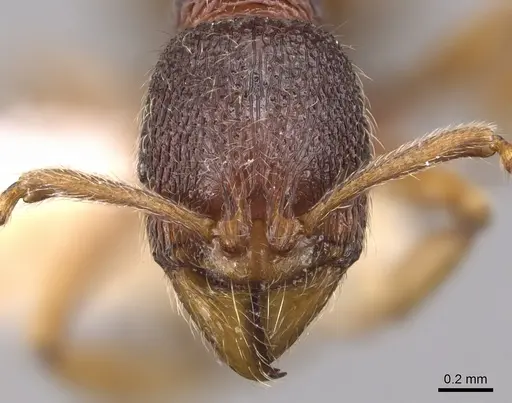
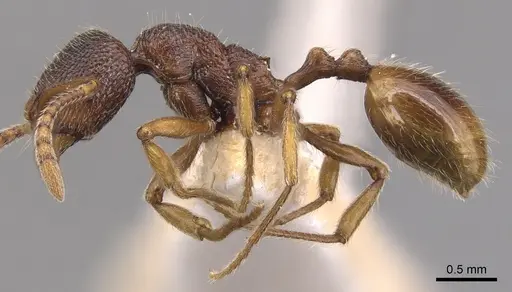
Workers are relatively large for the genus at 4.2-4.7 mm, with brown color that often has a rusty or ferrugineous tinge [1]. The most distinctive trait is the presence of several standing hairs on the outer side of the tibiae and on top of the antennae (scapes), these hairs stick out clearly above the normal pubescence, which is rare among European Stenamma [1]. The propodeal teeth are short, stout, and slightly upturned [1]. Males are also unique: they have almost completely absent notauli (the grooves on the back of the thorax), while all other European Stenamma males have well‑developed notauli [1].
Distribution and Biogeography
This species has a narrow range on the southern side of the Alps, with confirmed records from northern Italy (Friuli Venezia Giulia, Lombardy) and southern Switzerland (Canton Ticino) [1]. The Swiss specimens come from about 950 m elevation [1]. In 2017,a study confirmed S. zanoni also on Corsica, with specimens originally collected in 1984 and misidentified as S. petiolatum [2]. The latitude of the main distribution is about 44.50°N, placing it in an extratropical biogeographic zone [3].
Current Knowledge Gaps
Stenamma zanoni is a 'ghost species' in terms of biological knowledge. Queens have never been collected or described, so we have no information on colony founding, social structure, or queen morphology [1]. There is no data on nuptial flight timing, diet, temperature or humidity needs, or overwintering behavior. Without a single known captive colony, any care advice is entirely speculative. Finding a queen in the wild would be a significant scientific discovery [1].
Related Species for Context
The best‑studied European Stenamma is S. debile, which is widespread and common. S. striatulum is another species found in similar habitats. Both are cryptic ground nesters that live in cool, damp forest floors [2]. If S. zanoni were ever available, care would likely be similar: preferring undisturbed leaf litter, slow colony growth, and moderate temperatures. However, the Corsican record and Alpine distribution suggest S. zanoni may have somewhat different ecological preferences than S. debile [2].
Frequently Asked Questions
Can I keep Stenamma zanoni ants?
No, this species is essentially impossible to keep because queens have never been collected or described, meaning no captive colonies exist [1]. Even if foundresses were discovered, there is no biological data to guide their care.
Where does Stenamma zanoni live?
It is known only from northern Italy (Friuli Venezia Giulia, Lombardy), southern Switzerland (Canton Ticino), and one record from Corsica [1][2]. The main distribution is around 44.50°N in the southern Alps [3].
How big are Stenamma zanoni workers?
Workers measure 4.2-4.7 mm in total length, which is relatively large for the Stenamma genus [1].
What makes Stenamma zanoni different from other Stenamma?
The most distinctive feature is the presence of standing hairs on the tibiae and scapes that clearly project above the normal pubescence, this is unusual among European Stenamma [1]. Males also have almost completely absent notauli, which is unique among known European Stenamma males [1].
When was Stenamma zanoni discovered?
The species was formally described in 2011 by Fabrizio Rigato, so it is one of the newest recognized European ant species [1]. It was previously confused with the related Stenamma petiolatum.
Do Stenamma zanoni queens exist?
Queens have never been collected or described, this is one of the most significant knowledge gaps for this species [1]. Without queens, establishing captive colonies is impossible.
What do Stenamma zanoni eat?
Unknown, no dietary observations have been documented. Based on genus-level patterns, they likely forage for small invertebrates and honeydew on the forest floor, but this is entirely speculative.
Do Stenamma zanoni need hibernation?
Unknown, no seasonal data exists. However, given their Alpine distribution in Italy and Switzerland, hibernation is almost certainly required. Related temperate European ants typically need 3-4 months at 5-10°C.
Are Stenamma zanoni good for beginners?
No, this species is not available for keeping (no known colonies exist) and even if it were, there is no care information to guide its maintenance. This is an expert-level species in terms of knowledge gaps, not difficulty [1].
How fast do Stenamma zanoni colonies grow?
Unknown, no colony growth data exists. Based on related Stenamma species, growth is likely slow, but this is entirely speculative.
What temperature do Stenamma zanoni need?
Unconfirmed, no thermal studies exist. Based on their Alpine distribution (44.50°N), they likely tolerate cool conditions. Related European Stenamma species do well at 15-22°C, but specific requirements for S. zanoni are unknown [3].
Can I find Stenamma zanoni in the wild?
Possibly, but extremely unlikely given their limited range (northern Italy and southern Switzerland) and cryptic behavior. They would require targeted field searching in their known range. Finding a queen would be a significant scientific discovery since none have ever been collected [1].
Report an Issue
The current care sheet is based fully on literature. See inconsistencies, or something that's incorrect? Please , it will be resolved after review from an admin. Contributing to the blogs tab also helps providing information, to make us be able to further improve the caresheets. Thank you for your support!
References

This caresheet is licensed under CC BY-SA 4.0 .
Community Blogs
CASENT0904561
View on AntWeb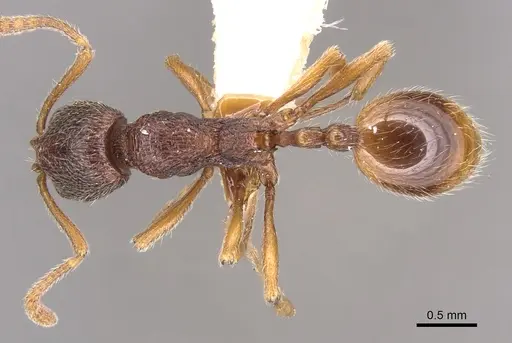
Literature
Loading distribution map...Loading products...