
Stenamma monstrosum
- Sci. Name
- Stenamma monstrosum
- Tribe
- Stenammini
- Subfamily
- Myrmicinae
- Author
- Branstetter, 2013
- Distribution
- Found in 2 countries
Introduction
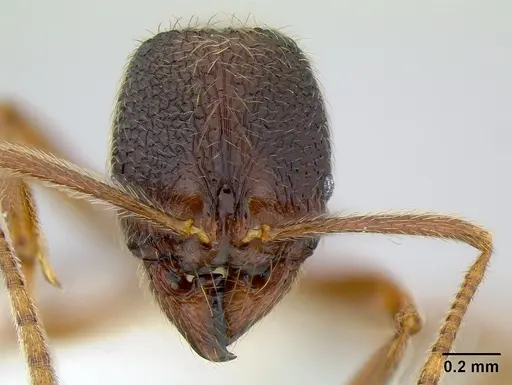
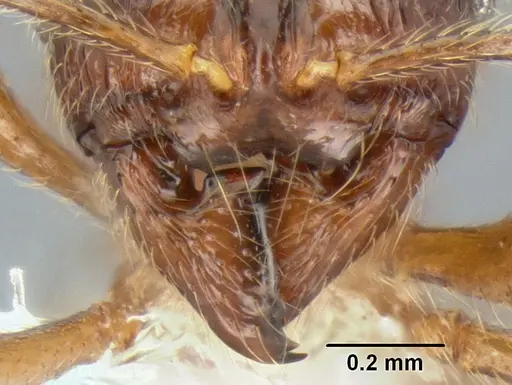
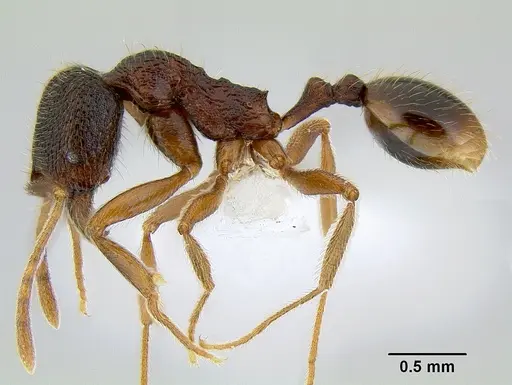
Stenamma monstrosum is a rare ant from the montane cloud forests of Honduras and Nicaragua. Workers have a mottled brown to reddish-brown color and unusually shaped mandibles with a deep notch containing a small tooth at the base . The species was described in 2013 and is known from only three collections of sifted leaf litter, making it one of the rarest ants in the hobby. Unlike most Stenamma that nest in soil or rotting wood on the forest floor, researchers think S. monstrosum may be arboreal (tree-dwelling) because it is so rare in leaf litter samples and has a slender, gracile body . The name 'monstrosum' refers to its Frankenstein-like combination of unique features that set it apart from other Stenamma.
Quick Summary
- Difficulty: Expert
- Origin & Habitat: Honduras to Nicaragua, montane wet forest (cloud forest, mixed hardwood forest) at 1400-1650m elevation [2][3]
- Colony Type: Unknown, only worker caste described, colony structure and queen biology are completely unconfirmed
- Size & Growth:
- Queen: Undescribed, queen caste has never been documented [2]
- Worker: Size data unavailable, only head, antenna, and other non-body measurements have been documented [1][2]
- Colony: Unknown, only isolated workers collected, no colony ever observed
- Growth: Unknown, no colony development data exists
- Development: Unknown, no development observations exist for this species (Lifecycle completely unstudied. No data on egg, larval, or pupal stages.)
- Antkeeping:
- Temperature: Keep cool (20-24°C) based on montane cloud forest habitat at 1400-1650m elevation [2]. Avoid overheating. A gentle gradient allowing cooler areas is advisable.
- Humidity: High humidity required, think damp cloud forest conditions. Keep substrate moist but not waterlogged. Provide a gradient from damp to slightly drier areas [2].
- Diapause: Unknown. As a tropical montane species, it may not need true diapause, but a cool period (15-18°C) during winter could be beneficial if a colony is established.
- Nesting: Arboreal hypothesis suggests providing elevated nesting options. Use a Y-tong or plaster nest with small chambers. High humidity is critical. No verified nesting preferences.
- Behavior: Behavior is essentially unstudied. Based on the genus, expect moderate foraging activity, likely predaceous on small invertebrates, and relatively non-aggressive. Escape risk is moderate, their medium size means standard barriers should work, but tiny gaps should still be avoided. No stinging information specific to this species, but Myrmicinae ants generally have functional stingers.
- Common Issues: extreme rarity makes obtaining this species nearly impossible., no captive breeding data exists, colonies cannot be established from workers alone., hypothesized arboreal lifestyle means standard ground-nesting setups may be inappropriate., high humidity requirements can lead to mold problems if ventilation is poor., dietary needs in captivity are completely unknown.
Rarity and Collection History
Stenamma monstrosum is known from only three collections of workers, all from sifted leaf litter in Honduras and Nicaragua [1][2]. The holotype was collected in Parque Nacional La Muralla, Honduras at 1420m elevation [1]. Because of its extreme rarity in leaf litter and its gracile build, researchers think it may be arboreal [2]. The queen has never been found, and no colony has ever been observed.
Identification and Morphology
Workers are distinctive and can be recognized by several key features. The base of each mandible has a deep notch containing a small tooth, this is the most obvious trait. The front edge of the clypeus (the plate above the mouth) has a deep, uneven depression that looks like four small teeth when viewed from above. The eyes are relatively small, with only 5-6 ommatidia (individual lens units) at their widest. The middle body section (mesosoma) appears elongated and slender, with a wide, shallow groove between the middle and hind parts. The upper back of the hind body (propodeal dorsum) is distinctly longer than the sloping rear section. Body color is mottled brown to red-brown or orange-brown, with the gaster (abdomen) often having yellow-brown patches [1].
Habitat and Distribution
This species occurs in montane wet forests of Central America, specifically in cloud forest and mixed hardwood forest at elevations between 1400-1650 meters [2]. Its known range runs from Honduras to Nicaragua, making it a narrow endemic of the Central American highlands [3]. The high-elevation cloud forest environment is cool, humid, and often misty or foggy, with dense vegetation. This is a tropical species, but from a cool, elevated habitat rather than lowland tropical conditions.
Keeping an Extremely Rare Species
Stenamma monstrosum is not a species you will encounter in the antkeeping hobby. It remains one of the most poorly known ants, with no captive colonies ever established. If you somehow obtain workers, understand that you are entering completely uncharted territory. There is no established care protocol, no dietary information, no breeding data, and no way to verify if your setup is right. Based on the arboreal hypothesis and cloud forest origin, provide high humidity, moderate temperatures around 20-24°C, and consider vertical or elevated nesting options. Feed small live prey items typical of predatory Myrmicinae, small fruit flies, springtails, or other micro-arthropods. Document any observations thoroughly, they would represent genuine new scientific knowledge. This species is an extreme challenge even for expert antkeepers and should only be attempted by those with extensive experience and the ability to maintain specialized conditions [2].
Frequently Asked Questions
Can I keep Stenamma monstrosum ants?
In practice, no, this species is virtually unavailable to hobbyists. It is known from only three collections ever made, the queen caste has never been described, and no captive colonies exist. Even if workers were obtained, there is no established care protocol and no information on how to keep them alive [2].
How big do Stenamma monstrosum colonies get?
Unknown. No colony has ever been observed. Only isolated workers have been collected, and the maximum colony size in the wild is completely unstudied [2].
What do Stenamma monstrosum ants eat?
Unconfirmed. Based on the genus (Myrmicinae), they are likely predaceous on small invertebrates. Offer small live prey like fruit flies, springtails, or tiny arthropods. Sugar acceptance is unknown [2].
Do Stenamma monstrosum ants sting?
Myrmicinae ants have functional stingers, so they likely can sting. However, no specific information exists about the sting of this species or its pain level. Given their small size and rarity, stinging behavior has not been documented [2].
What temperature do Stenamma monstrosum ants need?
Based on their cloud forest origin at 1400-1650m elevation, aim for cool conditions around 20-24°C. Avoid overheating. The elevated, montane habitat suggests they prefer cooler temperatures than typical tropical ants [2].
Are Stenamma monstrosum good for beginners?
Absolutely not. This is an expert-only, research-level species. No captive care information exists, colonies cannot be established, and they represent the ultimate challenge in antkeeping, keeping something we essentially know nothing about [2].
Where does Stenamma monstrosum live?
Honduras to Nicaragua, in montane cloud forest and mixed hardwood forest at 1400-1650m elevation. This is a narrow endemic of Central American highlands, not a widespread species [3][2].
How long do Stenamma monstrosum workers live?
Unknown. No lifecycle or longevity data exists for this species. Development from egg to worker has never been observed [2].
Can I keep multiple Stenamma monstrosum queens together?
Unknown. The queen caste has never been described, so colony structure (single queen vs multiple queen) is completely unconfirmed. There is no information on whether they can be kept in multi-queen arrangements [2].
Do Stenamma monstrosum need hibernation?
Unknown. As a tropical montane species, they may not require true hibernation but might benefit from a cool period during 'winter' months. No observations exist to confirm this [2].
What makes Stenamma monstrosum different from other Stenamma?
Several unique features: the deep notch in the basal margin of the mandible containing a small tooth, the deeply notched clypeus, and the hypothesized arboreal lifestyle. The species name 'monstrosum' refers to its unusual Frankenstein-like combination of morphological traits [1][2].
Why is Stenamma monstrosum so rare?
The species appears to be genuinely rare in the wild, possibly due to a restricted geographic range and potentially arboreal habits that make them difficult to collect. Only three collections have ever been made despite extensive ant surveys in Central America. This makes them both scientifically valuable and virtually unavailable to hobbyists [2].
Report an Issue
The current care sheet is based fully on literature. See inconsistencies, or something that's incorrect? Please , it will be resolved after review from an admin. Contributing to the blogs tab also helps providing information, to make us be able to further improve the caresheets. Thank you for your support!
References

This caresheet is licensed under CC BY-SA 4.0 .
Community Blogs
CASENT0621327
View on AntWeb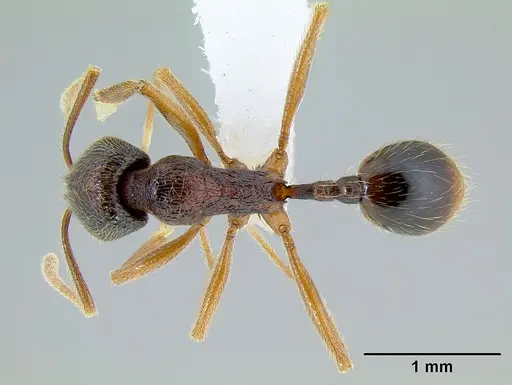
Literature
Loading distribution map...Loading products...