
Stegomyrmex connectens
- Sci. Name
- Stegomyrmex connectens
- Tribe
- Solenopsidini
- Subfamily
- Myrmicinae
- Author
- Emery, 1912
- Distribution
- Found in 2 countries
Introduction
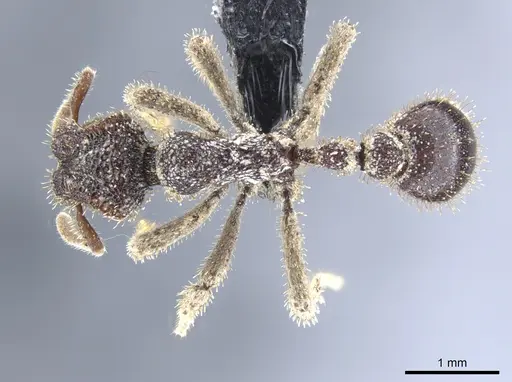
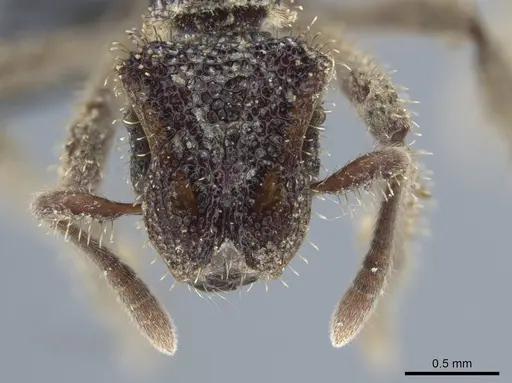
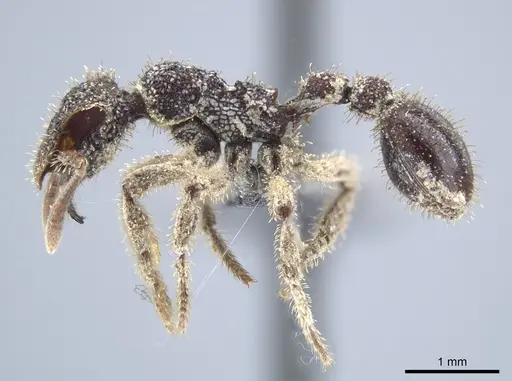
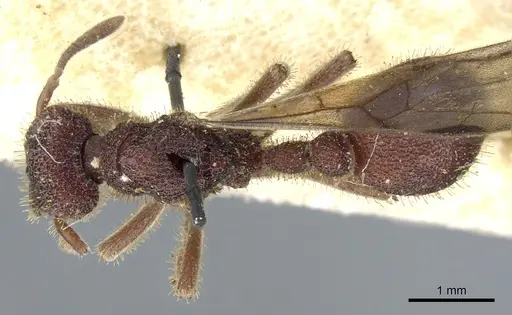
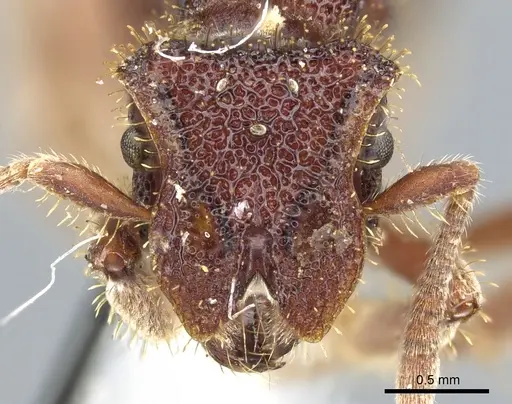
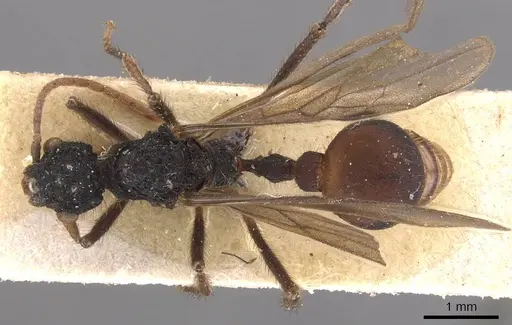
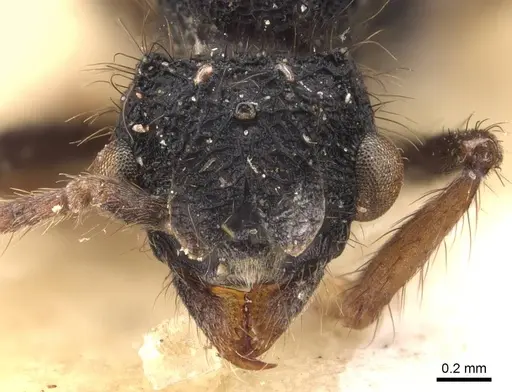
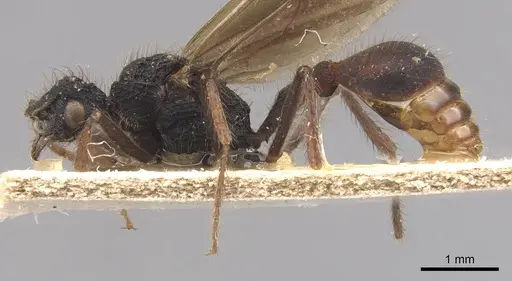
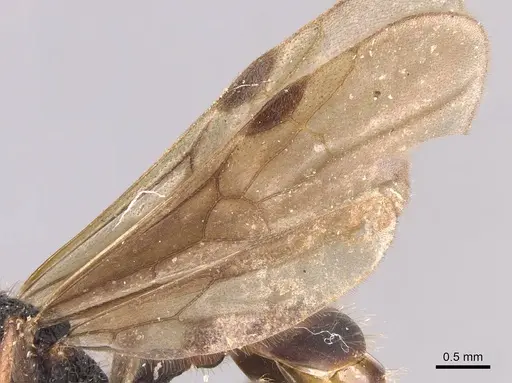
Stegomyrmex connectens is an extremely rare Neotropical ant and the type species of its genus. The queen size is not documented, but the species is known only from a single queen specimen collected in Vilcanota, Peru . A male from Mapiri, Bolivia was tentatively assigned to this species, but it may belong to a different one . These ants belong to the tribe Solenopsidini within the subfamily Myrmicinae. They have unique soil-binding pilosity - specialized hairs that collect and hold soil particles for camouflage, similar to the related genus Basiceros . This cryptic appearance helps them blend into the forest floor habitat.
Quick Summary
- Difficulty: Expert
- Origin & Habitat: Found in the Neotropical region, recorded from Peru (Vilcanota), Bolivia (Mapiri), and possibly Ecuador [1][3][4]. The genus inhabits rainforest litter environments where the soil-binding pilosity provides effective camouflage among leaf litter and soil particles [2].
- Colony Type: Unknown, this species is known only from a single queen specimen. No established colonies have ever been documented, and the tentatively associated male may actually belong to a different species [1].
- Size & Growth:
- Queen: Size measurement unavailable, no total length (TL) provided in available literature. Known only from a single queen specimen.
- Worker: Undescribed, the worker caste has never been formally described for this species
- Colony: Unknown, no colony data exists
- Growth: Unknown
- Development: Unknown, no development data available for this species (No brood development has ever been observed. No related species data is available to estimate.)
- Antkeeping:
- Temperature: Presumably room temperature suitable for Neotropical species, start around 20-26°C and observe. No direct data exists, keep stable.
- Humidity: High humidity preferred, rainforest floor litter species typically require consistently moist substrate. Keep the nest substrate moist but not waterlogged. No specific percentages are known.
- Diapause: Unknown, Neotropical species may have reduced activity periods rather than true hibernation, but no specific data exists for this species.
- Nesting: Natural nesting is in leaf litter and soil. In captivity, a naturalistic setup with moist substrate and ample hiding structures would be a guess. Y-tong or plaster nests with small chambers might work, but this is entirely untested.
- Behavior: Extremely poorly documented. The genus is known for its cryptic lifestyle and soil-binding camouflage hairs that collect debris [2]. Based on tribe Solenopsidini (which includes Solenopsis and Wasmannia), they likely forage in leaf litter and may have a stinger. Escape risk cannot be assessed due to lack of colony-keeping experience. Exercise extreme caution with any handling, assume functional stinger present.
- Common Issues: no documented captive colonies exist, this species has never been kept in captivity, queen may not be correctly associated with male specimens, they may be different species [1], worker caste undescribed, no reference material for identifying workers, extremely limited distribution data makes accurate care recommendations impossible, no information on founding behavior, diet preferences, or colony development
Species Overview and Identification
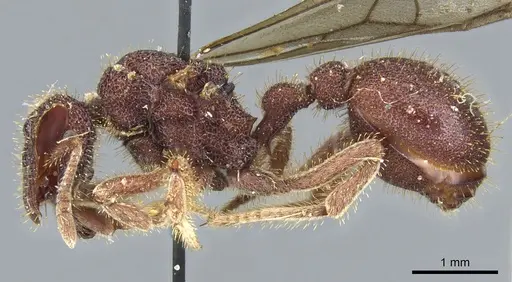
Stegomyrmex connectens is one of the rarest ants in the world, in fact, it has never been kept in captivity. The species is known only from a single queen collected in Vilcanota, Peru and a male from Mapiri, Bolivia that may or may not be the same species [1]. The queen can be identified by two unique anteroventral projections on the petiolar peduncle, these are small tooth-like structures on the stalk connecting her thorax and abdomen [1]. This feature is found in no other Stegomyrmex species. The ants have a remarkable two-layered pilosity: specialized brush hairs that are splintered near the tips (like bottle brushes) and holding hairs that are filiform. These hairs collect soil particles, providing exceptional camouflage among leaf litter [2].
Distribution and Habitat
Stegomyrmex connectens is known from two disjunct localities: the holotype queen from Vilcanota, Peru and the tentatively associated male from Mapiri, Bolivia [1]. Additional records exist from Ecuador, though specimen details are limited [4]. The species inhabits Neotropical rainforest environments, likely in the forest floor litter layer where its cryptic camouflage provides effective protection. The related genus Basiceros (which shares similar soil-binding pilosity) is known from lowland tropical rainforests, suggesting S. connectens occupies comparable microhabitats [2]. The disjunct distribution between Peru and Bolivia, combined with the morphological differences between the known specimens, raises questions about whether the current species concept accurately reflects a single species [1].
Why This Species is Not Recommended for Keepers
Stegomyrmex connectens should NOT be kept by any antkeeper, there are fundamental reasons why this species is unsuitable for captivity. First, no established colonies exist in the hobby or scientific literature. The species is known only from museum specimens collected decades ago, and no one has ever documented its biology, founding behavior, or colony structure. Second, the worker caste has never been formally described, there is no reference material to identify workers even if you somehow acquired them. Third, the queen specimen itself may not be correctly associated with the male, meaning we may not even know what the male looks like or if it belongs to a different species [1]. There is simply no basis for providing meaningful care instructions. Attempting to keep this species would be purely experimental with no supporting knowledge base. Instead, consider related and better-documented Solenopsidini species such as Solenopsis, Wasmannia, or other Stegomyrmex species that have established captive populations.
Related Species and Better Alternatives
If you are interested in keeping ants with similar morphology and behavior, several better-documented alternatives exist within the tribe Solenopsidini. The genus Stegomyrmex itself includes other species that are more known, though still rarely kept. Wasmannia auropunctata (the little fire ant) is a small, cryptic species with similar litter-dwelling habits and is well-established in captivity, note that this species is invasive in many regions. Solenopsis species (fire ants) are more aggressive but also well-documented. Basiceros, the genus most closely related to Stegomyrmex based on the shared soil-binding pilosity, is occasionally available and offers similar camouflage behavior [2]. These species have documented care requirements, known colony structures, and established breeding in captivity. They provide the opportunity to observe the fascinating soil-camouflage behavior that makes Stegomyrmex interesting without the extreme uncertainty of an essentially unknown species.
Frequently Asked Questions
Can I keep Stegomyrmex connectens ants?
No. This species has never been kept in captivity and no biological information exists to guide care. It is known only from a single queen specimen in a museum. There are no established colonies, no documented care requirements, and the worker caste has never been described. This is not a species for any keeper, expert or beginner.
What does Stegomyrmex connectens look like?
The queen has two distinctive anteroventral projections on the petiolar peduncle (the stalk connecting thorax and abdomen). Size is not precisely documented but estimated around 5-6mm. The species has unique soil-binding pilosity, specialized hairs that collect soil particles for camouflage, similar to the related genus Basiceros [1][2].
Where does Stegomyrmex connectens live?
The species is known from Peru (Vilcanota) and Bolivia (Mapiri) in the Neotropical region, with possible records from Ecuador [1][3][4]. It likely inhabits rainforest floor litter, where its cryptic camouflage among leaf litter and soil provides protection.
How big do Stegomyrmex connectens colonies get?
Unknown. No colony has ever been documented. The species is known only from isolated museum specimens, a single queen and a tentatively associated male.
What do Stegomyrmex connectens eat?
Unknown. No feeding observations exist. Based on tribe Solenopsidini biology, they likely forage for small invertebrates and may tend aphids for honeydew, but this is entirely speculative.
How long does it take for Stegomyrmex connectens to develop from egg to worker?
Unknown. No brood development has ever been observed or documented for this species.
Is Stegomyrmex connectens good for beginners?
Absolutely not. This is not a species that can be kept at all, there is no biological data to support captive care, no documented colonies exist, and the worker caste has never been described. This is an expert-level species in terms of rarity, not difficulty.
Do Stegomyrmex connectens need hibernation?
Unknown. As a Neotropical species from Peru and Bolivia, they likely experience seasonal variation rather than true hibernation. No specific data exists.
What is the best nest type for Stegomyrmex connectens?
No recommendation can be made. No Stegomyrmex connectens has ever been kept in captivity. Naturalistic setups with moist leaf litter might theoretically work, but this is untested.
Report an Issue
The current care sheet is based fully on literature. See inconsistencies, or something that's incorrect? Please , it will be resolved after review from an admin. Contributing to the blogs tab also helps providing information, to make us be able to further improve the caresheets. Thank you for your support!
References

This caresheet is licensed under CC BY-SA 4.0 .
Community Blogs
Literature
Loading distribution map...Loading products...