
Texas Thief Ant
Solenopsis texana
- Sci. Name
- Solenopsis texana
- Tribe
- Solenopsidini
- Subfamily
- Myrmicinae
- Author
- Emery, 1895
- Common Name
- Texas Thief Ant
- Distribution
- Found in 4 countries
Introduction
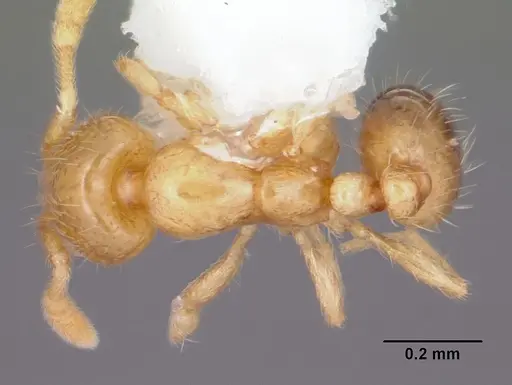
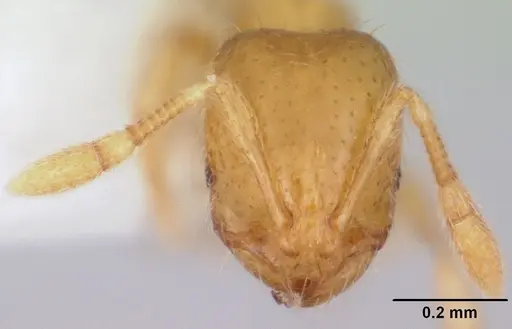
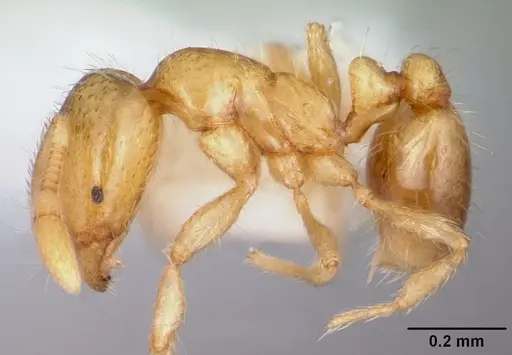
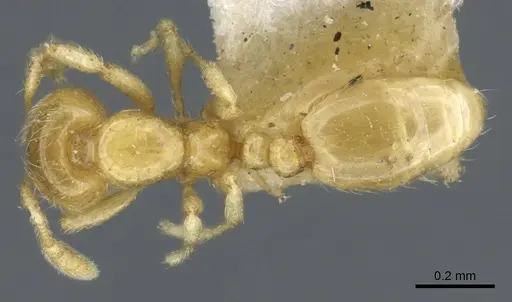
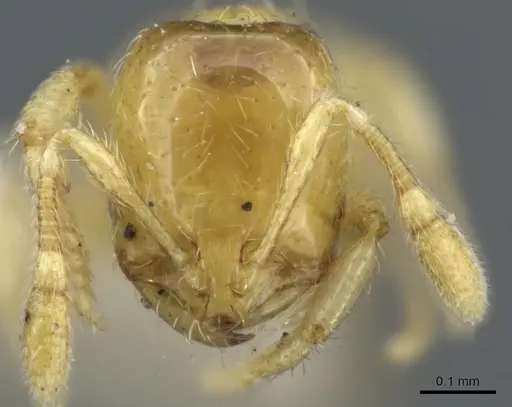
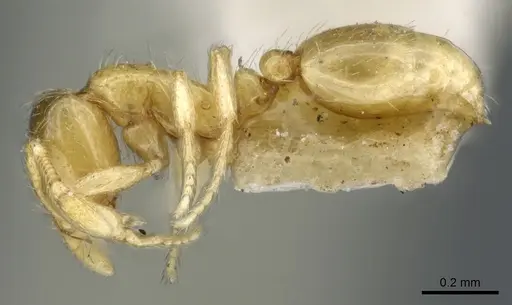
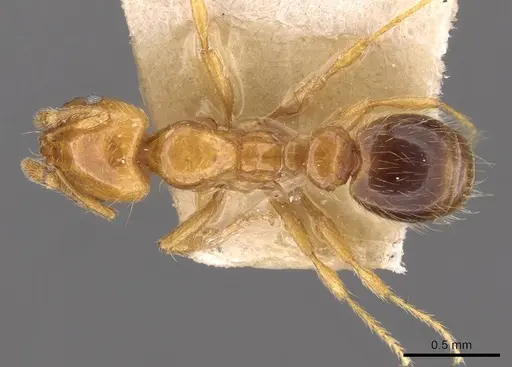
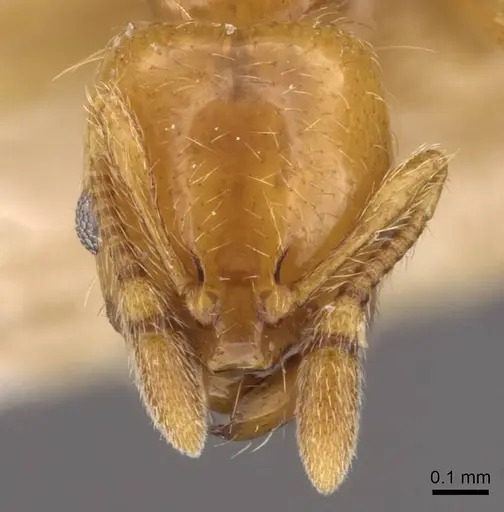
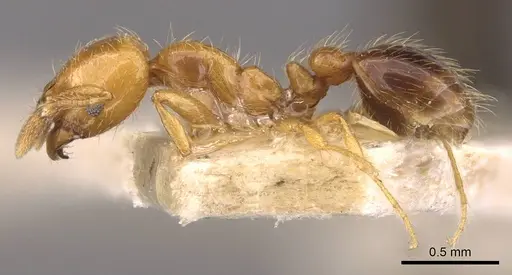
Solenopsis texana is a tiny thief ant from the Solenopsis molesta species complex. Workers are minute, measuring about 1.23–1.35 mm in total length, and are pale yellow to medium brown with a slightly darker gaster . Queens are larger at 3.12–3.84 mm, medium brown to yellowish-brown, with notably small eyes compared to similar species . This species has a huge range: from southern Canada through the United States down to Colombia and Panama, making it one of the more widespread Solenopsis species in the Americas . It lives in a wide variety of habitats, including arid thorn shrubland, grasslands, forests, and cloud forests up to 2540 m elevation . As a thief ant, it nests underground or in rotting wood, often near other ant colonies, and sneaks in to steal their food and brood .
Quick Summary
- Difficulty: Medium
- Origin & Habitat: Native to southern North America, ranging from southern Canada through the United States to Colombia. Found in diverse habitats: arid thorn shrubland, grasslands with scattered oaks, beech/magnolia forest, pine/hardwood forest, riparian areas, and cloud forests from 10–2540 m elevation [1]. They nest in soils ranging from light brown clay to rocky loam, often under stones, in rotten logs, or in dead wood [4][1].
- Colony Type: Colony structure is not well studied. A loose queen was collected in July, suggesting summer nuptial flights [1]. Based on other small Solenopsis, colonies are likely monogyne (single queen), but this is unconfirmed.
- Size & Growth:
- Queen: 3.12–3.84 mm [1]
- Worker: 1.23–1.35 mm [1]
- Colony: Unknown – not documented in research, inferred from similar thief ants to be up to a few hundred workers
- Growth: Moderate
- Development: 6–8 weeks (estimated, based on typical small Solenopsis development) (Brood has been collected in nests during May and September [1], suggesting year‑round production in warm climates or seasonal peaks in temperate ones.)
- Antkeeping:
- Temperature: Room temperature (20–24 °C) works well. A slight temperature gradient in the nest is beneficial. Avoid extremes [4].
- Humidity: Keep the nest substrate lightly moist but not waterlogged. In nature they occupy soils from dry clay to moist loam, so a gradient works [1].
- Diapause: Likely beneficial for colonies from northern populations. Reduce temperature to 10–15 °C for 2–3 months in winter to mimic their natural cycle [4][2].
- Nesting: Y‑tong (AAC) nests or plaster nests with chambers scaled to their tiny size work best. Tight spaces are preferred. Test‑tube setups are fine for founding.
- Behavior: These ants are secretive and cryptic – they prefer to forage underground or through hidden routes rather than in the open. Workers are fast and scavenge on small arthropods. They have a sting but it's far too small to affect humans. Escape risk is moderate – they are very small, so use fine mesh or a thin layer of fluon/oil on the outworld rim. They are not aggressive toward humans.
- Common Issues: colonies remain small – don't expect massive worker forces, a few hundred is normal for the species., their cryptic nature means you may not see much activity – this is typical, not a problem., tiny workers can escape through standard vents – use fine mesh (≤0.5 mm) or tight glass covers., overfeeding can lead to mold in small test‑tube setups – remove uneaten food promptly., wild‑caught colonies may carry phorid flies or other parasites that can decimate the colony in captivity [5].
Housing and Nest Setup
Because Solenopsis texana is such a tiny species, you need to scale the nest to match. Y‑tong (AAC) blocks with narrow chambers work great – the ants feel secure in tight spaces. Plaster nests are also good if you carve small compartments. A test‑tube setup (classic water reservoir + cotton plug) works fine for founding colonies. Once the colony hits about 50–80 workers, move them to a small formicarium.
These ants are cryptic and like dark hiding spots. Cover the nest with a dark foil or board to reduce stress. The outworld can be small – a plastic container with a thin layer of sand or soil gives them something to dig in. Most importantly, seal every gap with fine mesh or a band of fluon – these tiny ants can squeeze through the tiniest cracks [4][1].
Feeding and Diet
Like other thief ants, S. texana is an opportunistic scavenger. In captivity, they eagerly take small insects – fruit flies, pinhead crickets, tiny mealworms, or mosquito larvae. They also scavenge on dead insects. Offer a drop of sugar water or honey water once a week for carbs, though they don't need it often. In the wild, they likely tend aphids for honeydew and steal food from other ant colonies [1].
Feed small amounts every 2–3 days. Because the colony stays modest, a single fruit fly per day may be enough. Remove leftovers quickly to prevent mold in the damp nest.
Temperature and Seasonal Care
Keep the nest at normal room temperature,20–24 °C. The species has a huge natural range (Canada to Colombia), so it tolerates a broad spectrum, but avoid letting it get above 28 °C or below 15 °C for long. A temperature gradient in the nest lets the ants choose their preferred spot [4].
For overwintering, a mild hibernation period is beneficial, especially if your colony came from a temperate region. Slowly lower the temperature to 10–15 °C over a few weeks and keep them there for 2–3 months (roughly November–February). Then slowly warm them back up. This mimics their natural cycle and may boost colony health in the long run [2]. If you keep them warm all year, they may still produce brood slowly through winter. Either approach works, but be consistent.
Behavior and Colony Dynamics
Colonies of S. texana stay small compared to their fire ant cousins – expect only a few hundred workers at peak. The queen is modestly productive, producing workers steadily. Workers are fast, shy, and prefer to stay hidden. They use underground tunnels and rarely forage in the open. This is their natural 'thief ant' strategy: they avoid detection by larger ants and predators [1].
In the wild, they often live near other ant species and sneak into their nests to steal food, eggs, and even young brood. In captivity, you might try to recreate this by offering prey near another ant colony (in a separate enclosure), but be careful – they are easily outcompeted by larger species. They have a sting, but it's too tiny to feel, so there is no handling risk for humans [1][5].
Identification Tips
Identifying S. texana to species level is tricky because workers look very similar to several other thief ants in the Solenopsis molesta complex. The most reliable way is to check the queen – she has notably small eyes compared to other species. Workers are pale yellow to medium brown, very small (1.23–1.35 mm total length), and have short funicular segments (the middle segments of the antenna) under 0.10 mm long [1]. The hairs on the hind tibiae are mostly lying flat (appressed), which helps separate them from Solenopsis carolinensis (which has hairs that stick out). Also, S. texana workers have fewer than 10 erect hairs on the top of the mesosoma, while similar species often have more. Without queens, identification is difficult, so if you catch a wild colony, be aware it might be a closely related species [1].
Frequently Asked Questions
How long does it take for Solenopsis texana to produce first workers?
Expect first workers in about 6–8 weeks after the queen lays her eggs, assuming room temperature around 21–24 °C. This is typical for small Solenopsis species. The queen seals herself in during founding, but we don't know if she feeds or not – this pattern is just inferred from related species.
Can I keep Solenopsis texana in a test tube?
Yes, test tubes work well for founding colonies. Use a small tube with a cotton plug creating a water reservoir. The colony can stay in that setup until it reaches about 50–80 workers, at which point you should move them to a proper formicarium with chambers they can fill.
How big do Solenopsis texana colonies get?
Colonies are not well studied, but based on related thief ants, they likely stay under a few hundred workers. Don't expect thousands – small colonies are normal for this species.
What do Solenopsis texana eat?
They accept small insects like fruit flies, pinhead crickets, and small mealworms. They also occasionally take sugar water or honey. Feed small amounts every few days and remove uneaten food to prevent mold.
Do Solenopsis texana need hibernation?
It is likely beneficial, especially for colonies from northern parts of its range. Reduce the temperature to 10–15 °C for 2–3 months during winter. This mimics their natural cycle and can improve long‑term colony health.
Are Solenopsis texana good for beginners?
They are medium difficulty – not the easiest, but not hard either. Their small size and secretive nature can make them less showy than larger ants. They are better suited for antkeepers who enjoy watching cryptic foraging behavior rather than constant activity.
Why are my Solenopsis texana not very active?
This is normal – they are cryptic ants that prefer to stay hidden and use underground routes. They are not a 'showy' species that roams in the open. If your colony is healthy (queen laying eggs, workers present), the low visibility is just their natural behavior.
When should I move my colony to a formicarium?
Move from a test tube to a formicarium once the colony reaches 50–80 workers. Use a Y‑tong or plaster nest with chambers scaled to their tiny size – tight spaces are important. Avoid large, open areas.
Can I keep multiple ant species together with Solenopsis texana?
No – this is not recommended. As thief ants, they may attempt to raid other colonies, and they are easily outcompeted by larger species. Keep each species in its own enclosure.
Report an Issue
The current care sheet is based fully on literature. See inconsistencies, or something that's incorrect? Please , it will be resolved after review from an admin. Contributing to the blogs tab also helps providing information, to make us be able to further improve the caresheets. Thank you for your support!
References

This caresheet is licensed under CC BY-SA 4.0 .
Community Blogs
Literature
Loading distribution map...Loading products...