
Solenopsis terricola
- Sci. Name
- Solenopsis terricola
- Tribe
- Solenopsidini
- Subfamily
- Myrmicinae
- Author
- Menozzi, 1931
- Distribution
- Found in 6 countries
Introduction
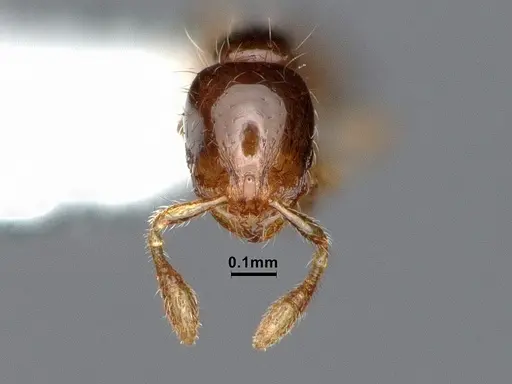
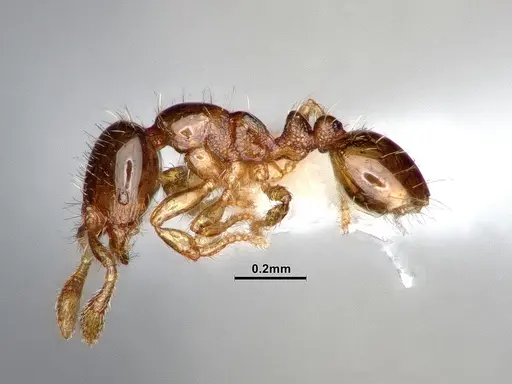
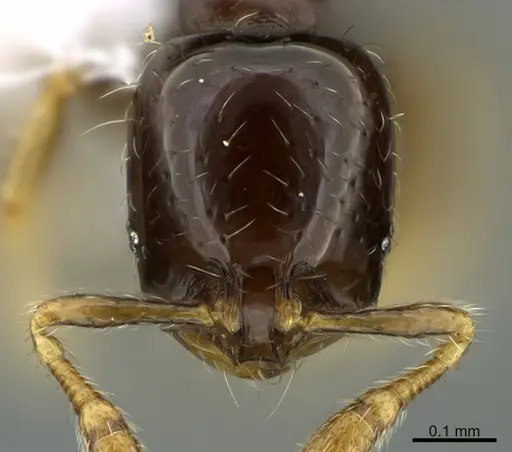
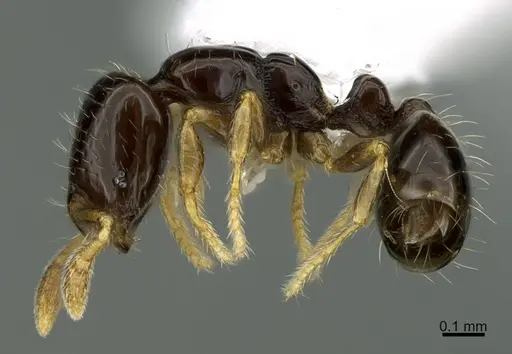
Solenopsis terricola is a tiny thief ant that belongs to the Solenopsis brevicornis species complex. Workers are only 1.20-1.32 mm (average 1.23 mm) and queens reach 2.28-3.18 mm (average 2.65 mm) . In Central America, workers have a dark brown to black body that strongly contrasts with yellow legs and antennae - but Caribbean populations are concolorous pale brown . The head is elongated with straight sides, and the sides of the thorax are dotted with small pits (punctate). This species lives in leaf litter across a wide range of forest types: dry tropical forests, mountain hardwood forests, bamboo/cloud forests, wet cloud forests, and wet montane forests. It has been found from 126 m elevation in the Dominican Republic up to 4000 m in Central America . Its native range includes Costa Rica, Guatemala, Panama, Mexico, and several Caribbean islands (Dominica, Saint Lucia, Dominican Republic). A related thief ant, Solenopsis abdita, has recently been found established outside its native range, but Solenopsis terricola itself is not considered invasive .
Quick Summary
- Difficulty: Medium
- Origin & Habitat: Native to the Neotropical region, Costa Rica, Guatemala, Panama, Mexico, Dominica, Saint Lucia, Dominican Republic [1]. Found in leaf litter in dry tropical forests, mountain hardwood forests, bamboo/cloud forests, wet cloud forests, and wet montane forests at elevations from 126 m to 4000 m [1][2][3]. One specific collection from Jaragua National Park, Dominican Republic, was in dry forest at 126 m [5].
- Colony Type: Colony structure is not documented, the number of queens per colony has not been studied. Based on typical thief ant patterns, it may be monogyne, but this is unconfirmed.
- Size & Growth:
- Queen: 2.28-3.18 mm (average 2.65 mm) [1]
- Worker: 1.20-1.32 mm (average 1.23 mm) [1]
- Colony: Unknown, no colony size data available for this species.
- Growth: Unknown, growth rate has not been documented.
- Development: Unconfirmed, no published data for Solenopsis terricola. Based on related Solenopsis species, a rough guess is 6-10 weeks from egg to first worker at 22-26°C, but this needs verification. (Development times are only estimated. Actual timing may differ. Temperature and food availability will affect development.)
- Antkeeping:
- Temperature: Keep at 22-26°C. This species occurs in tropical to subtropical forests, including high-elevation cloud forests where temperatures are mild. Avoid temperatures below 18°C or above 30°C [1][2].
- Humidity: High humidity is essential. These ants live in leaf litter in wet cloud forests and wet montane forests [1]. Keep the nest substrate consistently moist but not waterlogged. Provide a water source, a small test tube water reservoir or a moist sponge. Good ventilation is needed to prevent mold.
- Diapause: No, this is a tropical species that does not require hibernation. Maintain warm conditions year-round [2][3].
- Nesting: Use a test tube setup for founding, then transfer to a small formicarium. Y-tong (AAC) nests with very small chambers or a naturalistic setup with fine, moist soil work well. These ants prefer tight, dark spaces that mimic compressed leaf litter. Avoid large open chambers. Ensure excellent escape prevention, workers are only about 1.2 mm and can squeeze through tiny gaps.
- Behavior: As a thief ant, Solenopsis terricola is likely predatory on small invertebrates and may raid other ant colonies for brood. Workers are tiny (1.2 mm) and can slip through very narrow gaps, escape proofing must be top-notch. They are shy and non-aggressive toward humans, but will defend their nest if disturbed. Their sting is very mild due to their small size (subfamily Myrmicinae, tribe Solenopsidini, sting with piperidine alkaloid venom). They forage mostly at night and prefer dark, humid environments.
- Common Issues: escape is a major risk, workers are only 1.2 mm and can fit through gaps that seem impossible, use fine mesh and Fluon on all edges., wild-caught colonies may carry parasites or diseases that can kill them in captivity, quarantine new colonies., high humidity needs can cause mold growth if ventilation is poor, balance moisture with air flow., overfeeding (especially large prey) leads to waste and mold, feed only tiny items., slow colony growth (if that is the case) may discourage impatient keepers, be prepared for a long wait.
Housing and Setup
Because Solenopsis terricola workers are only 1.2 mm, your first job is making sure they cannot escape. Standard barriers like Fluon or PTFE must be applied to all lid edges, and any ventilation holes need ultra-fine mesh (for example,0.1 mm nylon fabric). For the nest itself, start with a test tube setup: a small test tube (e.g.,15×100 mm) with a water reservoir about one-third of the tube, sealed with a cotton plug. The cotton should stay moist but never dripping. Once you have a small colony (maybe 10+ workers), you can move them to a Y-tong (AAC) nest with the smallest chambers you can find, or a naturalistic setup made of fine, moist soil pressed into a container. These litter ants like tight, dark spaces, avoid large open areas. Keep the nest in a dark drawer or cupboard, and only disturb it for feeding or cleaning. An outworld (foraging area) should be small, escape-proof, and can be a plastic box with a smooth Fluon-coated rim. [1]
Temperature and Humidity
Set the temperature at 22-26°C year-round. Solenopsis terricola comes from tropical and subtropical forests, including high-elevation cloud forests where it stays cool but never cold [1][2]. Avoid letting the temperature drop below 18°C, no hibernation needed. Humidity is critical: these ants live in wet leaf litter, so the nest substrate must be consistently moist. Not wet enough to pool water, but like a damp sponge. Use a test tube water reservoir, and if the nest is a soil setup, mist the sides occasionally. But don't overdo it, too much moisture without ventilation leads to mold. Air exchange is important: small holes with fine mesh work well. In dry climates, you may need to cover most of the outworld to keep humidity high, but leave a tiny vent for airflow.
Feeding and Diet
Thief ants are predators that eat small invertebrates and sometimes steal brood from other ant colonies. For Solenopsis terricola, offer tiny live prey: springtails, fruit flies, or small termites. You can also give them a bit of crushed mealworm or a tiny drop of honey-water (diluted 1:3). Feed only what they can finish in 24 hours to avoid mold. Because the workers are so small, even a fruit fly may be a big meal, cut or crush prey if needed. Remove leftovers after a day. Protein is important for brood development. If the colony seems small, don't overfeed, a single springtail per day might be enough for a tiny queen with a few workers. Fresh water must always be available, either from the test tube reservoir or a small water dish with a sponge or cotton to prevent drowning. [1]
Behavior and Temperament
Solenopsis terricola is a shy, non-aggressive ant. Workers move slowly and avoid confrontation. They are most active at night and in dark conditions. In the wild, they forage alone or in small groups through leaf litter [1]. As thief ants, they may try to sneak into other nests to steal eggs and larvae, but in captivity this is not a problem unless you house them with another species. Their sting uses piperidine alkaloid venom (typical of solenopsidine ants), but the tiny stinger delivers almost no pain to humans. Still, they can sting if mishandled. The real risk is escape: because they are so small, they can disappear through the tiniest crack. Use Fluon on all surfaces, and check for gaps regularly. If you see workers wandering in the outworld when it's dark, that's normal, they are foraging. But if they find a way out, you may lose the colony.
Colony Development
The colony development of Solenopsis terricola is not documented in the literature. What we know is based on general Solenopsis patterns, so treat this as very rough. Queens are 2.28-3.18 mm, relatively small for the genus [1]. They are probably claustral (seal themselves in while raising the first workers), but this is unconfirmed. Expect the first nanitic workers to appear after 6-10 weeks if kept warm and humid. The first workers will be even smaller than normal, barely visible. Do not disturb the queen during this time, just keep her in a dark, humid test tube. Once you see workers, you can offer tiny prey. Colony growth is likely slow, perhaps only a few dozen workers after a year. Patience is key. There is no information on maximum colony size, based on similar thief ants, it might stay under a few hundred workers. Do not attempt to combine queens, colony structure is unknown, so treat each queen separately.
Seasonal Care
No hibernation needed. Solenopsis terricola is a tropical species and should be kept warm year-round [2][3]. If your room gets cold in winter, use a small heating cable or heat mat under part of the nest to keep temperatures around 22-26°C. Keep humidity stable, dry winter air in heated rooms can be a problem, consider using a humidity dome or covering the outworld more. Even though this species comes from high elevations that can get cool at night, it does not need a cold season. Maintain consistent conditions and your colony should stay active all year.
Frequently Asked Questions
How long does it take for Solenopsis terricola to have first workers?
There is no published data for this species. Based on related Solenopsis, a rough guess is 6-10 weeks at 22-26°C, but this is unconfirmed. Be patient and avoid checking the queen too often.
What do Solenopsis terricola ants eat?
They are predatory thief ants that eat tiny live prey like springtails and fruit flies. You can also offer a tiny drop of honey-water or a piece of crushed mealworm. Remove uneaten food after 24 hours to prevent mold.
Can I keep Solenopsis terricola in a test tube?
Yes, test tubes are great for founding. Use a small tube (15×100 mm) with a water reservoir about 1/3 full, sealed with a moist cotton plug. Make sure the cotton is not soaking wet. Later you can move them to a small formicarium, but the test tube is fine until you have at least 10 workers.
Are Solenopsis terricola good for beginners?
They are rated Medium difficulty. Their tiny size and escape risk make them challenging. Beginners should first try easier, more robust species like Lasius niger or a Camponotus species. But if you are careful with escape proofing and humidity, they can be a rewarding challenge.
How big do Solenopsis terricola colonies get?
Colony size is unknown, there is no published data. Based on other small thief ants, colonies probably stay under a few hundred workers. Don't expect rapid growth.
Do Solenopsis terricola need hibernation?
No, they are a tropical species and do not need hibernation. Keep warm (22-26°C) all year [2][3].
Why are my Solenopsis terricola escaping?
Workers are only 1.2 mm, they can walk through gaps you cannot see. Apply Fluon to all edges, use ultra-fine mesh (0.1 mm) on vents, and check every connection. If any ants are outside the setup, you have found a gap, seal it immediately.
What temperature is best for Solenopsis terricola?
Keep them at 22-26°C. This range mimics the moderate temperatures of their high-elevation forest habitats. Avoid below 18°C or above 30°C [2][3].
Can I keep multiple queens together?
Colony structure is unconfirmed, there is no evidence of polygyny in this species. Do not combine queens. House each one separately until we know more.
What is the best nest type for Solenopsis terricola?
A Y-tong (AAC) nest with the smallest chambers, or a naturalistic setup with fine, moist soil pressed into a container. Test tubes are fine for founding. Avoid large, open nests, these ants need tight, dark spaces.
Is Solenopsis terricola invasive?
No, this species is native to the Caribbean and Central America and has not been documented as invasive outside its range. However, a related thief ant (Solenopsis abdita) has recently established in Britain [4]. Never release any ants into the wild outside their native area.
Report an Issue
The current care sheet is based fully on literature. See inconsistencies, or something that's incorrect? Please , it will be resolved after review from an admin. Contributing to the blogs tab also helps providing information, to make us be able to further improve the caresheets. Thank you for your support!
References

This caresheet is licensed under CC BY-SA 4.0 .
Community Blogs
CASENT0884411
View on AntWeb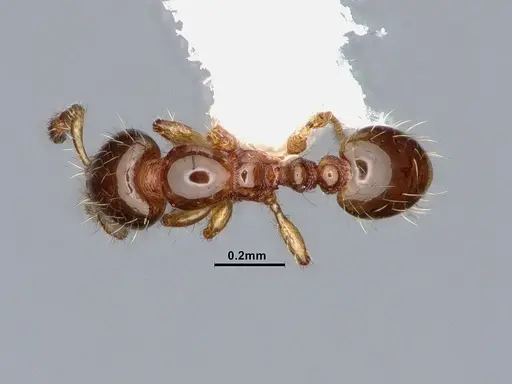
CASENT0923590
View on AntWeb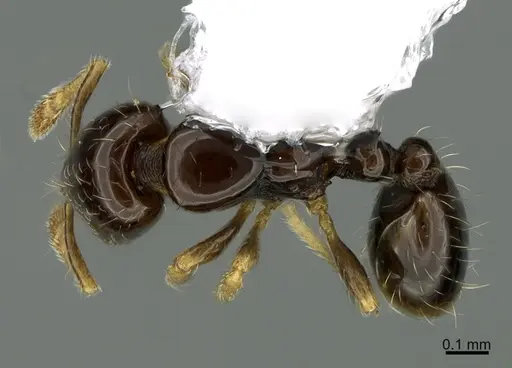
Literature
Loading distribution map...Loading products...