
Solenopsis sulfurea
- Sci. Name
- Solenopsis sulfurea
- Tribe
- Solenopsidini
- Subfamily
- Myrmicinae
- Author
- Roger, 1862
- Distribution
- Found in 4 countries
Introduction
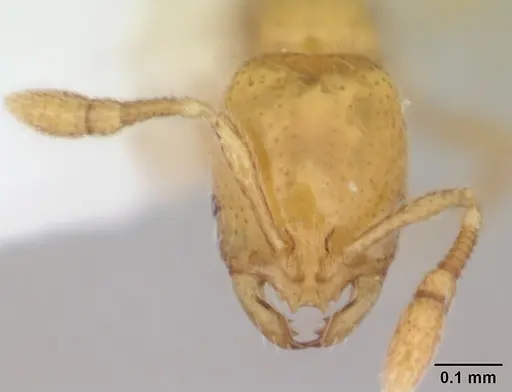
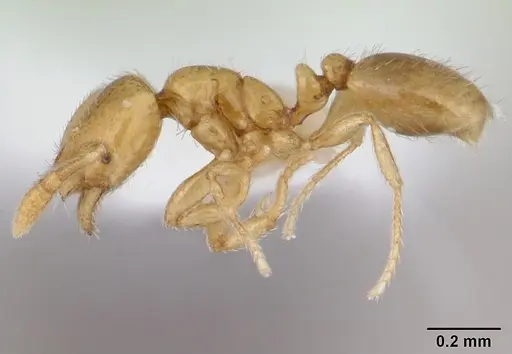
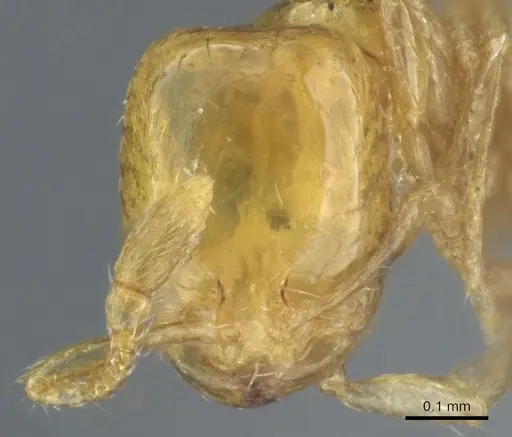
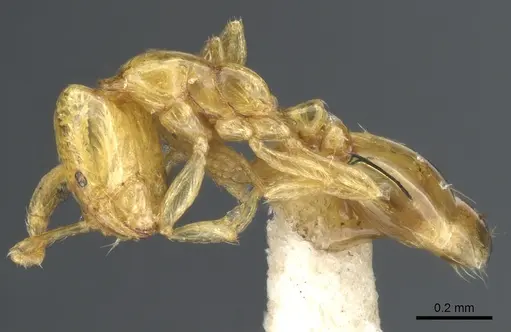
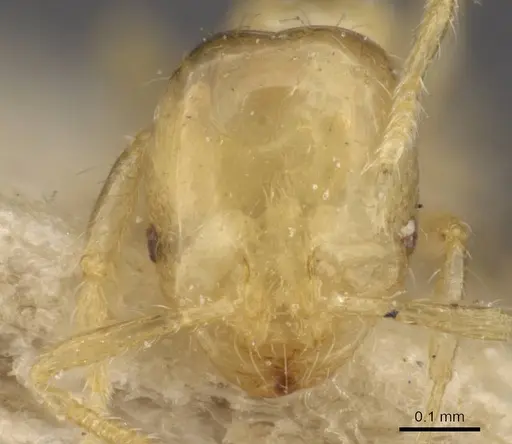
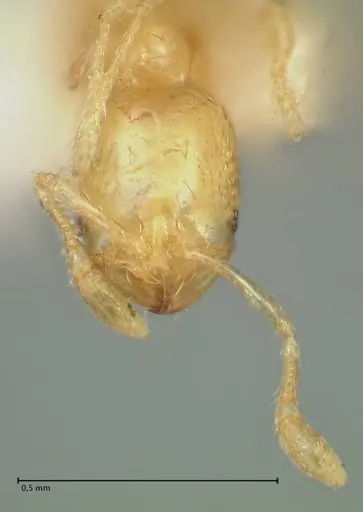
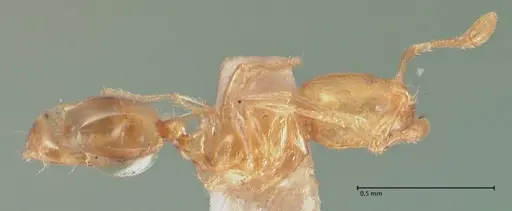
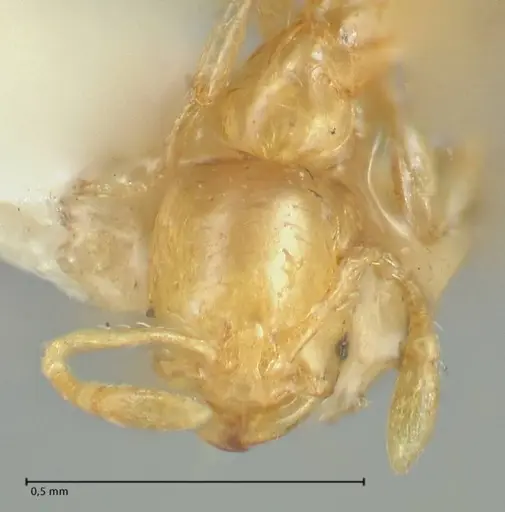
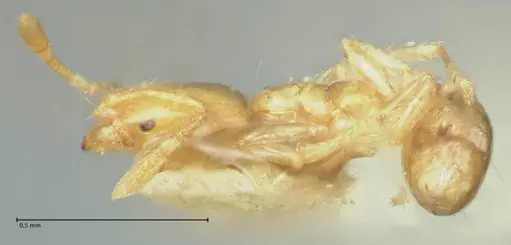
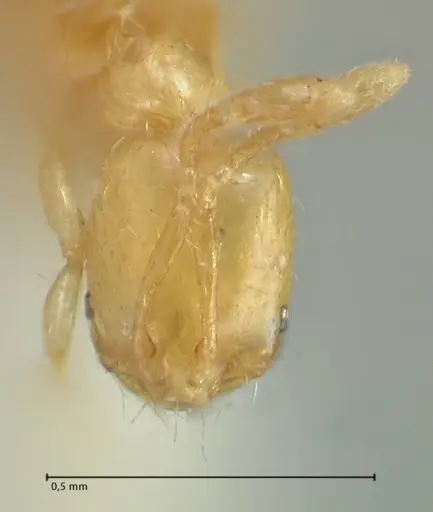
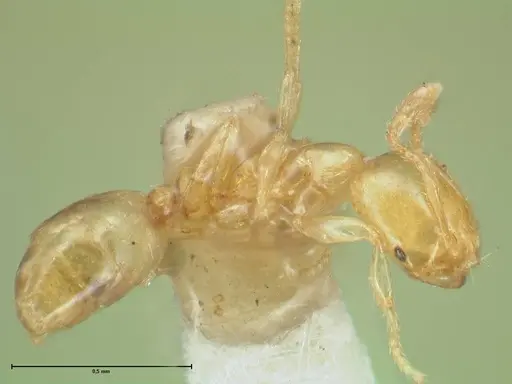
Solenopsis sulfurea is a tiny thief ant, part of the Solenopsis molesta species complex . Workers are very small, measuring 1.22–1.46 mm total length, and are pale yellow to bicolored with a brown gaster . Queens are larger,4.08–4.20 mm, and golden brown . This species is found across the Neotropical region: Argentina, Brazil, French Guiana, Guyana, Paraguay, Suriname, and Venezuela . They live in humid subtropical forests, nesting in leaf litter . Like other thief ants, they are secretive and spend most of their time underground.
Quick Summary
- Difficulty: Medium
- Origin & Habitat: Humid subtropical tall forest in leaf litter in Paraguay [1]. Recorded in Argentina (Buenos Aires, Santa Fe, Corrientes), Brazil, French Guiana, Guyana, Paraguay, Suriname, and Venezuela [1][2][3][4].
- Colony Type: Unknown – no published data on queen number or social structure for this species.
- Size & Growth:
- Queen: ~4.1 mm [1]
- Worker: 1.22–1.46 mm [1]
- Colony: Unknown – related thief ants can have several hundred to a few thousand workers, but numbers for this species are not documented.
- Growth: Unknown
- Development: Unknown – likely 4–8 weeks based on small Solenopsis species, but no specific data. (Development times are not documented. Keep conditions stable and observe.)
- Antkeeping:
- Temperature: Keep at 24–28°C – inferred from their subtropical forest habitat. Avoid prolonged temperatures below 20°C.
- Humidity: Keep the nest substrate consistently moist but not waterlogged – they come from leaf litter in humid forests [1].
- Diapause: Unknown – native to subtropical/tropical regions, so true hibernation is unlikely. Reduced activity may occur in cooler months.
- Nesting: Prefers soil and leaf litter [1]. In captivity, test tubes with a water reservoir work for founding. For larger colonies, a plaster or soil nest with small, dark chambers is suitable.
- Behavior: Secretive, mostly underground. They are aggressive toward other ant species and use mass recruitment to food sources [5]. They have a functional sting (typical of the Solenopsidini tribe) but it is too small to be a concern for humans. Escape risk is very high due to their tiny size – any gap over 1 mm is an escape route.
- Common Issues: escape is the biggest risk – use fluon barriers and fine mesh on all openings., slow colony growth during founding – be patient and leave the queen undisturbed for at least 4–6 weeks., mold from overwatering – keep the nest moist but not wet, and remove uneaten food., protein deficiency – they strongly prefer meat-based foods [6], feed small insects regularly.
Housing and Nest Setup
Because workers are only about 1.3 mm long, escape prevention is critical. Use a test tube with a water reservoir and cotton plug for the founding stage – this provides dark, humid space. Once the colony grows, move them to a small formicarium with soil or plaster chambers. Make sure all ventilation holes are covered with fine mesh (less than 0.5 mm openings). Apply fluon or PTFE to the rim of the outworld. A compact setup is better than a large one, as these ants prefer tight spaces. [5][6][1]
Feeding and Diet
These ants are omnivorous soil dwellers that show a strong preference for protein over sugar [6][5]. In bait tests, they chose meat, tuna, and canned meat over other options [6]. Feed them small pieces of mealworms, bloodworms, or fruit flies. Offer sugar water or honey occasionally, but make protein the main food. Remove leftovers after 24 hours to prevent mold. Because workers are so tiny, chop food into very small pieces or use pre-killed prey.
Temperature and Seasonal Care
Solenopsis sulfurea comes from warm, humid subtropical forests [1]. Keep the nest at 24–28°C for best brood development. A heating cable under part of the nest creates a temperature gradient. Room temperature in the low 20s°C is also fine, but avoid long periods below 20°C. There is no evidence they need winter diapause – they likely stay active year-round if kept warm.
Behavior and Temperament
These ants are secretive and spend most of their time in the nest. They use mass recruitment: one worker finds food, then signals nestmates to help carry it back [5]. They are aggressive toward other ant species but their sting is too small to harm humans. Their greatest threat is escape – they can squeeze through impossibly small gaps. Always check seals and barriers daily.
Colony Development
Queens measure about 4.1 mm [1]. Researchers collected dealate queens from leaf litter, but the founding method (claustral or semi‑claustral) is unconfirmed [1]. Based on other small Solenopsis, the first workers may appear after 4–8 weeks. Be patient and avoid disturbing the tube during the first month. The first workers (nanitics) will be even smaller than normal workers. Colony growth is likely slow at first, then accelerates as the foraging force builds up.
Frequently Asked Questions
How long does it take for Solenopsis sulfurea to get first workers?
There are no published timelines for this species. Based on similar small Solenopsis, first workers may appear after 4–8 weeks at 24–28°C. Leave the queen undisturbed for at least 4 weeks.
What do Solenopsis sulfurea ants eat?
They strongly prefer protein foods – especially meat, tuna, and canned meat [6]. Feed small insects like bloodworms, mealworms, or fruit flies. They will also take sugar water, but protein should be the main food.
Are Solenopsis sulfurea ants dangerous?
No, they are not dangerous to humans. They have a sting (like other Myrmicinae) but it is too small and weak to break human skin.
Do Solenopsis sulfurea ants need hibernation?
Probably not – they are native to subtropical/tropical regions. However, no specific studies exist. Keep them warm year‑round (24–28°C) and expect normal activity.
How big do Solenopsis sulfurea colonies get?
Unknown. Related thief ants in the Solenopsis molesta complex can have several hundred to a few thousand workers, but colony size for this species is not documented.
Can I keep Solenopsis sulfurea in a test tube?
Yes. Test tubes with a water reservoir work very well for founding. Make sure the tube is kept dark and undisturbed. Use fluon on the rim to prevent escapes – these ants are tiny.
Why are my Solenopsis sulfurea escaping?
Workers are only 1.2–1.5 mm long. They can escape through gaps you might not even see. Apply fluon to all edges, use fine mesh on vents, and check all connections. Even a 0.5 mm gap is enough.
What temperature do Solenopsis sulfurea need?
Keep the nest between 24–28°C. They come from warm subtropical forests [1] and need consistent warmth for brood development. A heating cable can help maintain this range.
Are Solenopsis sulfurea good for beginners?
They are medium difficulty. Their tiny size makes escape prevention tricky, and information on their captive care is limited. Experienced keepers who are prepared to handle small ants will have more success.
When should I move Solenopsis sulfurea to a formicarium?
Move them when the test tube becomes crowded (30–50 workers) or when the queen seems cramped. A small soil‑based nest or a plaster nest with tiny chambers works well. They do not need large spaces.
Report an Issue
The current care sheet is based fully on literature. See inconsistencies, or something that's incorrect? Please , it will be resolved after review from an admin. Contributing to the blogs tab also helps providing information, to make us be able to further improve the caresheets. Thank you for your support!
References

This caresheet is licensed under CC BY-SA 4.0 .
Community Blogs
CASENT0178130
View on AntWeb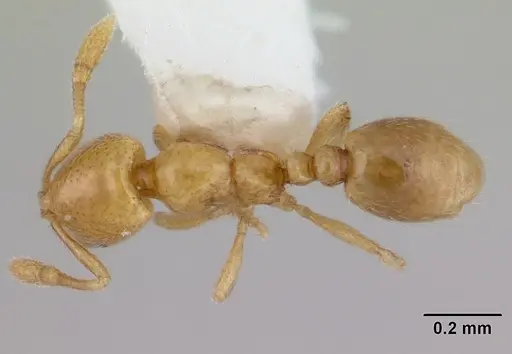
CASENT0904624
View on AntWeb
CASENT0908807
View on AntWeb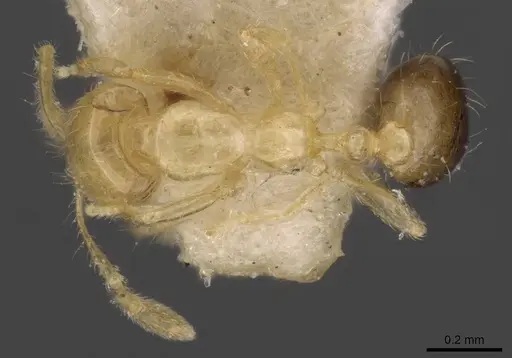
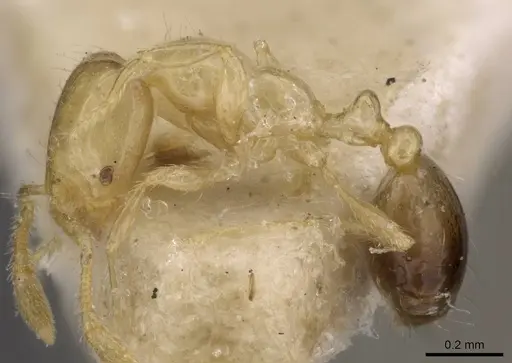
CASENT0913873
View on AntWeb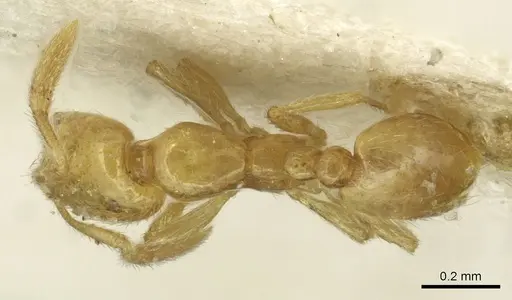
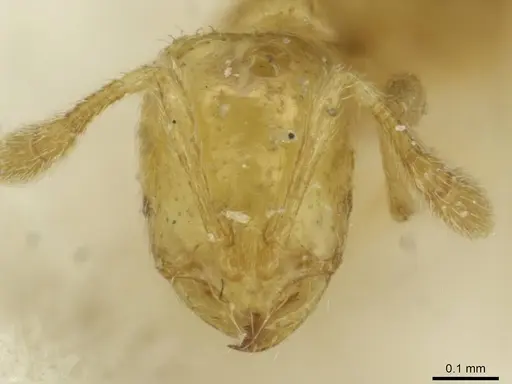
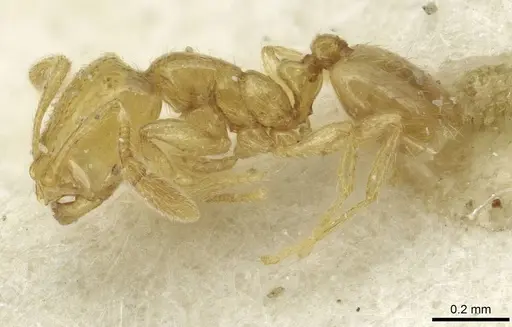
FOCOL1890
View on AntWeb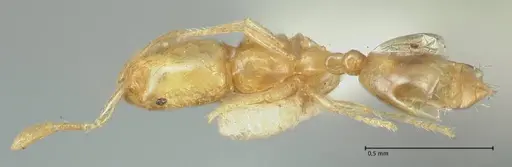
FOCOL1891
View on AntWeb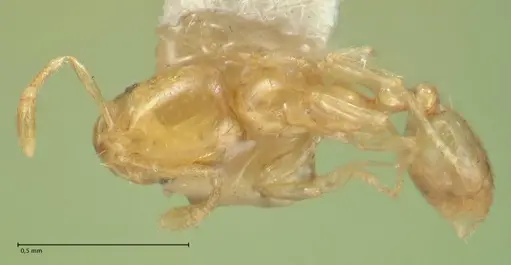
FOCOL1892
View on AntWeb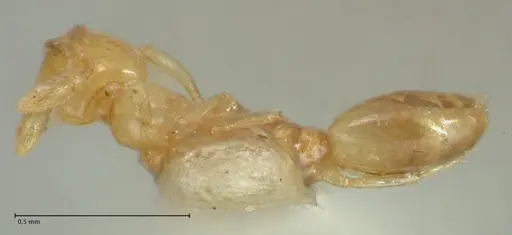
Literature
Loading distribution map...Loading products...