
Solenopsis succinea
- Sci. Name
- Solenopsis succinea
- Tribe
- Solenopsidini
- Subfamily
- Myrmicinae
- Author
- Emery, 1890
- Distribution
- Found in 8 countries
Introduction
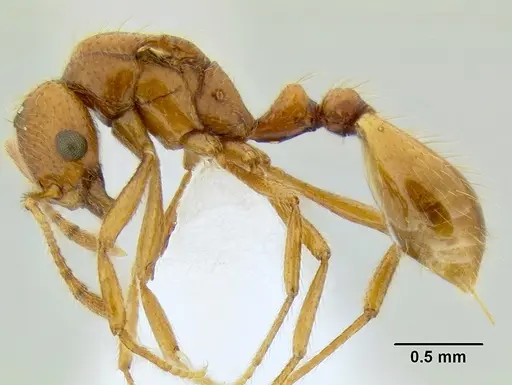
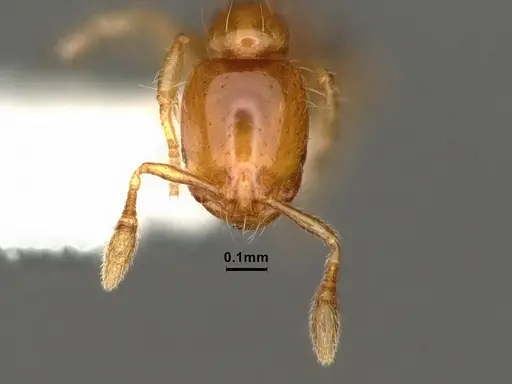
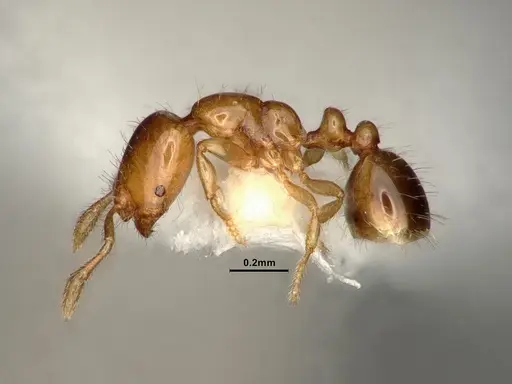
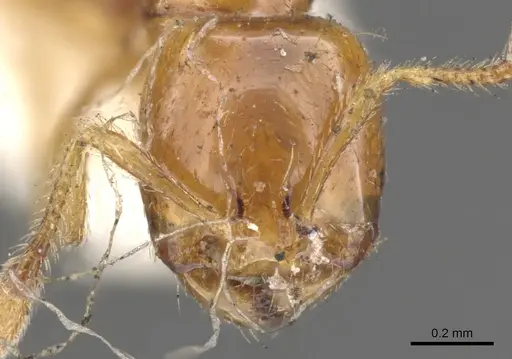
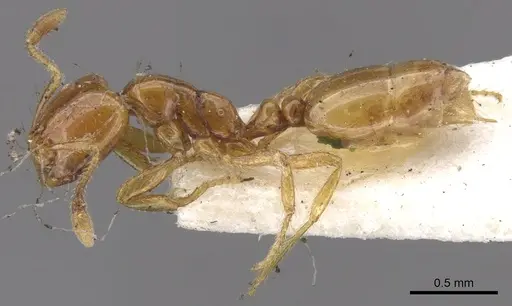
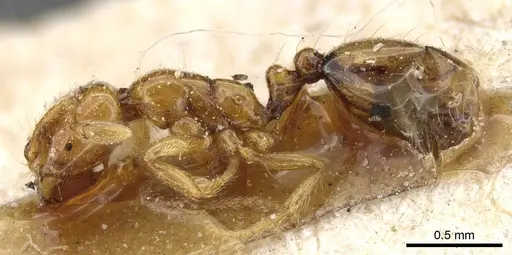
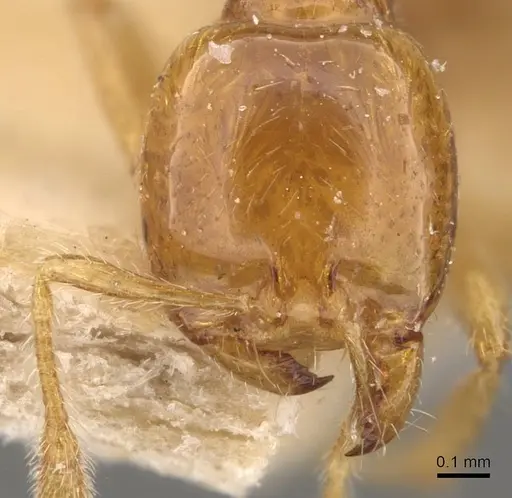
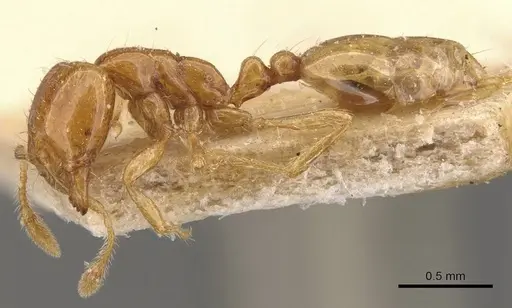
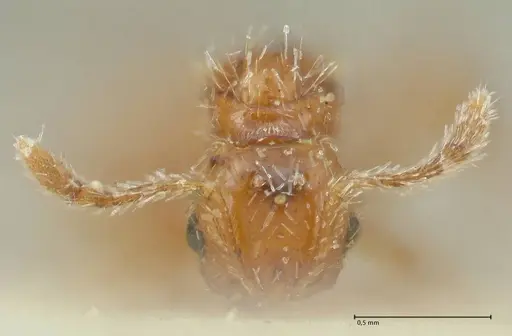
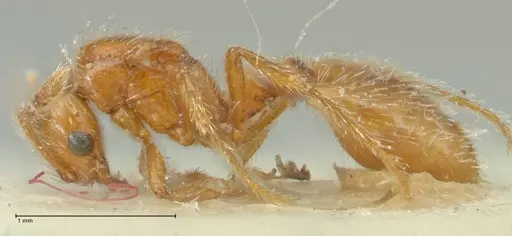
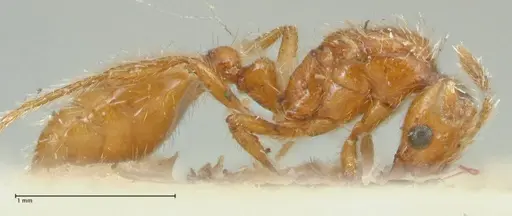
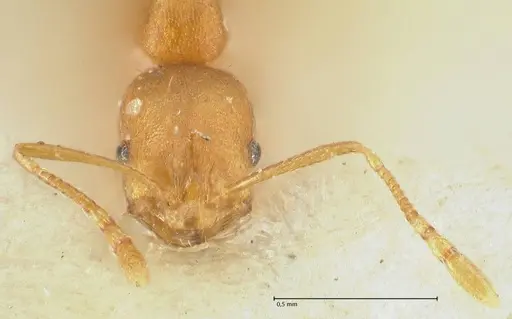
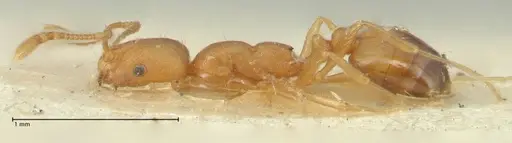
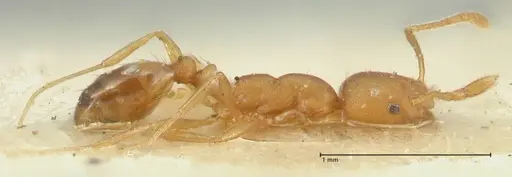
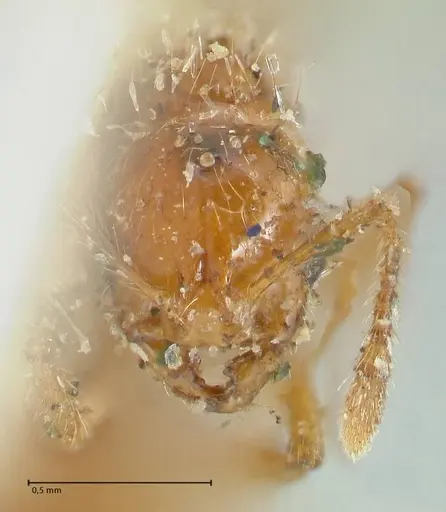
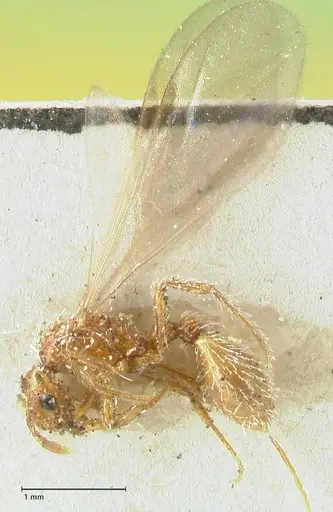
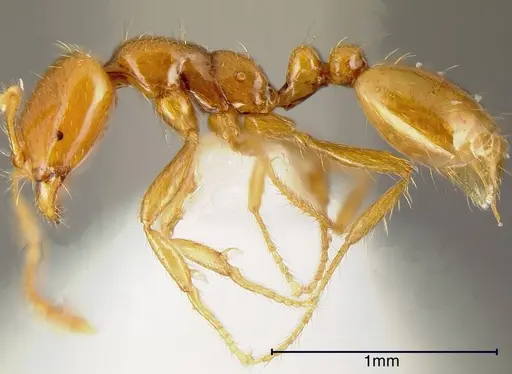
Solenopsis succinea is a small thief ant from the Solenopsis wasmannii species complex. Workers are about 2.2mm long and golden yellow, while queens are larger at 3.5mm with a lighter yellow gaster . This species is native to the Neotropical region, found from Argentina and Brazil through Central America (Costa Rica, Guatemala, Mexico) to the Caribbean islands (Puerto Rico, Haiti, Saint Vincent) . They are relatively easy to identify among thief ants because they lack clypeal carinae and lateral teeth, have a 10-segmented antenna in queens, and are larger than most related species . What makes this ant especially interesting is its suspected biology. Researchers have noted that the queen's small size and unusual mandibles strongly suggest she is a temporary social parasite . This means a queen likely invades another ant colony, kills the host queen, and uses the host workers to raise her first brood. Workers have been collected on decaying fruit, so they probably forage for sweet substances and may tend aphids for honeydew .
Quick Summary
- Difficulty: Hard
- Origin & Habitat: Neotropical region from Argentina and Brazil through Central America (Costa Rica, Guatemala, Mexico) to Caribbean islands (Puerto Rico, Haiti, Saint Vincent). Nests in rotting logs in upland forests, workers have been taken on decaying fruit [1][2][3].
- Colony Type: Unconfirmed, suspected temporary social parasite based on female morphology [1].
- Size & Growth:
- Queen: 3.5mm [1]
- Worker: ~2.2mm (range 2.0-2.3mm) [1]
- Colony: Unknown
- Growth: Unknown
- Development: Unknown, estimated 6-8 weeks based on related Solenopsis, but unconfirmed for this species (Development timeline is not documented for Solenopsis succinea. The estimate above is a rough guess from other thief ants.)
- Antkeeping:
- Temperature: Tropical species, keep at 24-28°C. Avoid dropping below 22°C. Unconfirmed optimal range, inferred from native habitat [1].
- Humidity: Moderate to high, nesting in rotting logs in upland forests suggests humid but not waterlogged conditions. Keep nest substrate consistently moist [2][3].
- Diapause: No, tropical species, no hibernation needed. Keep temperatures stable year-round [1].
- Nesting: Prefers rotting wood. Use test tube setup for founding. For established colonies, Y-tong (AAC) or plaster nest works. Keep nest humid with drier foraging area.
- Behavior: Workers are tiny (2.2mm) but active foragers. They have a functional stinger (Myrmicinae subfamily). Escape risk is high, workers can squeeze through very small gaps. They are omnivorous, likely feeding on sweet liquids and small insects. As a suspected social parasite, captive founding is challenging.
- Common Issues: colony failure during founding due to suspected parasitic biology, host species unknown, humidity control, too wet causes mold, too dry causes desiccation, escape risk, 2mm workers need very tight barriers, very little care information is documented, making husbandry experimental, desiccation risk if humidity drops too low
Housing and Nest Setup
For founding, a test tube setup is the standard approach: fill one-third with water, plug with cotton, and add the queen. Keep the tube dark and humid at 24-28°C. Since this species is a suspected social parasite, the queen may need a host colony to succeed, captive founding without a host is highly uncertain [1]. Once workers appear, the colony can stay in the test tube or move to a small formicarium. Y-tong (AAC) or plaster nests work well for established colonies, providing good humidity control. Keep the nest material moist but not waterlogged. A water tower or additional test tube provides constant water access. Foraging areas should be drier than the nest.
Feeding and Diet
In the wild, workers have been found on decaying fruit, so they are attracted to sweet substances [2][3][1]. In captivity, offer a varied diet: sugar water or honey for energy, and small insects like fruit flies or pinhead crickets for protein. Feed small amounts every 2-3 days and remove uneaten food to prevent mold. Ensure adequate protein during founding, especially if the queen is parasitic and needs to sustain herself. Remove moldy food immediately, as it can kill small colonies.
Temperature and Seasonal Care
As a tropical species, Solenopsis succinea needs warm temperatures year-round. Keep the nest at 24-28°C (75-82°F). Use a small heating cable on one side to create a temperature gradient. Avoid temperatures below 22°C, which can slow activity. No hibernation is needed, maintain stable conditions and avoid drafts or air conditioning vents [1]. Keep humidity moderate to high by misting the nest or using a water reservoir.
Behavior and Colony Dynamics
This species is suspected to be a temporary social parasite, the founding queen invades a host colony, replaces the host queen, and uses host workers to rear her first brood [1]. This makes captive founding very difficult. Workers are tiny (2.2mm), golden yellow, and active foragers. They have a functional stinger (typical of Myrmicinae), but given their size, the sting is mild. Monitor for escape, they can squeeze through tiny gaps. If you obtain a colony, it may already contain host workers.
Identification and Similar Species
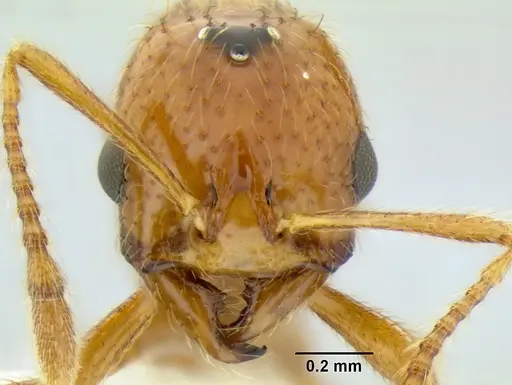
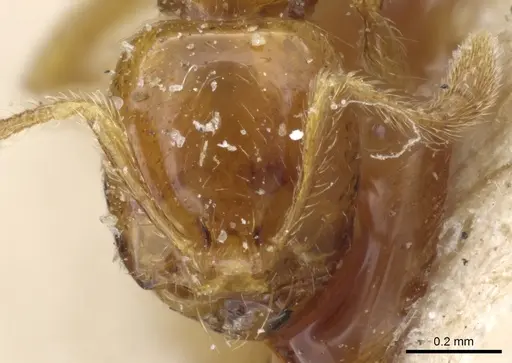
Solenopsis succinea belongs to the wasmannii species complex and the succinea group (subgenus Diagyne). Key features: workers ~2.2mm, golden yellow, queens 3.5mm with 10-segmented antennae, clypeal carinae absent, no lateral or extralateral clypeal teeth [1]. The clypeal form is unusual, making it easy to distinguish from most other thief ants. It could be confused with Solenopsis bicolor, but S. succinea has a unique clypeal structure. The succinea group is characterized by evanescent clypeal carinae and a transverse clypeal margin without teeth [5].
Frequently Asked Questions
How long does it take for Solenopsis succinea to produce first workers?
The exact development time is unknown for this species. Based on related Solenopsis, it might take 6-8 weeks from egg to worker at 24-28°C, but this is purely an estimate. The parasitic founding behavior may affect development.
Do Solenopsis succinea ants sting?
Yes, they have a functional stinger as members of the Myrmicinae subfamily. However, workers are very small (~2.2mm), so the sting is mild and rarely breaks human skin.
What do Solenopsis succinea ants eat?
They are omnivorous. Field observations show workers on decaying fruit, so they like sweet foods [2][3]. In captivity, offer sugar water or honey, small insects (fruit flies, pinhead crickets), and other organic matter.
Are Solenopsis succinea good for beginners?
No, this species is rated Hard. Very little is known about their biology, and they are suspected to be temporary social parasites, making founding extremely difficult. Beginners should start with easier, well-documented species.
Can I keep multiple Solenopsis succinea queens together?
Colony structure is unconfirmed. As a suspected temporary social parasite, their queen dynamics are unknown. Do not attempt to combine queens, it could lead to fighting. Keep a single queen per colony unless you observe otherwise.
Do Solenopsis succinea need hibernation?
No, they do not require hibernation. They are a tropical species and need warm conditions year-round (24-28°C). Do not cool them.
How big do Solenopsis succinea colonies get?
Colony size is unknown. There is no documented maximum. It is not known to form large supercolonies.
What is the best nest type for Solenopsis succinea?
A test tube setup works for founding. For established colonies, Y-tong (AAC) or plaster nests provide good humidity control. Keep the nest humid with some drier areas in the outworld.
Why is my Solenopsis succinea colony dying?
Common causes include temperature too low, humidity problems (too dry or too wet), insufficient protein, or stress. As a suspected parasite, they may have unknown requirements. Keep stable warm, humid conditions and offer diverse food.
Report an Issue
The current care sheet is based fully on literature. See inconsistencies, or something that's incorrect? Please , it will be resolved after review from an admin. Contributing to the blogs tab also helps providing information, to make us be able to further improve the caresheets. Thank you for your support!
References

This caresheet is licensed under CC BY-SA 4.0 .
Community Blogs
CASENT0106271
View on AntWeb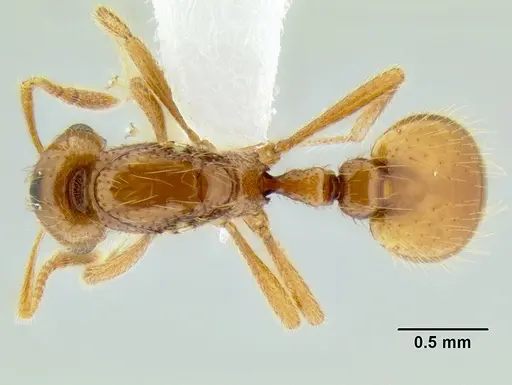
CASENT0884321
View on AntWeb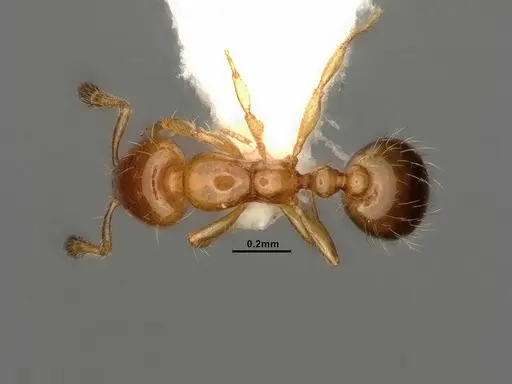
CASENT0902342
View on AntWeb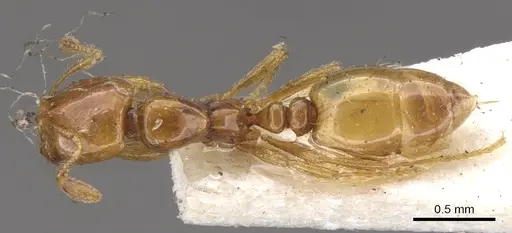
CASENT0904633
View on AntWeb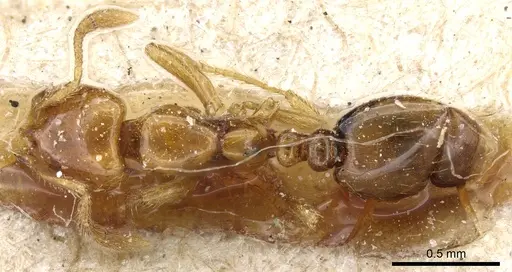
CASENT0908850
View on AntWeb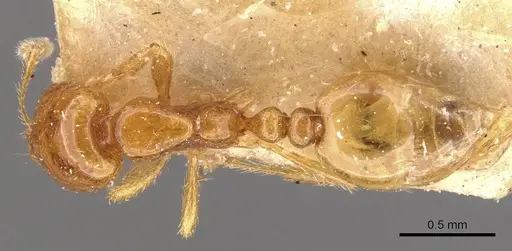
FOCOL1885
View on AntWeb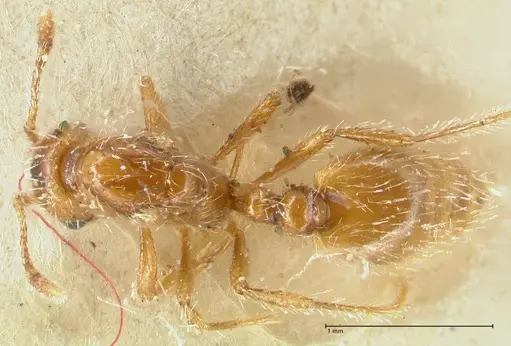
FOCOL1886
View on AntWeb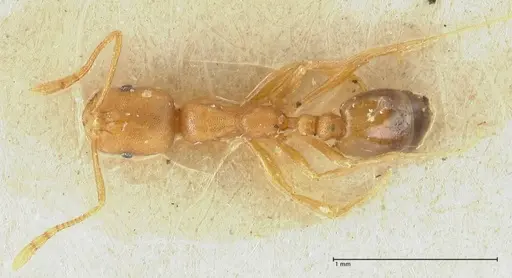
FOCOL1887
View on AntWeb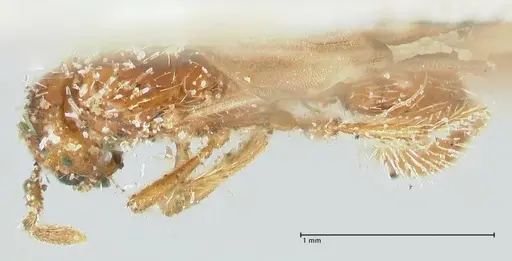
INBIOCRI001238349
View on AntWeb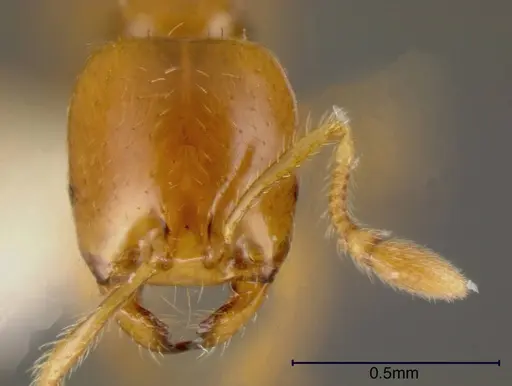
Literature
Loading distribution map...Loading products...