
Solenopsis quinquecuspis
- Sci. Name
- Solenopsis quinquecuspis
- Tribe
- Solenopsidini
- Subfamily
- Myrmicinae
- Author
- Forel, 1913
- Distribution
- Found in 1 countries
Introduction
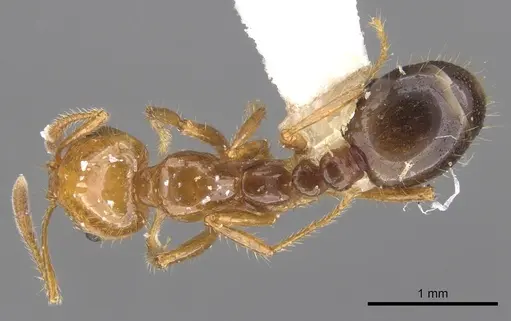
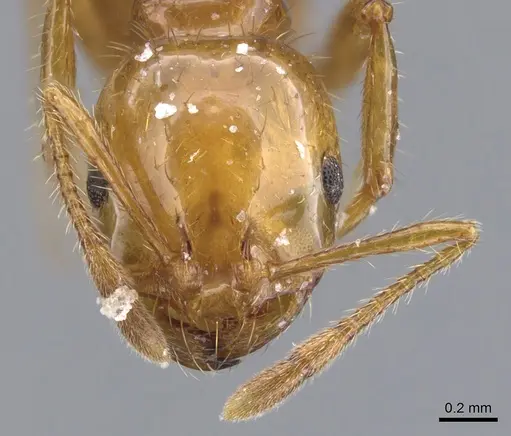
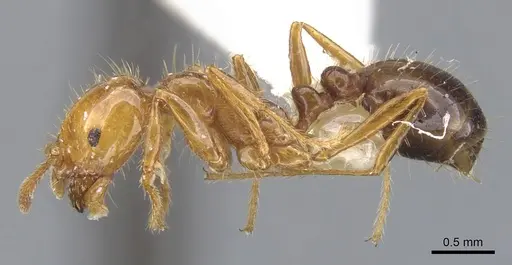
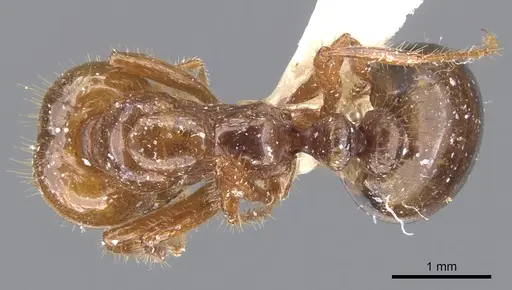
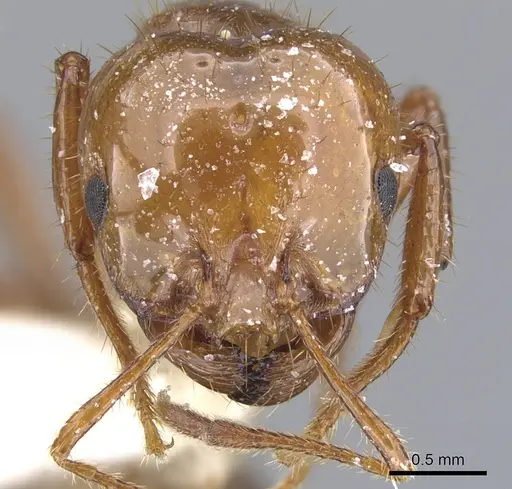
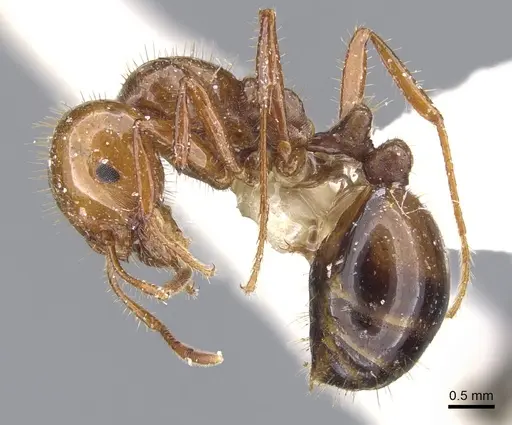
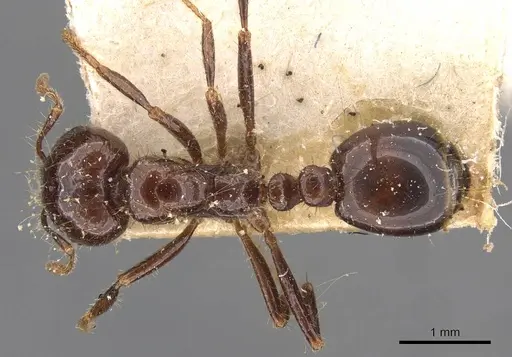
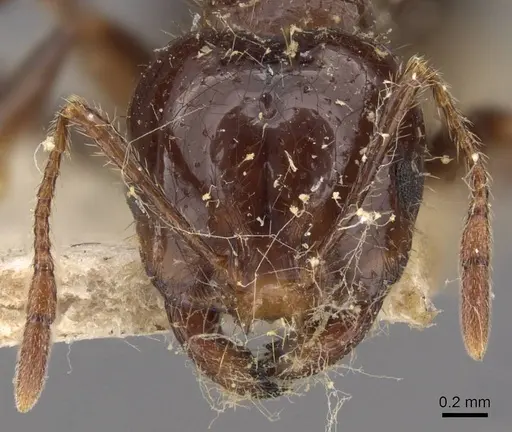
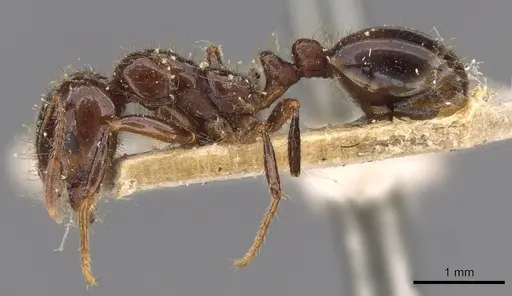
Solenopsis quinquecuspis is a fire ant native to southern South America. It is found in Uruguay, southern Brazil, and Argentina . Workers are small to medium-sized, with major worker head length up to 1.47 mm . The body is reddish-brown to dark brown, and unlike many related fire ants, it lacks a pale spot on the first gastric segment, a key identification feature . Queens are larger, measuring 7.1-7.7 mm . This species belongs to the Solenopsis saevissima group and is socially polymorphic: colonies can have a single queen (monogyne) or multiple queens (polygyne), controlled by the GP-9 gene . What makes it particularly interesting is that it frequently hybridizes with Solenopsis invicta and Solenopsis richteri where their ranges overlap, especially near Rosario, Argentina . This hybridization blurs species boundaries and makes identification tricky.
Quick Summary
- Difficulty: Medium
- Origin & Habitat: Native to southern South America: Rio Grande do Sul (Brazil), Uruguay, and Argentina (Buenos Aires, La Pampa, eastern Santa Fe and Cordoba provinces). It often occurs on hilly or rocky ground and can live alongside other fire ant species [5][1].
- Colony Type: Socially polymorphic, colonies can be monogyne (single queen) or polygyne (multiple queens). Queen number is determined by the GP-9 gene: B-like alleles give monogyne, b-like alleles give polygyne [2][3].
- Size & Growth:
- Queen: 7.1-7.7 mm [1]
- Worker: size data unavailable (head measurements only available) [1]
- Colony: Unknown, not specified in available literature
- Growth: Moderate to fast (fire ants establish quickly) [6][2]
- Development: Estimated 4-6 weeks based on related fire ants (Development speeds up at higher temperatures. First workers (nanitics) are smaller.)
- Antkeeping:
- Temperature: Keep nest at 24-28°C. Fire ants prefer warm conditions, a heating cable on one side creates a useful gradient. Room temperature (22-24°C) is often adequate [1].
- Humidity: Dry to moderately moist. Allow the nest substrate to dry partly between waterings. They prefer well‑drained conditions, as they nest in rocky or hilly ground [5].
- Diapause: No true diapause required, being a South American species, they don't need hibernation. Activity may slow slightly in cooler months, but they can be kept active year‑round
- Nesting: Y‑tong (AAC), plaster, or soil nests work well. Fire ants are ground‑nesting and prefer compact, dark chambers. They will excavate soil if given the chance
- Behavior: Fire ants are defensive and deliver painful stings when threatened. They are active foragers, hunting for protein and collecting honeydew. Workers are polymorphic, with major workers having larger heads for processing food. They are small and can squeeze through tiny gaps, use fluon on nest edges and fine mesh on outworlds. This species hybridizes with other fire ants where ranges overlap [4].
- Common Issues: stinging, fire ants have functional stingers, handle carefully, escape prevention is critical, small workers can slip through tiny gaps, wild-caught colonies may carry microsporidian parasites (Vairimorpha, Thelohania) [8][9] or be attacked by Pseudacteon flies [10][11], hybridization with S. invicta and S. richteri can make exact identification difficult [4], polygyne colonies can grow very large, ensure the nest has enough space
Housing and Nest Setup
Solenopsis quinquecuspis does well in Y-tong (AAC) nests or naturalistic setups with soil. Fire ants are ground-nesting by nature and prefer compact, dark chambers. If using a naturalistic setup, provide a layer of soil or sand about 2-3 cm deep that you can keep lightly moist. These ants don't need high humidity, aim for dry to moderately moist conditions, letting the substrate dry partly between waterings. Use a test tube setup for founding colonies, then transition to a proper nest once the colony reaches 50+ workers. Escape prevention is essential, apply fluon to all nest edges and use fine mesh on outworlds, as these small ants can slip through surprisingly tiny gaps [1][5].
Feeding and Diet
Fire ants are omnivorous and will accept both protein and sugar sources. Offer protein-rich foods like small crickets, mealworms, or other insects 2-3 times per week. They also readily consume sugar water, honey, or diluted syrup. In the wild, they forage for insects and collect honeydew from aphids and scale insects. Fire ants are known for their aggressive foraging, major workers can tackle prey much larger than themselves. Remove uneaten food after 24-48 hours to prevent mold. A constant sugar water supply is recommended for established colonies.
Temperature Requirements
Keep your colony at 24-28°C for optimal growth and development. Fire ants originate from warm regions of South America and thrive in warm conditions. A heating cable placed on one side of the nest creates a temperature gradient that lets ants choose their preferred zone. Room temperature (around 22-24°C) is often adequate in heated homes. Avoid temperatures below 20°C for extended periods, as this can slow colony development and reduce activity. Unlike temperate species, they don't require a winter cooling period [1].
Defense and Sting
This species has a functional stinger, like all fire ants in the subfamily Myrmicinae, they can deliver painful stings. When disturbed, workers will swarm and sting repeatedly, releasing alarm pheromones that alert other colony members to the threat. The sting sensation is often described as a sharp, burning pain, hence the name 'fire ant.' When working with this species, move slowly and avoid vibrations. Use long-handled tools rather than your hands near the nest. If stung, wash the area with soap and water, the venom contains alkaloids that can cause pustules in sensitive individuals. Keep the colony secure from curious pets and children.
Colony Structure and Genetics
Solenopsis quinquecuspis is one of the few fire ant species that exhibits social polymorphism, some colonies have a single queen while others have multiple queens. This is controlled by a gene called GP-9. Colonies with the B-like allele have only one queen (monogyne), while those with the b-like allele can have multiple reproductive queens (polygyne) [2][3]. In areas where this species overlaps with S. invicta and S. richteri (particularly around Rosario, Argentina), hybridization occurs, meaning some colonies may have mixed genetics [4]. If you're keeping stock from the hobby, genetic purity may vary. Polygyne colonies can become very large [7].
Health and Parasites
Wild-caught colonies of S. quinquecuspis may carry parasites and diseases that can affect captive colonies. In their native range, they can be infected by microsporidian parasites including Vairimorpha invictae and Thelohania solenopsae [8][9]. They are also hosts for Pseudacteon decapitating flies, parasitoid flies that lay eggs inside workers, eventually decapitating them [10][11]. The social parasite Solenopsis daguerrei also targets this species [12]. Quarantine any wild-caught colony for several weeks and monitor for unusual mortality or parasites before introducing to your collection. Purchasing from reputable breeders who verify colony health is recommended.
Frequently Asked Questions
How long does it take for Solenopsis quinquecuspis to raise first workers?
Based on related fire ant species, expect 4-6 weeks from egg to first worker at optimal temperature (around 26°C). Founding queens seal themselves in and raise the first brood alone. The first workers (nanitics) are smaller than mature workers.
Can I keep multiple queens together in one colony?
This species is socially polymorphic, both single-queen and multi-queen colonies occur naturally. However, combining unrelated foundresses is not recommended as they may fight. If you want a polygyne colony, it's safer to start with a single queen or purchase an established multi-queen colony from a breeder [2][3].
What do Solenopsis quinquecuspis ants eat?
They are omnivorous. Offer protein sources like small insects (crickets, mealworms) 2-3 times per week, and provide constant access to sugar water, honey, or diluted syrup. They will also scavenge and forage actively.
Are Solenopsis quinquecuspis good for beginners?
This species is rated as medium difficulty. They are active and interesting to watch, but their sting and escape tendencies require careful handling. They are more challenging than beginner species like Lasius but easier than some exotic ants. If you're comfortable with defensive ants and escape prevention, they make rewarding colonies.
Do Solenopsis quinquecuspis need hibernation?
No, being a South American species from temperate regions, they don't require true hibernation. However, they may reduce activity in cooler months. Keep them at room temperature or slightly warmer year-round.
How big do Solenopsis quinquecuspis colonies get?
Mature polygyne colonies can reach several thousand workers. Monogyne colonies typically stay smaller. They are polymorphic, colonies contain workers of various sizes, with major workers having significantly larger heads for food processing [7][1].
Why is my Solenopsis quinquecuspis colony dying?
Common causes include: parasites from wild-caught colonies (microsporidia, Pseudacteon flies), temperatures too cold (below 20°C), excessive humidity causing mold, or escape leading to lost ants. Quarantine wild-caught colonies and ensure proper temperature and ventilation. Fire ants are resilient once established [8][9].
What makes Solenopsis quinquecuspis different from other fire ants?
Unlike most fire ants, S. quinquecuspis lacks the pale spot on the first gastric segment, this is a key identifying feature. It also has some of the largest major workers in the saevissima species group. Genetically, it shows extensive hybridization with S. invicta and S. richteri in areas where their ranges overlap [1][4].
Report an Issue
The current care sheet is based fully on literature. See inconsistencies, or something that's incorrect? Please , it will be resolved after review from an admin. Contributing to the blogs tab also helps providing information, to make us be able to further improve the caresheets. Thank you for your support!
References

This caresheet is licensed under CC BY-SA 4.0 .
Community Blogs
Literature
Loading distribution map...Loading products...