
Solenopsis oculata
- Sci. Name
- Solenopsis oculata
- Tribe
- Solenopsidini
- Subfamily
- Myrmicinae
- Author
- Santschi, 1925
- Distribution
- Found in 1 countries
Introduction
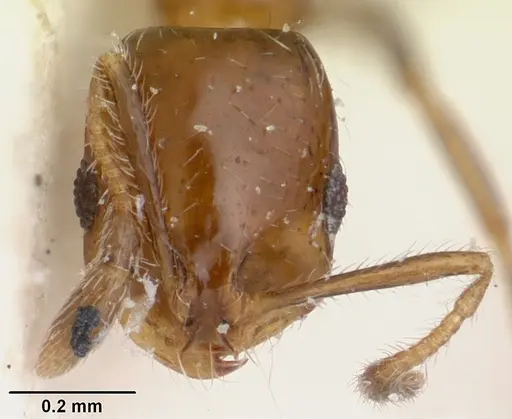
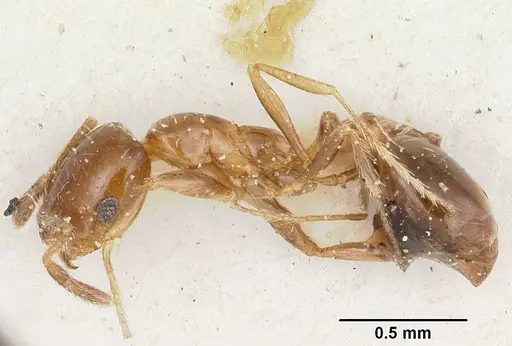
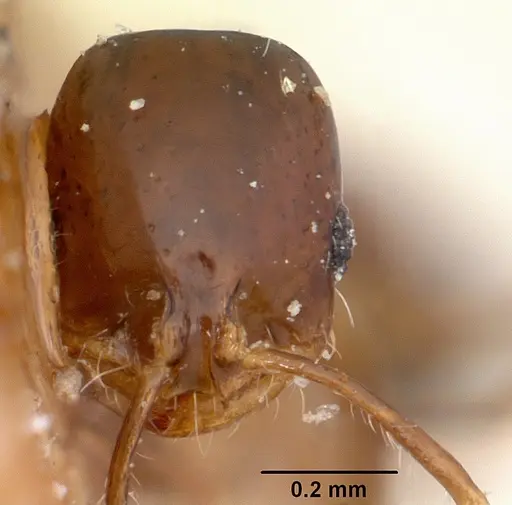
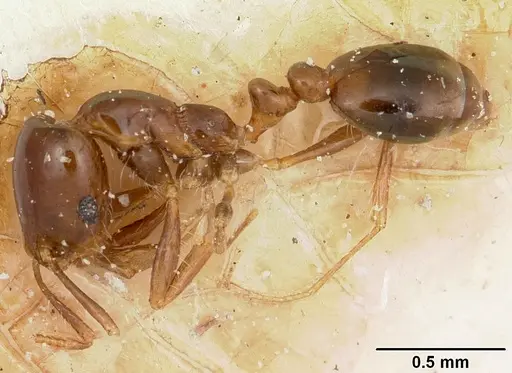
Solenopsis oculata is a tiny thief ant from the Solenopsis nigella complex. Workers are 1.8-2.04 mm long and dark brown, with a head longer than wide and large eyes. They lack a tooth on the subpeduncular process, which sets them apart from relatives . These ants live in humid tropical forests in Argentina and Venezuela, in ground microhabitats and leaf litter . Their sting is painful , so handle with care.
Quick Summary
- Difficulty: Hard
- Origin & Habitat: Native to northern South America, Argentina (Catamarca) and Venezuela. Lives in humid tropical forests from sea level up to 1200 m, in ground litter and forest floor microhabitats [2][3].
- Colony Type: Unknown. No data exists on queen number or social structure for this species.
- Size & Growth:
- Queen: Unknown, queen caste has never been described [1].
- Worker: 1.8-2.04 mm total length [1].
- Colony: Unknown, no data available.
- Growth: Unknown, no data available.
- Development: Unconfirmed, based on related Solenopsis, perhaps 6-10 weeks at optimal temperatures. (No species‑specific development data exist. All timelines are rough estimates from related species.)
- Antkeeping:
- Temperature: Warm and stable, they come from humid tropical forests. Aim for 24-28 °C with a gradient [2][3]. Avoid drops below 20 °C.
- Humidity: High humidity, keep the nest substrate consistently moist but not flooded. A water tube helps maintain moisture [2].
- Diapause: Unknown, as a tropical species, they likely do not need true hibernation, but may slow down in cooler periods.
- Nesting: Small, dark, humid chambers. Y‑tong (AAC) nests or test tubes with cotton work well. Scale chambers to their tiny size. No specific nest preferences are recorded [2].
- Behavior: Fierce for their size, they deliver a painful sting [2]. Because they are under 2 mm, escape prevention is critical, any gap larger than 0.5 mm is a potential exit. Likely predatory on small arthropods, typical of thief ants.
- Common Issues: escape prevention is critical, their tiny size lets them slip through any gap., maintaining consistent high humidity in an artificial nest can be tough., limited biological data means care advice is mostly guesswork., they are aggressive defenders and can sting, keepers should use caution., wild‑caught colonies may carry parasites, quarantine new stocks.
Housing and Nest Setup
Because Solenopsis oculata is tiny (under 2 mm), nest chambers must be narrow and cozy. Test tubes with cotton or a Y‑tong nest with small cells work well. They prefer dark, humid conditions that mimic their forest‑floor home [2][3]. Use fine mesh (≤0.5 mm) on all openings, these ants can squeeze through incredibly small gaps. Check seals often.
Feeding and Diet
Like other thief ants, Solenopsis oculata is predatory. Offer small live prey such as fruit flies, pinhead crickets, or tiny mealworms. They may also take diluted honey or sugar water occasionally. Remove uneaten food after 24 hours to prevent mold. No specific dietary studies exist for this species.
Temperature and Humidity
These ants inhabit humid tropical forests [2][3]. Keep temperatures at 24-28 °C, a heating cable on one side of the nest creates a gradient. High humidity is essential: keep the substrate damp but not soggy. A water tube provides a steady moisture source. Avoid cold drafts below 20 °C.
Behavior and Defense
Workers have a painful sting [2]. Despite their size, they defend the colony aggressively. Their tiny size makes escape a constant concern, seal every possible gap. They were observed tending coccids on Dahlia in Venezuela [2], suggesting they may tend honeydew‑producing insects in the wild.
Colony Development
Almost nothing is known about the biology of this species [1]. The queen has never been described, colony size is unrecorded, and founding behavior is unknown. Any care advice for development is inferred from related Solenopsis and should be taken as guesswork.
Frequently Asked Questions
How long does it take for Solenopsis oculata to produce first workers?
The exact timeline is unconfirmed. Based on related Solenopsis, perhaps 6-10 weeks from egg at 24-28 °C, but no species‑specific data exist.
What do Solenopsis oculata ants eat?
They are predatory and likely hunt small arthropods. Offer fruit flies, pinhead crickets, or tiny mealworms. Sugar sources may also be accepted, but protein should be primary. No specific feeding studies exist.
Are Solenopsis oculata good for beginners?
Rated Hard. The tiny size demands flawless escape prevention, high humidity is tricky to maintain, and very little is known about their biology. Not recommended for novice keepers.
How big do Solenopsis oculata colonies get?
Unknown. No data on colony size exists for this species.
What temperature do Solenopsis oculata need?
24-28 °C, with a gradient. They come from humid tropical forests [2][3]. Avoid temperatures below 20 °C.
Can I keep multiple Solenopsis oculata queens together?
This has not been studied. Combining queens is not recommended without data, they may fight.
Why are my Solenopsis oculata escaping?
They are under 2 mm and slip through tiny gaps. Use mesh ≤0.5 mm, check seals often, and consider fluon barriers.
Do Solenopsis oculata need hibernation?
Unknown, as a tropical species, they probably do not require true diapause, but no studies exist.
What is the best nest type for Solenopsis oculata?
Small, dark, humid chambers. Y‑tong (AAC) or test tubes work. Scale to their tiny size. No species‑specific recommendations are available.
Where is Solenopsis oculata found in the wild?
Argentina (Catamarca) and widely distributed across Venezuela. Lives in humid tropical forests, ground microhabitats [2][3].
Is Solenopsis oculata invasive anywhere?
No record of invasiveness. Never release captive colonies into non‑native areas.
Report an Issue
The current care sheet is based fully on literature. See inconsistencies, or something that's incorrect? Please , it will be resolved after review from an admin. Contributing to the blogs tab also helps providing information, to make us be able to further improve the caresheets. Thank you for your support!
References

This caresheet is licensed under CC BY-SA 4.0 .
Community Blogs
CASENT0103205
View on AntWeb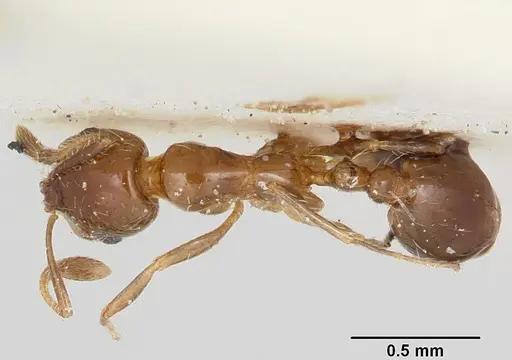
CASENT0103216
View on AntWeb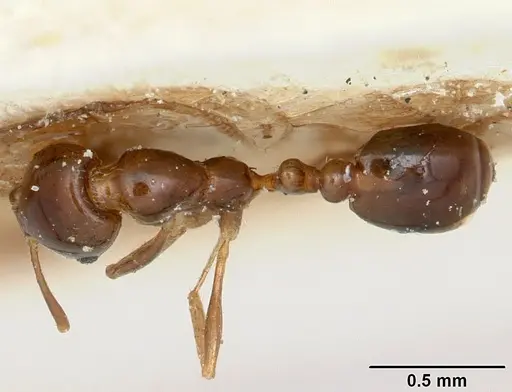
Literature
Loading distribution map...Loading products...