
Solenopsis occipitalis
- Sci. Name
- Solenopsis occipitalis
- Tribe
- Solenopsidini
- Subfamily
- Myrmicinae
- Author
- Santschi, 1911
- Distribution
- Found in 1 countries
Introduction
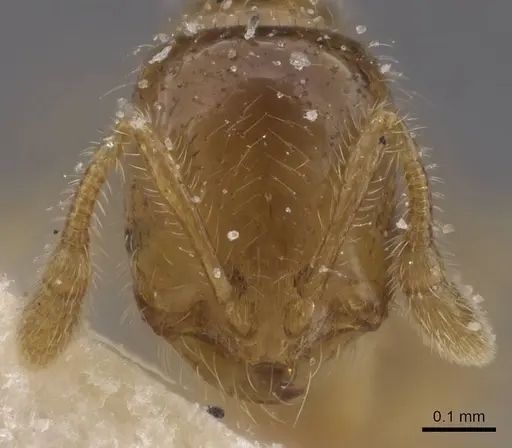
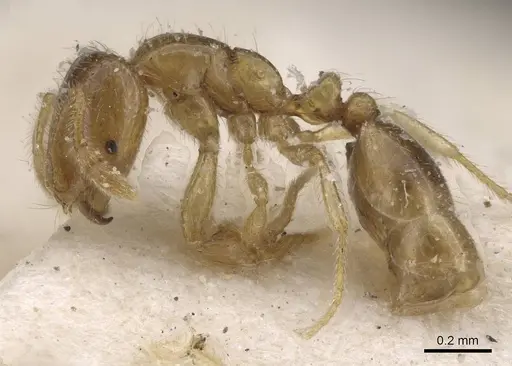
Solenopsis occipitalis is a tiny yellow ant measuring about 1.3 mm to 1.7 mm in total length . Workers have a rectangular head, a straight occipital margin, and a pair of well‑developed teeth on the clypeus. Their body is mainly yellow, with the mandibles and the first gastral tergite dark brown . This species belongs to the fire ant genus Solenopsis (subfamily Myrmicinae, tribe Solenopsidini). It was originally described from Tunisia and has since been recorded in Egypt (Mafareq, South Sinai) and Morocco (Beni Snassen mountains) ; additional records exist for Algeria . Unlike many related ants, its eyes have only a single facet .
Quick Summary
- Difficulty: Hard
- Origin & Habitat: North Africa, Tunisia, Algeria, Egypt, and Morocco. Found in arid to semi‑arid Mediterranean habitats, often under stones or in soil [1][2].
- Colony Type: Unconfirmed, based on typical Solenopsis patterns, likely single‑queen colonies, but this has not been verified.
- Size & Growth:
- Queen: Size data unavailable, no queen measurements have been published [1].
- Worker: 1.30-1.71 mm total length [1].
- Colony: Unknown, colony size has not been documented. Based on genus patterns, it may reach a few hundred workers, but this is speculative.
- Growth: Unknown
- Development: Unknown, no data available. (No species‑specific development data exists. Timing likely depends on temperature.)
- Antkeeping:
- Temperature: Provide a thermal gradient in the nest, with a warm area around 24-26°C and a cooler area about 18-20°C. Avoid temperatures above 30°C. These ants come from a warm North African climate [3].
- Humidity: Low to moderate, keep the nest mostly dry with a small moist area. Let the substrate dry out between waterings to mimic their arid natural habitat [3].
- Diapause: Unknown, this species comes from a region with mild winters. Full diapause may not be required, but if colony activity drops in winter, a slight cooling (15-18°C) for a few weeks can be tried [3].
- Nesting: They likely nest in soil, under stones, or in small cavities. A soil or plaster nest with narrow chambers, or a test tube setup, works well. Ensure superb escape prevention with fine mesh (≤0.5 mm) or fluon because of their tiny size [3].
- Behavior: Workers are tiny (1.3-1.7 mm) and fast‑moving. They are generally non‑aggressive toward keepers but will defend the nest if disturbed. Escape risk is very high, fine mesh and fluon barriers are essential. The species has a sting, but its potency is unknown and likely mild given their size [3].
- Common Issues: tiny size means escapes are likely without fine mesh or fluon barriers, colony growth is unknown, may be slow and vulnerable to disturbance in early stages, overheating risk, tiny ants can desiccate quickly above 30°C, lack of natural history data means some trial and error in care is necessary
Housing and Setup
Because workers are only 1.3-1.7 mm long [1], escape prevention is critical. Standard formicarium mesh may be too large, use fine mesh (≤0.5 mm) or apply fluon on the outworld rim. A Y‑tong (AAC) or plaster nest with narrow chambers works well, or keep small colonies in a test tube setup. Cover the nest to keep it dark while allowing observation. Connect a small outworld for foraging. Check all tubing and connections carefully, these ants can squeeze through gaps that look sealed [3].
Feeding and Diet
Solenopsis occipitalis is likely omnivorous like other Solenopsis. Provide a constant supply of sugar water or honey as an energy source. For protein, offer small insects such as fruit flies, pinhead crickets, or tiny mealworms. In nature they probably scavenge and hunt small invertebrates. Feed small prey items 2-3 times per week and remove uneaten food within a day or two to prevent mold. Portion size matters, give only what the colony can quickly consume [3].
Temperature and Seasonal Care
These North African ants prefer warm conditions. Provide a temperature gradient: a warm side at 24-26°C and a cooler end around 18-20°C. Avoid any temperature above 30°C, their tiny body mass makes them prone to desiccation and overheating. There is no documented need for a winter diapause, but if you keep them in a cool room (15-18°C) for a few weeks during winter, the colony may slow down beneficially. Watch the colony’s activity, if it remains active year‑round, a diapause is probably unnecessary [3].
Colony Founding
No information is available on the founding behavior of this species. It is unknown whether queens are claustral or semi‑claustral. If you obtain a newly caught queen, place her in a test tube with a water reservoir and a dark cover. Keep her undisturbed in a quiet, dark place. If workers appear, start offering small food items. The first workers (nanitics) are likely smaller than mature workers [3].
Handling and Temperament
Workers are small and fast but not aggressive toward keepers. When the nest is disturbed, they usually flee or briefly investigate before resuming normal activity. While they have a stinger (typical of Solenopsis), the sting has not been documented for this species and is probably mild. Always wash your hands after handling nest materials. The main challenge is escape, use fluon on outworld rims, check all seams, and never rely on standard mesh. Work gently and quickly when cleaning the outworld to avoid stressing the colony [3].
Frequently Asked Questions
How long does it take for Solenopsis occipitalis to raise first workers?
The egg‑to‑worker duration is unknown, no species‑specific data exists. Based on other small Solenopsis kept at 24-26°C, it may take 5-8 weeks, but this is only an estimate [3].
Can I keep Solenopsis occipitalis in a test tube?
Yes, test tubes work very well for small colonies. Use a tube with a water reservoir plugged by cotton, and keep it dark. Make sure the tube is tightly sealed, these ants can squeeze through standard cotton plugs. Move to a larger formicarium only when the colony clearly outgrows the tube [3].
What temperature do Solenopsis occipitalis need?
Provide a thermal gradient with a warm area at 24-26°C and a cooler area around 18-20°C. Never exceed 30°C. These are North African ants adapted to warm, dry conditions [3].
How big do Solenopsis occipitalis colonies get?
Colony size is not documented. Based on the genus, mature colonies may contain a few hundred workers, but this is speculation. No reliable size estimate is available [3].
Do Solenopsis occipitalis need hibernation?
Probably not. Their natural range (North Africa) has mild winters, so a true diapause is unlikely. If you see reduced activity in winter, you can lower the temperature slightly (15-18°C) for a few weeks, but there is no evidence that this is necessary [3].
What do Solenopsis occipitalis eat?
They are likely omnivorous. Offer sugar water or honey as a carbohydrate source. For protein, provide tiny insects such as fruit flies, pinhead crickets, or small mealworms. Feed small prey items 2-3 times per week and remove any leftovers the same day [3].
Are Solenopsis occipitalis good for beginners?
This species is not ideal for beginners. The biggest challenge is their tiny size, escape prevention requires careful setup and constant vigilance. They are not aggressive, so if you can manage the escape risk, they are otherwise easy to care for once established. Experience with small ants is recommended [3].
Why are my Solenopsis occipitalis escaping?
At 1.3-1.7 mm, these ants can pass through gaps that appear sealed. Check all connections, use fine mesh (≤0.5 mm) instead of standard mesh, and apply fluon on the outworld rim. Inspect the setup with bright light from all angles. Even tiny imperfections in tubing joints or between nest parts can be escape routes [3].
Can I keep multiple Solenopsis occipitalis queens together?
Colony structure is unconfirmed. Most Solenopsis are monogyne (single queen), so combining unrelated queens is not recommended, they may fight. If you catch multiple founding queens, house them separately until you observe their social behaviour [3].
Report an Issue
The current care sheet is based fully on literature. See inconsistencies, or something that's incorrect? Please , it will be resolved after review from an admin. Contributing to the blogs tab also helps providing information, to make us be able to further improve the caresheets. Thank you for your support!
References

This caresheet is licensed under CC BY-SA 4.0 .
Community Blogs
CASENT0913914
View on AntWeb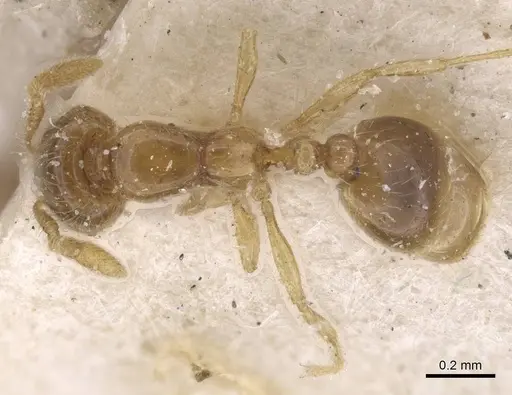
Literature
Loading distribution map...Loading products...