
Solenopsis minutissima
- Sci. Name
- Solenopsis minutissima
- Tribe
- Solenopsidini
- Subfamily
- Myrmicinae
- Author
- Emery, 1906
- Distribution
- Found in 1 countries
Introduction
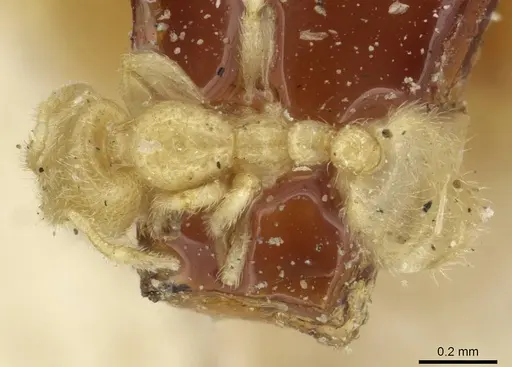
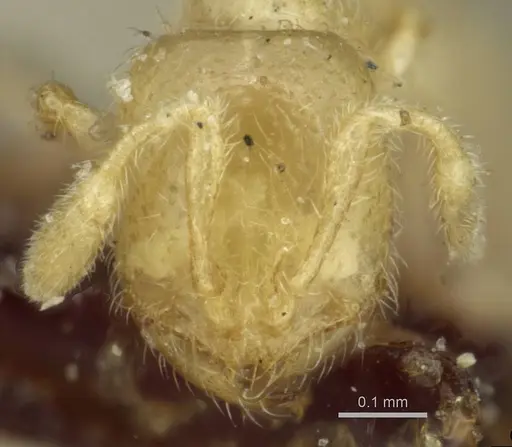
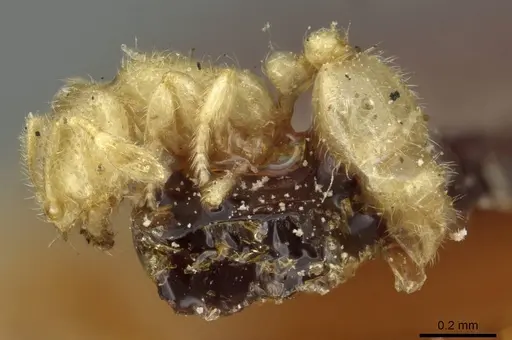
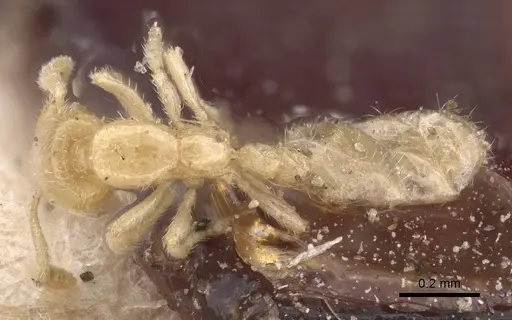
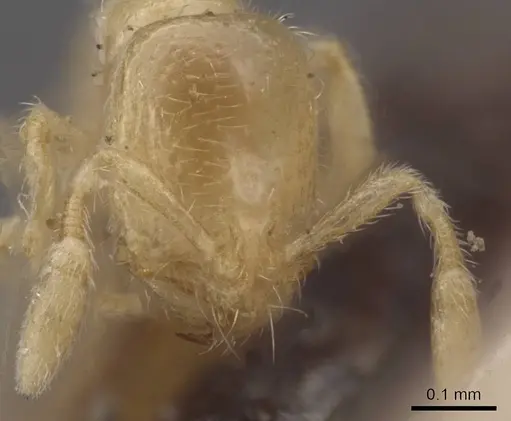
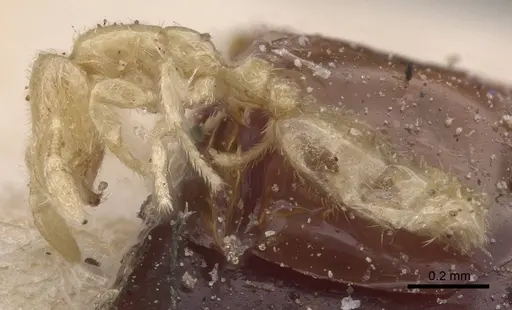
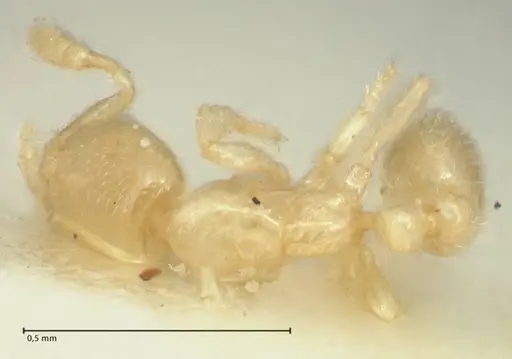
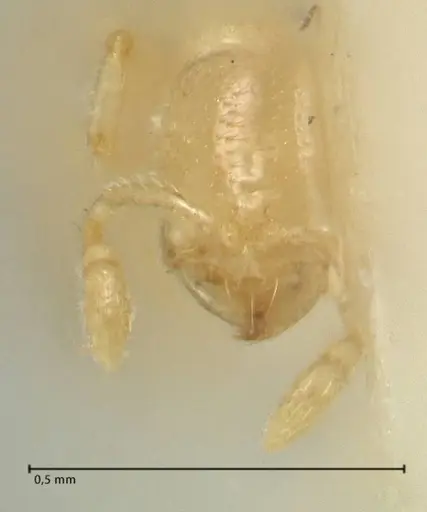
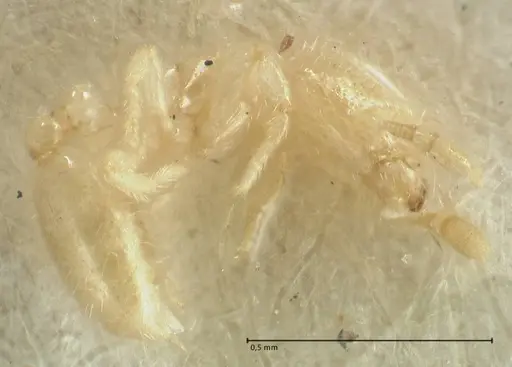
Solenopsis minutissima is one of the smallest ants in the world, with workers measuring about 1.2-1.3 mm long . These tiny ants are a uniform pale yellow color with a distinctive square-shaped head that sets them apart from similar species like Solenopsis subterranea. They belong to the Solenopsis pygmaea species complex and are often called thief ants because they steal food and brood from other ant colonies. The workers have extremely small eyes with only 1-2 ommatidia, making them nearly blind . Queens are considerably larger at 3-3.2 mm and have a brown coloration with a lighter gaster . This species is native to southern South America, particularly Argentina (Buenos Aires, Catamarca, Tucumán, Entre Ríos), with populations also documented in Brazil, French Guiana, Guyana, Suriname, and Trinidad . In their natural habitat, they nest under rocks in soil .
Quick Summary
- Difficulty: Expert
- Origin & Habitat: Native to southern South America, primarily Argentina (Buenos Aires, Catamarca, Tucumán, Entre Ríos), with populations in Brazil, French Guiana, Guyana, Suriname, and Trinidad. They nest under rocks in soil in subtropical to tropical environments [1][2][3].
- Colony Type: Colony structure is not extensively documented. Based on typical Solenopsis patterns, colonies are likely monogyne (single queen), but this has not been confirmed for this species.
- Size & Growth:
- Queen: 3-3.2 mm [1]
- Worker: 1.20-1.32 mm [2]
- Colony: Unknown, no specific data available, colony size is not documented
- Growth: Unknown, no data available on growth rate
- Development: Unknown, no specific data for this species (Based on related Solenopsis species, development may take 5-7 weeks at warm temperatures, but this is unconfirmed)
- Antkeeping:
- Temperature: Keep at 24-28 °C, mimicking the warm subtropical conditions of their native Argentina. A gentle heat gradient allows them to regulate their temperature. Avoid prolonged temperatures below 20 °C [2].
- Humidity: Moderate to high, keep the nest substrate consistently damp but not waterlogged. These ants naturally nest under rocks in soil, so the substrate should hold moisture well [2].
- Diapause: Unknown, as a subtropical species, true hibernation is unlikely. You may reduce feeding and slightly lower temperatures (to around 20-22 °C) during winter months if you wish to simulate seasonal slowdown, but this is not required.
- Nesting: These tiny ants do well in small test tube setups initially. For larger colonies, small Y-tong, plaster, or 3D-printed nests with fine chambers are suitable. Their small size means you need tight-fitting connections and very small water reservoirs. A naturalistic setup with fine soil substrate also works since they naturally nest under rocks in soil [2].
- Behavior: Thief ants by nature, they will attempt to steal food from other ant colonies if given access. Workers are not aggressive toward humans, they can sting but their tiny stingers cannot effectively penetrate human skin. They are very active foragers and rely heavily on chemical pheromone trails due to their poor eyesight. ESCAPE RISK IS EXTREMELY HIGH, their tiny size means they can squeeze through gaps that larger ants cannot. Excellent escape prevention is absolutely critical.
- Common Issues: escape prevention failure, they are so small they can slip through standard barriers, use multiple barriers or fine mesh., overfeeding, tiny colonies can be overwhelmed by large prey items, always offer small pieces., drowning risk, small water reservoirs can drown colonies if too deep, use shallow water sources., predation by other ants, their tiny size makes them vulnerable in multi-species setups., stress from handling, these ants are fragile and easily stressed, minimize disturbance.
Housing and Escape Prevention
Housing Solenopsis minutissima requires special attention to escape prevention. These ants are among the smallest in the world at just 1.2-1.3 mm, meaning they can squeeze through gaps as small as 0.5 mm. Standard fluon barriers may not be sufficient, you may need to use multiple barrier layers or very fine mesh (0.3 mm or less). Test tube setups work well for founding colonies, but ensure the cotton plug is packed tightly. When they eventually need more space, small Y-tong or plaster nests with chambers sized appropriately to their tiny bodies work best. Avoid large, open spaces in the nest, these ants prefer tight, cozy chambers. Any connections between nest areas should be narrow and smooth [2].
Feeding and Diet
As thief ants, Solenopsis minutissima readily accept protein sources. In captivity, they do well on small live prey like fruit flies, pinhead crickets, and small mealworms. You can also offer pre-killed insects cut into appropriately tiny pieces. Sugar sources like diluted honey or sugar water are typically accepted, though they may not be a primary food source. Feed small amounts frequently rather than large prey items that could overwhelm or escape the colony. Remove uneaten food after 24-48 hours to prevent mold. Because of their tiny size, even a single fruit fly is a substantial meal for their colony. These feeding recommendations are based on typical Solenopsis patterns, as specific dietary data for this species is not available [2].
Temperature and Seasonal Care
Keep your colony at 24-28 °C, mimicking the warm subtropical conditions of their native Argentina. A heating cable or mat on one side of the nest creates a temperature gradient they can regulate themselves. Avoid temperatures below 20 °C for extended periods. Unlike temperate species, they likely do not require a true hibernation period, but you might reduce feeding and slightly lower temperatures (to around 20-22 °C) during winter months to simulate natural seasonal slowdown. Stable temperatures are more important than exact numbers, avoid drafts and rapid temperature fluctuations. If your room temperature is already in the 24-28 °C range, no additional heating may be needed [2].
Colony Founding
Founding behavior is unconfirmed for Solenopsis minutissima. Based on typical Solenopsis patterns, queens may be claustral (sealing themselves in a chamber and raising the first brood using stored fat reserves), but this has not been verified for this species. If claustral, the founding process would likely take 4-6 weeks before the first workers (nanitics) emerge. After the first workers arrive, the queen would stop foraging and workers would take over all food collection and brood care. During founding, keep the queen in a dark, quiet location with stable temperature and humidity. Do not disturb her during this critical period, checking too frequently can cause her to abandon or consume the brood [2].
Behavior and Defense
Solenopsis minutissima belongs to the subfamily Myrmicinae and tribe Solenopsidini, which use a sting as their primary defense mechanism, injecting venom composed mostly of piperidine alkaloids to hunt prey and defend the colony. However, their tiny stingers cannot effectively penetrate human skin, so they are harmless to people. They are aggressive toward other ant colonies in their territory, this is their 'thief ant' nature. They will raid nearby ant nests to steal brood and food. In captivity, keep them well-separated from other ant colonies to prevent raids and potential colony losses. Workers are primarily nocturnal or crepuscular in activity, though they will forage at any time if food is available. Their poor eyesight means they follow pheromone trails extensively, you may notice them forming distinct trails to food sources [2].
Frequently Asked Questions
How long does it take for Solenopsis minutissima to get their first workers?
This is unknown, no specific data exists for Solenopsis minutissima. Based on related Solenopsis species, it may take 5-7 weeks from founding to first workers emerging, but this is an estimate. The queen would likely seal herself in and raise the first brood alone, with nanitics (first workers) appearing after the eggs develop through larval and pupal stages.
What do I feed my Solenopsis minutissima colony?
Feed them small protein sources like fruit flies, tiny mealworms, or small crickets. They also accept sugar water or honey diluted with water. Cut prey into appropriately small pieces, even a single fruit fly is a substantial meal for these tiny ants. Remove uneaten food within 24-48 hours to prevent mold. These recommendations are based on typical Solenopsis patterns, as specific dietary data is not available.
Why are my Solenopsis minutissima escaping?
Their tiny 1.2-1.3 mm size allows them to escape through gaps that larger ants cannot. You need excellent escape prevention, use multiple fluon barrier layers, fine mesh (0.3 mm or less), and ensure all connections are tight. Check for any gaps larger than 0.5 mm. Even standard test tube setups may need additional barriers [1][2].
Do Solenopsis minutissima need hibernation?
No, they likely do not require true hibernation. As a subtropical species from Argentina, they are adapted to year-round warmth. However, you can reduce feeding and slightly lower temperatures (to around 20-22 °C) during winter months if you want to simulate natural seasonal conditions. Avoid prolonged temperatures below 18 °C.
Can I keep multiple Solenopsis minutissima queens together?
Not recommended. While colony structure is unconfirmed, related Solenopsis species are typically monogyne (single queen). Combining unrelated queens usually results in fighting and colony failure. If you acquire a wild colony, it will likely have only one functional queen.
How big do Solenopsis minutissima colonies get?
Unknown, no specific data exists for this species. Related thief ants in the Solenopsis pygmaea complex are often small, but colony size has not been documented. Growth rate is also unknown.
What is the best nest type for Solenopsis minutissima?
Small test tubes work well for founding colonies. For established colonies, small Y-tong or plaster nests with appropriately sized chambers work best. The chambers should be small and snug, these ants prefer cozy spaces. Avoid large, open formicaria designed for bigger ants. Never use acrylic nests.
Why is my Solenopsis minutissima queen not laying eggs?
Possible causes include: stress from disturbance during founding, temperatures too low (below 20 °C), humidity too low (dry substrate), or the queen may have died (common in newly caught queens). Ensure stable conditions, minimal disturbance, and proper temperature/humidity. Wait at least 2-3 weeks before checking, some queens take time to settle.
Report an Issue
The current care sheet is based fully on literature. See inconsistencies, or something that's incorrect? Please , it will be resolved after review from an admin. Contributing to the blogs tab also helps providing information, to make us be able to further improve the caresheets. Thank you for your support!
References

This caresheet is licensed under CC BY-SA 4.0 .
Community Blogs
Literature
Loading distribution map...Loading products...