
Solenopsis laeviceps
- Sci. Name
- Solenopsis laeviceps
- Tribe
- Solenopsidini
- Subfamily
- Myrmicinae
- Author
- Mayr, 1870
- Distribution
- Found in 6 countries
Introduction
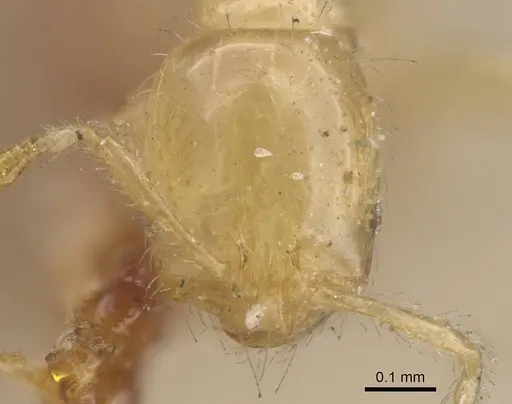
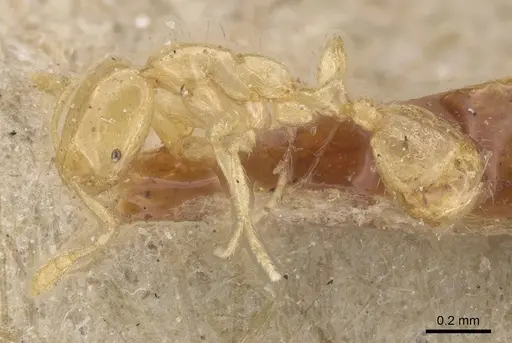
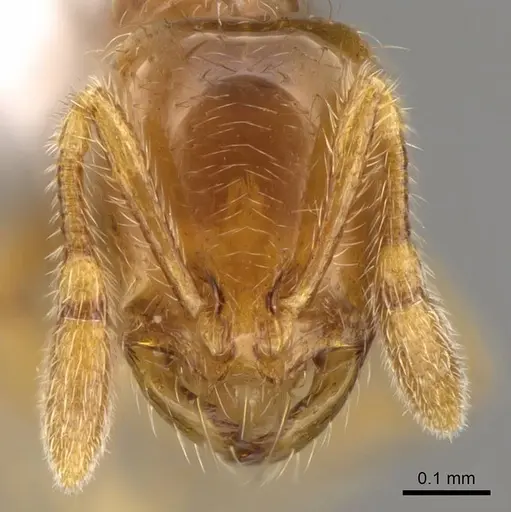
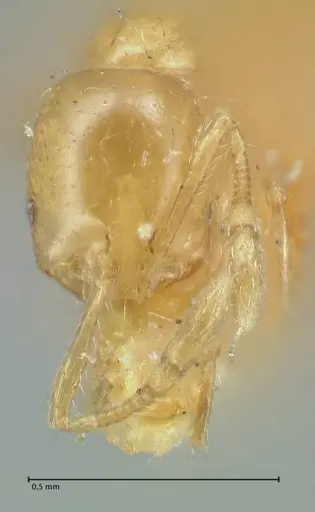
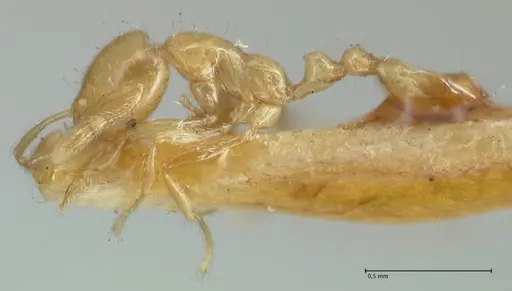
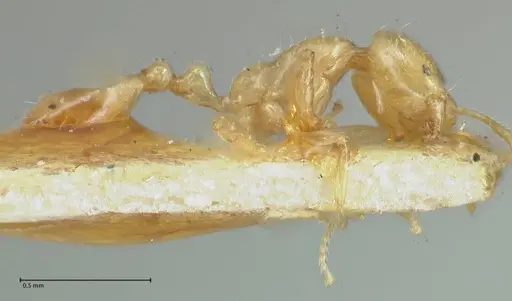
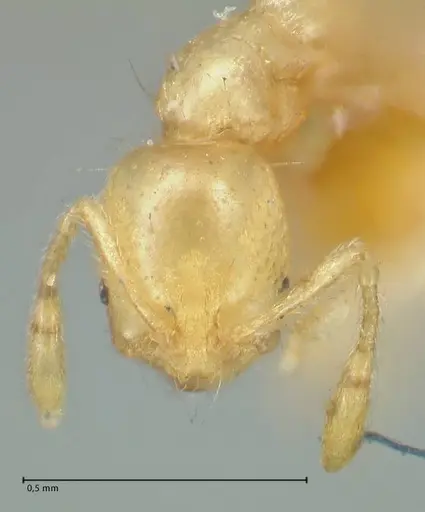
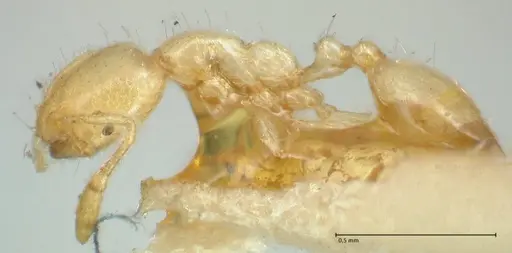
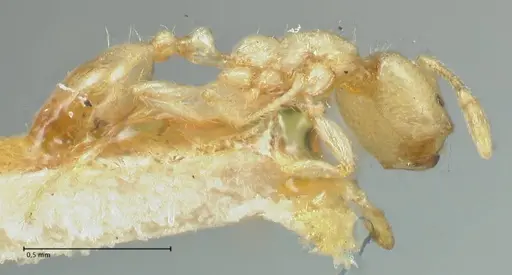
Solenopsis laeviceps is a tiny thief ant from the Solenopsis molesta species complex. Workers measure about 1.5-1.56 mm long, making them one of the smallest ants you'll encounter . They are concolorous yellow (sometimes pale brown with yellow legs) with a thickened petiole when viewed from the side. The sides of the head are convex, narrowing toward the back, and the clypeus (face plate above the jaws) has two well‑developed teeth that curve inward . The body is covered with erect and suberect hairs of various lengths. This species is native to the Neotropical region, found from Belize to Brazil, including Colombia, Costa Rica, and Panama. They live in wet montane forests, cloud forests, and oak forests at elevations above 1,000 m . Their name comes from their habit of raiding other ant colonies to steal brood and food.
Quick Summary
- Difficulty: Medium
- Origin & Habitat: Neotropical region, Belize, Brazil, Colombia, Costa Rica, Panama. Found in wet montane forest, old‑growth dry tropical rain forest, montane hardwood forest, wet montane cloud forest, and oak forest at elevations above 1,000 m [3][4][5].
- Colony Type: Colony structure is unconfirmed. Only the worker caste has been described in scientific literature [1].
- Size & Growth:
- Queen: Unknown, queen caste has not been described [1]
- Worker: 1.5-1.56 mm [1]
- Colony: Unknown, no colony size data available
- Growth: Unknown, no development data available
- Development: Unknown, based on related Solenopsis species, estimate 4-6 weeks at 26-28°C [1] (Development timeline is unconfirmed. Related thief ants develop relatively quickly in warm conditions.)
- Antkeeping:
- Temperature: Tropical species, keep at 24-28°C. Provide a gentle temperature gradient so ants can self‑regulate [1]
- Humidity: High humidity required, these ants come from wet montane and cloud forests. Keep the nest substrate consistently moist but not waterlogged. Mist the outworld occasionally [3]
- Diapause: Unknown, tropical species likely do not require formal hibernation. A slight cool period (20-22°C) during winter may be beneficial but is not essential [1]
- Nesting: Natural nesting occurs in soil and under stones. In captivity, use a small test tube setup, Y‑tong (AAC), plaster, or soil nest with fine chambers. Their tiny size requires appropriately scaled housing, avoid large, open nests [1]
- Behavior: Thief ants by nature, they are opportunistic predators and scavengers that accept both sugar and protein sources. Workers are active foragers on the ground and in vegetation. They possess a stinger and will defend the nest if disturbed, but the sting is very mild to humans due to their small size. Escape prevention is critical, at 1.5 mm they can squeeze through remarkably small gaps. Use fine mesh (
- Common Issues: escape prevention is critical due to their very small size, they slip through standard barrier setups, high humidity can lead to mold problems if ventilation is poor, limited scientific data means care is largely based on inference from related species, no queen or colony founding data exists, starting from wild‑caught colonies is difficult, their thief ant behavior may cause conflict with other ant species in mixed setups
Housing and Escape Prevention
Because Solenopsis laeviceps workers are only 1.5 mm long, escape prevention is your top priority [1]. These tiny ants can squeeze through gaps that seem invisible. Use test tubes with firmly packed cotton plugs, or a Y‑tong, plaster, soil, or 3D‑printed nest with tightly fitting lids. For barrier methods (e.g., fluon), apply multiple coats and reapply as needed. Fine mesh with holes smaller than 0.5 mm is essential for any ventilation openings. A single overlooked gap will result in an escaped colony within hours. Keep chambers and passages small and tight, spacious nests are stressful for such small ants [1].
Feeding and Diet
As thief ants, Solenopsis laeviceps are opportunistic feeders [1]. Offer sugar water or honey as a constant energy source. For protein, provide small live prey, flightless fruit flies, pinhead crickets, and small mealworms work well. They will also scavenge dead insects. Feed small amounts every 2-3 days and remove uneaten food to prevent mold. Their tiny size means even small prey items are substantial meals, err on the side of underfeeding. A varied diet supports colony health [1].
Temperature and Humidity
This tropical species comes from wet montane forests in Central and South America, so warmth and high humidity are both important [3][4]. Keep the nest area at 24-28°C, a heating cable on one side creates a gentle gradient. For humidity, maintain consistently moist substrate without flooding. The nest should show condensation periodically but not be waterlogged. Mist the outworld occasionally and provide a water tube. Poor humidity leads to failed molts and colony decline [1].
Colony Establishment
Starting a colony of S. laeviceps is challenging because only the worker caste has been described, no queen description exists [1]. If you obtain a founding queen (from a nuptial flight), she will likely seal herself in a claustral chamber like other Solenopsis species and raise her first workers alone on stored fat reserves. Keep the founding chamber small and dark. Once nanitic workers emerge (very small), the colony can be moved to a more permanent setup if needed. Adopting a wild colony is possible but difficult due to their tiny size and specific habitat needs [1].
Behavior and Defense
Solenopsis laeviceps is a thief ant, they specialize in infiltrating other ant colonies to steal brood and food [1]. Workers are active foragers both on the ground and in vegetation. Despite their tiny size, they have a functional stinger and will use it if the nest is disturbed. The sting is very mild to humans, comparable to a mosquito bite. In captivity, they are generally peaceful toward keepers and focus aggression on prey. They do not form supercolonies like some related Solenopsis [1].
Frequently Asked Questions
How long does it take for Solenopsis laeviceps to go from egg to worker?
The exact timeline is unconfirmed. Based on related Solenopsis species, expect roughly 4-6 weeks from egg to first worker at 26-28°C. The first nanitic workers will be very small, which is normal for thief ants [1].
Are Solenopsis laeviceps good for beginners?
This species is rated medium difficulty. Care requirements are straightforward (warmth, humidity, sugar + protein), but their extremely small size makes escape prevention challenging. Beginners should first master larger species before attempting these tiny thieves [1].
What do I feed Solenopsis laeviceps?
Provide sugar water or honey constantly. For protein, offer small live prey such as flightless fruit flies, small mealworms, or tiny crickets. They are opportunistic and will eat most standard ant foods. Remove uneaten food quickly to prevent mold [1].
Can I keep multiple queens together?
Colony structure is unconfirmed. Based on related Solenopsis, they likely form single‑queen colonies. Combining unrelated queens is not recommended as aggression is probable. If you obtain a founding queen, house her alone until workers appear [1].
How big do Solenopsis laeviceps colonies get?
Colony size data is not available. Related thief ants typically form colonies of several hundred to a few thousand workers. Given their tiny size, expect moderate colony growth over time [1].
Do Solenopsis laeviceps need hibernation?
As a tropical species from wet montane forests, they likely do not require a formal hibernation period. A slight temperature drop during winter (to around 20-22°C) may mimic natural seasonality but is not necessary. Complete dormancy is probably not needed [1].
Why are my Solenopsis laeviceps escaping?
At only 1.5 mm, these ants are expert escape artists. Standard barriers often fail. Use fine mesh (holes
What temperature should I keep Solenopsis laeviceps at?
Keep them warm at 24-28°C. Tropical species prefer stable warmth. Use a heating cable on one side to create a gradient. Avoid prolonged temperatures below 20°C, as this is a warm‑adapted species from wet montane forests [3][4].
Where is Solenopsis laeviceps found in the wild?
This species is native to the Neotropical region: Belize, Brazil, Colombia, Costa Rica, and Panama. They inhabit wet montane and cloud forests at elevations around 1,000 m or higher, as well as oak forests and tropical rainforests [3][4][5].
Report an Issue
The current care sheet is based fully on literature. See inconsistencies, or something that's incorrect? Please , it will be resolved after review from an admin. Contributing to the blogs tab also helps providing information, to make us be able to further improve the caresheets. Thank you for your support!
References

This caresheet is licensed under CC BY-SA 4.0 .
Community Blogs
CASENT0217938
View on AntWeb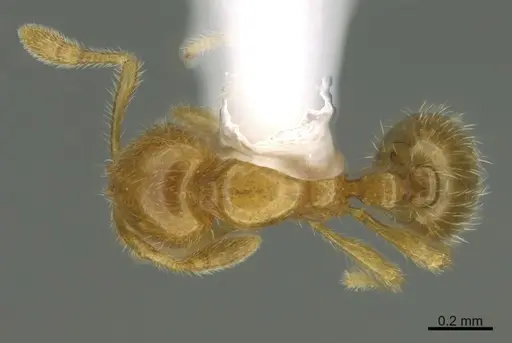
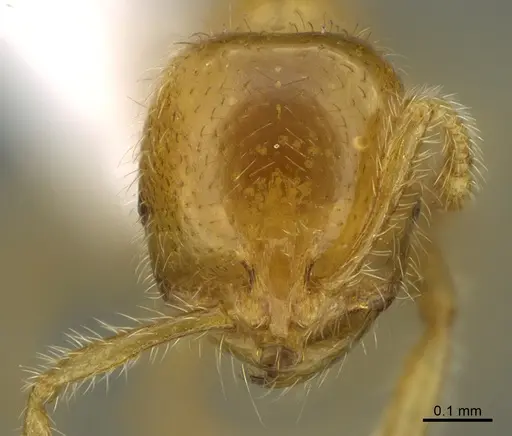
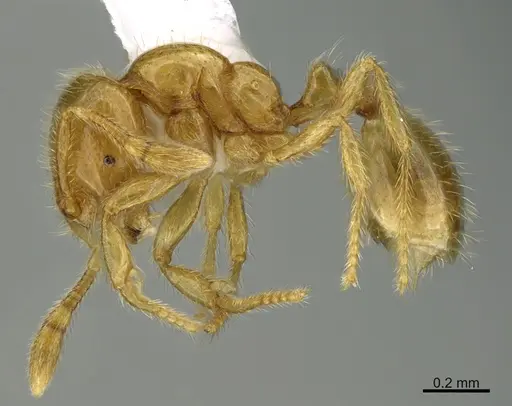
CASENT0913903
View on AntWeb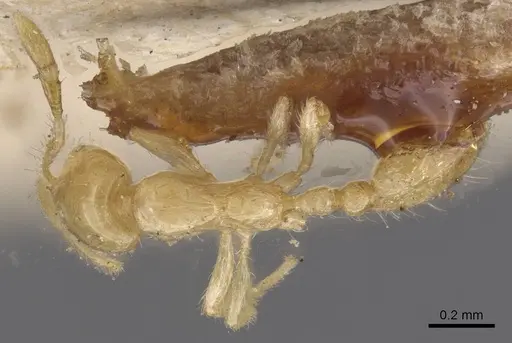
CASENT0914174
View on AntWeb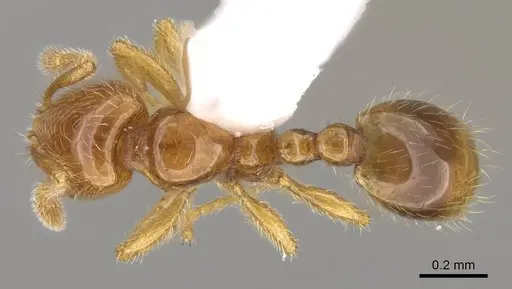
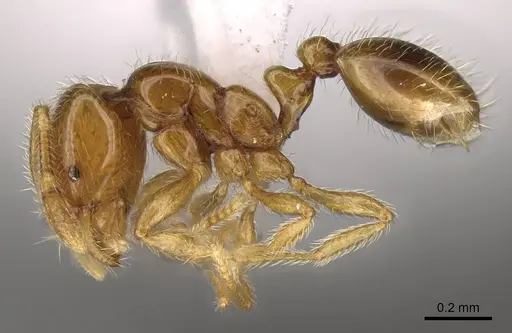
CASENT0916025
View on AntWeb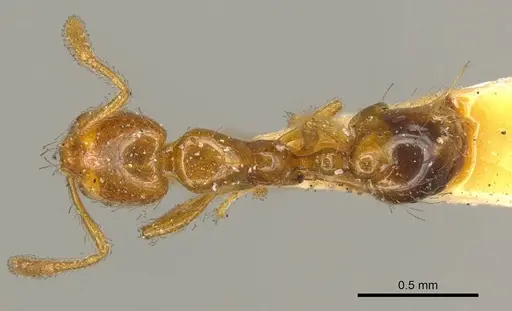
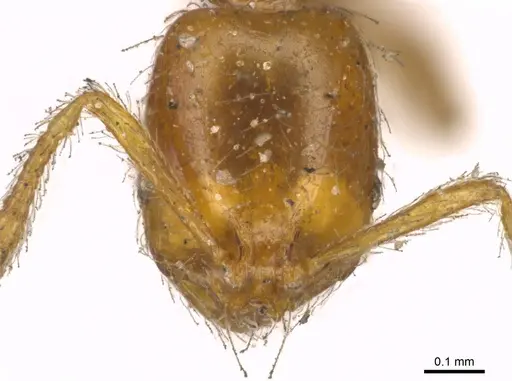
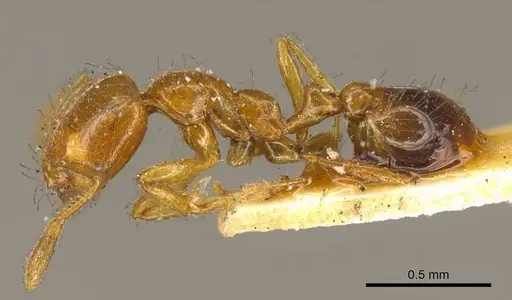
FOCOL1888
View on AntWeb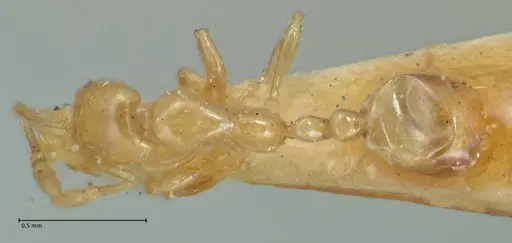
FOCOL1889
View on AntWeb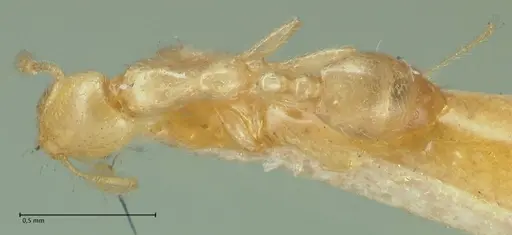
Literature
Loading distribution map...Loading products...