
Krockow's Thief Ant
Solenopsis krockowi
- Sci. Name
- Solenopsis krockowi
- Tribe
- Solenopsidini
- Subfamily
- Myrmicinae
- Author
- Wheeler, 1908
- Common Name
- Krockow's Thief Ant
- Distribution
- Found in 2 countries
Introduction
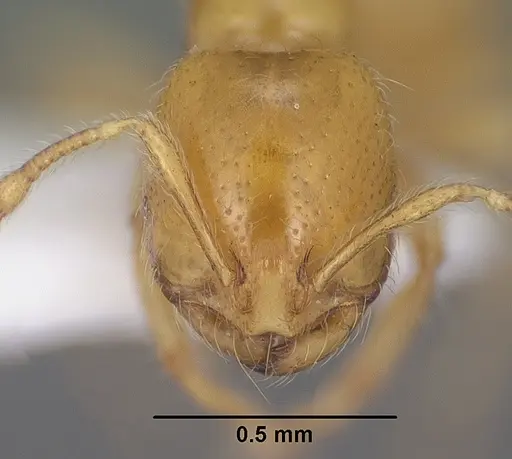
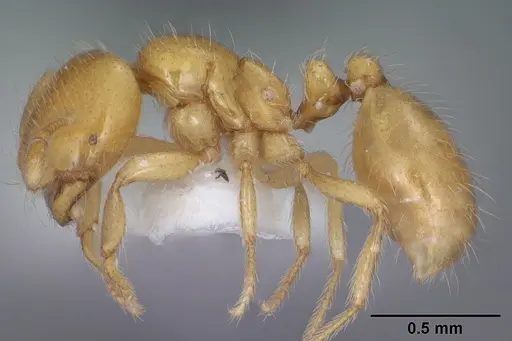
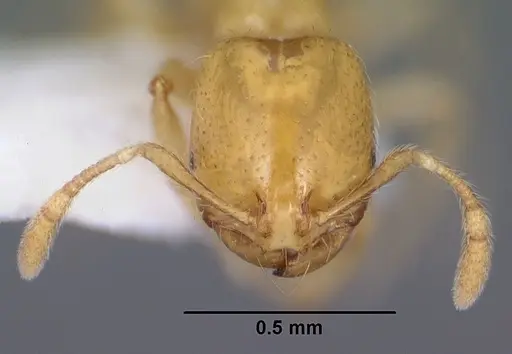
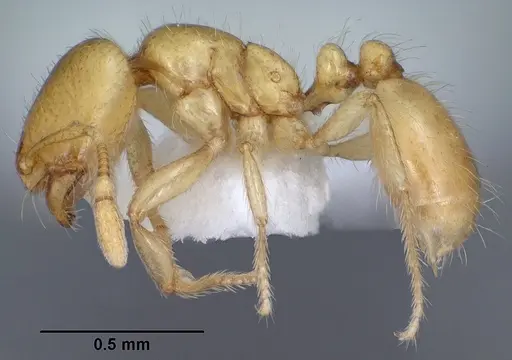
Solenopsis krockowi is a small thief ant native to the southwestern United States and northern Mexico. Workers are bright yellow, measuring 2.2–2.3 mm, and the queen is much larger at over 7 mm. They belong to the Solenopsis fugax species complex and have a nearly square head that is longer than wide, with coarse punctures and widely spaced teeth on the front of the head . They nest under stones or directly in soil in dry shrubland, sparse mesquite scrub, and Chihuahuan Desert scrub . This species is predominantly subterranean, so you'll rarely see them foraging on the surface. Their range covers Arizona, New Mexico, Texas, and central Mexico (San Luis Potosí and Hidalgo) . Sexuals (young queens and males) have been found in nests during July and August, suggesting summer nuptial flights . Like other thief ants, they are opportunistic feeders and can persist even during invasions by the red imported fire ant, Solenopsis invicta . They also have special antennal glands visible as pores between segments 8 and 9 of the worker antenna .
Quick Summary
- Difficulty: Medium
- Origin & Habitat: Southwestern United States (Arizona, New Mexico, Texas) and northern Mexico (San Luis Potosí, Hidalgo). Found in Chihuahuan Desert scrub, riparian areas, juniper woodland, sagebrush, and urban habitats. Nests under stones in dry shrubland including sparse mesquite scrub on rocky slopes [1].
- Colony Type: Social structure is not well documented. Based on typical Solenopsis patterns, they are likely monogyne (single queen), but this is unconfirmed.
- Size & Growth:
- Queen: Over 7 mm (measured 7.32 mm) [1]
- Worker: 2.22–2.34 mm [1]
- Colony: Up to several hundred workers, estimated from related thief ants
- Growth: Moderate (estimated from related Solenopsis species)
- Development: Estimated 5–7 weeks at optimal temperature based on genus-level data (Development time is inferred from related species. Specific data for S. krockowi is not available.)
- Antkeeping:
- Temperature: Keep at 22–26 °C. This species comes from desert and semi-arid habitats, so a heating cable on one side of the nest can create a useful temperature gradient.
- Humidity: Low to moderate. Their natural habitat is dry shrubland. Keep the nest substrate moderately dry, with a small moist area for brood. Avoid over-watering.
- Diapause: Likely yes – their range includes areas with cold winters (New Mexico, Arizona). Provide a winter rest period at 10–15 °C for 2–3 months.
- Nesting: They nest under stones in nature, so a naturalistic setup with flat stones, Y-tong (AAC), or plaster nests works well. Keep substrate dry to moderately moist. Deep chambers suit their subterranean lifestyle [1].
- Behavior: This is a calm species compared to fire ants. Workers are small (2.2–2.3 mm) and golden yellow. They spend most of their time underground, so above‑ground activity is low. They have a stinger and can deliver a mild sting if disturbed. Because of their tiny size, use fine mesh barriers (≤0.5 mm) to prevent escapes. They are opportunistic feeders and may raid other ant colonies’ food [1].
- Common Issues: small size means escapes are likely without fine mesh barriers (≤0.5 mm), subterranean nature makes them less visible and active than surface-foraging species, colonies may grow slowly, so patience is needed during founding, humidity control is important – they prefer drier conditions than many tropical species, colony founding behavior is not well documented, so careful observation is key
Housing and Nest Setup
Solenopsis krockowi is a subterranean species that naturally nests under stones in dry environments. For captivity, a Y‑tong (AAC) nest, plaster nest, or a simple test‑tube setup works well. They prefer dry conditions – keep the nest substrate moderately dry, with just one small area slightly moist for the brood. Because workers are only 2.2 mm long, escape prevention is critical. Use fine mesh (≤0.5 mm) on all openings and ensure connections between outworld and nest are tight. A small outworld with a layer of sand or soil is enough, these ants don’t need large foraging spaces [1].
Temperature and Heating
This species comes from the hot, dry southwestern US and northern Mexico. Keep the colony at 22–26 °C for best activity and brood development. A heating cable on one side of the nest creates a gentle gradient, letting the ants choose their preferred temperature. Avoid prolonged temperatures below 18 °C. During winter, you can reduce to 10–15 °C for a diapause period, mimicking their natural seasonal cycle.
Feeding and Diet
As a thief ant, Solenopsis krockowi is an opportunistic feeder. In captivity, offer small protein sources like fruit flies, small crickets, or mealworm pieces 2–3 times per week, and a constant sugar source (sugar water, honey, or diluted maple syrup). Prey should be no larger than the ants themselves (about 2 mm). Remove uneaten food after 24 hours to prevent mold. They may also take small amounts of grease or seeds.
Colony Development and Growth
Queens are very large (over 7 mm) relative to workers (2.2 mm), which suggests they have enough reserves for claustral founding – but the actual founding behavior is unconfirmed. Based on typical Solenopsis, the queen likely seals herself in a chamber and raises the first brood without foraging. The first workers (nanitics) will be smaller than mature workers. Development from egg to worker probably takes 5–7 weeks at optimal temperature. The colony likely grows to several hundred workers over time, but exact maximums are unknown [1].
Winter Care and Diapause
Because their range includes New Mexico and Arizona – areas with cold winters – you should provide a winter diapause period of 2–3 months at 10–15 °C. Move the colony to a cooler spot (like an unheated garage or basement) during winter, reduce feeding, and keep the nest slightly drier. Return them to normal temperatures (22–26 °C) in spring to trigger renewed activity and brood production. If you live in a temperate climate, a natural winter cool‑down at room temperature may be sufficient, but cooler conditions are safer.
Behavior and Temperament
This is a calm species – much less aggressive than fire ants (Solenopsis invicta). Workers are small and spend most of their time underground, so you won’t see them often. They have a functional stinger but rarely use it on keepers, you’ll only feel a mild sting if you handle them roughly or disturb the nest severely. Their small size means they can slip through tiny cracks, so excellent escape prevention is essential. They are not known to be aggressive toward other colonies, but as thief ants they may opportunistically steal food from neighboring colonies if given the chance [1].
Frequently Asked Questions
How long does it take for Solenopsis krockowi to have first workers?
Based on related Solenopsis species, expect first workers (nanitics) to emerge 5–7 weeks after the queen lays eggs at optimal temperatures around 24 °C. Exact timing for S. krockowi has not been documented.
What do Solenopsis krockowi ants eat?
They are opportunistic feeders. Offer small protein sources (fruit flies, small crickets, mealworm pieces) 2–3 times per week, and a constant sugar source like sugar water or honey. Prey should be appropriately sized for their 2 mm workers.
Can I keep Solenopsis krockowi in a test tube?
Yes, test tubes are good for founding colonies. Use a standard setup with a water reservoir (cotton ball) at one end. Because they prefer drier conditions, make sure the tube isn’t too wet. Once the colony reaches about 20–30 workers, you can move them to a small formicarium or Y‑tong nest.
What temperature do Solenopsis krockowi need?
Keep them at 22–26 °C. They come from the southwestern US and northern Mexico and prefer warm conditions. A heating cable on one side of the nest creates a useful gradient. Avoid temperatures below 18 °C for long periods.
Do Solenopsis krockowi need hibernation?
Yes, likely a 2–3 month diapause period during winter. Their range includes cold‑winter areas (New Mexico, Arizona). Keep them at 10–15 °C during this time, reduce food, and return to normal temperatures in spring.
Are Solenopsis krockowi good for beginners?
They are medium difficulty. They are small, prefer dry conditions, and are mostly hidden underground, so they’re less engaging than some beginner species. They also need good escape prevention. If you already have experience with small Myrmicinae, they can be rewarding.
How big do Solenopsis krockowi colonies get?
The maximum colony size is unknown for this species. Based on related thief ants, colonies likely reach several hundred workers. The queen is large (over 7 mm), which may support a sizable colony.
When do Solenopsis krockowi have nuptial flights?
Sexuals (young queens and males) have been found in nests during July and August, suggesting summer nuptial flights. This aligns with the monsoon season in the southwestern US, when conditions are favorable
Why are my Solenopsis krockowi escaping?
They are very small (2.2 mm) and can squeeze through tiny gaps. Use fine mesh (≤0.5 mm) on all openings, including connections between outworld and nest. Check all seams and lids for gaps – subterranean species are good at finding small cracks.
Report an Issue
The current care sheet is based fully on literature. See inconsistencies, or something that's incorrect? Please , it will be resolved after review from an admin. Contributing to the blogs tab also helps providing information, to make us be able to further improve the caresheets. Thank you for your support!
References

This caresheet is licensed under CC BY-SA 4.0 .
Community Blogs
CASENT0104467
View on AntWeb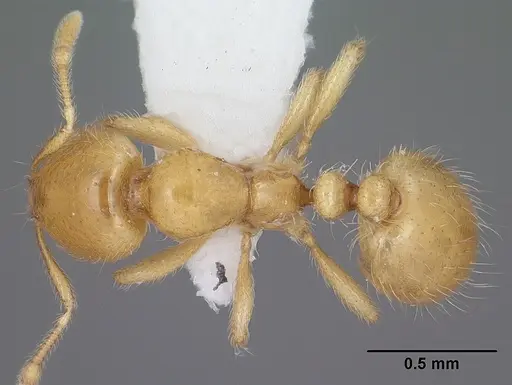
CASENT0104468
View on AntWeb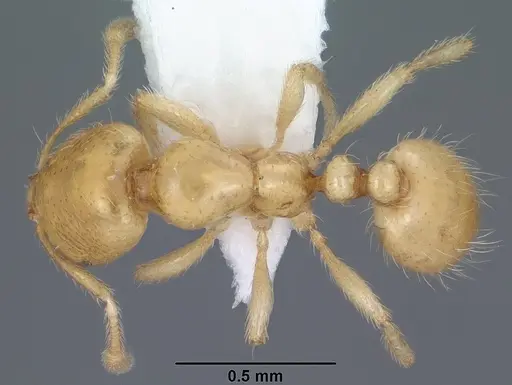
Literature
Loading distribution map...Loading products...