
Solenopsis kochi
- Sci. Name
- Solenopsis kochi
- Tribe
- Solenopsidini
- Subfamily
- Myrmicinae
- Author
- Finzi, 1936
- Distribution
- Found in 2 countries
Introduction
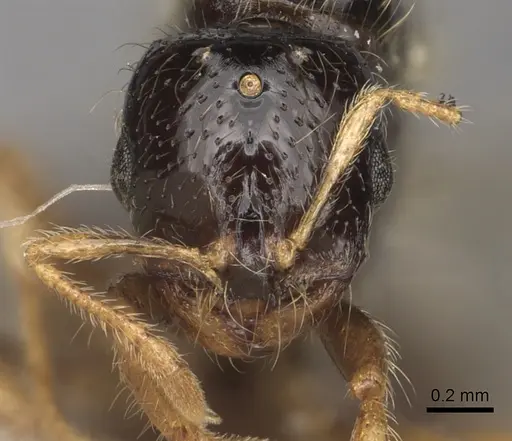
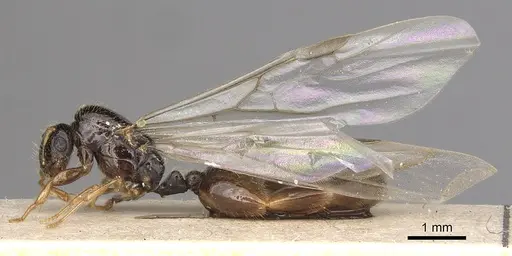
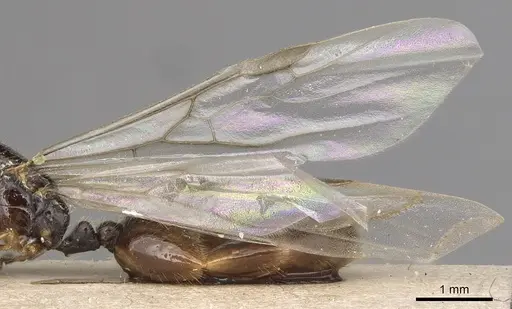
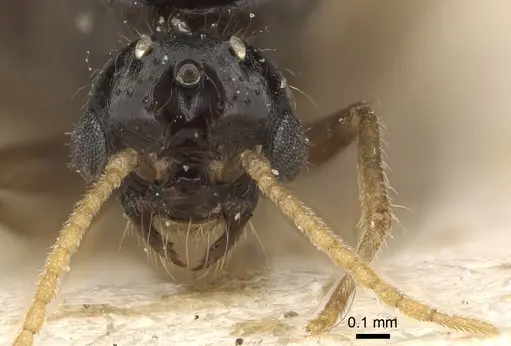
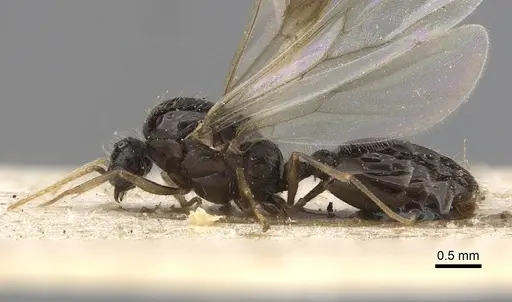
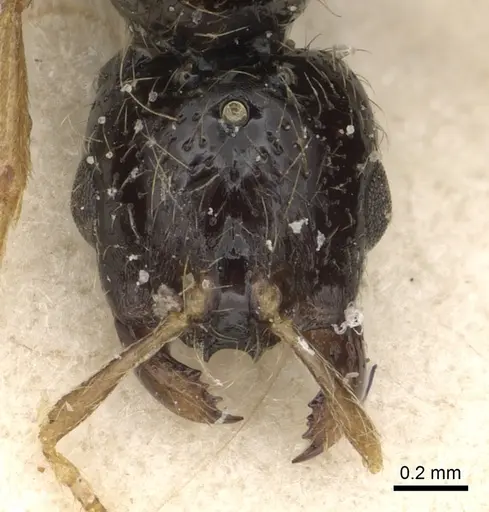
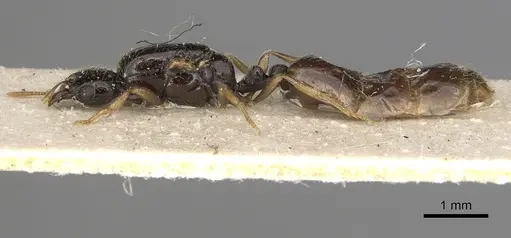
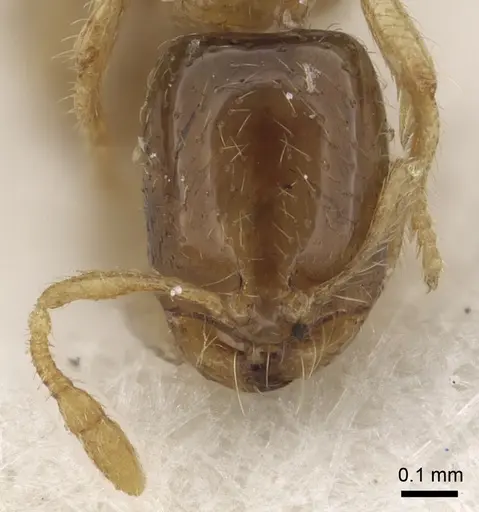
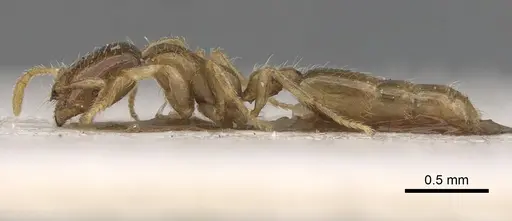
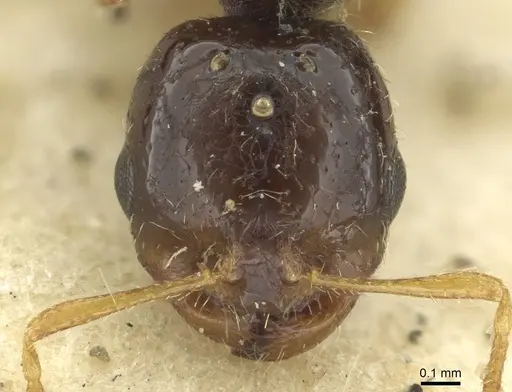
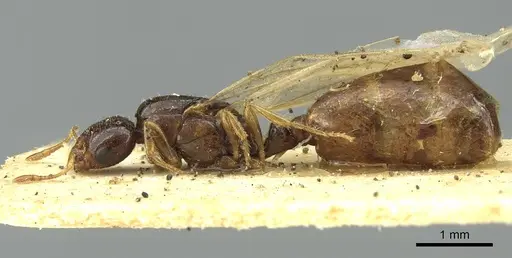
Solenopsis kochi is a tiny yellow ant species from Egypt, with a possible record in Israel. It belongs to the Myrmicinae subfamily. Workers are just 2.0mm long, among the smaller Solenopsis species. Queens are much larger at 5.7mm, with dark brown head and mesosoma contrasting with a lighter brown gaster. The species is identified by its convex head margins - broader than the similar Solenopsis orbula - and uniformly yellow workers . This is one of the least known ants in the world. The last specimens were collected between 1933 and 1935,and no one has ever observed a living colony in the wild. Absolutely no biological, ecological, or behavioral data exists. Every aspect of its captive care is pure guesswork, making it an extremely challenging species to keep, and not recommended for antkeepers.
Quick Summary
- Difficulty: Expert
- Origin & Habitat: Known only from Egypt (Salloum, Helwan, Cairo, Ikingi Mariout, Marsa Matrouh) with a possible record in Israel (central Coastal Plain). The habitat is hot, arid desert or semi-desert [1][2].
- Colony Type: Unconfirmed, colony structure has never been observed. Related Solenopsis species range from single-queen to multi-queen colonies, but no data exists for this species.
- Size & Growth:
- Queen: 5.7mm [1], measured from type specimens
- Worker: 2.0mm [1], measured from type specimens
- Colony: Unknown, species has not been observed in the wild since original collection in 1933-1935
- Growth: Unknown
- Development: Unknown, no biological observations exist for this species (Development timeline cannot be estimated. No colony has ever been raised in captivity or observed in the wild.)
- Antkeeping:
- Temperature: Inferred: Based on Egyptian distribution, likely tolerates 20-35°C. Start around 24-28°C and monitor colony activity. No species-specific data exists.
- Humidity: Inferred: Desert species, likely prefers dry to moderately humid conditions. Avoid excessive moisture. Provide a gradient with a small water chamber.
- Diapause: Unknown, unlikely to require hibernation given the warm Egyptian climate, but no data confirms this
- Nesting: Inferred: Likely nests in soil or under stones like other Solenopsis species. A small test tube setup with minimal moisture would be an appropriate starting point.
- Behavior: Inferred: Solenopsis kochi belongs to a subfamily known for having a functional sting, but this specific species has not been studied for defensive behavior. Tiny workers (2.0mm) can squeeze through very small gaps, so escape prevention must be excellent. Related Solenopsis are typically omnivorous and ground-nesting. No behavioral observations exist in scientific literature.
- Common Issues: no established care protocols, this is an unstudied species, species has never been successfully kept in captivity, no reference colonies exist, wild-caught colonies may be extremely rare or nonexistent, collection may be illegal or unethical, tiny worker size (2mm) creates significant escape risk, fine mesh barriers are essential, complete lack of biological data means all care is experimental, with very low success probability
Species Overview and Identification
Solenopsis kochi is an extremely rare ant known only from museum specimens collected in Egypt between 1933 and 1935,with a possible record from Israel. It was originally described as a subspecies of Solenopsis orbula but was elevated to full species in 2009 based on clear morphological differences [1]. Workers are uniformly yellow and tiny at just 2.0mm, while queens reach 5.7mm with dark brown head and mesosoma. Key features separating it from S. orbula are its convex head sides, broader head, larger size (TL 2.0 vs 1.4), and longer scapes [1]. The species has not been collected or observed for over 85 years, making it one of the world's least known ants.
Why This Species Is Extremely Challenging
Before attempting to keep Solenopsis kochi, understand that absolutely no biological or ecological data exists. The last known specimens were collected in 1933-1935,and no living colony has ever been observed [1]. There are no established care protocols, no info on diet, colony size, founding behavior, temperature, or humidity requirements. Every aspect of keeping this species would be pure experimentation. While related Solenopsis are typically omnivorous and ground-nesting, applying that generic knowledge to this specific species is speculative. Only advanced antkeepers with extensive experience and willingness to conduct experiments should even consider this species, but even then, success is extremely unlikely.
Inferred Care Recommendations
If you still decide to try, these are educated guesses based on the genus and habitat. Since the species comes from Egypt's hot, arid environment, start with a temperature range of 24-30°C and low to moderate humidity. A small test tube setup with a minimal water reservoir, similar to starting other small Solenopsis species, would be appropriate. Offer varied tiny protein sources (fruit flies, pinhead crickets) and sugar water, but acceptance is uncertain. The tiny workers (2mm) mean you must use excellent escape prevention with fine mesh barriers. Remember: these are generic genus-level inferences, not species-specific advice. Success is very unlikely without baseline data.
Legal and Ethical Considerations
This species has not been seen in the wild since the 1930s. It may be extremely rare or possibly extinct in the wild. Any collection would be ethically questionable and potentially illegal without proper permits. The species is known from only a handful of museum specimens in Egypt and possibly Israel [1][2]. If a colony were ever discovered, it would be of major scientific interest. For all these reasons, Solenopsis kochi should be considered a species for scientific study, not for the antkeeping hobby. Without research connections and permits in Egypt or Israel, it is essentially unavailable to keep legally.
Frequently Asked Questions
How do I care for Solenopsis kochi ants?
No one knows. This species has never been studied in captivity and has no established care requirements. The last known specimens were collected in 1933-1935,and absolutely no biological data exists [1]. All care would be experimental guesswork.
What do Solenopsis kochi ants eat?
Unknown, no feeding observations exist for this species. Related Solenopsis are typically omnivorous (sugars and proteins), but this species has never been observed feeding. Any diet recommendations are pure speculation.
What temperature do Solenopsis kochi ants need?
Inferred only, based on Egyptian distribution, they likely tolerate warm temperatures around 24-30°C. No specific temperature data exists [1].
How big do Solenopsis kochi colonies get?
Unknown, colony size has never been observed. The species has not been collected or studied in the wild since its original description in the 1930s [1].
Are Solenopsis kochi good for beginners?
No. This species is absolutely not for beginners or even intermediate antkeepers. There are no established care protocols, no reference colonies, and no biological data. Keeping this species would be purely experimental with extremely low chances of success.
Can I keep multiple Solenopsis kochi queens together?
Unknown, colony structure has never been observed. Some Solenopsis are polygynous, others monogyne, but no data exists for this species [1].
Where is Solenopsis kochi found?
Egypt (Salloum, Helwan, Cairo, Ikingi Mariout, Marsa Matrouh) and possibly Israel (central Coastal Plain). The species was collected between 1933-1935 and has not been observed since [1][2].
Is Solenopsis kochi endangered?
Unknown, conservation status has never been assessed. The species has not been observed in over 85 years, so it may be extremely rare, locally extinct, or possibly extinct. Any surviving population would be of great scientific interest.
How long do Solenopsis kochi workers live?
Unknown, no lifespan data exists for this species. Development from egg to adult has never been observed or documented.
When do Solenopsis kochi have nuptial flights?
Unknown, nuptial flight timing has never been documented. The original type specimens were collected in February and March, but this does not necessarily indicate flight timing [1].
What makes Solenopsis kochi different from other fire ants?
Solenopsis kochi is much smaller than typical fire ants (workers only 2.0mm) and is uniformly yellow rather than reddish. It is also one of the rarest and least studied ant species, with no biological observations ever recorded [1].
Report an Issue
The current care sheet is based fully on literature. See inconsistencies, or something that's incorrect? Please , it will be resolved after review from an admin. Contributing to the blogs tab also helps providing information, to make us be able to further improve the caresheets. Thank you for your support!
References

This caresheet is licensed under CC BY-SA 4.0 .
Community Blogs
CASENT0281016
View on AntWeb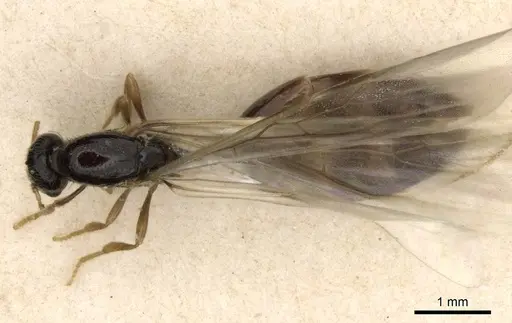
CASENT0281017
View on AntWeb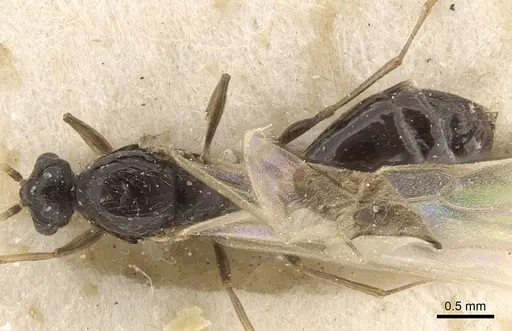
CASENT0281018
View on AntWeb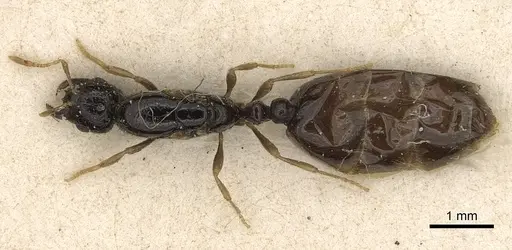
CASENT0281035
View on AntWeb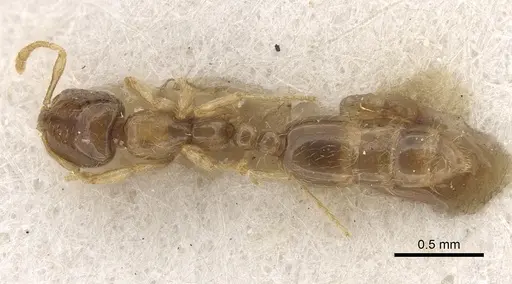
CASENT0913596
View on AntWeb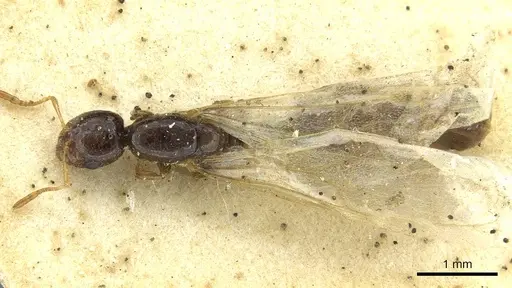
Literature
Loading distribution map...Loading products...