
Solenopsis juliae
- Sci. Name
- Solenopsis juliae
- Tribe
- Solenopsidini
- Subfamily
- Myrmicinae
- Author
- Arakelian, 1991
- Distribution
- Found in 1 countries
Introduction
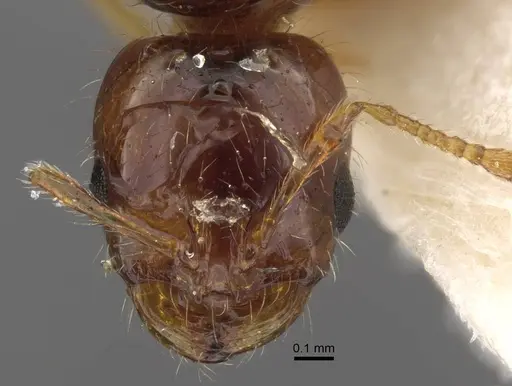
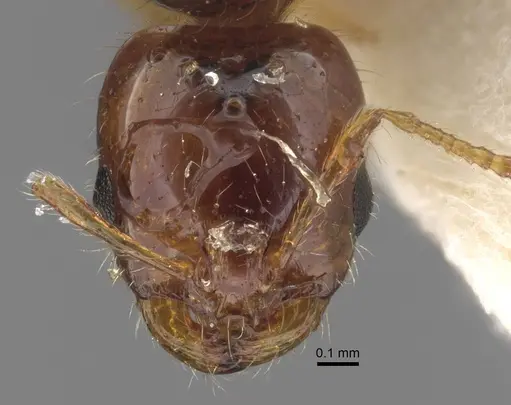
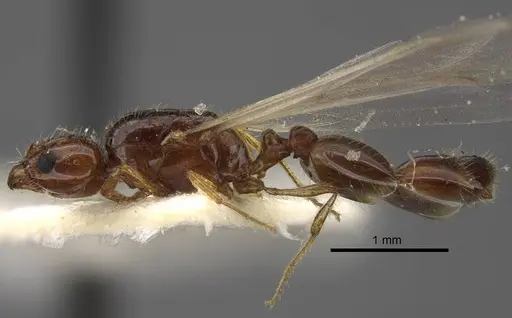
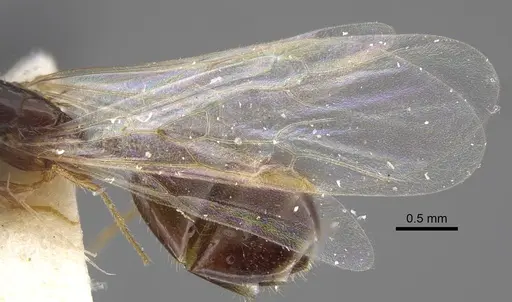
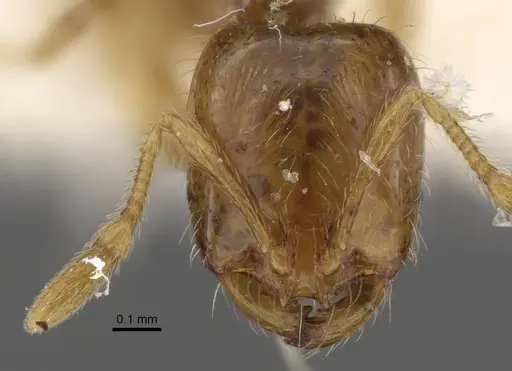
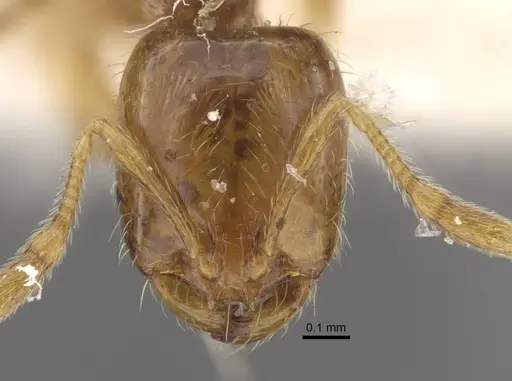
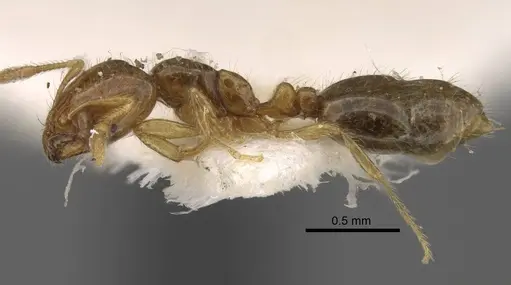
Solenopsis juliae is a small thief ant species native to the Caucasus region and parts of Eastern Europe. Workers are tiny (size data unavailable) and have distinctive parallel-sided heads that help distinguish them from related species . Queens are also tiny (size data unavailable). The species shows a yellowish to light brown coloration typical of thief ants. It has been recorded in Armenia, Croatia, Hungary, and Russia . Nests are built in soil under stones, at elevations from 413 m to 1750 m . This species co-occurs with Solenopsis fugax across much of its range, and distinguishing between them often requires examination of sexuals (queens and males) rather than workers alone . Like other thief ants, it is thought to infiltrate other colonies for food, but specific kleptoparasitic behavior has not been confirmed for this species.
Quick Summary
- Difficulty: Medium
- Origin & Habitat: Native to the Caucasus region and Eastern Europe, specifically Armenia, the Northern Caucasus (Kabardino-Balkaria region of Russia), Croatia, and Hungary [2]. In Armenia, they inhabit oak forest glades at high elevation (1750 m), while in Russia they occur in the forest belt of steppe zones at lower elevations (around 413 m). Nests are built in soil under stones [3].
- Colony Type: Unconfirmed. A single field collection recorded 62 workers and 4 queens [3], which may represent a single colony, but data are insufficient to determine colony structure.
- Size & Growth:
- Queen: size data unavailable (no measurements published)
- Worker: size data unavailable
- Colony: Maximum observed: 62 workers and 4 queens collected at one site [3], full colony size unknown.
- Growth: Unknown
- Development: Unknown (No studies on development time exist.)
- Antkeeping:
- Temperature: No specific data. Based on the temperate habitat (elevation 413-1750 m in Armenia and Caucasus), room temperature (20-24°C) is a reasonable starting point [3].
- Humidity: Habitat suggests moderate soil moisture, keep substrate lightly moist but not waterlogged. No precise data available.
- Diapause: Unknown but likely required given temperate distribution. If diapause is provided, a winter rest period around 5-10°C for 2-3 months is typical for the region, but unconfirmed.
- Nesting: Naturally nests in soil under stones [3]. A naturalistic setup with a soil layer and flat stones is recommended.
- Behavior: Workers are small and likely use their stinger for defense (subfamily Myrmicinae, tribe Solenopsidini). They have parallel-sided heads, distinguishing them from S. fugax [1]. Escape risk is high due to tiny size. No specific behavioral studies are available, activity patterns unknown.
- Common Issues: difficult to correctly identify without examining sexuals, as workers are similar to S. fugax [4], high escape risk due to tiny size, use fine mesh (≤0.5 mm) and tight barriers, very little is known about captive care, most advice is inferred from related Solenopsis species, colony founding behavior and requirements are unstudied
Housing and Nest Setup
For Solenopsis juliae, a naturalistic setup is recommended since they nest in soil under stones in the wild [3]. Use a container with a 2-3 cm layer of dry-to-slightly-damp soil (sand and loam mix). Place flat stones or slate pieces on the surface to provide dark, enclosed spaces. Alternatively, a Y-tong or plaster nest with a soil chamber can work, but ensure chambers are sized for tiny workers. The outworld should be simple and easy to clean. Because of their tiny size, all connections must be extremely secure. Apply Fluon or similar barrier grease to rim edges and use fine mesh (≤0.5 mm) on ventilation holes. A water test tube embedded in the soil provides humidity without flooding.
Feeding and Diet
No specific dietary studies exist for Solenopsis juliae. As a small thief ant (Solenopsis genus), they are thought to steal food from other ants, but captive feeding must be based on related species. Offer tiny protein sources: fruit flies, small mealworms, or cricket pieces. Feed small amounts 2-3 times per week, removing uneaten food within 24 hours. A small drop of sugar water or diluted honey can be offered occasionally. Fresh water should always be available. Their tiny size means even smallest prey items are appropriate. Note that these recommendations are inferred from other Solenopsis, actual dietary preferences may differ. [3]
Temperature and Seasonal Care
Keep the colony at room temperature, ideally 20-24°C, based on the temperate habitat [3]. No specific thermal data are available, so monitor the colony's response. A gentle gradient with a heating cable on one side (placed on top to avoid drying) can create a warm zone. Winter diapause may be required, but has not been studied. If you attempt diapause, gradually cool the colony to 5-10°C and maintain for 2-3 months (typical for region), then warm back up in spring. Keep substrate slightly moist throughout winter. Without diapause, colonies may still persist, but long-term health is uncertain.
Behavior and Defense
Solenopsis juliae workers are tiny and have parallel-sided heads, a distinguishing feature from S. fugax [1]. They belong to a stinging subfamily (Myrmicinae, tribe Solenopsidini) and can deliver a painful sting if threatened, but are not aggressive toward humans. Their small size makes escape prevention critical. They are likely nocturnal or crepuscular, but no specific activity data exist. In the nest, they keep brood in protected areas. Cryptic species status with S. fugax means careful identification is needed [4]. No specific behavioral studies have been conducted.
Colony Founding
Colony founding behavior has not been observed for Solenopsis juliae. It is unknown whether queens are claustral or require feeding during founding. In captivity, provide a founding queen with a small test tube setup (water reservoir with cotton plug) or a small soil container with a flat stone. Keep the setup dark and undisturbed. Do not feed initially, as some Solenopsis are claustral, but be prepared to offer food if she appears weak. The time to first workers is unknown. Patience is essential, watch for signs of brood without disturbing. [3]
Growth and Development
No data exist on colony growth rate or development timeline for Solenopsis juliae. The single field collection recorded 62 workers and 4 queens [3], but how long it took to reach that size is unknown. In captivity, growth will depend on conditions. Workers may exhibit size variation (minors and majors), but this has not been documented. Production of sexuals is unstudied. It is assumed that colony growth is moderate, similar to other temperate Solenopsis, but this is speculation.
Frequently Asked Questions
How long does it take for Solenopsis juliae to raise first workers?
Unknown. No studies on development time exist. The estimate of 6-8 weeks is based on related Solenopsis and may not apply. Be patient and do not disturb the founding queen.
What do Solenopsis juliae eat in captivity?
No specific diet studied. Offer tiny protein sources like fruit flies, small mealworms, and occasional sugar water. Remove uneaten food promptly.
Can I keep Solenopsis juliae in a test tube setup?
A test tube with water reservoir works for founding, but ensure excellent escape prevention. Naturalistic setup with soil and stones may be preferred.
Do Solenopsis juliae need hibernation?
Unknown but likely required. If attempted, cool to 5-10°C for 2-3 months, however, no data support a specific requirement.
How big do Solenopsis juliae colonies get?
Maximum recorded: 62 workers and 4 queens at one site [3]. Full colony size is unknown.
Are Solenopsis juliae good for beginners?
Not recommended for beginners due to limited captive knowledge and high escape risk. Best for experienced keepers interested in rare species.
Why are my Solenopsis juliae dying?
Common issues: escape, incorrect humidity, unknown diseases. Since little is known about this species, any problems are hard to diagnose. Ensure tight barriers, moderate moisture, and clean water.
How do I distinguish Solenopsis juliae from Solenopsis fugax?
Workers of S. juliae have more parallel head sides (straighter sides) than S. fugax, but reliable identification often requires examining queens or males [1][4].
When should I move Solenopsis juliae to a formicarium?
No specific guidance, move when test tube becomes crowded. Use a formicarium with appropriately small chambers and excellent escape prevention.
What temperature is best for Solenopsis juliae?
20-24°C is reasonable based on natural habitat, but no specific data exist. Avoid temperatures below 15°C or above 30°C.
Report an Issue
The current care sheet is based fully on literature. See inconsistencies, or something that's incorrect? Please , it will be resolved after review from an admin. Contributing to the blogs tab also helps providing information, to make us be able to further improve the caresheets. Thank you for your support!
References

This caresheet is licensed under CC BY-SA 4.0 .
Community Blogs
CASENT0917366
View on AntWeb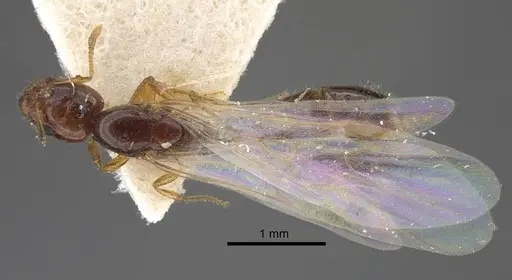
CASENT0917367
View on AntWeb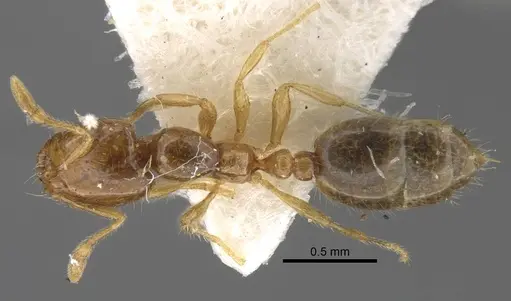
Literature
Loading distribution map...Loading products...