
Solenopsis joergenseni
- Sci. Name
- Solenopsis joergenseni
- Tribe
- Solenopsidini
- Subfamily
- Myrmicinae
- Author
- Santschi, 1919
- Distribution
- Found in 2 countries
Introduction
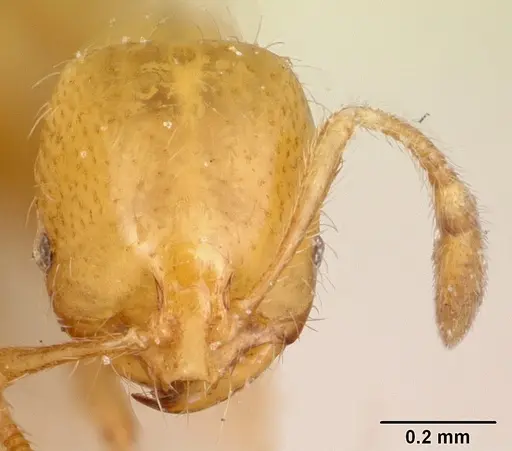
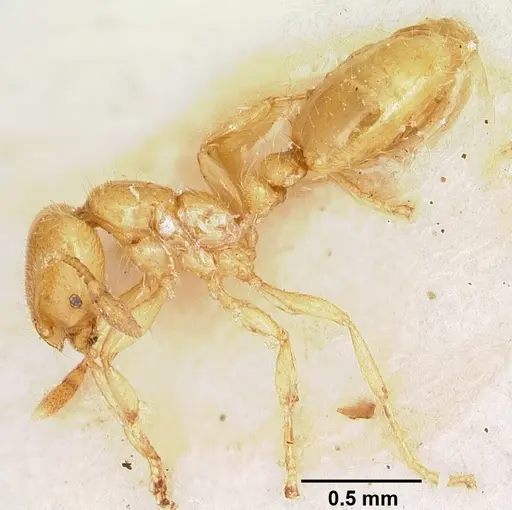
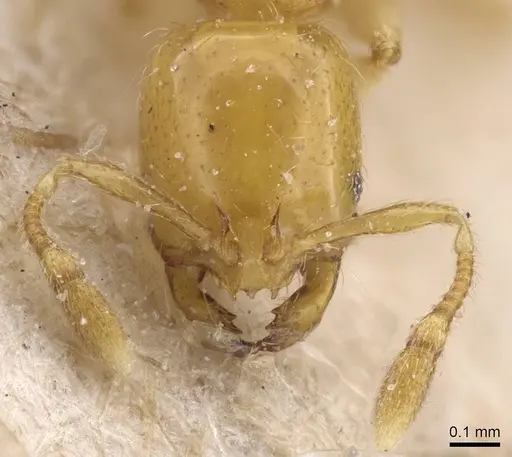
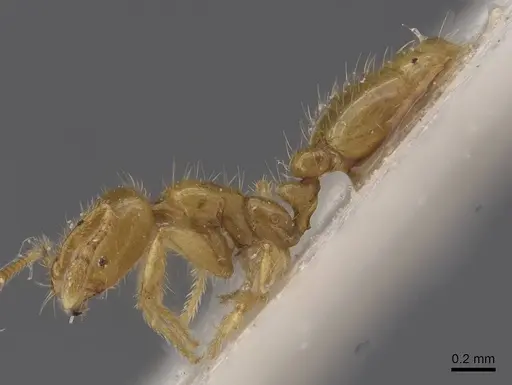
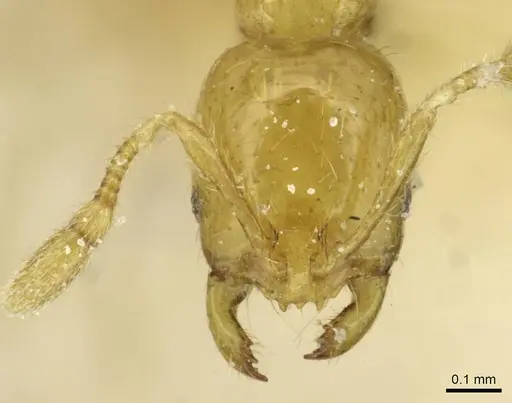
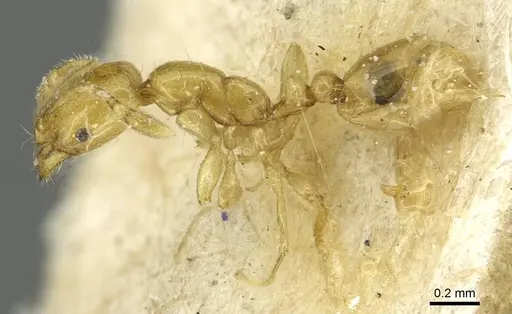
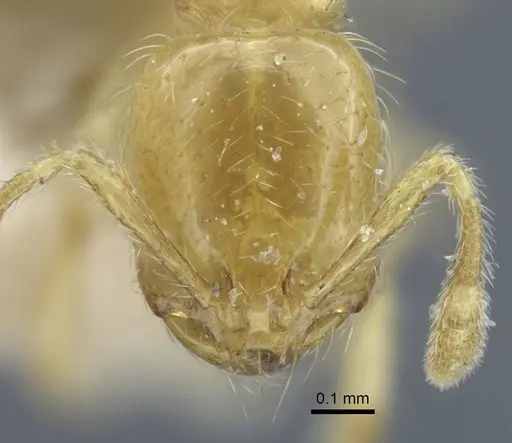
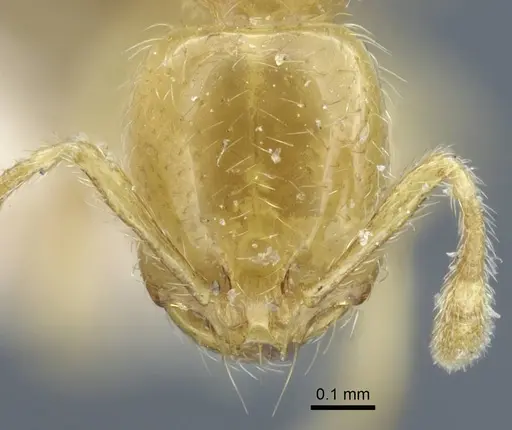
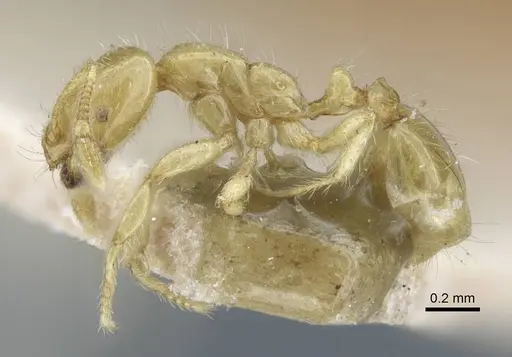
Solenopsis joergenseni is a small yellow thief ant, part of the Solenopsis molesta species complex. Workers measure 1.8-2.16 mm in total length, with a rectangular head that is longer than wide. The front edge of the clypeus has four teeth - some workers have a small bump that looks like a fifth tooth. Their eyes are relatively large (8-10 ommatidia) and they have horizontal grooves (striae) on both the mesopleuron and metapleuron, a key feature that separates them from similar species like Solenopsis clytemnestra, which only has striae on the metapleuron . The body is a uniform yellow, giving them a pale, almost see-through look that is typical of many thief ants.
Quick Summary
- Difficulty: Expert
- Origin & Habitat: Native to the Neotropical region, Argentina (Formosa, Córdoba, Chaco, Santa Fe), Brazil (Minas Gerais, Pirapora), and Paraguay (Humid Chaco) [2][3][1]. They live in leaf litter, under rocks, and forage on the ground, workers are easily attracted to protein baits like wieners [1].
- Colony Type: Colony structure is unconfirmed. Only the worker caste has been documented, no queens have ever been collected or described. If a queen exists, it is likely that colonies are monogyne (single queen), but this is pure speculation.
- Size & Growth:
- Queen: Unknown, no queen caste has been documented [1].
- Worker: 1.8-2.16 mm (average 1.94 mm) [1].
- Colony: Unknown, no data on maximum colony size exists. Given the small worker size, colonies are probably small to moderate, but this is a guess.
- Growth: Unknown
- Development: Unconfirmed, no studies on this species. Based on related Solenopsis, expect around 4-8 weeks at 24-28°C. (Development timeline is estimated from related species in the genus.)
Housing and Setup
Because workers are only ~2 mm, escape prevention is your top priority. Use test tubes with tight cotton plugs or small Y‑tong (AAC) or plaster formicariums with very fine mesh (200+ micron). A test tube with a water reservoir works well, the narrow space mimics their natural hiding places under rocks and in leaf litter. Avoid large, open enclosures, these tiny ants can become stressed in overly spacious setups. The outworld should have a tight seal and no gaps. Never use acrylic nests, they are impossible to secure properly for such small ants [1].
Feeding and Diet
Thief ants are opportunistic. In the wild they are strongly attracted to protein baits (wieners were used to collect specimens in Brazil) [1]. Offer small protein sources: fruit flies, pinhead crickets, or tiny mealworm pieces. They will also accept sugar water or honey, but protein should be the main part of the diet. Feed small amounts every 2-3 days and remove leftovers promptly to avoid mold. For a tiny colony, even one fruit fly is a huge meal.
Temperature and Seasonal Care
Keep the nest at 24-28°C. These are tropical/subtropical ants from South America, so they are used to warmth year‑round. Room temperature (20-24°C) is okay but will slow them down. A small heating cable on one side can create a gradient if your room is cool. No hibernation needed, never cool them below 18°C. Keep conditions consistent all year [1].
Behavior and Colony Dynamics
This species is known only from workers, no queen has ever been collected or described [1]. That makes captive keeping extremely challenging (probably impossible) because you would need to find a mated queen, and we don’t even know what she looks like. Workers forage alone or in small groups, typical of thief ants. Their relatively large eyes (8-10 ommatidia) help them spot food. They have horizontal striae on both the mesopleuron and metapleuron, a key ID feature that separates them from similar species like Solenopsis clytemnestra [1]. They are not aggressive and their sting is harmless to humans.
Frequently Asked Questions
How do I keep Solenopsis joergenseni ants?
Keeping this species is extremely difficult because no queen has ever been documented, you cannot start a colony without one. If you somehow obtain workers, house them in a test tube or small Y‑tong nest with tight barriers to prevent escape (they are only ~2 mm). Keep at 24-28°C with moderate humidity. Feed tiny protein sources like fruit flies. But realistically, this is not a species that can be kept in captivity [1].
What do Solenopsis joergenseni eat?
They readily accept protein baits, in the wild they were collected using wieners (meat). Offer small insects like fruit flies, pinhead crickets, or tiny mealworm pieces. They will probably also take sugar water or honey [1].
How big do Solenopsis joergenseni colonies get?
Colony size is completely unknown, no studies have documented it. Because the workers are so small (1.8-2.16 mm), colonies probably stay under a few hundred workers, but this is just an educated guess [1].
Can I find a queen of Solenopsis joergenseni?
Queens have never been collected or described, only workers are known to science [1]. Finding a mated queen is probably impossible. This makes captive keeping of this species essentially impossible.
What temperature do Solenopsis joergenseni need?
Keep them at 24-28°C, these are tropical ants. Room temperature (20-24°C) is okay but slows them. No heating is needed if your room stays in that range [1].
Do Solenopsis joergenseni need hibernation?
No, as tropical ants from Argentina, Brazil, and Paraguay, they do not require winter rest. Keep warm conditions year‑round [1].
Are Solenopsis joergenseni good for beginners?
Absolutely not, this species should be considered impossible to keep. No queen has ever been found, so you cannot start a colony. Even if you got workers, care information is nonexistent. Their tiny size also requires expert-level escape proofing. Do not attempt to keep this species [1].
Where is Solenopsis joergenseni found?
They live in the Neotropical region of South America: Argentina (Formosa, Córdoba, Chaco, Santa Fe), Brazil (Minas Gerais, Pirapora), and Paraguay (Humid Chaco). They nest under rocks and in leaf litter [2][3][1].
How long do Solenopsis joergenseni take to develop?
Development time is unconfirmed, no studies exist. Based on related Solenopsis, estimate 4-8 weeks from egg to worker at 24-28°C [1].
Report an Issue
The current care sheet is based fully on literature. See inconsistencies, or something that's incorrect? Please , it will be resolved after review from an admin. Contributing to the blogs tab also helps providing information, to make us be able to further improve the caresheets. Thank you for your support!
References

This caresheet is licensed under CC BY-SA 4.0 .
Community Blogs
CASENT0103215
View on AntWeb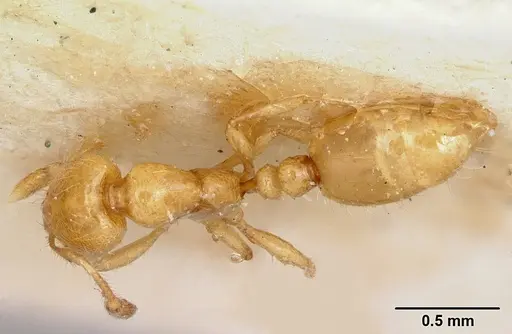
CASENT0913901
View on AntWeb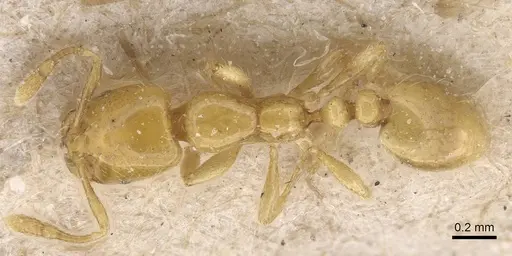
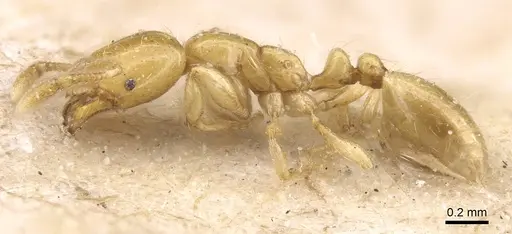
CASENT0913902
View on AntWeb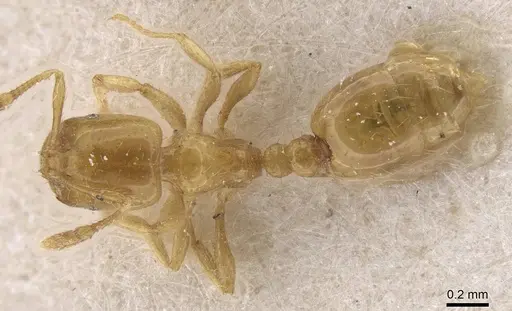
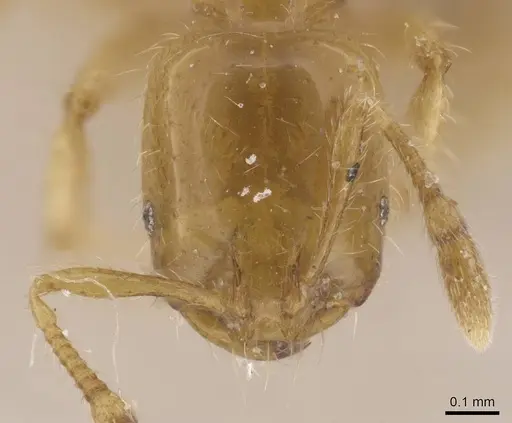
CASENT0913944
View on AntWeb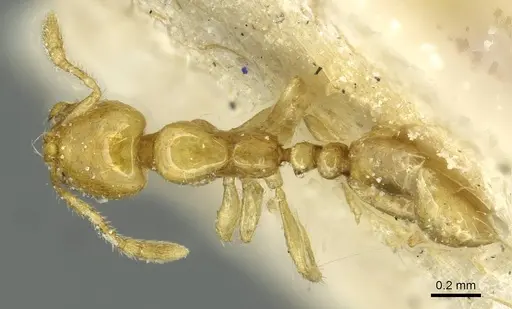
CASENT0917010
View on AntWeb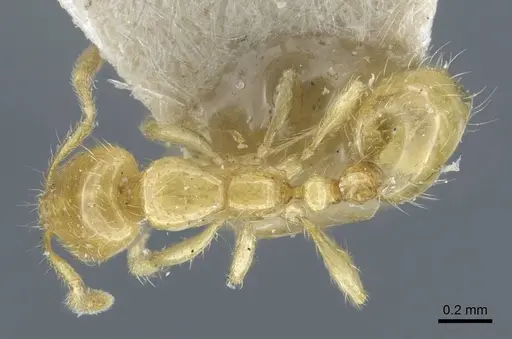
Literature
Loading distribution map...Loading products...