
Solenopsis iheringi
- Sci. Name
- Solenopsis iheringi
- Tribe
- Solenopsidini
- Subfamily
- Myrmicinae
- Author
- Forel, 1908
- Distribution
- Found in 3 countries
Introduction
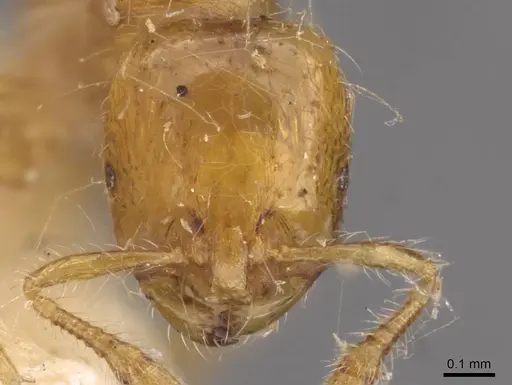
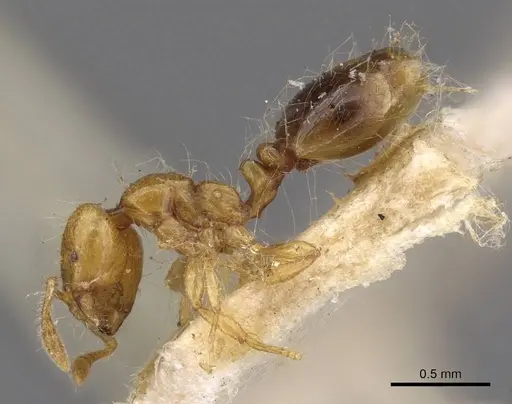
Solenopsis iheringi is a small dimorphic thief ant belonging to the wasmannii species complex, found in South America including Brazil, Paraguay, and northern Argentina . Minor workers are 2.0-2.2 mm (total length), bicolored with a brownish-yellow body and brown gaster. Major workers are 3.2 mm, with a reddish-brown body and yellowish gaster . Queens have never been collected or described. This species inhabits humid subtropical forest edges, where it forages on the ground and raids the brood and food stores of other ant colonies .
Quick Summary
- Difficulty: Medium
- Origin & Habitat: Native to the Neotropical region of South America: Brazil, Paraguay, and northern Argentina. It is found in humid subtropical tall forest edges, including submontane semidecidual seasonal forest fragments in the Atlantic Forest [1][2].
- Colony Type: Unknown. Queens have never been collected, so colony structure is not documented [1].
- Size & Growth:
- Antkeeping:
- Temperature: Based on its subtropical forest habitat [1], keep at 24-28°C. Provide a warm gradient so ants can self-regulate.
- Humidity: High humidity is recommended. In nature, this ant lives in humid subtropical forests, so keep the nest substrate damp but not waterlogged [1][2].
- Diapause: Not required. Being a subtropical species, it does not need true hibernation. A slight cooling period (18-20°C) during winter may slow activity but is not necessary.
- Nesting: Test tube setups with a water reservoir work well. Prefers snug, humid chambers. Avoid dry, airy setups. Can also use Y-tong (AAC), plaster, or soil nests with a moisture gradient. Ensure excellent escape prevention with fine mesh (0.5 mm or smaller) and fluon barriers.
- Behavior: Small, secretive thief ants that primarily forage on the ground and raid other ant colonies for brood and food stores. Not aggressive toward humans but will defend their nest. Majors may serve as soldiers or foragers. Most active in low light. Escape risk is extreme due to 2 mm worker size, use airtight seals and fine mesh.
- Common Issues: queen absence makes colony propagation very difficult, queens have never been collected in the wild., escape prevention is critical due to 2 mm worker size, even tiny gaps allow escape., high humidity needs can lead to mold if ventilation is inadequate., difficulty obtaining founding colonies since queens are rarely found and founding behavior is unconfirmed.
Housing and Nest Setup
Solenopsis iheringi does well in a simple test tube with a water reservoir (cotton plug) or in a small Y‑tong / plaster nest with a moisture gradient. Because workers are only 2 mm, all connections must be airtight, use flexible tubing and fine mesh (0.5 mm or smaller). Apply fluon to the rims of the outworld. Keep the nest in a quiet, low‑traffic area, and cover the nest with red film to reduce light stress. Avoid large, open spaces, they feel more secure in small chambers. [1]
Feeding and Diet
In the wild, they steal brood and food from other ant colonies. In captivity, offer small protein sources such as fruit flies, pinhead crickets, or tiny pieces of mealworm. Supplement with sugar water or honey for energy. Feed small amounts every 2-3 days and remove uneaten food after 24 hours to prevent mold. Live prey can trigger natural raiding behavior, but they will also scavenge dead insects. [1]
Temperature and Seasonal Care
Keep the colony at 24-28°C, this matches their subtropical forest habitat [1][2]. A small heat cable on one side of the nest creates a useful gradient. Never let the nest dry out, check the water reservoir daily. During winter, you can lower the temperature to 18-20°C to reduce activity, but do not let it drop below 15°C. Diapause is not required.
Colony Dynamics and Growth
Solenopsis iheringi is one of the few dimorphic thief ants, producing both minor and major workers [3]. Majors develop from larger larvae and likely have roles in defense or handling larger prey. Exact colony size and growth rate are unknown because queens have never been collected. Neither the founding method nor the number of queens per colony has been documented. Be patient, colony growth may be slow and unpredictable.
Handling and Observation
These ants are tiny and quick, use a magnifying glass or macro lens for good observations. They are not aggressive, but their small size makes direct handling difficult. Use gentle aspiration (pooter) to move workers. Because they are most active in low light, use red film over the nest. Inspect all seals and barriers daily during the first weeks, a gap that looks insignificant to you is a highway for a 2 mm ant. [1]
Frequently Asked Questions
How do I start a Solenopsis iheringi colony?
Starting a colony is very difficult because queens have never been collected. Your only option is to find a wild colony that already has a queen, but this is extremely rare. Founding behavior is unconfirmed, so even if you catch a queen during a nuptial flight (timing unknown), you would have to guess the founding method. Patience and luck are essential.
What do Solenopsis iheringi ants eat?
They eat small insects and can accept sugar water. Offer fruit flies, tiny crickets, or small mealworms as protein. Remove uneaten prey after 24-48 hours to prevent mold. They will also drink honey water for energy. Feed every 2-3 days.
Are Solenopsis iheringi ants dangerous?
No, they are not dangerous to humans. They are tiny ants that focus on raiding other ant colonies. While they can sting (subfamily Myrmicinae), their small size makes the sting negligible. They pose no threat to humans or pets.
Do Solenopsis iheringi need hibernation?
No, they do not require true hibernation. As subtropical ants from Brazil and Paraguay, they experience mild seasonal variation rather than cold winters. You can provide a slight cooling period (18-20°C) during winter to simulate their natural dry season, but this is optional and should not drop below 15°C.
How long does it take for Solenopsis iheringi to develop from egg to worker?
Exact development time is unknown. Based on related Solenopsis species, it might take 6-8 weeks at optimal temperatures, but this is only a guess. Direct data for this species do not exist.
Can I keep multiple Solenopsis iheringi queens together?
This is not recommended. Queens have rarely been observed in this species, and their colony structure is not understood. The safest approach is to keep a single queen per colony. Combining unrelated queens has not been documented and could result in fighting.
Why are my Solenopsis iheringi escaping?
Their small size (2 mm workers) makes escape a constant risk. Use fine mesh (0.5 mm or smaller) on all ventilation, apply fluon to rim edges, and check lid seals regularly. Even tiny gaps that seem insignificant to human eyes are large enough for these ants to squeeze through.
Are Solenopsis iheringi good for beginners?
This species is moderate difficulty and not ideal for complete beginners. The main challenges are their small size (requiring excellent escape prevention), high humidity needs, and difficulty obtaining queens for starting new colonies. If you're experienced with small Myrmicinae ants and can maintain humid conditions, they can be rewarding.
How big do Solenopsis iheringi colonies get?
Maximum colony size is unknown. Because queens have never been collected, even rough estimates are impossible. Based on related thief ants, colonies likely stay small (a few hundred workers), but there is no data to confirm.
What temperature is best for Solenopsis iheringi?
Keep them at 24-28°C. These subtropical ants prefer warm, humid conditions similar to their native Atlantic Forest habitat in Brazil. A slight gradient allowing them to move between warmer and cooler areas of the nest is ideal. Avoid temperatures below 15°C.
Report an Issue
The current care sheet is based fully on literature. See inconsistencies, or something that's incorrect? Please , it will be resolved after review from an admin. Contributing to the blogs tab also helps providing information, to make us be able to further improve the caresheets. Thank you for your support!
References

This caresheet is licensed under CC BY-SA 4.0 .
Community Blogs
CASENT0178133
View on AntWeb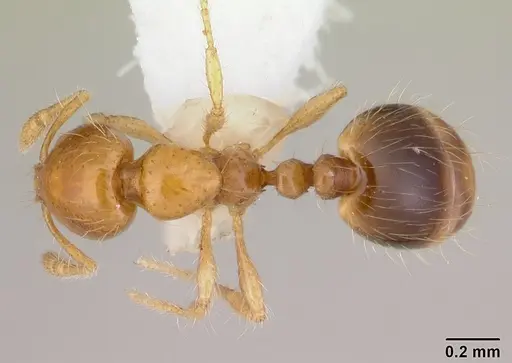
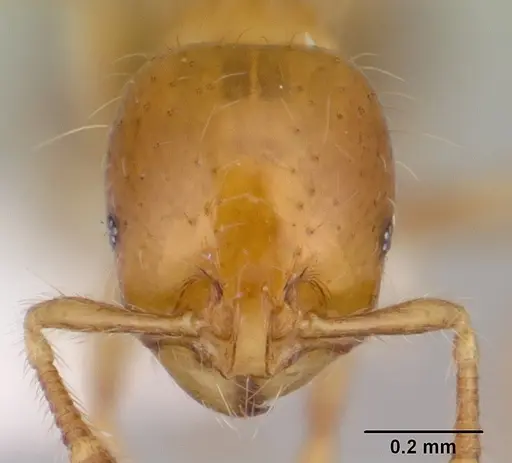
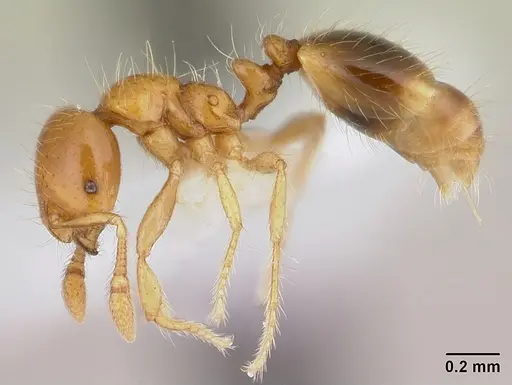
CASENT0908796
View on AntWeb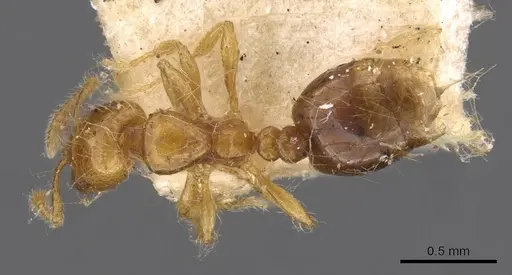
Literature
Loading distribution map...Loading products...