
Solenopsis hayemi
- Sci. Name
- Solenopsis hayemi
- Tribe
- Solenopsidini
- Subfamily
- Myrmicinae
- Author
- Forel, 1908
- Distribution
- Found in 2 countries
Introduction
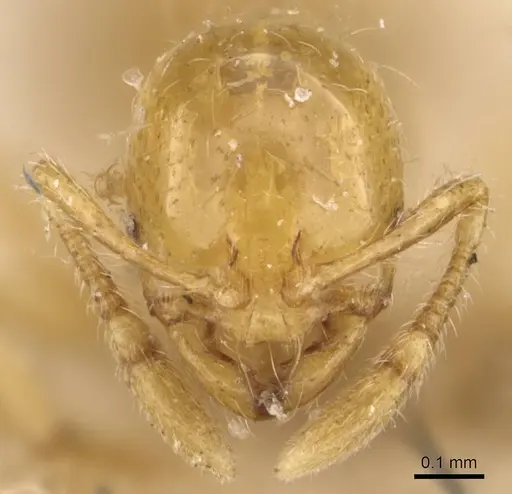
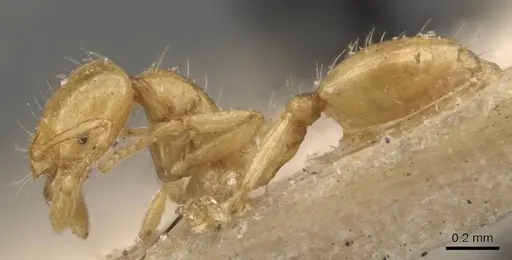
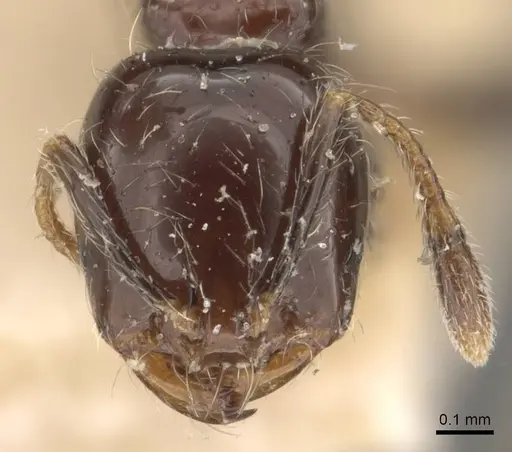
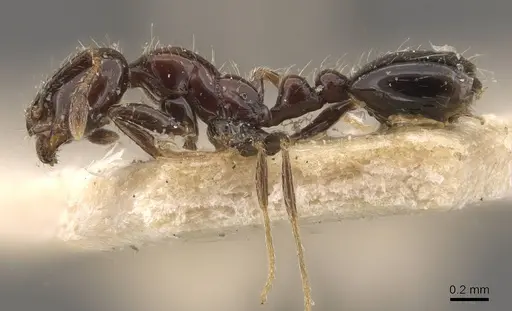
Solenopsis hayemi is a small thief ant from the Solenopsis stricta species complex, native to Central and South America from Mexico to Brazil and Paraguay . Workers measure 1.74-2.28 mm total length and vary in color - some are entirely yellow, others bicolored with a red head and mesosoma and a black abdomen . They nest underground and are recognizable by their wide, arched petiole when viewed from the side, which helps separate them from similar species like Solenopsis stricta and Solenopsis decipiens . As a typical thief ant, they are opportunistic predators and scavengers, often raiding the brood and stored food of other ant colonies.
Quick Summary
- Difficulty: Hard
- Origin & Habitat: Ranges from Mexico (Chiapas and Veracruz) south through Costa Rica, Panama, Colombia, and Brazil to Paraguay [1][2][3]. In Costa Rica they inhabit Pacific Coast lowlands, in Paraguay they forage in humid subtropical medium forests. They have been collected at elevations from sea level to 900 m in Colombia [4]. Nests are underground.
- Colony Type: Unconfirmed. The queen caste has not been described in scientific literature, so colony structure is unknown [4].
- Size & Growth:
- Queen: Unknown, the queen has never been described [4].
- Worker: 1.74-2.28 mm total length [4].
- Colony: Unknown for this species. Related thief ants may reach several hundred to a few thousand workers, but no data exists for S. hayemi.
- Growth: Unknown, no studies have tracked colony growth.
- Development: Estimated 5-7 weeks based on related Solenopsis species, but unconfirmed for S. hayemi. (Estimate only, no specific developmental data exists.)
- Antkeeping:
- Temperature: 24-28°C, based on tropical origin [4]. Avoid temperatures above 32°C or below 20°C.
- Humidity: Moderate to high. Keep the nest substrate consistently moist but not waterlogged, mimicking humid subtropical forest floors [4].
- Diapause: No true diapause is likely, as they come from tropical regions. Activity may slow during cooler months, but extended cold is unnecessary.
- Nesting: Underground nester [4]. In captivity, use a Y‑tong (AAC), plaster, or soil nest with tight, small chambers scaled to the workers' tiny size.
- Behavior: Small and active foragers. As a thief ant, they raid other colonies for brood and stored food. Not aggressive toward humans, their sting is mild (typical of the subfamily Myrmicinae, tribe Solenopsidini). Escape prevention is critical due to their ~2 mm size, use fine mesh (≤0.5 mm) or tight seals [4].
- Common Issues: escape risk due to tiny size, use fine mesh or barriers, queen and founding biology are unconfirmed, making captive rearing uncertain, thief ants prefer small live prey, ensure consistent supply of fruit flies or similar, overheating can be fatal, keep below 32°C even though they are tropical, humidity must be maintained, dry conditions quickly lead to colony decline
Housing and Nest Setup
Because workers are only about 2 mm long, your nest must have small, tight chambers. A Y‑tong (AAC) or plaster nest works well. Provide a water reservoir to keep the substrate moist but not flooded. The outworld can be a smooth‑walled container, these ants are not strong climbers on clean surfaces. However, any ventilation holes must be covered with very fine mesh (≤0.5 mm) because they can squeeze through tiny gaps [4]. For a founding colony, a test tube is fine until you have at least a few dozen workers, then transfer to a formicarium.
Feeding and Diet
As a thief ant, Solenopsis hayemi is an opportunistic predator and scavenger. Offer small live prey like fruit flies, pinhead crickets, or small mealworms [4]. They will also take dead insects and might accept a tiny drop of diluted honey or sugar water, but protein is more important. Feed small prey two to three times per week, adjusting based on consumption. Remove uneaten food after 24-48 hours to prevent mold.
Temperature and Seasonal Care
This tropical species needs consistent warmth. Keep the nest at 24-28°C [4]. A small heating cable on one side of the nest creates a useful gradient, the ants can move to cooler spots if needed. Avoid temperatures below 20°C or above 32°C. They do not require a true diapause, but activity may drop during cooler periods. No special winter treatment is needed.
Colony Founding
How Solenopsis hayemi founds a colony is not known. No queen has ever been described, so we cannot confirm if they are claustral, semi‑claustral, or parasitic [4]. If you acquire a queen, keep her in a dark, undisturbed test tube with water and a small entrance. Watch carefully but do not disturb. Once the first workers appear, you can try offering tiny prey.
Behavior and Defense
Workers are small but active, mostly foraging at night or in dim light. Their name ‘thief ant’ comes from raiding other colonies for brood and stored food. They can sting, but the venom is mild, much less painful than that of fire ants (subfamily Myrmicinae, tribe Solenopsidini). They are not aggressive toward humans. Because of their tiny size, be vigilant about escape prevention: use fine mesh or tight seals on all openings [4].
Frequently Asked Questions
How long does it take for Solenopsis hayemi to raise their first workers?
That has not been studied. Similar Solenopsis species take about 5-7 weeks from egg to worker at 24-28°C, but this is an estimate for S. hayemi. The first workers (nanitics) are smaller than mature ones.
What do Solenopsis hayemi ants eat?
They are opportunistic predators and scavengers. Give them small live prey like fruit flies, pinhead crickets, or small mealworms. They will also eat dead insects and may accept a drop of diluted honey or sugar water [4]. Feed two to three times per week.
Can I keep multiple queens together?
It is not recommended. The colony structure is unknown, but most Solenopsis species are monogyne (single queen). If you have more than one founding queen, house them separately to avoid fighting.
What temperature do Solenopsis hayemi need?
Keep the nest at 24-28°C. They are tropical and need consistent warmth. Avoid temperatures below 20°C or above 32°C. A small heating cable on one side of the nest can provide a gradient [4].
Are Solenopsis hayemi good for beginners?
No, they are rated hard. The queen and founding biology are unknown, escape is a constant challenge due to their 2 mm size, and they require a steady supply of small live prey. Only experienced keepers should attempt them.
How big do Solenopsis hayemi colonies get?
Colony size has not been documented. Related thief ants can reach several hundred to a few thousand workers, but this is a guess. Expect slow growth initially.
Do they need hibernation?
No. As a tropical species from Central and South America, they prefer warmth year‑round. They may be less active in cooler months but do not need a cold diapause period [4].
Why are my Solenopsis hayemi escaping?
Their tiny size (about 2 mm) lets them slip through very small gaps. Check all ventilation holes, seams, and connection points. Use fine mesh (≤0.5 mm) and consider applying fluon or petroleum jelly to barriers [4].
When should I move them to a formicarium?
Keep founding colonies in a test tube until there are at least 20-30 workers and the test tube gets crowded. Then transfer to a Y‑tong or plaster nest. Do not disturb them too early.
Report an Issue
The current care sheet is based fully on literature. See inconsistencies, or something that's incorrect? Please , it will be resolved after review from an admin. Contributing to the blogs tab also helps providing information, to make us be able to further improve the caresheets. Thank you for your support!
References

This caresheet is licensed under CC BY-SA 4.0 .
Community Blogs
CASENT0908832
View on AntWeb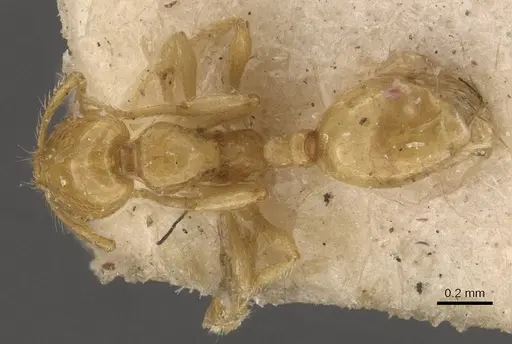
CASENT0908836
View on AntWeb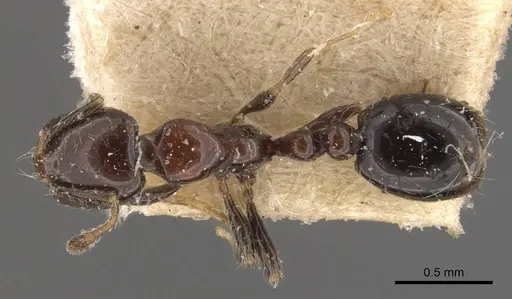
Literature
Loading distribution map...Loading products...