
Solenopsis franki
- Sci. Name
- Solenopsis franki
- Tribe
- Solenopsidini
- Subfamily
- Myrmicinae
- Author
- Forel, 1908
- Distribution
- Found in 1 countries
Introduction
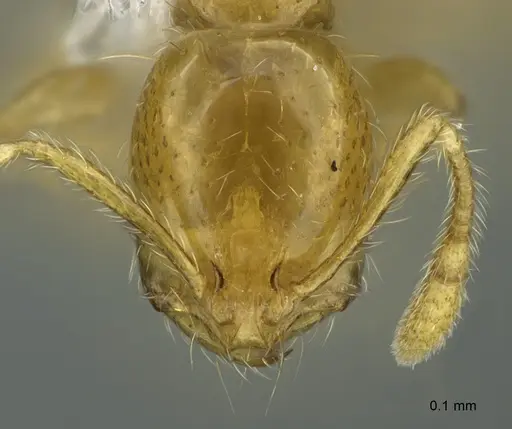
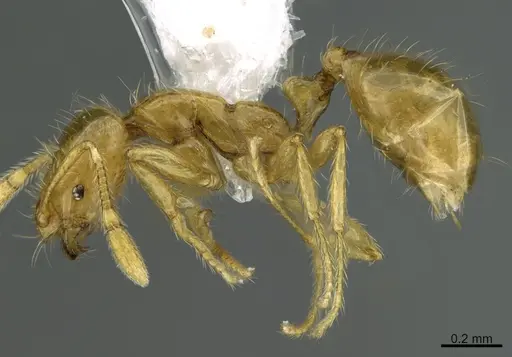
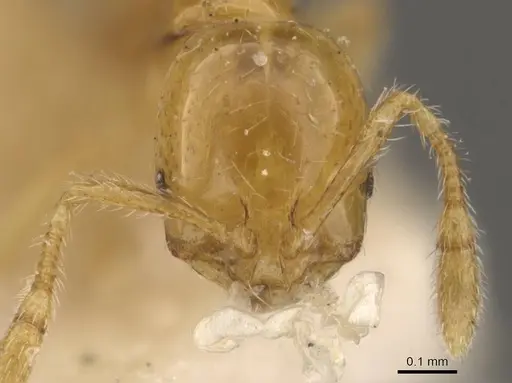
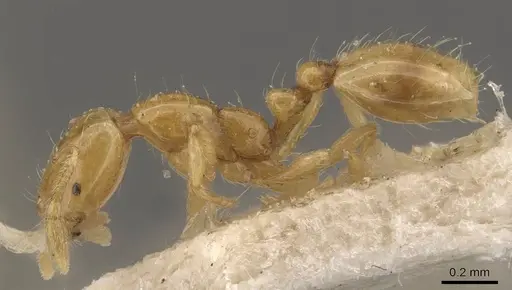
Solenopsis franki is a tiny thief ant from the Neotropical region. Workers measure 1.47-1.68 mm and queens reach 3.00 mm, both with a uniform golden-yellow body . They belong to the Solenopsis molesta species complex and are known for raiding other ant nests to steal brood. Their range spans Brazil, Colombia, Guyana, Paraguay, and Argentina . In the wild they inhabit a variety of habitats, from dry forest and coffee plantations to wet rainforests . This predatory nature means they need regular small prey in captivity.
Quick Summary
- Difficulty: Medium
- Origin & Habitat: Native to the Neotropical region: Brazil, Colombia, Guyana, Paraguay, and Argentina [2][3]. Found in dry forest at 950 m, leaf litter in coffee plantations at 1405 m, and wet rainforest with dark clay soils [1][2].
- Colony Type: Colony structure is unknown. Based on related Solenopsis species, likely monogyne (single queen). Ergatoid replacement reproductives may occur but are not confirmed [1].
- Size & Growth:
- Queen: 3.00 mm [1]
- Worker: 1.47-1.68 mm [1]
- Colony: Unknown – no data available for S. franki. Based on related species, possibly up to a few hundred workers.
- Growth: Moderate
- Development: Unknown – estimated 6–8 weeks at 24–28°C based on small Solenopsis species. No direct observations are available. (Temperature and humidity strongly affect brood development.)
- Antkeeping:
- Temperature: 24–28°C is ideal. Provide a temperature gradient so workers can self-regulate [2][3].
- Humidity: Moderate to high. Keep the substrate moist but not waterlogged. They tolerate diverse moisture levels naturally [1].
- Diapause: Unlikely – as a tropical species, true diapause is not required. Maintain warm conditions year-round.
- Nesting: Y-tong, plaster, or test tubes work well. Their tiny size demands very tight seals and small chambers. In nature they nest in leaf litter, rotting wood, and near termite nests [4].
- Behavior: Active, persistent foragers. Workers are bold but not aggressive to humans. They have a stinger, but the sting is very mild due to their size. Escape prevention is critical – they can slip through gaps over 1.5 mm. Use fine mesh and seal all connections.
- Common Issues: escape – workers are tiny and can squeeze through standard formicarium gaps., insufficient protein – they are predatory and need regular small live prey., founding queens may fail if disturbed – leave them undisturbed in a test tube for the first 6–8 weeks., young colonies are vulnerable to desiccation if humidity drops too low., wild-caught colonies may carry mites or other parasites.
Housing and Escape Prevention
Housing Solenopsis franki requires near‑perfect escape prevention. Workers are just 1.47–1.68 mm long [1] – even tiny gaps serve as exits. Use Y‑tong (AAC), plaster, or test tubes with tightly packed cotton plugs. Apply fluon to all edges and connection points. Check enclosures daily during the founding stage. For larger colonies, use small‑chambered nests that match their tiny bodies. In the wild they nest in leaf litter and near termite nests [4], so a fine soil substrate with a moisture gradient works well.
Feeding and Diet
As thief ants, Solenopsis franki have a strongly predatory diet. In captivity, offer small live prey like springtails, fruit flies, and pinhead crickets. They also accept crushed mealworms, bloodworms, and fish flakes. Sugar water or honey can be given occasionally, but protein should make up most of the diet. Feed 2–3 times per week and remove uneaten food after 24 hours to prevent mold. Their tiny size means a single fruit fly can feed a small colony.
Temperature and Seasonal Care
Being a Neotropical species, S. franki needs warmth. Keep the nest area at 24–28°C [2][3]. A heating cable on one side creates a gradient for thermoregulation. In the wild they inhabit dry forest, coffee plantations, and wet rainforests [1][2], so they tolerate a range of humidity but consistent warmth is best. No true hibernation is needed, but a slight drop to 20–22°C in winter can mimic seasonal cycles and may benefit established colonies.
Colony Founding and Growth
Queens measure 3.00 mm [1]. Their founding behavior is unknown, but based on related Solenopsis species they are likely claustral (sealing themselves in a chamber and raising the first brood entirely on stored fat). Place a newly mated queen in a small test tube with a water reservoir, seal the chamber, and do not disturb her for 6–8 weeks. The first nanitic workers will emerge after about 6–8 weeks at optimal temperature. Growth is moderate – expect several months to reach 50 workers and over a year to reach a few hundred. Keep the nest warm and humid during founding.
Behavior and Defense
These ants are active foragers with bold personalities. Workers will explore thoroughly and can be persistent in finding food. They possess a stinger, but due to their tiny size the sting is very mild – most keepers feel only a brief pinprick. They are not aggressive toward humans and will flee when threatened. Their real danger is escape, not defense. In the wild they raid other ant nests and termite mounds [4], a behavior that translates to persistent food‑finding in captivity. Observing their coordinated foraging is rewarding.
Frequently Asked Questions
Can I keep Solenopsis franki in a test tube?
Yes – test tubes are ideal for founding. Given their tiny size (workers 1.47–1.68 mm [1]), use a small water reservoir with a firm cotton plug. Once the colony reaches 30–50 workers, move them to a Y‑tong or plaster nest with appropriately sized chambers.
How long does it take for Solenopsis franki to produce first workers?
The exact timeline is unknown for this species. Based on related small Solenopsis, expect 6–8 weeks at 24–28°C. The queen is 3.00 mm [1] and likely claustral, so do not disturb her during the founding period.
What do Solenopsis franki eat?
They are predatory and need protein‑rich foods. Offer small live prey such as fruit flies, springtails, and tiny crickets. They also accept crushed mealworms, bloodworms, and fish flakes. Sugar water can be given occasionally. Their small size means even a single fruit fly is a substantial meal for a founding colony.
Are Solenopsis franki good for beginners?
They are rated medium difficulty. Their tiny size makes escape prevention challenging, and they require more attention to housing than larger species. If you are new to antkeeping, start with a larger, more forgiving species like Lasius niger or Camponotus herculeanus.
How big do Solenopsis franki colonies get?
No specific data are available. Based on related species in the molesta complex, colonies likely reach a few hundred workers at maturity. They remain smaller than many common pet ant species.
Do Solenopsis franki need hibernation?
No – as a Neotropical species from warm climates, they do not require true hibernation. Keep them at 24–28°C year‑round. A slight reduction to 20–22°C in winter may simulate natural cycles but is not necessary.
Why are my Solenopsis franki escaping?
Their tiny size (workers 1.47–1.68 mm [1]) allows them to squeeze through gaps that seem impossibly small. Use fine mesh, apply fluon to all edges, and check connections daily. Even a gap smaller than 1 mm can be an exit for these determined ants.
When should I move Solenopsis franki to a formicarium?
Move them when the test tube becomes crowded or the water reservoir runs dry – typically when the colony has 30–50 workers. Choose a nest with small chambers to avoid stressing the young colony. Y‑tong or plaster nests work well.
Can I keep multiple Solenopsis franki queens together?
This is unknown for S. franki. Based on typical Solenopsis molesta complex patterns, they are likely monogyne (single queen). Do not mix unrelated queens, as they will fight. If you find multiple reproductives, they are probably ergatoid replacement queens, not co‑queens.
Report an Issue
The current care sheet is based fully on literature. See inconsistencies, or something that's incorrect? Please , it will be resolved after review from an admin. Contributing to the blogs tab also helps providing information, to make us be able to further improve the caresheets. Thank you for your support!
References

This caresheet is licensed under CC BY-SA 4.0 .
Community Blogs
CASENT0217934
View on AntWeb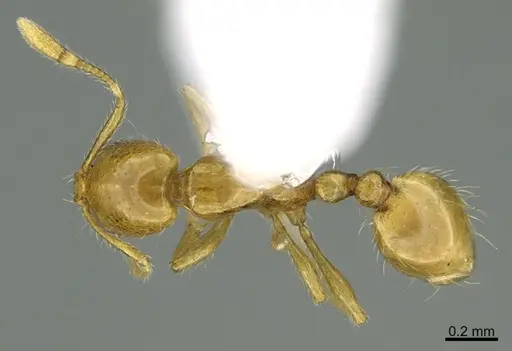
CASENT0908831
View on AntWeb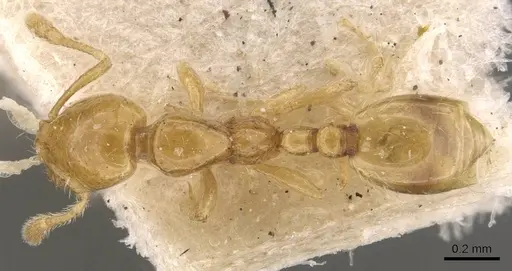
Literature
Loading distribution map...Loading products...