
Solenopsis fairchildi
- Sci. Name
- Solenopsis fairchildi
- Tribe
- Solenopsidini
- Subfamily
- Myrmicinae
- Author
- Wheeler, 1926
- Distribution
- Found in 1 countries
Introduction
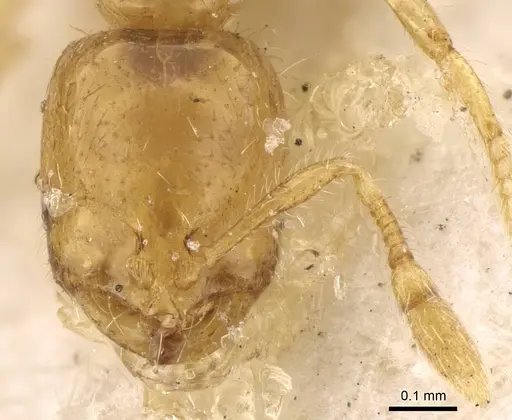
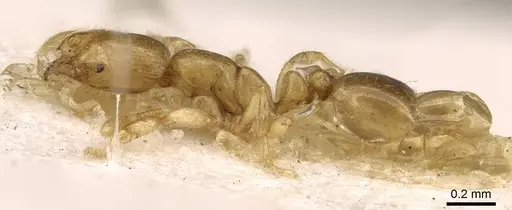
Solenopsis fairchildi is a small, yellowish to reddish-brown ant in the fire ant genus Solenopsis. Worker size is roughly 2-4mm, inferred from typical Solenopsis patterns. Queens are larger, estimated at 5-7mm based on the genus. This species is a Mediterranean endemic found mainly in the Balearic Islands (Mallorca is the type locality) , the Iberian Peninsula (including the Valencian Community) , and recently confirmed in Malta . It was originally described by W.M. Wheeler in 1926 from specimens collected near Esporlas on Mallorca . In natural habitats, it nests under small stones in warm, open areas like dehesa (open oak woodland) . It is less abundant than its relatives . As a member of the Myrmicinae subfamily (tribe Solenopsidini), it has a functional stinger delivering piperidine alkaloid venom to hunt and defend itself.
Quick Summary
- Difficulty: Medium
- Origin & Habitat: Mediterranean endemic found in the Balearic Islands (Mallorca, Minorca), the Iberian Peninsula (Spain), and Malta. Inhabits warm, open habitats including dehesa (open oak pasture) and dry grassy areas, nesting under small stones [1][4][2][3].
- Colony Type: Likely single-queen (monogyne) based on typical Solenopsis genus patterns, though this has not been confirmed for the species. Colonies appear modest in size, less abundant than related species in its range [4].
- Size & Growth:
- Queen: ~5-7mm (inferred from typical Solenopsis genus patterns)
- Worker: ~2-4mm (inferred from typical Solenopsis genus patterns)
- Colony: Estimated up to several hundred workers at maturity (based on typical Solenopsis patterns), species-specific data not available
- Growth: Moderate (estimated from genus patterns)
- Development: Estimated 6-8 weeks at optimal temperature (25-28°C) based on typical Solenopsis development [5] (Development time is inferred from related Solenopsis species, specific data for S. fairchildi is not available.)
- Antkeeping:
- Temperature: Keep at 25-30°C. As a Mediterranean species, they prefer warm conditions. A heating cable on one side of the nest creates a temperature gradient so ants can self-regulate [5].
- Humidity: Low to moderate, prefer dry to moderately damp nest conditions. Allow the nest substrate to dry partially between waterings. Avoid over‑damp conditions, which can cause mold and kill colonies. Natural habitat is dry and open [5].
- Diapause: Yes, this temperate/Mediterranean species needs a winter rest. Reduce temperature to 10-15°C for 2-3 months during winter. Stop feeding during this period and keep the colony in a cool, dark location [5].
- Nesting: Natural nest sites are under stones in soil [1]. In captivity, a Y‑tong (AAC) nest, plaster nest, or a naturalistic setup with compact chambers works well. They prefer tight, snug chambers scaled to their small size. Avoid large, open spaces [5].
- Behavior: These ants are defensive and will sting when threatened. They are foragers that actively search for food, small insects and sweet liquids. Workers are small but aggressive for their size. Escape prevention is critical because of their tiny size, use fine mesh and tight‑fitting lids. They are primarily nocturnal or crepuscular foragers [5].
- Common Issues: stinging, they have a functional stinger and will use it when threatened, so handle with care, escape prevention is critical due to their tiny size, they can squeeze through very small gaps, colonies can fail if kept too damp, these are dry‑habitat ants, overheating can kill them quickly, avoid temperatures above 35°C, slow founding phase, queens may take months to raise the first workers, patience is required
Housing and Nest Setup
Solenopsis fairchildi does well in several nest types. A Y‑tong (AAC) nest with narrow chambers scaled to their small size works excellently. Plaster nests also provide the dry conditions they prefer. A naturalistic setup with a soil layer and flat stones on top mimics their natural nesting under stones [1]. For the outworld, use a simple foraging area, these are small ants, so a shallow container works fine. Escape prevention is critical: use tight‑fitting lids and apply fluon or similar barrier to container edges. Even the smallest gaps will result in escapes [5].
Feeding and Diet
Like other Solenopsis species, these ants are omnivorous. They readily accept small live prey such as fruit flies, pinhead crickets, and other tiny insects. They also take honey water, sugar water, and honeydew. Protein is essential for brood development, offer small insects at least twice weekly. Sugar sources should be available constantly, either as honey diluted with water or sugar water on a cotton ball. Remove uneaten food promptly to prevent mold. During the founding phase, the queen does not need to be fed, she survives on stored fat reserves [5].
Temperature and Seasonal Care
As a Mediterranean species, Solenopsis fairchildi thrives at warm temperatures between 25-30°C. This range supports optimal brood development and colony activity. Use a heating cable or heat mat on one side of the nest to create a temperature gradient, ants can move between warmer and cooler areas as needed. During winter, these ants require a diapause (hibernation) period of 2-3 months. Reduce temperatures to 10-15°C and stop all feeding. Keep the colony in a cool, dark location such as an unheated garage or basement. Do not feed during diapause. Resume normal care in spring when temperatures gradually increase [5].
Behavior and Defense
This species has a functional stinger and will use it when threatened. The sting is painful for an ant of this size, similar to other fire ants. When disturbed, workers may swarm out aggressively to defend the colony. They are primarily nocturnal foragers, most active in the evening and night hours. Workers are small but numerous and will pursue threats persistently. When keeping this species, avoid disturbing the nest unnecessarily and never poke at them with fingers or tools. If you need to move the colony, wait until most workers are in the foraging area rather than disturbing the nest directly. In the wild, S. fairchildi is less abundant than its relatives, so colonies are unlikely to reach the huge sizes seen in pest fire ants [4][5].
Colony Founding
Newly mated queens are thought to dig a small chamber in soil and seal themselves inside (claustral founding), but this has not been confirmed for S. fairchildi. The queen lays eggs and raises the first brood alone, surviving on her stored fat reserves. Do not feed the founding queen, it can actually harm her. Keep the founding chamber dark and undisturbed. First workers (nanitics) will be smaller than normal workers and will emerge after several weeks. Once workers appear, begin offering food sparingly. The colony will grow slowly at first, then accelerate once the first cohort of workers is established [5].
Growth and Development
Development from egg to worker takes an estimated 6-8 weeks at optimal temperature (25-28°C). This figure is based on typical Solenopsis development patterns, specific data for S. fairchildi is lacking. Eggs develop into larvae, then pupae (often with a cocoon in Solenopsis), then emerge as workers. The first workers (nanitics) are typically smaller than later workers. Growth rate is moderate, colonies may take 6-12 months to reach up to 50-100 workers under good conditions. Larger colonies of several hundred workers develop over 2-3 years. Patience is essential, especially during the founding phase when progress seems very slow [5].
Frequently Asked Questions
Does Solenopsis fairchildi sting?
Yes, they have a functional stinger and will sting when threatened. The sting is painful for an ant of this size, similar to other fire ants. Handle with care and avoid disturbing the colony unnecessarily [5].
How long does it take for the first workers to appear?
Expect 6-8 weeks from egg to first worker at optimal temperature (25-28°C). This is based on typical Solenopsis development patterns. The founding phase is slow, be patient and do not disturb the queen [5].
Can I keep multiple queens together?
Not recommended. While some Solenopsis may tolerate multiple founding queens briefly, combining unrelated queens typically results in fighting. It is best to start with a single mated queen for each colony [5].
What do Solenopsis fairchildi eat?
They are omnivorous. Feed small live insects (fruit flies, pinhead crickets) for protein and offer honey water or sugar water as a sugar source. Remove uneaten food promptly to prevent mold [5].
Do they need hibernation?
Yes, this is a Mediterranean species requiring a winter diapause. Reduce temperature to 10-15°C for 2-3 months during winter and stop all feeding. Keep them in a cool, dark location [5].
Are Solenopsis fairchildi good for beginners?
They are rated medium difficulty. While not the most difficult species, their small size, stinging ability, and specific temperature/humidity needs make them better suited for keepers with some experience. The slow founding phase also requires patience. They are less abundant than many other fire ants, so colony growth may feel slower [4][5].
How big do colonies get?
Based on typical Solenopsis patterns, colonies likely reach up to several hundred workers at maturity. They are not among the largest fire ant species. Growth is slow, expect up to 50-100 workers within 6-12 months under good conditions [5].
What temperature do they need?
Keep them at 25-30°C. As Mediterranean ants, they prefer warm conditions. A heating cable on one side of the nest creates a gradient allowing ants to self-regulate. Avoid temperatures above 35°C [5].
Why are my ants escaping?
Their small size means they can squeeze through tiny gaps. Use fine mesh (less than 0.5mm), tight‑fitting lids, and apply fluon or petroleum jelly to all edges. Check for any cracks or gaps in the setup [5].
When should I move them to a formicarium?
Keep founding queens in a test tube setup until the first workers appear. After the colony reaches 30-50 workers, you can consider moving them to a proper formicarium or Y‑tong nest. They prefer snug chambers, so avoid oversized nests [5].
Report an Issue
The current care sheet is based fully on literature. See inconsistencies, or something that's incorrect? Please , it will be resolved after review from an admin. Contributing to the blogs tab also helps providing information, to make us be able to further improve the caresheets. Thank you for your support!
References

This caresheet is licensed under CC BY-SA 4.0 .
Community Blogs
CASENT0914172
View on AntWeb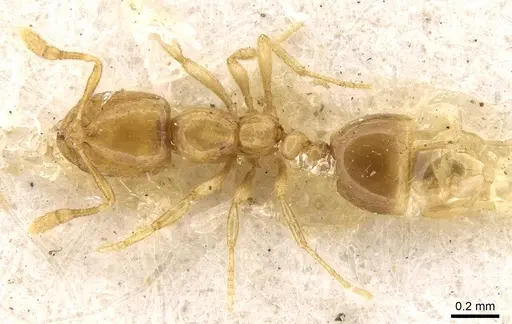
Literature
Loading distribution map...Loading products...