
Solenopsis daguerrei
- Sci. Name
- Solenopsis daguerrei
- Tribe
- Solenopsidini
- Subfamily
- Myrmicinae
- Author
- Santschi, 1930
- Distribution
- Found in 3 countries
Introduction
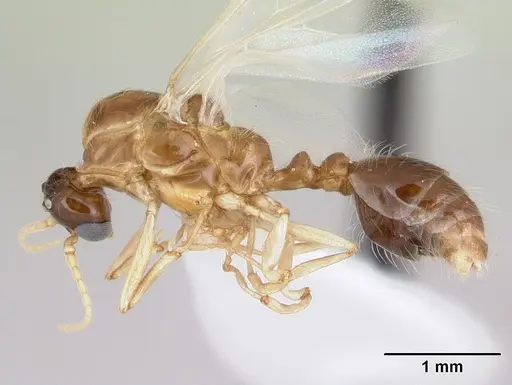
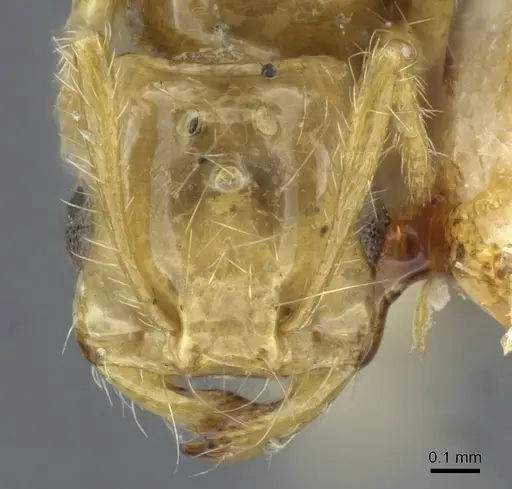
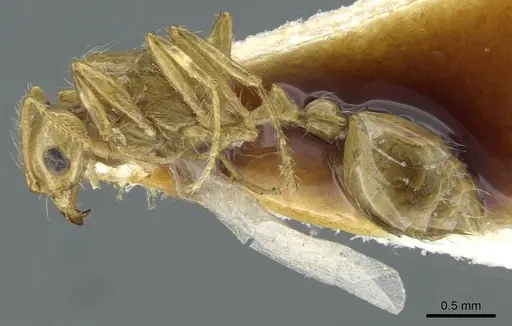
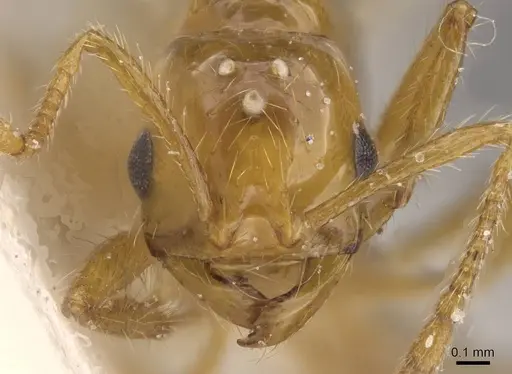
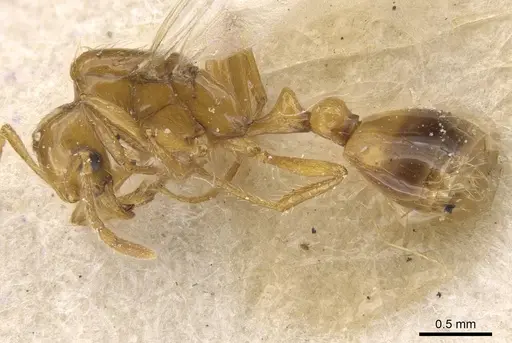
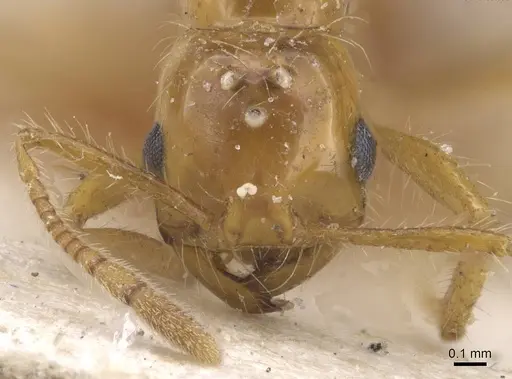
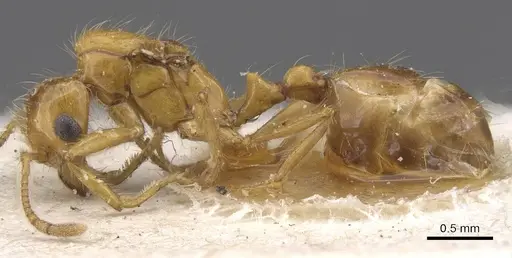
Solenopsis daguerrei is a tiny parasitic ant, measuring 5mm or less in length, with a yellow body and brown markings on the mandibles and the tip of the abdomen . This species belongs to the Solenopsis saevissima group and is found across southern South America, including Argentina, Uruguay, Paraguay, and parts of Brazil . Unlike almost every other ant species, S. daguerrei has completely lost its worker caste - the colony produces only queens and males, relying entirely on host fire ant colonies for survival . The queens attach themselves to the neck of the host queen, effectively yoking and immobilizing her while draining resources from the colony . This is one of the rarest and most specialized ants in the world, and it cannot be kept in captivity using traditional antkeeping methods. It is listed as Vulnerable on the IUCN Red List .
Quick Summary
- Difficulty: Expert
- Origin & Habitat: Native to southern South America, found in Argentina, Uruguay, Paraguay, and Brazil. Inhabits grasslands and disturbed areas where host fire ant colonies (Solenopsis invicta, S. richteri, S. macdonaghi, S. quinquecuspis) are present [1] [4].
- Colony Type: Obligate social parasite, no worker caste exists. Queens and males are produced within host colonies. The parasite queen attaches to the host queen's neck and diverts colony resources [4][1].
- Size & Growth:
- Queen: ~5 mm or less [1].
- Worker: N/A, worker caste has been completely lost [2].
- Colony: Unknown, typically only a few individuals (queens and males) per host colony. No independent colony exists [4].
- Growth: Unknown, cannot be bred independently.
- Development: N/A, no workers produced. (This species produces only sexual reproductives (queens and males), no workers at all. All brood is raised by host fire ant workers [3].)
- Antkeeping:
- Temperature: Not applicable, this species cannot be maintained independently in captivity. For host colony requirements, refer to Solenopsis invicta caresheets.
- Humidity: Not applicable, cannot be kept independently. Relies entirely on host colony microclimate.
- Diapause: Unknown, follows host colony cycles, but never observed in captivity.
- Nesting: Lives entirely within host fire ant colonies. Cannot be kept in any standard nest type [4].
- Behavior: Solenopsis daguerrei is completely dependent on host colonies. Queens attach to the host queen's neck, reducing her egg production [4]. Males and winged queens are produced seasonally within the host nest. The parasite has no means of foraging or caring for itself, host workers feed and maintain all immature stages [3]. It possesses a sting (typical of Solenopsidini), but as a workerless parasite, it rarely uses it and is not aggressive towards humans. This species is not defensive and cannot survive outside the host colony.
- Common Issues: no workers means it cannot form an independent colony [2]., all laboratory attempts to propagate this species have failed [4][3]., requires a live host fire ant colony to survive, which itself is difficult to maintain [4]., even when transferred to non-parasitized host colonies, the parasite is typically executed by host workers [4]., extremely rare in the wild, parasitizes less than 4% of host colonies [4][5]., listed as Vulnerable (IUCN 2.3), may be protected in some areas, collection could be restricted [5].
Why This Ant Cannot Be Kept
Solenopsis daguerrei is one of the few ants in the world that cannot be kept using traditional antkeeping methods. This species is an obligate social parasite, it has completely lost the worker caste and cannot survive without a host fire ant colony [2][3]. Unlike typical ants where the queen founds a new colony alone, S. daguerrei queens must invade an existing colony of fire ants (typically Solenopsis invicta, S. richteri, S. macdonaghi, or S. quinquecuspis) and attach themselves to the host queen [4][1]. The host workers then raise the parasite's brood instead of their own. Every attempt to propagate this species in laboratory settings has failed, researchers have been unable to establish self-sustaining colonies [4][3]. Even when queens are transferred to non-parasitized fire ant colonies, the host workers typically execute the intruder within days [4]. This species is genuinely not keepable in captivity.
The Parasitic Lifestyle
S. daguerrei represents one of the most extreme examples of social parasitism in ants. The queen physically attaches to the neck of the host queen, a behavior called 'yoking' [4]. This attachment immobilizes the host queen and dramatically reduces her egg production, studies show parasitized colonies have significantly fewer host queens and reduced worker brood [4][3]. The parasite essentially hijacks the entire colony: host workers feed and care for the parasite's eggs, larvae, and pupae as if they were their own [3]. The colony produces only S. daguerrei queens and males, no host workers are produced by the parasite's presence. Heavily infested colonies show fewer major workers and alate reproductives, eventually leading to colony collapse [4]. This makes the species of significant interest to researchers studying biological control of invasive fire ants.
Identification and Morphology
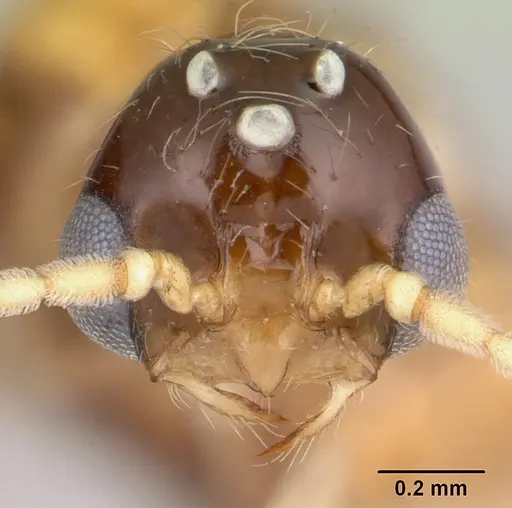
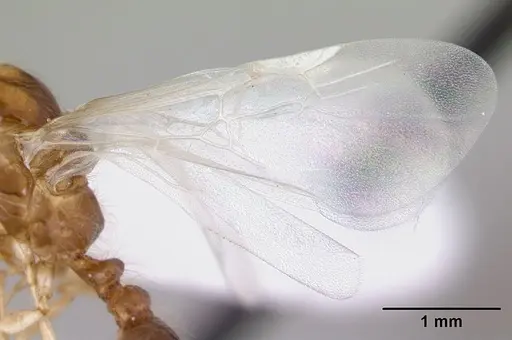
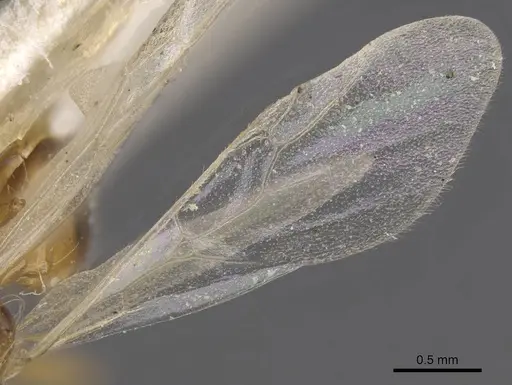
S. daguerrei is a small ant, measuring 5 mm or less in length [1]. The body is yellow with brown markings on the mandibles and the tips of the abdominal segments [1]. Unlike its host fire ants, this species has completely lost the worker caste, only queens and males are produced. The queens lack the clypeal carinae (ridges) found in typical Solenopsis, and have reduced wing venation [1]. The body is smooth and polished with almost no sculpture, except for fine striations on the rear quarter of the petiole [1]. Males are similarly reduced in size with simplified genitalia [1]. These morphological reductions are typical of social parasites that no longer need to perform worker functions like foraging or nest construction.
Distribution and Host Specificity
S. daguerrei is found across southern South America, from Buenos Aires Province in Argentina north through Uruguay to Campo Grande, Brazil, and east to São Paulo, Brazil [1]. However, the species is generally sparse throughout its range, field surveys show only about 1.4% of fire ant colonies are parasitized [4]. The primary host appears to be S. invicta (the red imported fire ant), with S. richteri, S. macdonaghi, and S. quinquecuspis also serving as hosts [1][6]. Interestingly, sampling in Brazil and Argentina found S. daguerrei only in S. invicta colonies, suggesting possible host specialization [1]. Some researchers believe it may be a complex of cryptic species, each potentially specialized on different host fire ant species [4].
Research and Biological Control Potential
S. daguerrei has attracted significant attention from researchers studying biological control of invasive fire ants. Studies show that fire ant colonies with S. daguerrei have 47% fewer queens and 33% fewer mound densities [7]. The parasite inhibits egg production by the host queen, potentially causing colony collapse [3]. This led to interest in using S. daguerrei as a biological control agent against invasive fire ants in the United States [3]. However, all attempts to introduce the parasite into fire ant colonies have failed, both in laboratory settings and field trials [4][3]. The extreme difficulty of laboratory rearing and the parasite's tendency to be executed by host workers have prevented its use as a biocontrol agent [4]. The species is now considered a potential model for understanding social parasitism and host-parasite coevolution.
Frequently Asked Questions
Can I keep Solenopsis daguerrei as a pet ant?
No. Solenopsis daguerrei cannot be kept as a pet ant. This is an obligate social parasite that has completely lost its worker caste and cannot survive without a host fire ant colony. Every attempt to propagate this species in captivity has failed [4][3]. You cannot establish a colony the way you would with typical ants.
How do I start a Solenopsis daguerrei colony?
You cannot start an independent colony. Unlike typical ants, S. daguerrei has no workers and cannot forage, nest, or care for itself. The only way to maintain this species would be to establish a host fire ant colony (S. invicta or similar) and introduce the parasite, but laboratory attempts have consistently failed [4][3].
Do Solenopsis daguerrei ants have workers?
No. S. daguerrei is one of the few ant species that has completely lost the worker caste. The colony produces only queens and males, with all brood care performed by host fire ant workers [2][3].
What do Solenopsis daguerrei eat?
S. daguerrei does not forage for food. The parasite relies entirely on the host colony for nutrition. Host workers feed and maintain the parasite's brood as if it were their own [3]. The adult parasites are fed by host workers through trophallaxis.
Are Solenopsis daguerrei ants dangerous?
S. daguerrei poses no danger to humans. This tiny parasitic ant cannot sting or bite effectively, and it cannot survive outside a host fire ant colony. The species is completely dependent on its host and has no effective defensive behavior.
What temperature do Solenopsis daguerrei need?
This is unknown because the species has never been successfully maintained in captivity. The host fire ants (S. invicta) prefer temperatures around 24-30°C, but you cannot keep this parasite independently regardless of conditions.
Do Solenopsis daguerrei need hibernation?
Unknown. This species has never been maintained in captivity long enough to observe its seasonal patterns. It would likely follow the host colony's cycle, but this is unconfirmed.
How big do Solenopsis daguerrei colonies get?
S. daguerrei colonies remain very small, typically just a few individuals (queens and males) within the host colony. Unlike typical ants that can grow to thousands of workers, this parasite exists in small numbers while drawing resources from the host [4].
Is Solenopsis daguerrei a good beginner ant?
No. This species is not keepable at all. Even expert ant researchers and entomologists have failed to maintain colonies of this species. If you're interested in keeping ants, please choose a species with a functional worker caste that can establish independent colonies [4][3].
Report an Issue
The current care sheet is based fully on literature. See inconsistencies, or something that's incorrect? Please , it will be resolved after review from an admin. Contributing to the blogs tab also helps providing information, to make us be able to further improve the caresheets. Thank you for your support!
References

This caresheet is licensed under CC BY-SA 4.0 .
Community Blogs
CASENT0178132
View on AntWeb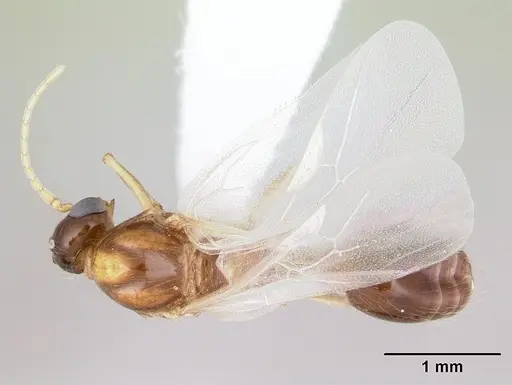
CASENT0911238
View on AntWeb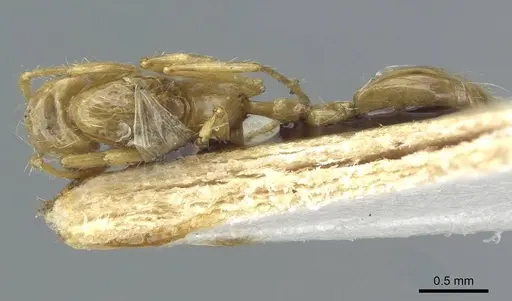
CASENT0913883
View on AntWeb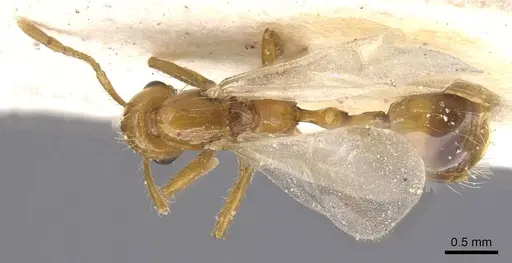
CASENT0915419
View on AntWeb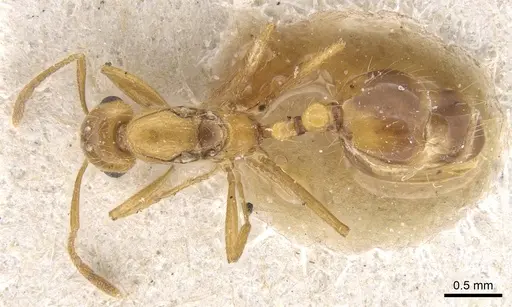
Literature
Loading distribution map...Loading products...