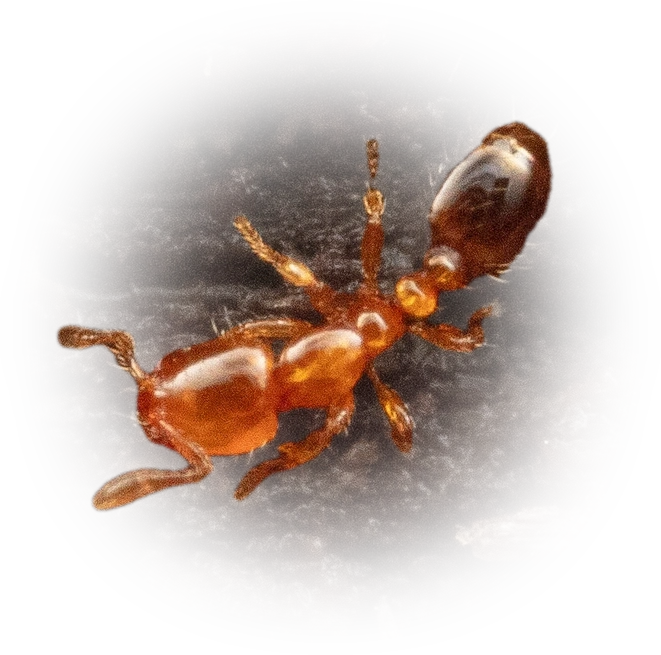
Solenopsis azteca
- Sci. Name
- Solenopsis azteca
- Tribe
- Solenopsidini
- Subfamily
- Myrmicinae
- Author
- Forel, 1893
- Distribution
- Found in 9 countries
Introduction
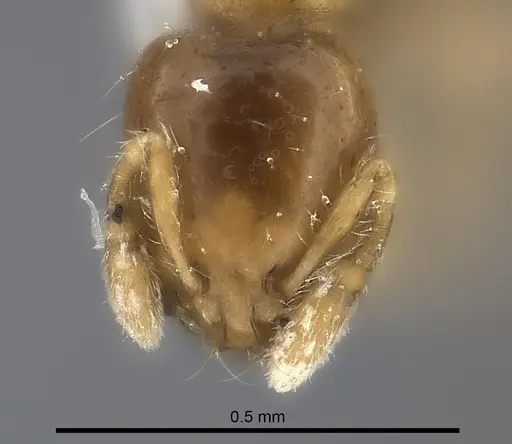
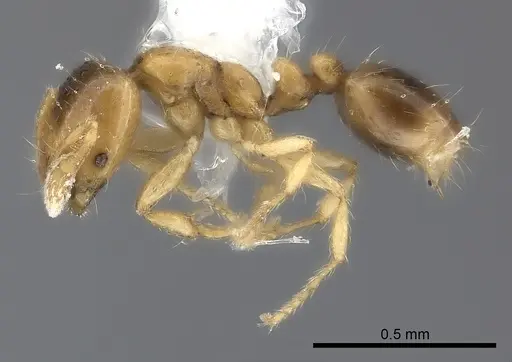
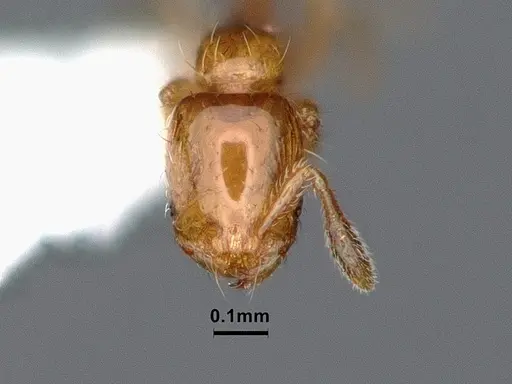
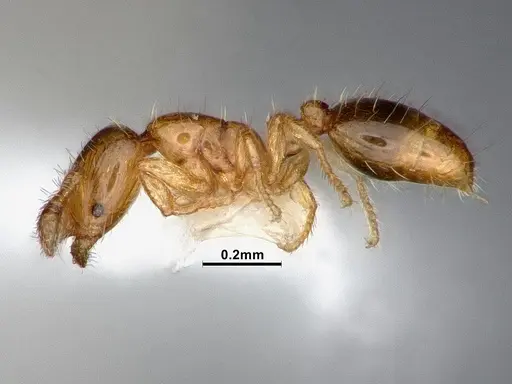
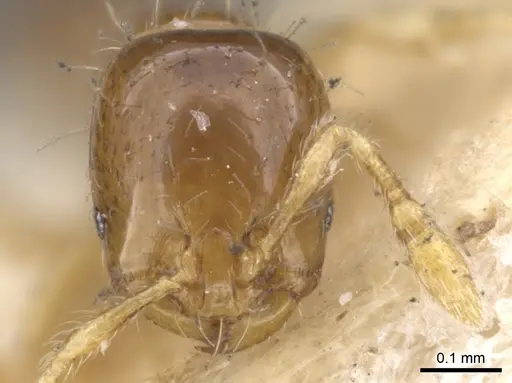
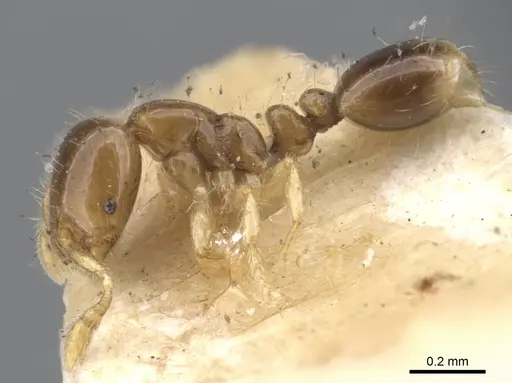
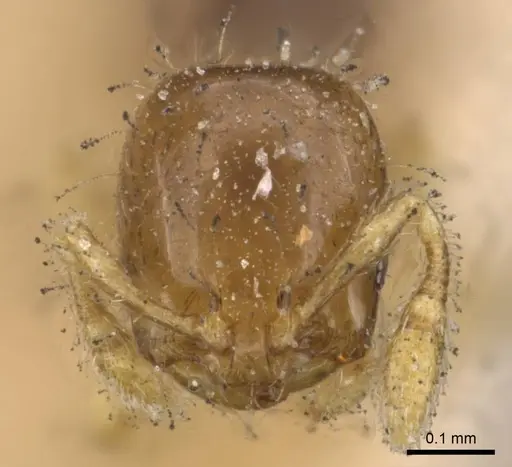
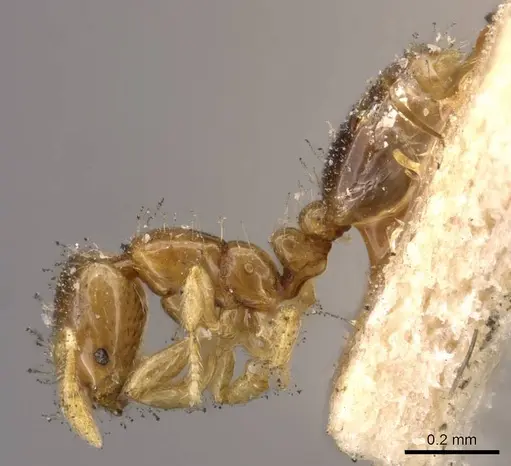
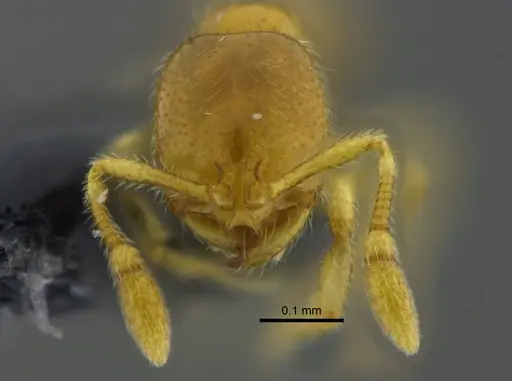
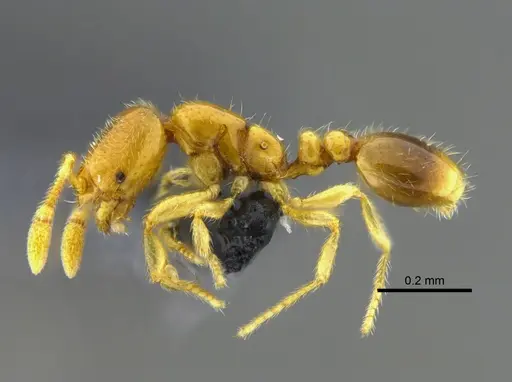
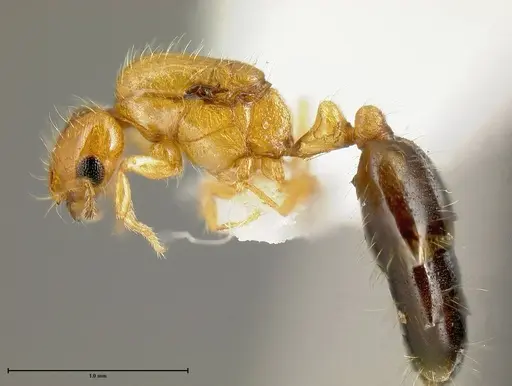
Solenopsis azteca is a tiny thief ant, with workers measuring just 1.32-1.36 mm in total length and queens 3.48 mm . Workers range from light yellow to light brown, some having a reddish‑brown cloud on the head or a dark band on the abdomen . The queen is bicolored - golden yellow head and midbody with a golden‑brown gaster . This species belongs to the Solenopsis brevicornis complex and lives in leaf litter in dry forests from Honduras south to Colombia and Venezuela, and throughout the Caribbean (Jamaica, Puerto Rico, the Lesser Antilles) . It occasionally nests with the termite Amitermes medius .
Quick Summary
- Difficulty: Medium
- Origin & Habitat: Native to the Neotropical region from Honduras south to Colombia and northern Venezuela, plus the Caribbean islands [4][1]. Lives in leaf litter in dry forests, sometimes in primary tropical forest, and has been found under bark of stumps and logs [5].
- Colony Type: Unconfirmed. Based on typical Solenopsis patterns, possibly monogyne (single-queen).
- Size & Growth:
- Queen: 3.48 mm [1][2]
- Worker: 1.32-1.36 mm [1][2]
- Colony: Unknown, estimated at several hundred workers at most, given the tiny worker size.
- Growth: Moderate
- Development: 6-10 weeks (estimated based on related Solenopsis species) (No species‑specific data, timing is a rough guide from other thief ants.)
- Antkeeping:
- Temperature: 24-28°C year‑round, these are tropical ants. Use a gentle gradient so they can regulate.
- Humidity: Moderate. Keep the nest substrate lightly moist but allow the top to dry a little between waterings, mimicking a dry forest floor.
- Diapause: No, tropical species, no hibernation needed.
- Nesting: Y‑tong (AAC) or plaster nests with small, tight chambers work well. Naturalistic setups with soil and leaf litter also suit their dry‑forest lifestyle.
- Behavior: Shy and secretive. They rarely show aggression and prefer to stay hidden. They have a sting (typical of Solenopsis) but it is negligible to humans. Their tiny size (1.3 mm) makes escape prevention critical, they can slip through any gap larger than 0.5 mm. They are primarily nocturnal and, as thief ants, they steal food from other colonies and termite nests.
- Common Issues: escape prevention is vital, use fine mesh (≤0.5 mm) on all openings, even tiny gaps are a risk., slow colony growth may test patience compared to faster‑growing species., wild‑caught colonies can carry parasites or brood diseases., overfeeding leads to mold in small nests, remove leftovers within 24 hours., they are skittish, too much disturbance can cause brood abandonment.
Housing and Nest Setup
Because Solenopsis azteca workers are only 1.32-1.36 mm, you need escape‑proof housing from day one. Start colonies in test tubes, then move to Y‑tong (AAC) or plaster nests with small chambers, these tiny ants feel safer in tight spaces [1]. A layer of dry forest soil and leaf litter mimics their natural habitat. Keep the nest substrate moderately moist (not wet), with the surface allowed to dry a little between waterings. Use fine mesh (0.5 mm or smaller) on all vents and joints, these ants can defeat barriers that seem solid to the eye.
Feeding and Diet
As thief ants, they are omnivorous and will accept a range of small prey. Offer fruit flies, pinhead crickets, and tiny mealworms, their size limits what they can kill. They also take sugar water or honey water, though less eagerly than some ants. In the wild they are associated with termite nests (Amitermes medius), so they may raid termite brood [1]. Feed protein twice a week and keep sugar water available. Remove uneaten solids within 24 hours to avoid mold in their small nest.
Temperature and Care
Keep your colony at 24-28°C year‑round, these tropical ants need steady warmth [1]. A heating mat on one side of the nest creates a gradient. They do not hibernate, if the temperature drops below 20°C, brood development slows or stops. Avoid drafts and air‑conditioning. Warmth speeds up the egg‑to‑worker cycle, so aim for the upper end of the range.
Behavior and Temperament
Solenopsis azteca is a shy, non‑aggressive thief ant. It forages at night and spends the day hidden in leaf litter or nest crevices. Its sting is present but very mild, you’re unlikely to feel it even if handled. These ants prefer flight over fight, they rely on their tiny size and stealth to avoid predators. They have been observed stealing food from termite colonies and other ants [1]. In captivity, they will exploit even the smallest food particle.
Nuptial Flights
Reported nuptial flights occur pre‑dawn. In one Puerto Rican study,75 flights were recorded, with a maximum of 23 queens and 136 males captured in a single night [6]. Most flights were all‑male or all‑female, but about a third were mixed‑sex. If you live within the species’ range, you can catch queens using a light trap or by scanning leaf litter surfaces at dawn after a rain. Flight seasons are not precisely known but likely coincide with the wet season in the Caribbean.
Collecting and Finding Colonies
Look for Solenopsis azteca in dry forest leaf litter, under stones, or under bark of fallen logs [5][1]. They can be sampled with pitfall traps, Berlese funnels, or surface baits, Vienna sausage bait worked at the Parque Nacional H. Pittier [1]. Their nests are often tiny and hidden, you may need to search near termite mounds (Amitermes medius). Note that queens fly pre‑dawn, so dawn is the best time to catch alates if you live within their range.
Legal and Ethical Considerations
Solenopsis azteca is native to the Neotropics and Caribbean. Do not release it outside its natural range, it could become invasive. It is not protected, but wild collection should be minimal and only from places where it is abundant. Always buy from reputable breeders, especially if you live outside its range. Once captive, colonies must never be released. [4][1]
Frequently Asked Questions
How long does it take for Solenopsis azteca to produce first workers?
Expect 6-10 weeks from egg to first worker at 24-28°C. This is an estimate from related Solenopsis species, no species‑specific data is available.
Can I keep Solenopsis azteca in a test tube?
Yes, test tubes work well for founding. But because workers are only 1.32 mm, use a plug of cotton wool and a piece of fine mesh to prevent escapes, they can squeeze through tiny gaps.
What do Solenopsis azteca eat?
They are omnivorous thief ants. Offer tiny insects (fruit flies, pinhead crickets) and sugar water. In the wild they raid termite nests, so termite eggs or small roach nymphs are also accepted.
Are Solenopsis azteca good for beginners?
Medium difficulty. They are not aggressive and don’t need hibernation, but their tiny size makes escape prevention tricky. They are better for keepers who already have experience with small ants.
Do Solenopsis azteca need hibernation?
No, they are tropical and active all year. Keep them at 24-28°C continuously.
How big do Solenopsis azteca colonies get?
Based on their tiny worker size, colonies likely max out at a few hundred workers. No studies have documented a natural colony size.
Why are my Solenopsis azteca escaping?
Their tiny size (1.32 mm) means they can slip through gaps you might not see. Use fine mesh (0.5 mm or smaller) on all openings, seal joints with silicone, and apply fluon or similar barriers to the inner nest walls.
Can I keep multiple queens together?
It is not recommended. All Solenopsis azteca colonies studied appear to be single‑queen, and unrelated queens will fight. Keep only one queen per nest.
Where is Solenopsis azteca found in the wild?
From Honduras south to Colombia and northern Venezuela, and throughout the Caribbean (Jamaica, Puerto Rico, Barbados, Dominica, Grenada, Saint Vincent, Guadeloupe, etc.) They live in leaf litter in dry forests and coffee groves [5].
Report an Issue
The current care sheet is based fully on literature. See inconsistencies, or something that's incorrect? Please , it will be resolved after review from an admin. Contributing to the blogs tab also helps providing information, to make us be able to further improve the caresheets. Thank you for your support!
References

This caresheet is licensed under CC BY-SA 4.0 .
Community Blogs
CASENT0217928
View on AntWeb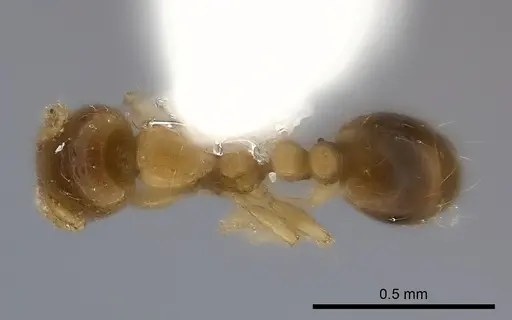
CASENT0636191
View on AntWeb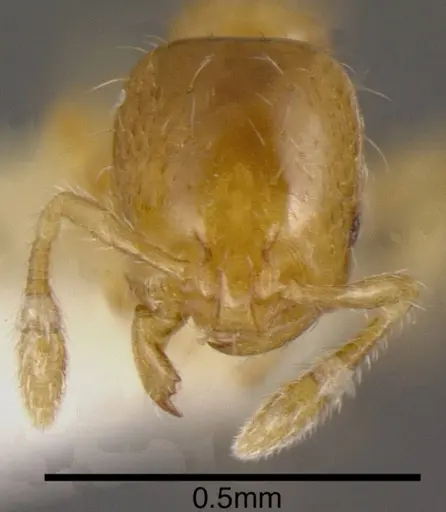
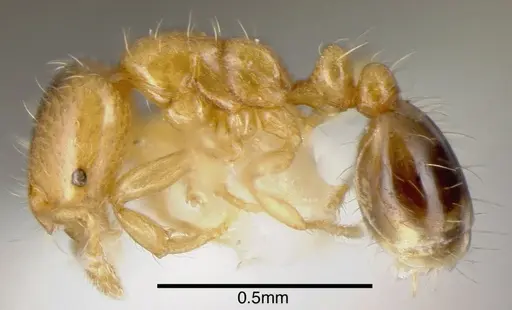
CASENT0766363
View on AntWeb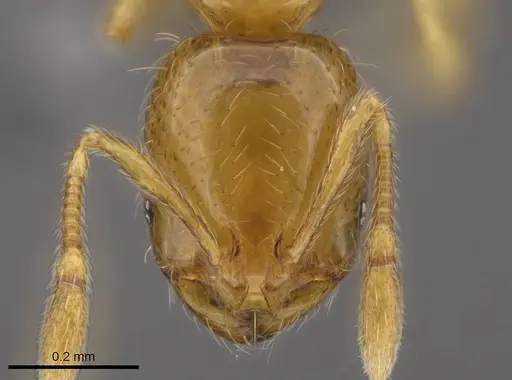
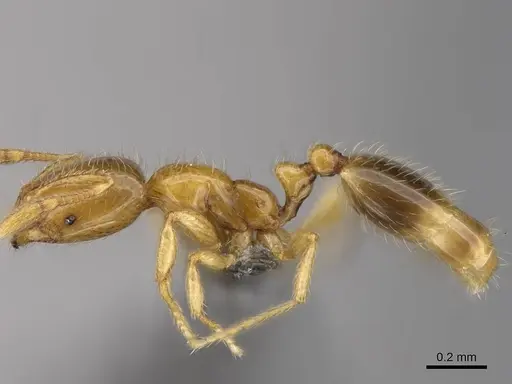
CASENT0884409
View on AntWeb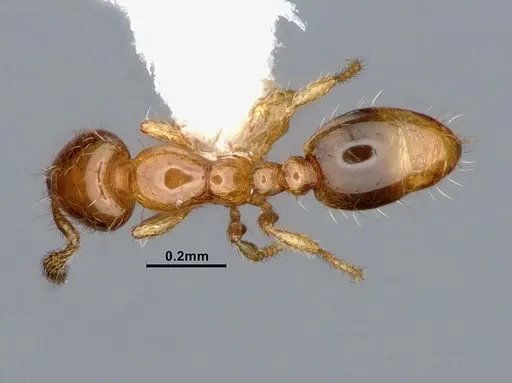
CASENT0902343
View on AntWeb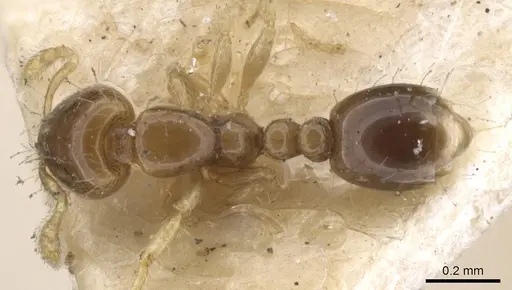
CASENT0908813
View on AntWeb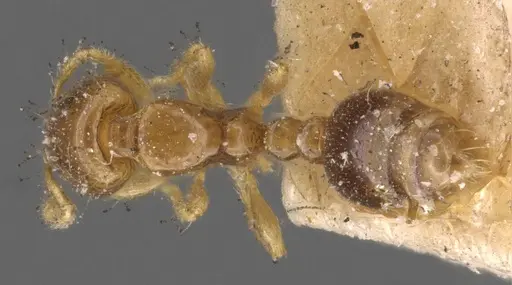
CBUMAGENT42012
View on AntWeb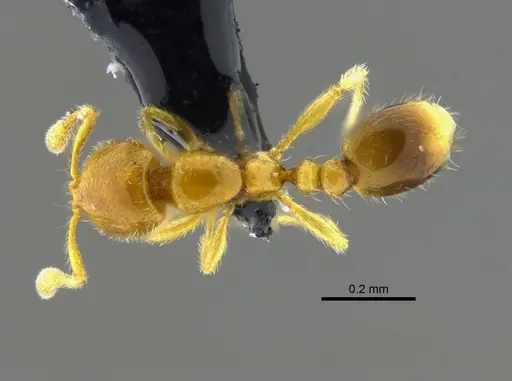
INBIOCRI001253986
View on AntWeb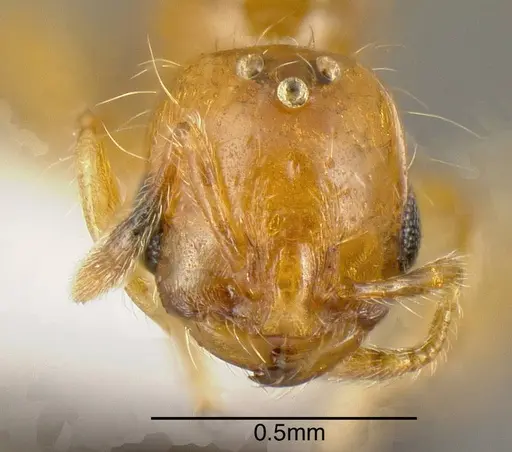
Literature
Loading distribution map...Loading products...