
Golden Fire Ant
Solenopsis aurea
- Sci. Name
- Solenopsis aurea
- Tribe
- Solenopsidini
- Subfamily
- Myrmicinae
- Author
- Wheeler, 1906
- Common Name
- Golden Fire Ant
- Distribution
- Found in 2 countries
Introduction
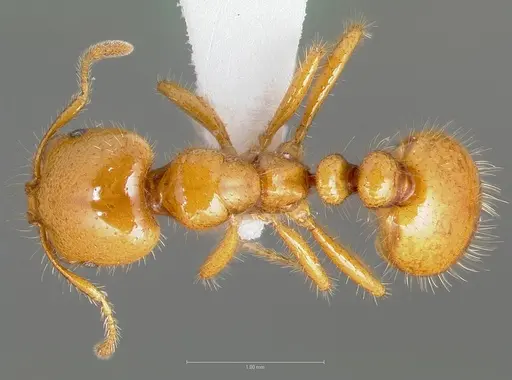
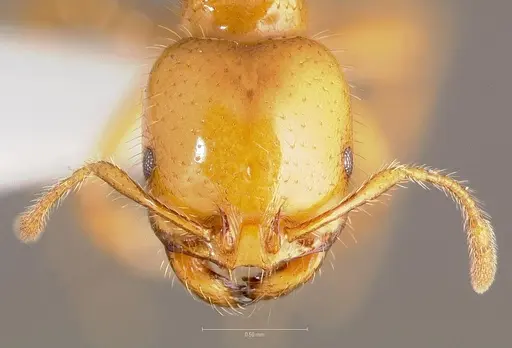
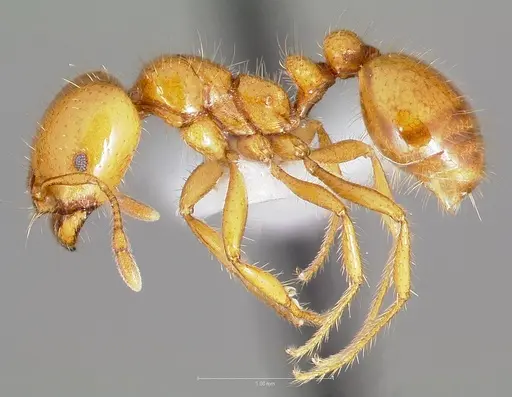
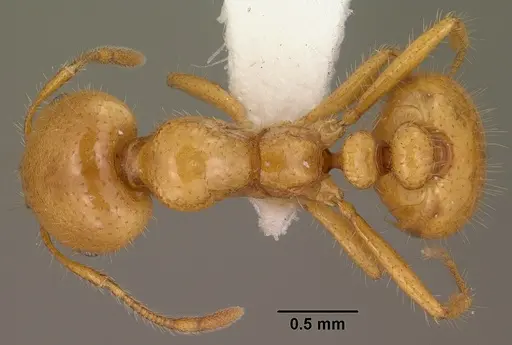
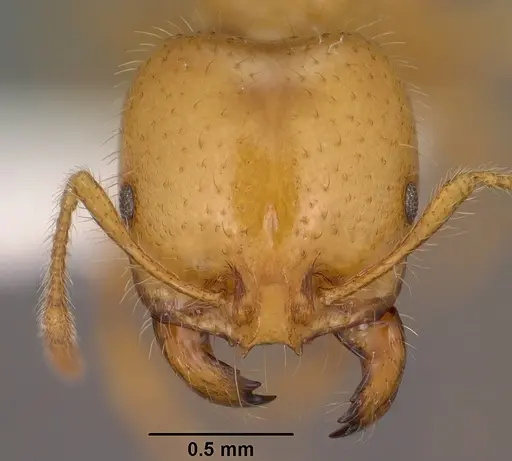
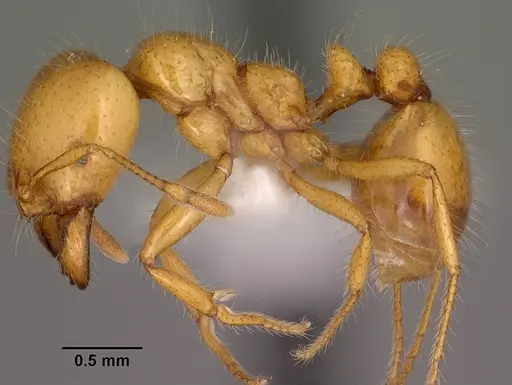
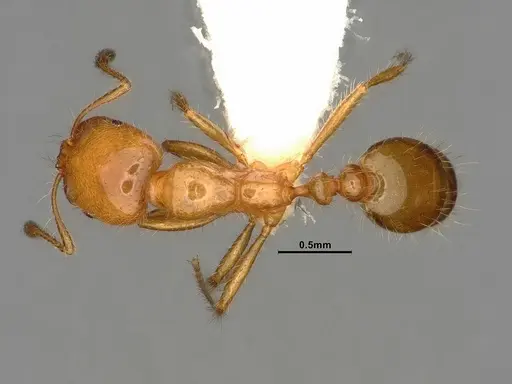
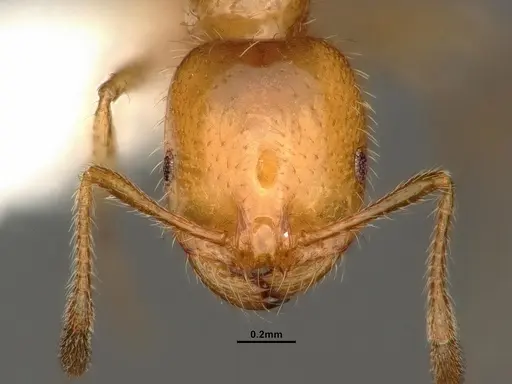
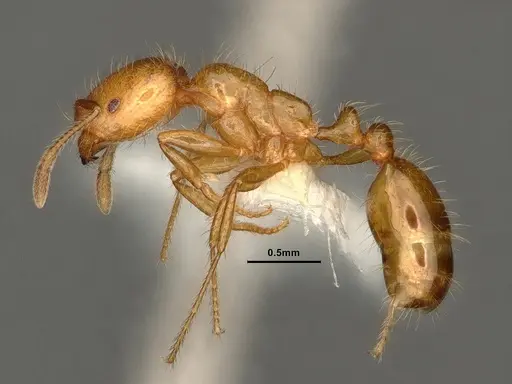
Solenopsis aurea is a small, golden-yellow fire ant native to the arid southwestern United States and northern Mexico . Workers are lighter in color with a light-colored gaster, often with brown patches, and have notably small eyes . This species belongs to the Solenopsis geminata group and is one of the smaller native fire ants in North America . Colonies are small and nest under stones, dried dung, or other objects in dry, coarse, gravelly soils, without forming mounds . Unlike more aggressive fire ants, Solenopsis aurea is less aggressive and avoids competition with invasive species by inhabiting very dry areas .
Quick Summary
- Difficulty: Medium
- Origin & Habitat: Southwestern United States (California, Texas, Arizona, Nevada) and northern Mexico (Chihuahua, Durango, Jalisco, Nuevo León, Zacatecas, Hidalgo, Sonora) [3][6]. Inhabits Chihuahuan Desert habitats like black grama grassland, creosotebush scrub, mesquite and thorn scrub, as well as urban areas [3].
- Colony Type: Colony social structure is unconfirmed by available literature. Based on typical Solenopsis patterns, likely monogyne (single queen).
- Size & Growth:
- Queen: Data unavailable for queens, based on Solenopsis geminata group patterns, queens are typically 5-7 mm.
- Worker: Minor workers around 2-4 mm, majors slightly larger (inferred from Solenopsis geminata group) [3].
- Colony: Small, likely less than 500 workers based on field observations [3][2][4].
- Growth: Moderate
- Development: Estimated 6-10 weeks at optimal temperature (based on related Solenopsis species) (Development time likely longer than tropical fire ants due to temperate/desert adaptation.)
- Antkeeping:
- Temperature: Warm conditions preferred. Active at average 33°C in the wild, with critical thermal maximum around 47.6°C [7]. Keep nest area at 26-32°C with a temperature gradient. Avoid prolonged exposure above 43°C, as ants abandon plants at that temperature [7].
- Humidity: Low to moderate, desert ants adapted to arid conditions. Keep substrate dry to slightly moist, avoiding waterlogging. Use coarse, gravelly soil similar to natural nesting sites [2][4].
- Diapause: Yes, likely requires a winter rest period based on temperate geographic range. Reduce temperature to 15-18°C for 2-3 months. Supercooling point around -6.7°C indicates good cold tolerance [8].
- Nesting: Prefers dry, coarse, gravelly soil. Natural colonies nest under stones, dried dung, or other objects without mounds [2][4]. In captivity, use a sandy/gritty substrate in a formicarium or test tube setup with dry conditions. Avoid overly humid setups.
- Behavior: Nocturnal or crepuscular, workers are rarely found outside the nest during the day and will immediately retreat when exposed to light [2]. Less aggressive than other fire ants [1]. Omnivores, likely feeding on seeds and small insects [4]. Their venom contains piperidine alkaloids (cis-C11 and trans-C11 in ~4:1 ratio) [9], but stings are not considered medically significant.
- Common Issues: small colony size means slow growth, may test beginner patience, nocturnal habits result in little daytime activity, observe in evening or use red light, excessive humidity quickly kills desert-adapted ants, keep substrate dry, small workers can escape through tiny gaps, use fluon and tighten seals, wild-caught colonies are rare and fragile due to cryptic nesting and small size
Temperature and Heating
Solenopsis aurea is a hot-climate specialist adapted to desert conditions [4]. In the wild, these ants are active at average temperatures around 33°C and can tolerate temperatures up to 47.6°C before abandoning their plants [7]. Their critical thermal maximum (CTM) is approximately 47.6°C, and they abandon the cactus they protect when temperatures reach around 43°C [7]. In captivity, maintain nest temperatures between 26-32°C. Use a heating cable on one side of the nest to create a temperature gradient, allowing workers to regulate their own body temperature by moving between warmer and cooler areas. For diapause, reduce temperatures to around 15-18°C for 2-3 months. These ants have excellent cold tolerance with supercooling points around -6.7°C, meaning they can survive quite cold temperatures when inactive [8].
Housing and Nest Setup
These desert fire ants prefer dry, coarse, gravelly soils similar to their natural habitat [2][4]. In the wild, colonies nest under stones, dried dung, or other objects, typically without forming a mound [2]. For captivity, use a formicarium with a sandy or gritty substrate that drains well. Avoid setups that retain too much moisture, these ants will quickly decline in damp conditions. A test tube setup can work for founding colonies, but ensure the cotton plug is not too wet. For established colonies, a naturalistic setup with a dry top layer and a moisture gradient works well. Since they are nocturnal, provide some darkness or shaded areas in the outworld. Escape prevention is important given their small size, use fluon on container edges and ensure any gaps are sealed.
Feeding and Diet
Solenopsis aurea is an omnivore that probably feeds on seeds and small insects in the wild [4]. As fire ants, they will accept protein sources like small insects (fruit flies, small crickets, mealworms) and sweet liquids (sugar water, honey). In their role as mutualists in the Sonoran Desert, they are attracted to extrafloral nectar from plants like Ferocactus wislizeni [7]. Feed them small insects 2-3 times per week and provide a constant sugar source. Unlike aggressive fire ants, they may be less inclined to raid other ant colonies for brood. Fresh water should always be available. Given their small colony sizes, avoid overfeeding, remove uneaten prey within 24 hours to prevent mold.
Behavior and Activity Patterns
This species is nocturnal or crepuscular, meaning you will see most activity during evening and night hours [2]. Workers are rarely found outside the nest during the day and will immediately disappear into lower passages when exposed to light [2]. Compared to other fire ants like the invasive red imported fire ant (Solenopsis invicta), Solenopsis aurea is much less aggressive [1]. They avoid competition with imported fire ants by living in habitats too dry for those species [5]. In the wild, they defend cacti like Ferocactus wislizeni from herbivores in exchange for nectar [7]. Their daily activity pattern shows high numbers in the morning, decreasing until abandonment during the hottest mid-day hours, then increasing again in the evening [7]. This behavioral pattern helps them avoid extreme heat.
Venom and Defense
Like other fire ants, Solenopsis aurea possesses a sting and produces venom composed primarily of piperidine alkaloids. The major components are cis-C11 and trans-C11,with a ratio of about 4:1 cis to trans [9]. This venom is used to subdue prey and defend the colony. While the sting can be painful, this species is considered less aggressive than imported fire ants, so stings are less likely [1]. Handle with care and avoid disturbing the colony unnecessarily.
Colony Development
Colonies of Solenopsis aurea are small compared to other fire ant species [2][4]. In Nevada, colonies were found to be small and few in number [3]. Dealate (wingless, mated) females have been collected in July and August, suggesting nuptial flights occur during summer months [3]. The founding method is unconfirmed but is likely claustral based on related Solenopsis species. First workers (nanitics) will be smaller than mature workers. Growth rate is moderate, faster than some temperate ants but slower than tropical fire ants. Expect 6-10 weeks from egg to first worker at optimal temperatures (estimated from related species). Colonies likely reach several hundred workers at maximum. The small colony size means keepers should expect slower development and avoid disturbing founding queens.
Frequently Asked Questions
Is Solenopsis aurea good for beginners?
Solenopsis aurea is rated as medium difficulty. While less aggressive than other fire ants, they have specific requirements: they need dry conditions, are nocturnal so you won't see much daytime activity, and colonies remain small. They can be rewarding if you understand their needs, but beginners might find slow growth and cryptic behavior challenging.
How long does it take for Solenopsis aurea to produce first workers?
Based on related Solenopsis species, expect 6-10 weeks from egg to first worker at optimal temperatures (around 28-30°C). The queen likely seals herself in during claustral founding and lives off stored fat until her first workers emerge. First workers (nanitics) are smaller than mature workers.
What temperature do Solenopsis aurea need?
Keep nest temperatures between 26-32°C. These are desert-adapted ants that are active at around 33°C in the wild [7]. They can tolerate up to 47.6°C but will seek cooler areas above 43°C [7]. Use a heating cable on one side to create a temperature gradient. In winter, reduce to 15-18°C for 2-3 months of diapause.
Can I keep multiple queens together?
It is not recommended. Solenopsis aurea is likely monogyne (single queen) based on typical Solenopsis patterns. Combining unrelated queens would probably result in fighting. Wild colonies are small and centered around one reproductive female [2].
How big do Solenopsis aurea colonies get?
Colonies remain small compared to other fire ants, likely under 500 workers at maximum [2][4]. In Nevada, colonies were described as small and few [3]. This is much smaller than tropical fire ants that can reach thousands of workers.
Why are my Solenopsis aurea not coming out during the day?
This is normal, Solenopsis aurea is nocturnal or crepuscular [2]. Workers rarely emerge during daylight hours and will immediately retreat when exposed to light [2]. Observe activity in the evening and early morning, or use a red light to watch without disturbing them.
Do Solenopsis aurea need hibernation?
Yes, likely 2-3 months of diapause during winter. Reduce temperature to 15-18°C. These ants have good cold tolerance with supercooling points around -6.7°C [8]. In their native desert habitat, they experience cold winters and naturally become inactive during this period.
What do Solenopsis aurea eat?
They are omnivores. Feed small insects (fruit flies, small crickets, mealworms) 2-3 times per week and provide constant access to sugar water or honey [4]. They also attend to extrafloral nectar in the wild [7]. Remove uneaten prey within 24 hours.
Why are my ants dying?
Most common issues: excessive humidity (they are desert ants needing dry conditions), too-cold temperatures (they need warmth), or disturbance during founding. Also ensure escape prevention, their small size means they can slip through tiny gaps. Wild-caught colonies may carry parasites that can decimate small colonies.
Report an Issue
The current care sheet is based fully on literature. See inconsistencies, or something that's incorrect? Please , it will be resolved after review from an admin. Contributing to the blogs tab also helps providing information, to make us be able to further improve the caresheets. Thank you for your support!
References

This caresheet is licensed under CC BY-SA 4.0 .
Community Blogs
Literature
Loading distribution map...Loading products...