
Simopone silens
- Sci. Name
- Simopone silens
- Subfamily
- Dorylinae
- Author
- Bolton & Fisher, 2012
- Distribution
- Found in 1 countries
Introduction
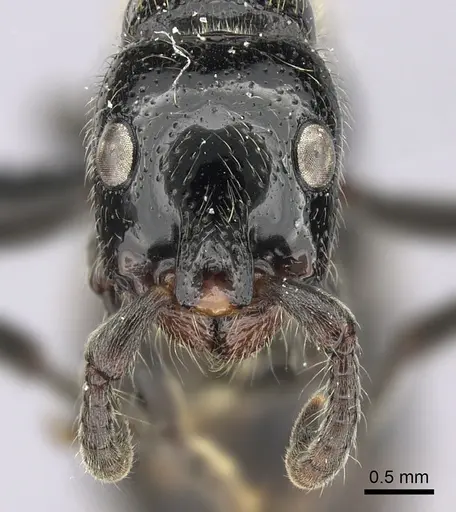
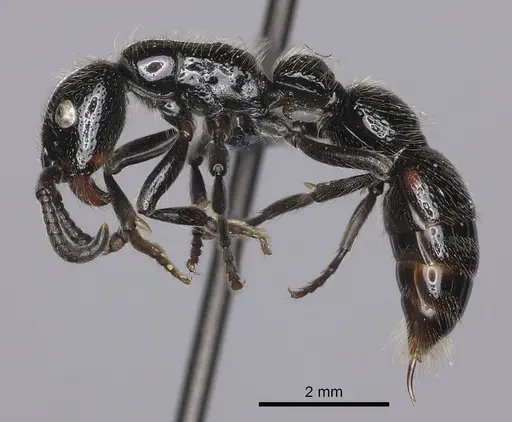
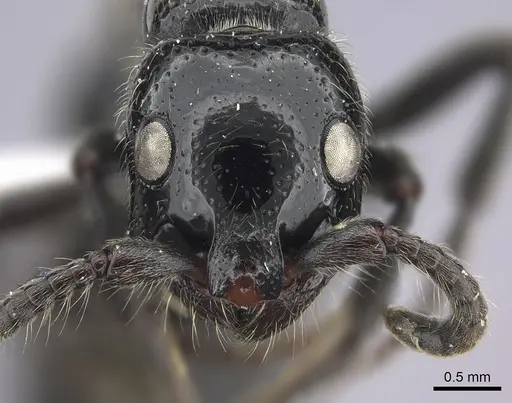
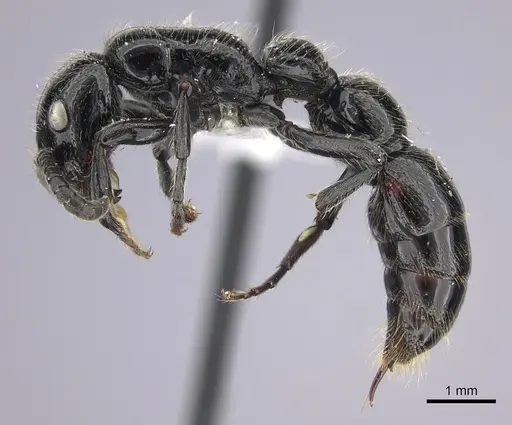
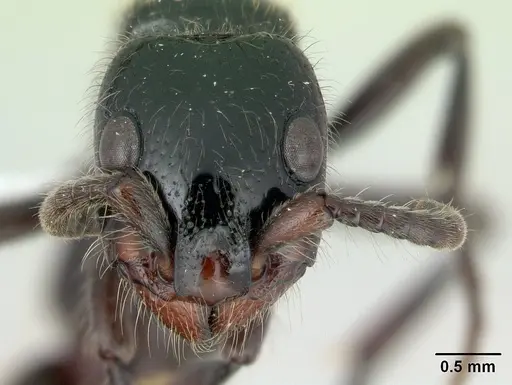
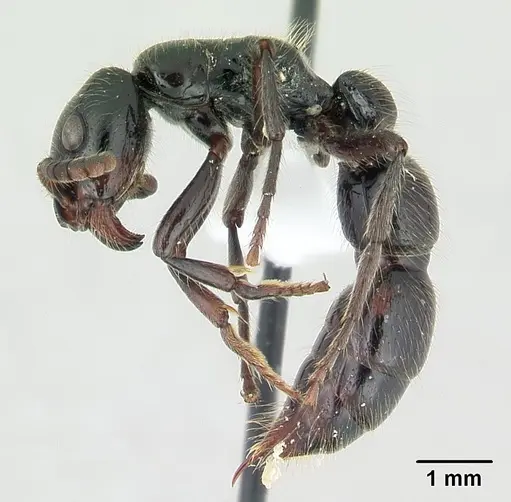
Simopone silens is a dark, predatory ant native to Madagascar, in the subfamily Dorylinae. Workers have a glossy black body with blackish-brown appendages and a dull reddish clypeus. Body size data is not documented, but head length is about 2 mm . These ants live in tropical dry forests in the Tsingy de Bemaraha region, nesting in dead branches above ground and on low vegetation . This species is closely related to Simopone rex and can be told apart by the shape of the clypeal margin and fine striolae on the propodeal declivity .
Quick Summary
- Difficulty: Expert
- Origin & Habitat: Madagascar, Mahajanga Province, Tsingy de Bemaraha National Park, around 100m elevation. Found in tropical dry forest, nesting in dead branches above ground and on low vegetation [1][2].
- Colony Type: Colony structure is unconfirmed. Most Dorylinae are monogyne, but no specific data exists for this species.
- Size & Growth:
- Queen: Unknown, queen not described in literature.
- Worker: Size data unavailable. Head length 1.96-2.16 mm [1] (no total body length reported).
- Colony: Unknown, not documented.
- Growth: Unknown
- Development: Unconfirmed, no data available. (Based on general Dorylinae patterns, development may take several months at warm temperatures.)
- Antkeeping:
- Temperature: Keep at 24-28°C, inferred from tropical dry forest origin. Use a heating cable on one side to create a gradient.
- Humidity: Maintain moderate humidity. Nest substrate should be slightly moist but not waterlogged. These ants come from dry forest, so avoid constant saturation.
- Diapause: Unlikely, as a tropical species, they probably do not require diapause. Keep warm year-round.
- Nesting: Provide arboreal nesting options: dead branches, cork pieces, or Y-tong nests with dark, enclosed chambers. Mimic natural dead wood cavities [2].
- Behavior: Little observed in captivity. Dorylinae are generally secretive and predatory. Workers likely forage individually or in small groups. Not aggressive to humans but may sting if disturbed. Escape risk is moderate due to small size. Likely nocturnal or crepuscular.
- Common Issues: lack of captive husbandry information makes care unpredictable, tropical origin requires stable warm temperatures year-round, predatory diet may be difficult to sustain with appropriate live prey, escape risk due to small size, use fine-mesh barriers, extremely rare in the hobby, limiting availability of advice
Natural History and Distribution
Simopone silens is endemic to Madagascar, known only from Mahajanga Province in Tsingy de Bemaraha National Park [1]. The type locality is at about 100 m elevation in tropical dry forest. Specimens were collected from dead branches above ground and from low vegetation, indicating an arboreal or semi-arboreal lifestyle [2]. The type series was collected in November 2001 (wet season). This species belongs to the emeryi group and closely resembles Simopone rex, but differs in the shape of the anterior clypeal margin and usually has fine longitudinal striolae on the propodeal declivity [1].
Housing and Nest Preferences
Since they naturally nest in dead branches above ground, provide dark, enclosed chambers. Y-tong (AAC) or plaster nests with tight spaces work well. You can also use naturalistic setups with cork bark or hollow branches. Keep the nest in a warm, stable area with moderate humidity. The outworld should have a thin layer of substrate and decorations for foraging. Ensure all escape routes are sealed, as workers are small and can fit through tiny gaps.
Feeding and Diet
As a Dorylinae ant, Simopone silens is likely predatory on small invertebrates. Offer live prey such as fruit flies, springtails, and tiny mealworms. They may also accept pieces of insect. Sugar sources are probably not a major part of their diet. Remove uneaten prey after 24 hours to prevent mold. Since their exact preferences are unknown, try different prey and watch what they take.
Temperature and Care Requirements
These ants need tropical conditions year-round. Keep the nest at 24-28°C. Use a heating cable on one side of the nest to create a temperature gradient. Avoid direct sunlight and drafts. Do not lower temperatures for hibernation, they do not require diapause. Stable warmth is essential.
Behavior and Temperament
Behavior has not been formally studied. Dorylinae ants are generally secretive and not prone to aggression unless the nest is disturbed. Workers are small (head length ~2 mm) and can squeeze through small openings, use fine-mesh barriers or talc barriers. They probably forage alone or in small groups, and may be more active at night. The sting is present but likely mild.
Frequently Asked Questions
How long does it take for Simopone silens to develop from egg to worker?
The development timeline has not been documented. Based on general Dorylinae biology, it likely takes several months at warm temperatures (around 26°C). Expect at least 2-3 months if conditions are stable.
What do Simopone silens ants eat?
As a predatory Dorylinae, they likely eat small live invertebrates. Offer fruit flies, springtails, and tiny mealworms. Remove leftover prey to keep the nest clean.
What temperature do Simopone silens need?
Keep them at 24-28°C year-round. Use a heating cable to maintain stable warmth, especially in cooler climates.
Can I keep multiple Simopone silens queens together?
Colony structure is unknown. Most Dorylinae are monogyne, so keeping multiple queens together is not recommended unless confirmed otherwise.
What is the best nest type for Simopone silens?
Provide dark, enclosed chambers that mimic dead branches. Y-tong (AAC) nests, plaster nests, or cork bark setups all work. Avoid acrylic nests.
Do Simopone silens need hibernation?
No. As a tropical species from Madagascar, they do not require diapause. Keep temperatures stable and warm year-round.
How big do Simopone silens colonies get?
Colony size is unknown. No data exists. Based on related species, colonies may be moderate, but this is speculation.
Are Simopone silens good for beginners?
No, this species is not for beginners. It is extremely rare in captivity, with almost no care information. Success is low even for experienced keepers.
Why are my Simopone silens dying?
Likely causes include temperature too low, humidity wrong, stress, or inadequate diet. Keep them stable at 26°C, provide moderate humidity and live prey. Wild-caught colonies may carry disease.
Report an Issue
The current care sheet is based fully on literature. See inconsistencies, or something that's incorrect? Please , it will be resolved after review from an admin. Contributing to the blogs tab also helps providing information, to make us be able to further improve the caresheets. Thank you for your support!
References

This caresheet is licensed under CC BY-SA 4.0 .
Community Blogs
CASENT0000556
View on AntWeb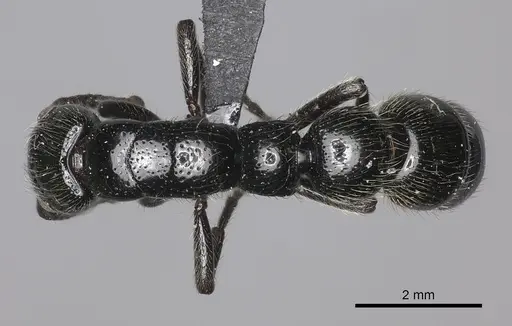
CASENT0000562
View on AntWeb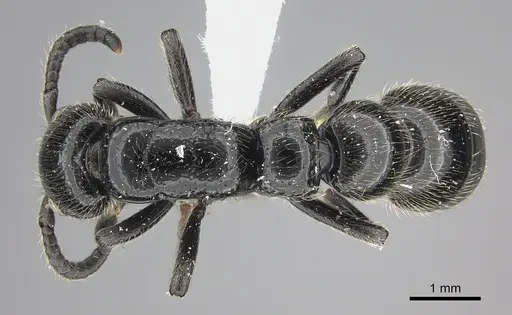
CASENT0410468
View on AntWeb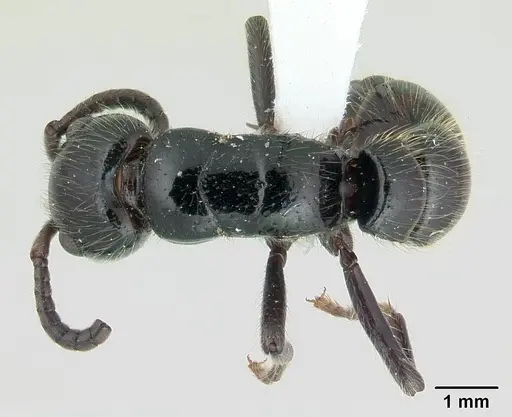
CASENT0740896
View on AntWeb
Literature
Loading distribution map...Loading products...