
Simopone sicaria
- Sci. Name
- Simopone sicaria
- Subfamily
- Dorylinae
- Author
- Bolton & Fisher, 2012
- Distribution
- Found in 1 countries
Introduction
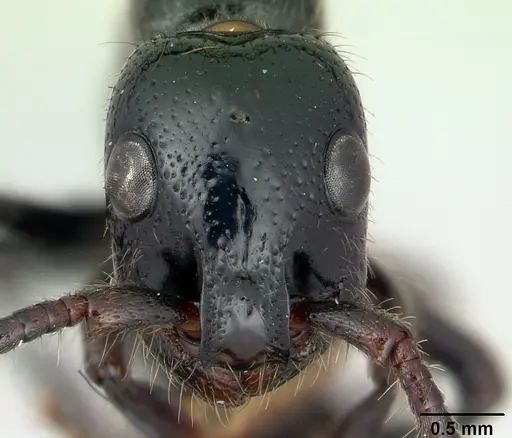
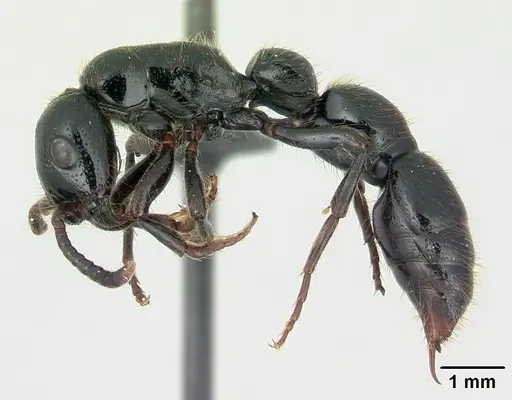
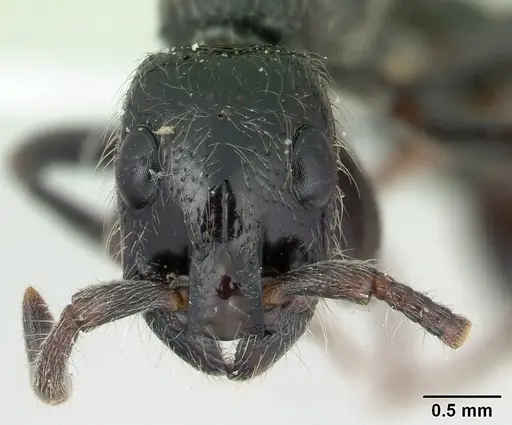
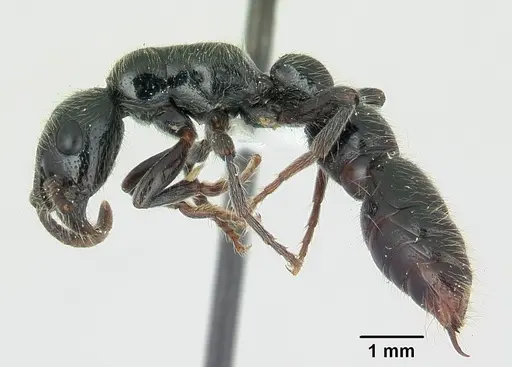
Simopone sicaria is a predatory ant species from Madagascar, belonging to the Dorylinae subfamily. Workers are uniformly black with blackish-brown to black appendages and a dull reddish clypeus . This species is a specialized predator that raids the nests of other ants. Researchers observed a raid on an arboreal nest of Terataner alluaudi that took less than 20 minutes. Workers moved rapidly through tree branches, entered the target nest, and emerged carrying the victim's brood while discarding captured adult ants . This raiding behavior makes them a unique and challenging species, as they require a constant supply of live ant brood as prey.
Quick Summary
- Difficulty: Hard
- Origin & Habitat: Simopone sicaria is found exclusively in Madagascar, in rainforest habitats. The type specimen was collected from a rotten stick on the ground in rainforest at 875m elevation in the Anjanaharibe-Sud Reserve [1][2].
- Colony Type: Unknown, colony structure has not been documented. Based on related Simopone species, they may be monogyne or polygyne, but this is unconfirmed.
- Size & Growth:
- Queen: Unknown, queen caste has not been described [1]
- Worker: Body size not directly recorded, estimated 5-7mm total length based on morphology of related Simopone species (inferred) [1]
- Colony: Unknown
- Growth: Unknown
- Development: Unknown (No direct data available. Related Dorylinae species typically develop in 4-8 weeks at tropical temperatures (inferred).)
- Antkeeping:
- Temperature: 24-28°C (estimated from Madagascar rainforest habitat). Provide a gradient with a heating cable so workers can self-regulate [2].
- Humidity: Moderate to high, keep substrate damp but not waterlogged. Use a water reservoir connected to the nest to maintain moisture [2].
- Diapause: Unknown. As a tropical species, formal diapause is unlikely, but activity may reduce during cooler periods. Maintain warm temperatures year-round.
- Nesting: In nature, they nest in rotten sticks and wood on the forest floor [1]. In captivity, use a Y-tong (AAC), plaster, or soil-based nest with narrow passages and multiple chambers. Provide rotting wood pieces and leaf litter to mimic the forest floor.
- Behavior: Simopone sicaria is a specialized predator that conducts fast, coordinated raids on other ant colonies [1]. Workers are not aggressive toward humans but may sting if handled (typical of Dorylinae). Their small size (estimated 5-7mm) means high escape risk, use fine mesh barriers. They are strictly carnivorous and will not accept sugar or standard ant feeds.
- Common Issues: queens undescribed, founding method completely unknown, making colony establishment nearly impossible., requires a constant supply of live ant brood, difficult to sustain for most keepers., no established captive husbandry, all care is experimental., small size makes escape prevention critical, use fine mesh or oil barriers., tropical requirements mean stable warmth is needed year-round.
Natural History and Predatory Behavior
Simopone sicaria is a specialized predator that conducts raids on other ant nests. The only observed raid involved workers rapidly moving through lower tree branches about 50 meters to reach an arboreal nest of Terataner alluaudi, breaching it in under 20 minutes [1]. Workers entered the nest, captured the victim's brood, and discarded adult Terataner by dropping them to the ground [1]. This predatory specialization means they cannot survive on sugar or dead insects, they need live ant brood or similar soft-bodied prey. Based on their behavior, they likely use chemical trails to locate prey, but this has not been confirmed.
Housing and Nesting
In their natural habitat, Simopone sicaria nests in rotten sticks and wood on the rainforest floor [1]. For captivity, replicate these conditions with a naturalistic setup. Use a Y-tong (AAC) or plaster nest with narrow passages and multiple chambers, as workers are small. Place a water reservoir in contact with the nest to maintain moisture. Add dead leaves, small twigs, and rotting wood pieces to the outworld to mimic forest floor debris. Ensure the outworld has a secure lid with fine ventilation mesh, as these ants are small and prone to escape.
Feeding Requirements
Simopone sicaria is an obligate predator that requires live ant brood or small live arthropods (e.g., springtails, small flies). They will not accept sugar water, honey, or dead insects [1]. In captivity, you will need to maintain feeder colonies (e.g., Tetramorium or Brachymyrmex) to provide a steady supply of brood. Feed every 2-3 days for small colonies, adjusting for consumption. Remove uneaten prey promptly to prevent mold. This specialized diet makes this species suitable only for experienced keepers with reliable live prey sources.
Temperature and Humidity
As a tropical rainforest species from Madagascar, Simopone sicaria requires warm, humid conditions. Maintain temperatures between 24-28°C with minimal fluctuation. Use a heating cable on one side of the nest to create a gradient, allowing workers to choose their preferred temperature. Humidity should be moderate to high, the substrate should feel damp but not waterlogged. A water reservoir connected to the nest helps maintain consistent moisture. Avoid both dry conditions and stagnant air, which can promote mold growth [2].
Behavior and Colony Dynamics
The behavior of Simopone sicaria centers on its predatory raids. Workers are fast and coordinated, capable of overwhelming ant colonies larger than themselves. They likely locate prey through chemical trails and work together to breach nest defenses. Unlike some army ants, they do not appear to be nomadic, they likely have a stable nest site. Workers are not aggressive toward humans but may sting if handled (Dorylinae typically possess functional stings). Colony size is unknown but likely modest, based on related species. Their small size and speed make escape prevention essential. [1]
Frequently Asked Questions
What do Simopone sicaria ants eat?
Simopone sicaria is an obligate predator that requires live ant brood or small live arthropods. They will not accept sugar, honey, or dead insects. You need to maintain feeder ant colonies or cultures of small prey [1].
Is Simopone sicaria a good beginner ant?
No. Their specialized predatory diet and completely unknown captive requirements make them unsuitable for any keeper except experienced specialists. They have never been successfully kept in the hobby.
How big do Simopone sicaria colonies get?
Colony size has not been documented. Based on related Simopone species, colonies may reach several hundred workers, but this is an estimate.
Where is Simopone sicaria found?
It is endemic to Madagascar, found in rainforest habitats at elevations around 875 meters, nesting in rotten wood on the forest floor [1][2].
Can I keep Simopone sicaria in a test tube setup?
A test tube might work for a founding queen if a queen is ever found, but for an established colony you need a naturalistic setup with multiple chambers and moisture control. They naturally nest in rotten wood.
Do Simopone sicaria need hibernation?
Diapause requirements are unknown. As a tropical species, they likely do not need a cold period, but maintain stable warm temperatures year-round.
How long does it take for Simopone sicaria to develop from egg to worker?
The timeline has not been documented. Based on related Dorylinae species, development likely takes 4-8 weeks at 24-28°C, but this is an estimate.
What temperature should I keep Simopone sicaria at?
Aim for 24-28°C, based on their rainforest habitat. Use a heat cable to create a gradient so workers can self-regulate.
Why is my Simopone sicaria colony dying?
Without established husbandry, failures are hard to diagnose. Likely causes: lack of live prey (they need ant brood), incorrect humidity (too dry or too wet), temperature outside 24-28°C, or stress from unsuitable nesting. This species is experimental, expect high mortality.
Report an Issue
The current care sheet is based fully on literature. See inconsistencies, or something that's incorrect? Please , it will be resolved after review from an admin. Contributing to the blogs tab also helps providing information, to make us be able to further improve the caresheets. Thank you for your support!
References

This caresheet is licensed under CC BY-SA 4.0 .
Community Blogs
CASENT0004544
View on AntWeb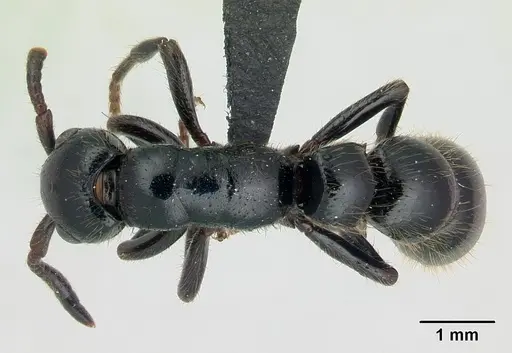
CASENT0004545
View on AntWeb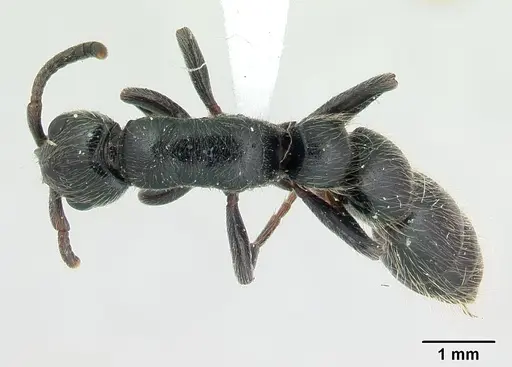
Literature
Loading distribution map...Loading products...