
Simopone oculata
- Sci. Name
- Simopone oculata
- Subfamily
- Dorylinae
- Author
- Radchenko, 1993
- Distribution
- Found in 1 countries
Introduction
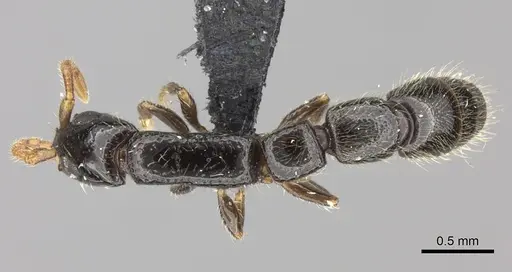
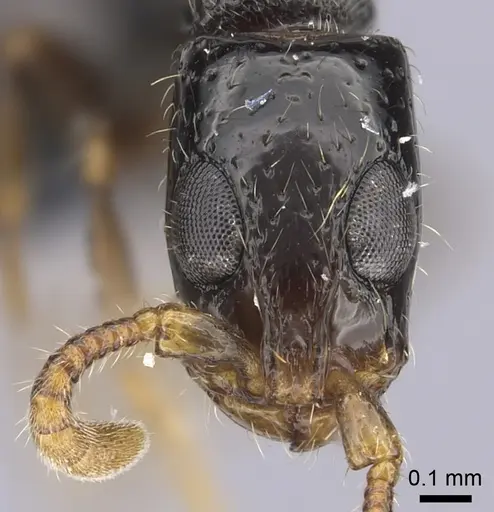
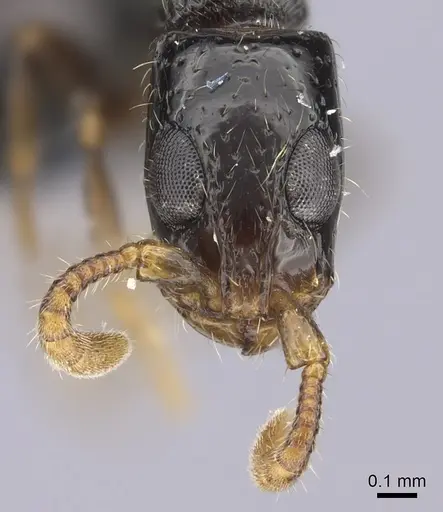
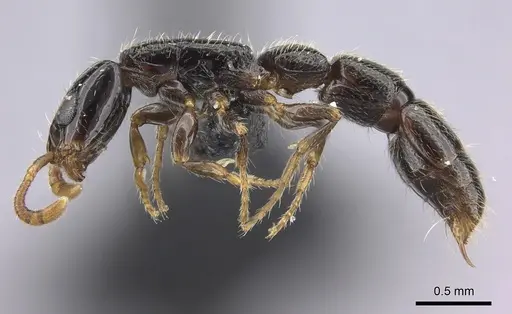
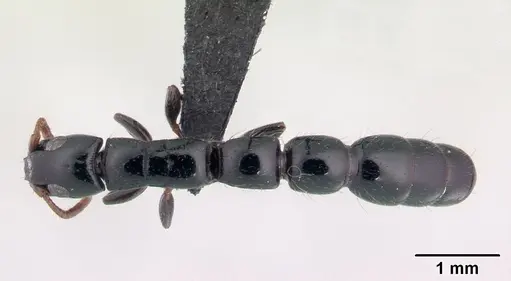
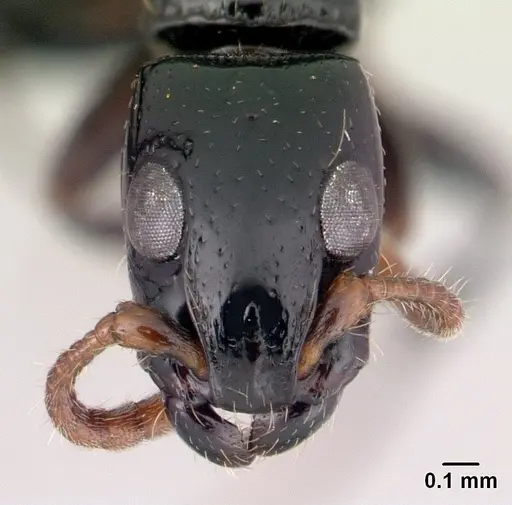
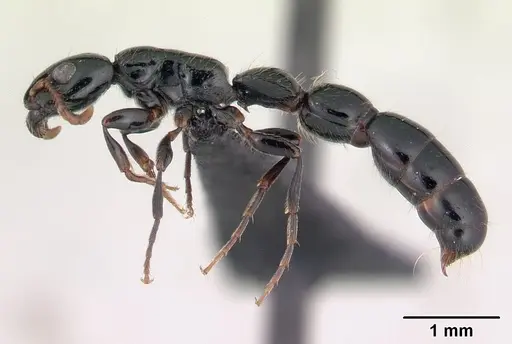
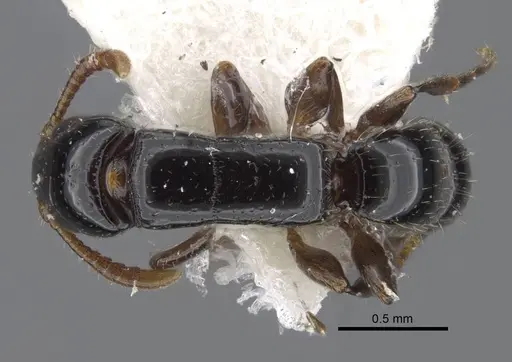
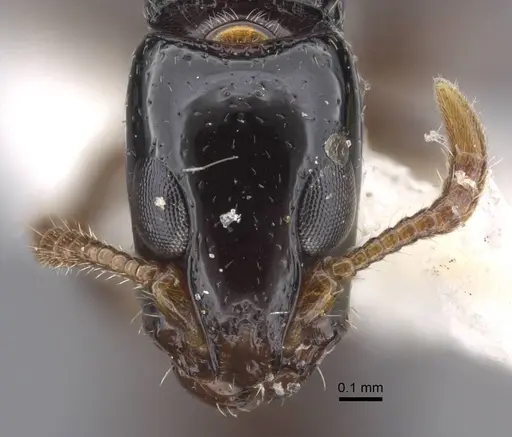
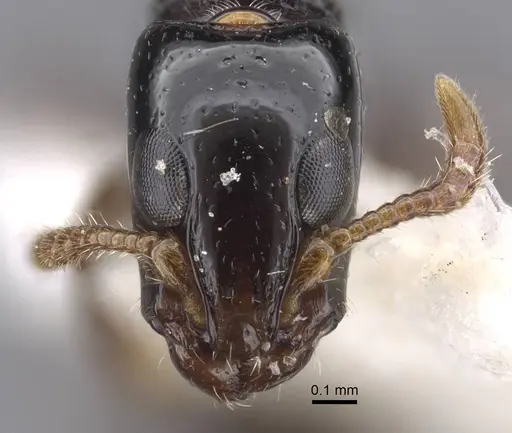
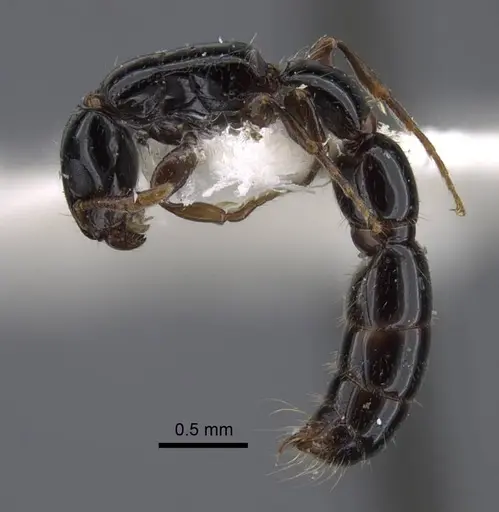
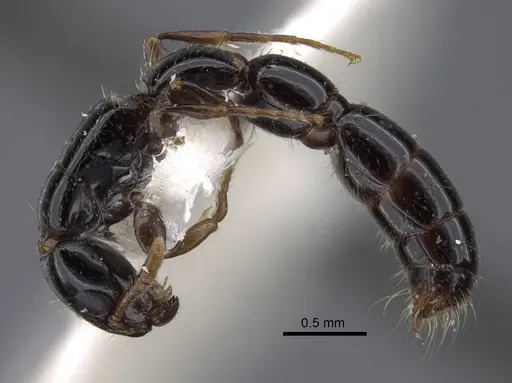
Simopone oculata is a small, slender predatory ant belonging to the Dorylinae subfamily, making it a relative of army ants. Workers measure around 4.5 mm in total length, with a distinctive elongated head and notably large eyes that give this species its name (oculata means 'eyed') . The body is dark brown to nearly black, with reddish-brown mandibles, leg tips, and the tip of the abdomen. This species belongs to the grandidieri species group and is known from Vietnam and Thailand . The genus Simopone is largely arboreal and rarely collected, so natural history is poorly understood . The type specimen was collected under a wood stump in secondary tropical forest, suggesting they prefer humid, shaded environments . These ants are predatory, like other Dorylinae, but appear to be more sedentary than true army ants.
Quick Summary
- Difficulty: Expert
- Origin & Habitat: Vietnam and Thailand in the Indomalaya region. Found under wood stumps in secondary tropical forest [3].
- Colony Type: Undocumented, no information on colony structure is available.
- Size & Growth:
- Antkeeping:
- Temperature: Keep at warm tropical temperatures, roughly 24-28°C, inferred from habitat. Provide a gentle heat gradient if possible.
- Humidity: High humidity is likely needed. Keep nest substrate consistently moist but not waterlogged. Mist enclosure regularly and ensure good ventilation to prevent mold.
- Diapause: Not required. As a tropical species, no diapause is expected. A slight cool period (around 20°C) may be tolerated but is not necessary.
- Nesting: A naturalistic setup works best: provide moist substrate (soil/coco fiber mix), leaf litter, and small pieces of wood for hiding. They nest under wood stumps in the wild [3]. Test tubes can be used for founding, but a natural enclosure is preferable once the colony is established.
- Behavior: Predatory ant that likely hunts small invertebrates. Forages individually or in small groups rather than forming large raiding columns [4]. Large eyes suggest reliance on vision. Likely moderately aggressive when defending the colony. Escape prevention is important: workers are 4.5 mm and slender, so they can slip through small gaps.
- Common Issues: very limited species-specific care information makes husbandry a major challenge, high humidity requirements create mold risk if ventilation is poor, live prey is essential, they probably cannot survive on sugar water alone, wild-caught colonies may carry parasites or be stressed by captivity
Housing and Nest Setup
Because Simopone oculata is poorly known, housing is a matter of educated guesswork based on its habitat. The type worker was found under a wood stump in secondary tropical forest [3]. A naturalistic terrarium with moist substrate, leaf litter, and wood pieces is recommended. Avoid overly dry setups.
For founding colonies, test tubes with a water reservoir can work, but these ants may stress easily. Transition to a naturalistic enclosure early to give them space for hunting. Escape prevention is critical: workers are slender and can squeeze through tiny gaps.
Feeding and Diet
As a doryline predator, Simopone oculata requires live prey. Offer small insects such as fruit flies, pinhead crickets, and tiny mealworms. They are not adapted to survive on sugar alone, though you can provide a small drop of sugar water as a supplement.
Feed every 2-3 days, adjusting portion size so that most prey is consumed within a few hours. Remove uneaten prey to prevent mold. Because natural diet is unknown, experiment with different prey sizes and types. [4]
Temperature and Humidity
Simopone oculata comes from a tropical environment, so warm and humid conditions are vital. No precise optimal ranges are published, but maintaining 24-28°C is a safe estimate. Use a heating mat on one side of the enclosure to create a gradient.
Humidity should be high but not stagnant. Keep the nest substrate visibly moist, and mist the outworld lightly daily. Ensure ventilation to avoid mold. Dry conditions are likely fatal very quickly. [3]
Behavior and Colony Dynamics
This species is poorly documented. It is a doryline but not a true army ant. Workers likely forage individually or in small groups [4]. The eyes are large, which suggests good vision. Aggression level is unknown, treat them with care.
Colony size in the wild is unknown. Reproduction and founding behavior have not been observed in the wild or captivity.
Seasonal Care and Overwintering
Because it is tropical, Simopone oculata does not require hibernation or diapause. Provide stable warm conditions year-round. A slight drop to around 20°C during the coolest months may be tolerated but is not beneficial. If temperatures drop naturally in your area and the colony is healthy, monitor closely. Do not let the substrate dry out during any cooler period. [3]
Frequently Asked Questions
How long does it take for Simopone oculata to raise first workers?
This is unknown. No studies have documented development times for this species. Be patient and expect the unexpected.
Can I keep Simopone oculata in a test tube?
Test tubes can work for founding, but a naturalistic setup is preferred given their preference for hiding under wood [3]. If using a test tube, ensure humidity is high and provide a small piece of wood or bark inside.
What do Simopone oculata eat?
They are carnivorous and require live prey. Offer small insects such as fruit flies, crickets, and mealworms. Sugar water is an optional supplement but not a substitute for protein.
Are Simopone oculata good for beginners?
No. This species is rated Expert because almost nothing is known about its care. Beginners should start with well-documented species like Lasius niger or Camponotus.
How big do Simopone oculata colonies get?
Maximum colony size is unknown. Based on the genus being rarely collected and presumably having small colonies, a guess of under a few hundred workers is plausible but unconfirmed.
Do Simopone oculata need hibernation?
No. As a tropical ant, they do not require a diapause period. Keep warm year-round. A slight cool spell at around 20°C is not harmful if it happens naturally.
Why is my Simopone oculata colony dying?
Likely causes are low humidity, unsuitable temperature, lack of live prey, or stress from frequent disturbances. Because so little is known, troubleshooting is difficult. Review all parameters and consult experienced keepers.
Can I keep multiple Simopone oculata queens together?
Not recommended. Colony structure is unconfirmed, and no data supports polygyny. Attempting to combine queens will likely result in aggression.
When should I move Simopone oculata to a formicarium?
There is no standard guideline. Wait until the test tube is visibly cramped (e.g., workers constantly away from the water plug, mold appears). Transition to a naturalistic setup early if possible.
Report an Issue
The current care sheet is based fully on literature. See inconsistencies, or something that's incorrect? Please , it will be resolved after review from an admin. Contributing to the blogs tab also helps providing information, to make us be able to further improve the caresheets. Thank you for your support!
References

This caresheet is licensed under CC BY-SA 4.0 .
Community Blogs
Literature
Loading distribution map...Loading products...