
Simopone nonnihil
- Sci. Name
- Simopone nonnihil
- Subfamily
- Dorylinae
- Author
- Bolton & Fisher, 2012
- Distribution
- Found in 1 countries
Introduction
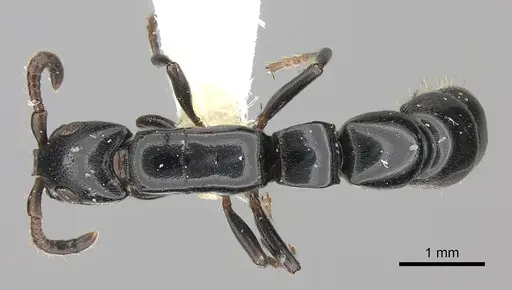
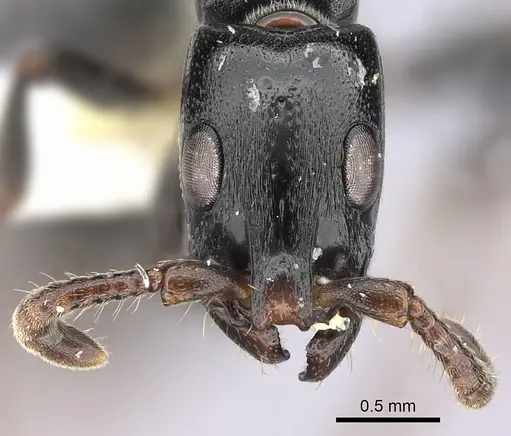
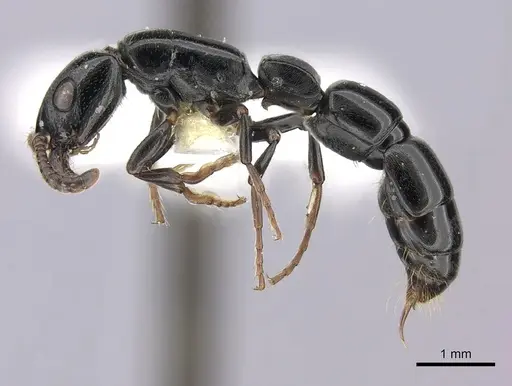
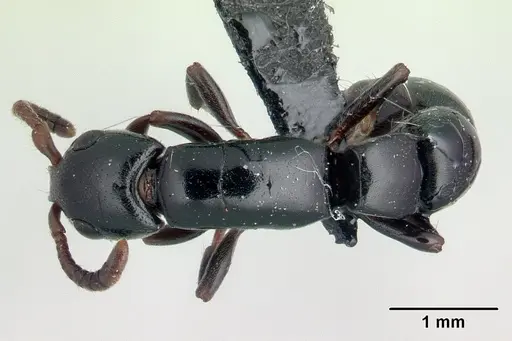
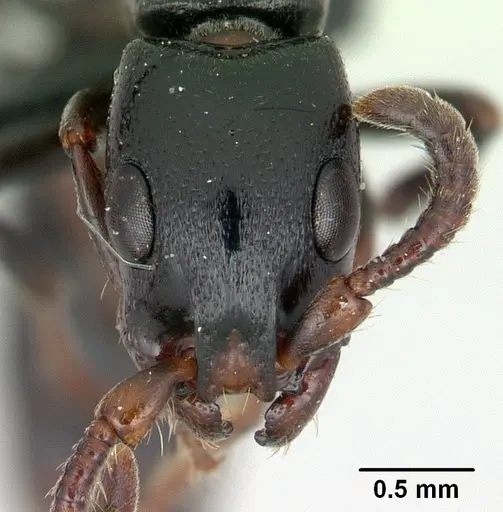
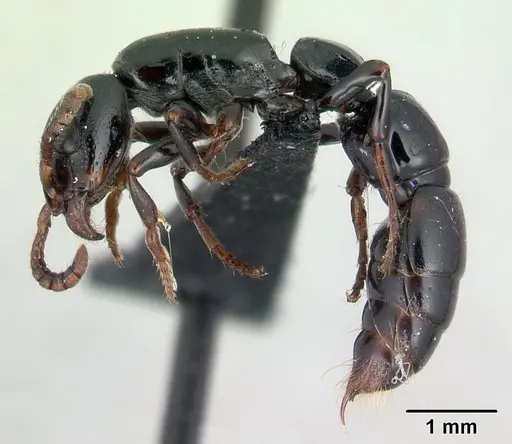
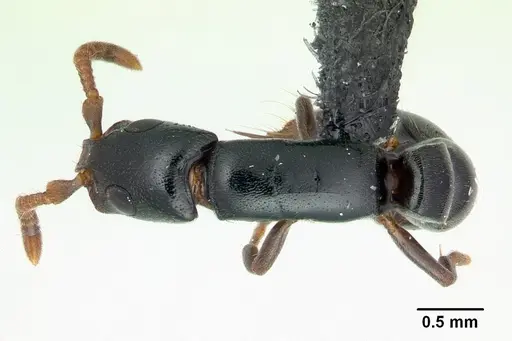
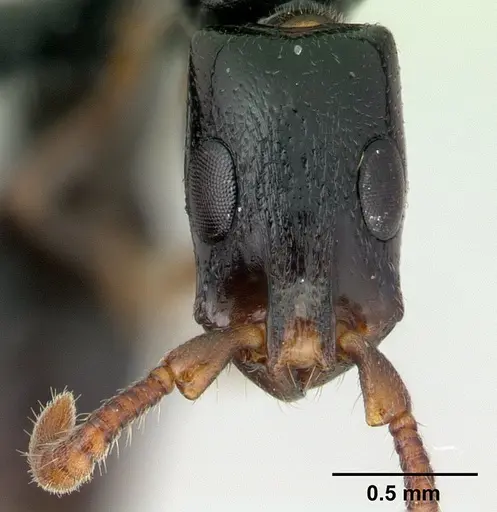
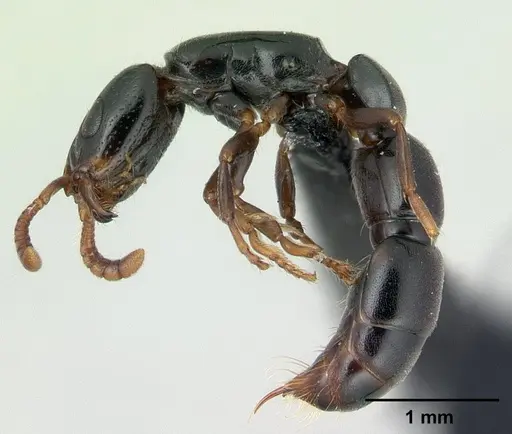
Simopone nonnihil is a small, slender ant native to Madagascar, in the emeryi species group of the genus. Their full adult color is black with lighter appendages and sometimes dull reddish spots on the sides of the pronotum and abdominal segments . They live in littoral rainforest at low elevation, foraging on low vegetation and inside dead sticks above ground level . This is a poorly studied predatory ant. As a member of the Dorylinae subfamily, it shares ancestry with army ants but has evolved a cryptic, individual-hunting lifestyle. Its small size, specific habitat needs, and lack of captive husbandry records make it a challenge even for experienced keepers.
Quick Summary
- Difficulty: Expert
- Origin & Habitat: Madagascar, Toamasina region (Ambohidena), in littoral rainforest at about 20 m elevation. Collected from dead sticks above ground and low vegetation [1][2].
- Colony Type: Unconfirmed – no data exists on colony structure or number of queens for this species.
- Size & Growth:
- Queen: Undescribed – queen caste has not been documented
- Worker: Size data unavailable. Head length reported as 1.22–1.68 mm, but total body length has not been recorded [1].
- Colony: Unknown – no colony size data available
- Growth: Unknown
- Development: Unknown – not documented (No direct measurements exist. Related Dorylinae species may take several months, but this is an estimate.)
- Antkeeping:
- Temperature: Likely 22–26°C, based on tropical lowland rainforest habitat. Keep stable with a slight gradient.
- Humidity: High – this species is documented as preferring humid conditions [3]. Keep the nest substrate consistently moist but avoid standing water.
- Diapause: Unknown – Madagascar has a mild climate, so seasonal dormancy may not be required.
- Nesting: Arboreal forager found in dead sticks and low vegetation. In captivity, use a plaster, Y‑tong, or natural cork bark setup with tight, narrow chambers scaled to their tiny size.
- Behavior: Cryptic, individual‑hunting predator. Not aggressive toward humans, but will defend the nest if disturbed. Escape risk is extreme because of their tiny size – use fine mesh on all openings. They forage alone and likely spend long periods motionless, waiting for prey.
- Common Issues: tiny size makes escape prevention critical – use fine mesh barriers., obligate predatory diet requires live prey (springtails, fruit flies), they will not accept sugar or dead food., high humidity needs – dry conditions can kill the colony quickly., colony growth is likely slow, and virtually no captive husbandry information exists – expect experimental care., live prey cultures must be maintained continuously.
Housing and Nest Setup
Simopone nonnihil is an arboreal forager found in dead sticks and low vegetation in Madagascar rainforests [2]. Provide a setup that mimics this: a plaster, Y‑tong, or natural cork bark nest with tight, narrow chambers scaled to the tiny workers. The nest must hold high humidity – this species is documented as preferring humid conditions [3]. Keep the substrate consistently moist but avoid standing water. Because the ants are very small, escape prevention is critical: use fine mesh on all openings and make sure connections between nest and outworld are snug.
Feeding and Diet
As a predatory cerapachyine ant, S. nonnihil almost certainly requires live small invertebrates as its primary food. In the wild, Simopone species are ambush predators that hunt small arthropods [2]. Offer tiny live prey such as springtails, fruit flies, and pinhead crickets every few days, removing uneaten remains to prevent mold. Sugar sources (honey, sugar water) are unlikely to be accepted – these are obligate predators. Be prepared to maintain cultures of feeder insects.
Temperature and Humidity
Keep temperatures in the 22–26°C range, mimicking Madagascar's warm rainforest climate. Provide a slight gradient so the ants can thermoregulate. Heating cables or mats can be placed on top of the nest, never underneath (to avoid drying out the substrate). Humidity is critical – collection data flag this species as humid‑loving [3]. Use a water reservoir or a moisture gradient, and avoid letting the nest dry out. Good ventilation will prevent mold while maintaining high humidity.
Behavior and Temperament
Simopone nonnihil is a cryptic, secretive ant that forages alone rather than in groups. It is not aggressive and poses no threat to humans – when disturbed it will flee instead of fight. As an ambush predator, it likely spends long periods motionless, waiting for prey. Much of its behavior has not been observed in captivity. Dorylinae ants usually have a functional stinger, but whether S. nonnihil stings is undocumented. If it can, the sting is negligible due to its small size. [1][2]
Acquiring and Establishing a Colony
This species is not available in the antkeeping hobby. No captive colonies have been reported. If you obtain a colony from wild collection, expect an experimental phase with no established methods. Start with a small test‑tube setup that holds high humidity, offer tiny live prey, and observe. Be ready to adjust humidity, prey types, and enclosure based on the colony’s response. Success would add valuable knowledge for the community. [2]
Frequently Asked Questions
How long does it take for Simopone nonnihil to develop from egg to worker?
The development timeline has not been documented. Based on related Dorylinae species, expect several months (possibly 3–6 months) from egg to first worker at optimal temperature, but this is an estimate.
Can I keep Simopone nonnihil in a test tube setup?
A test tube can work for a founding colony or small group, but you must maintain high humidity and provide access to small live prey. Test tubes dry out quickly, so monitor moisture closely. A small plaster or Y‑tong nest with a water reservoir is likely better for long‑term housing.
What do Simopone nonnihil eat?
They are obligate predators that need live small invertebrates. Offer springtails, fruit flies, tiny crickets, and other micro‑arthropods. They will not accept sugar, honey, or dead food.
Are Simopone nonnihil good for beginners?
No. They are rated Expert because of their tiny size (escape risk), obligate predatory diet, high humidity needs, lack of captive husbandry information, and likely slow growth. This species is for experienced keepers seeking a challenge.
How big do Simopone nonnihil colonies get?
Colony size is unknown – no data exists on maximum colony size. Based on related Simopone species, colonies are likely small (dozens to low hundreds of workers) rather than large.
Do Simopone nonnihil need hibernation or diapause?
Hibernation requirements are unknown. Madagascar has a mild tropical climate without harsh winters, so dramatic seasonal dormancy may not be required. Slight temperature reductions during cooler months may be appropriate, but this is speculative.
Can I keep multiple queens together?
Colony structure (monogyne vs polygyne) has not been documented for this species. Until more is known, keeping multiple unrelated queens together is not recommended.
Why are my Simopone nonnihil dying?
Common causes include: low humidity (rainforest species requires high moisture), lack of live prey (they cannot survive without hunting), escape through tiny gaps, and temperature extremes. Review all environmental parameters and ensure live prey is available.
When should I move my colony to a formicarium?
Do not move to a formicarium until the colony is well established with at least 20–30 workers and you have successfully maintained them in a founding setup. Given the lack of captive data, err on the side of keeping them in simple, humid setups longer to avoid stress from relocation.
Report an Issue
The current care sheet is based fully on literature. See inconsistencies, or something that's incorrect? Please , it will be resolved after review from an admin. Contributing to the blogs tab also helps providing information, to make us be able to further improve the caresheets. Thank you for your support!
References

This caresheet is licensed under CC BY-SA 4.0 .
Community Blogs
Literature
Loading distribution map...Loading products...