
Simopone marleyi
- Sci. Name
- Simopone marleyi
- Subfamily
- Dorylinae
- Author
- Arnold, 1915
- Distribution
- Found in 1 countries
Introduction
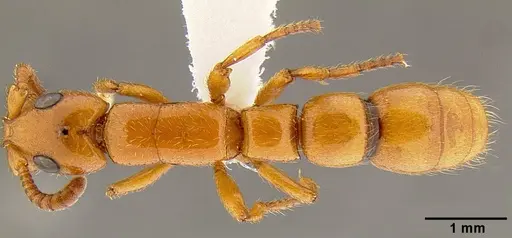
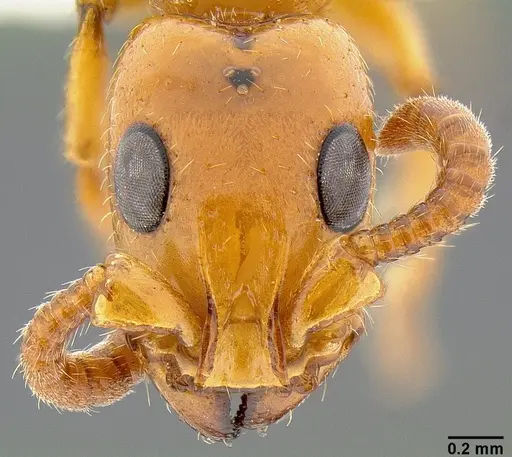
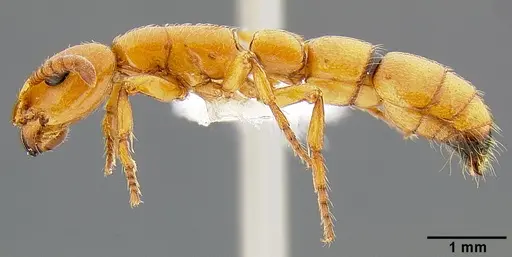
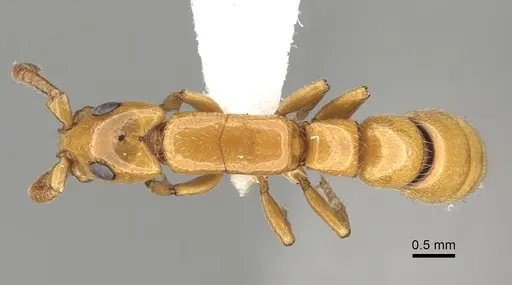
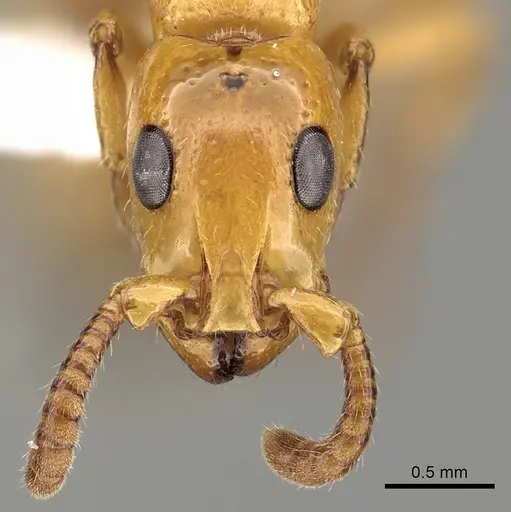
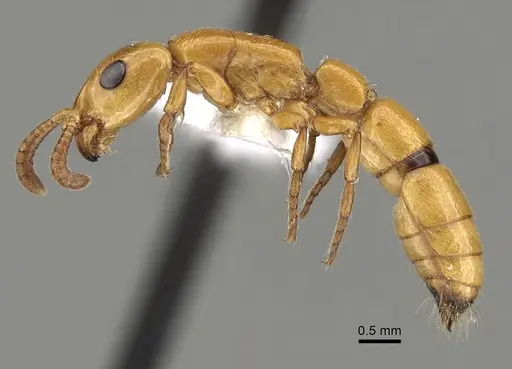
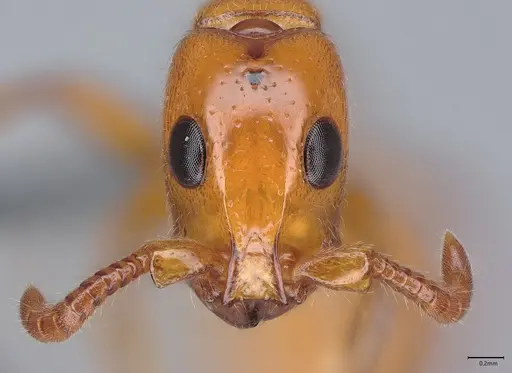
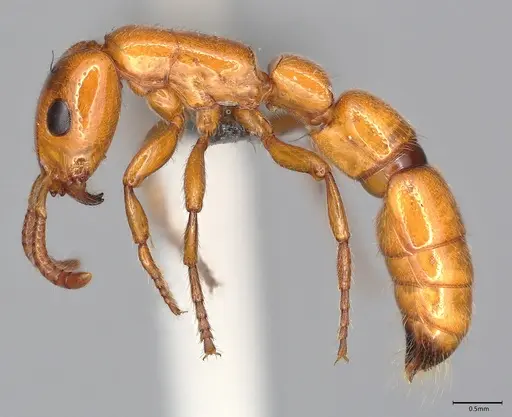
Simopone marleyi is a clear yellow ant from South Africa, found only in the Natal region around Durban. The head and body are bright yellow, with darker brown on the back parts of the abdomen . It belongs to the arboreal genus Simopone, which is rarely collected and poorly known . This species stands out because it has a unique clypeus and frontal lobe shape that makes it easy to identify . It is also the only Afrotropical Simopone with a worker-associated male on record .
Quick Summary
- Difficulty: Expert
- Origin & Habitat: South Africa (Natal, Durban region). Found in hollow stalks of castor bean plants [1]. This is an arboreal species from the Afrotropical region [2].
- Colony Type: Colony structure is unconfirmed, Simopone species are poorly studied and their social organization has not been documented.
- Size & Growth:
- Queen: size data unavailable
- Worker: size data unavailable
- Colony: Unknown, no colony size data available.
- Growth: Unknown, no development data available.
- Development: Unknown, no direct measurements exist for this species. (Development timeline has not been studied. Related doryline ants may take several months from egg to worker at warm temperatures, but this is only a guess.)
- Antkeeping:
- Temperature: Unknown, no specific data. Based on its subtropical origin, aim for 22-26°C and adjust based on colony behavior.
- Humidity: Unknown, no specific data. Arboreal nesting suggests moderate humidity, keep nest substrate slightly moist but allow some drying.
- Diapause: Unknown, no data on overwintering needs. South African ants from this coastal region may not require full hibernation but might be less active in cooler months.
- Nesting: Natural nesting occurs in hollow plant stems (castor bean stalks) [1]. In captivity, use narrow enclosed spaces such as a test tube or small chambered nest. Provide darkness and security.
- Behavior: Simopone marleyi is a predatory doryline ant. Like other Dorylinae, it has a functional stinger and can deliver a painful sting if threatened. These ants are rarely collected and poorly understood, suggesting they are cryptic and may be nocturnal or secretive [2]. Their small size and arboreal nature make them excellent escape artists, tight seals and fine mesh barriers are essential.
- Common Issues: no established care guidelines, keepers must pioneer husbandry methods., escape prevention is critical due to small size and agile movement., predatory diet requirement, need constant supply of very small live prey., wild‑caught colonies may fail to adapt to captive conditions due to stress., poorly known biology means any unexpected problem can become fatal.
Natural History and Distribution
Simopone marleyi is known only from the Natal region of South Africa, around Durban. The type specimens were collected in 1914 from hollow stems of castor‑oil plants [1]. This arboreal nesting habit fits the genus Simopone, which is largely arboreal and rarely collected [2]. The species is easily recognized by its clear yellow color and unique clypeus where the frontal lobes form rounded projections that stick out forward [1]. It is the only Afrotropical Simopone with a worker‑associated male, which helps with understanding the genus [3].
Housing and Nesting
In the wild, Simopone marleyi nests in hollow plant stems, especially castor bean stalks [1]. For captive care, provide narrow, enclosed spaces. A small test tube setup works well for founding colonies. For larger groups, use a nest with small chambers (about 1.5 mm tall) and a separate outworld for foraging. Since these ants are secretive and likely nocturnal, keep the nest dark and quiet.
Feeding and Diet
Simopone marleyi is a predatory doryline ant [2]. Offer very small live prey such as fruit flies, springtails, newly hatched mealworms, or other micro-arthropods. Prey should be no larger than the ant itself (roughly 1.5 mm). Feed every 2–3 days and remove leftovers after 24 hours. A drop of honey water may be accepted occasionally but is not a main food.
Temperature and Seasonal Care
No specific temperature data exists for this species. Based on its subtropical origin from coastal South Africa, aim for 22–26°C. A heating cable on one side of the nest can create a gradient, but avoid drying out the nest. Observe the colony: if workers are sluggish, increase warmth, if they avoid the warmer zone, it may be too hot. Diapause needs are unknown, a slight winter cooling (18–20°C) may be tried, but there is no evidence that true hibernation is required.
Behavior and Defense
As a doryline ant, Simopone marleyi has a functional stinger and can deliver a painful sting if provoked. The genus is rarely collected and poorly studied, suggesting a cryptic, possibly nocturnal lifestyle [2]. All Simopone species form a monophyletic group within the doryline ants, but they are not true army ants [4]. Minimize disturbances, especially during founding, and never handle them directly.
Frequently Asked Questions
How long does it take for Simopone marleyi to produce first workers?
The development time has not been documented. Based on related doryline ants, it may take 2–4 months from egg to worker at warm temperatures, but this is an estimate, actual data is missing.
Can I keep Simopone marleyi in a test tube?
Yes, a test tube setup is a good choice. Their natural nesting in hollow stems suggests they like narrow, enclosed spaces. Use a small test tube with a water reservoir and cotton plug, kept horizontal to give the colony a choice of humidity zones.
Do Simopone marleyi ants sting?
Yes, as members of the subfamily Dorylinae they have functional stingers. While small, they can deliver a painful sting if threatened. Avoid handling them and always provide an escape route.
What do Simopone marleyi eat?
They are predatory and hunt small invertebrates. Offer fruit flies, springtails, small mealworms, or other micro‑arthropods. Prey should be smaller than the ant (roughly 1.5 mm).
Are Simopone marleyi good for beginners?
No, this species is not for beginners. It is expert‑level because there is no established husbandry knowledge, it requires a steady supply of tiny live prey, and even experienced keepers may struggle to keep colonies alive.
How big do Simopone marleyi colonies get?
The maximum colony size is unknown. Simopone species are rarely collected and poorly studied. Related doryline ants can reach several hundred workers, but there is no data for this species.
Do Simopone marleyi need hibernation?
Overwintering needs are unknown. The species comes from a subtropical coastal area in South Africa where winters are mild. A period of reduced activity at 18–20°C may be sufficient rather than true hibernation.
Why is my Simopone marleyi colony dying?
Without established care guidelines, many factors can cause failure: prey too large, temperatures fluctuating, humidity wrong, stress from disturbance, or escape. This species requires experimentation and tolerance for loss.
Can I keep multiple queens together?
The colony structure has not been documented. Do not combine queens because we don’t know if they are monogyne (single‑queen) or polygyne (multiple‑queen).
Where is Simopone marleyi found in the wild?
It is known only from South Africa’s Natal region, around Durban. The original collection was from hollow stems of castor bean plants in the Stella Bush area [1].
Report an Issue
The current care sheet is based fully on literature. See inconsistencies, or something that's incorrect? Please , it will be resolved after review from an admin. Contributing to the blogs tab also helps providing information, to make us be able to further improve the caresheets. Thank you for your support!
References

This caresheet is licensed under CC BY-SA 4.0 .
Community Blogs
Literature
Loading distribution map...Loading products...