
Simopone fera
- Sci. Name
- Simopone fera
- Subfamily
- Dorylinae
- Author
- Bolton & Fisher, 2012
- Distribution
- Found in 1 countries
Introduction
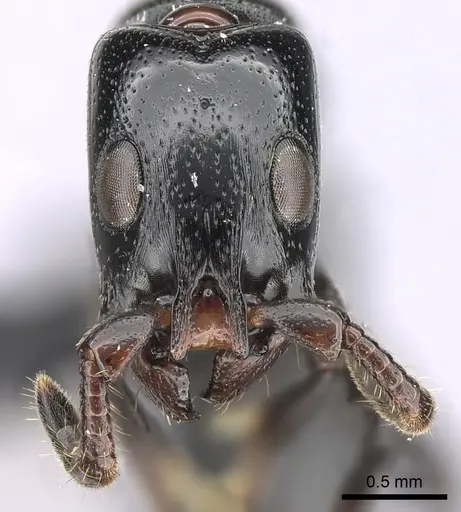
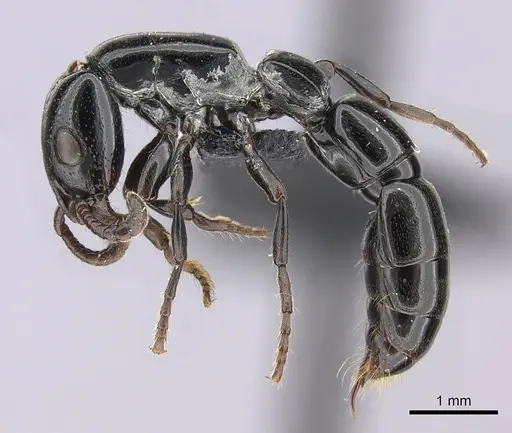
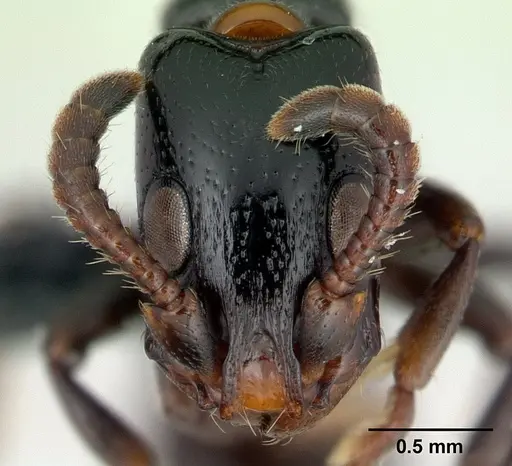
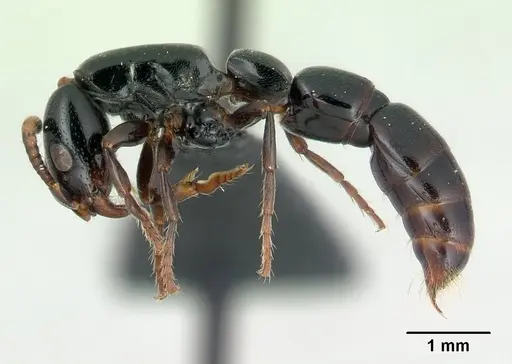
Simopone fera is a small predatory ant native to Madagascar, belonging to the subfamily Dorylinae. Workers are entirely black with slightly lighter appendages and clypeus . Their most distinctive feature is the pair of frontal lobes that project far forward, extending well beyond the front edge of the clypeus . The entire upper body lacks hairs, including the humeral area . This species is known only from tropical dry forests in northern Madagascar (Antsiranana province), where it has been collected from dead twigs above ground . As a member of the poorly studied genus Simopone, almost nothing is known about its colony structure, behavior, or captive care requirements.
Quick Summary
- Difficulty: Expert
- Origin & Habitat: Northern Madagascar (Antsiranana province), specifically Forêt Binara near Daraina at 375m elevation, in tropical dry forest [1][2].
- Colony Type: Colony structure is unconfirmed. Dorylinae ants typically have single-queen colonies but this has not been documented for Simopone fera specifically.
- Size & Growth:
- Queen: Unknown, queen caste has not been described for this species
- Worker: Size data unavailable, only head measurements exist (head length 1.38-1.72mm) but total body length has not been recorded [1]
- Colony: Unknown, no colony size data available
- Growth: Unknown
- Development: Unconfirmed, no development data exists for this species (Development timeline is unstudied. Based on typical Dorylinae patterns, expect 2-4 months from egg to worker at tropical temperatures if kept warm, but this is a rough estimate with no species-specific data.)
- Antkeeping:
- Temperature: Based on the tropical dry forest habitat, maintain stable warm conditions, likely around 24-28°C [1][2]. A gentle gradient allowing thermoregulation is beneficial if using a heat source.
- Humidity: Moderate to high humidity, nest substrate should be kept moist but not waterlogged, with good ventilation [2]. Avoid exact percentages as no specific data exists, use substrate dampness as a guide.
- Diapause: Unlikely, as a tropical species from Madagascar, they probably do not require a diapause period. Maintain year-round tropical conditions.
- Nesting: In nature they nest in dead twigs and small cavities above ground in forest habitats [1][2]. In captivity, they need small plaster or Y-tong (AAC) nests with tight chambers scaled to their tiny size. Provide cork pieces or dead twigs to mimic natural nesting. Avoid acrylic nests.
- Behavior: Simopone fera is a predatory ant that likely hunts small arthropods. Dorylinae ants are typically secretive and non-aggressive toward humans, they possess a stinger but are too small to cause noticeable pain. Their tiny size means escape prevention is critical, they can squeeze through very fine gaps. Nocturnal or crepuscular foraging is suspected but not confirmed.
- Common Issues: tiny size makes escape likely without extremely fine mesh barriers (under 0.5mm), no captive breeding data exists, establishing a colony may be difficult, specialized predatory diet requires a consistent supply of live prey, which is logistically challenging, humidity control is critical, too dry causes desiccation, too wet causes mold, virtually no species-specific care information exists in the hobby
Species Identification and Appearance
Simopone fera workers are small ants with a head length of 1.38-1.72mm and head width of 0.81-1.10mm [1]. Their most distinctive feature is the pair of frontal lobes that project far forward, extending considerably beyond the level of the anterior clypeal margin [1]. The eyes are located at or just in front of the cephalic midlength. The entire body is black, with the appendages and clypeus being slightly lighter in color [1]. Notably, the dorsum of the mesosoma lacks setae entirely, even the humeral setae are absent [1]. The abdominal segments (AII to AIV) also lack setae on their dorsal surfaces. This species belongs to the emeryi species group [2], which can be distinguished from similar species by the combination of morphological characters described in the original taxonomy paper [1].
Natural Habitat and Distribution
This species is known only from northern Madagascar, specifically the Antsiranana province. The type locality is Forêt Binara, located 7.5 km southwest of Daraina at an elevation of 375 meters [1]. The habitat is tropical dry forest, and specimens have been collected from dead twigs above the ground [1][2]. This region experiences a warm, relatively dry tropical climate with distinct wet and dry seasons. The species appears to have a restricted distribution within Madagascar's northern forests.
Predatory Behavior and Feeding
No specific data exists on the feeding behavior of Simopone fera. As a member of the subfamily Dorylinae, it is presumed to be a predator of other arthropods, but confirmed prey preferences are unknown [1]. Keepers attempting this species should offer small live prey such as fruit flies, springtails, or other micro-arthropods. Sugar sources are unlikely to be accepted, these are probably obligate predators. Because no captive feeding data exists, start with small prey items and adjust based on colony acceptance. Removing uneaten prey promptly is important to prevent mold. Establishing a consistent prey source before acquiring a colony is strongly recommended.
Housing and Nesting
In their natural habitat, Simopone fera nests in dead twigs and small cavities above ground in forest settings [1][2]. For captivity, small plaster or Y-tong (AAC) nests with tight chambers are suitable. The chambers should be scaled to their tiny worker size. Provide a water source for humidity but avoid flooding. Use extremely fine mesh on all openings (under 0.5mm), their small size makes escape likely without excellent barriers. A naturalistic setup with dead twigs or small cork pieces can mimic their natural nesting sites. Keep the nest area dark and quiet as these are secretive ants that prefer minimal disturbance.
Temperature and Humidity Requirements
As a tropical species from Madagascar, Simopone fera requires warm conditions. Based on the tropical dry forest habitat, maintain stable temperatures around 24-28°C [1]. Temperature drops below 20°C for extended periods are likely harmful. Use a heating cable on one side of the nest to create a gentle gradient if room temperature is insufficient. For humidity, keep the nest substrate damp but not waterlogged, aim for a consistently moist feel. Ensure adequate ventilation to prevent mold growth. Monitor condensation levels as a guide: some condensation is normal but excessive moisture indicates problems.
Challenges and Expert-Level Care
Simopone fera is an expert-level species primarily because virtually no captive care information exists. There are no established breeding protocols, no documented success stories in captivity, and limited morphological data on queens. Obtaining colonies will likely require wild collection in Madagascar, which has legal implications. The combination of tiny size, specialized predatory diet, and lack of captive data makes this species unsuitable for beginners. If you attempt to keep this species, document your observations carefully, any captive husbandry data would be scientifically valuable. Consider starting with more established tropical predatory ants like Diacamma or Ponerinae species before attempting Simopone.
Frequently Asked Questions
How long does it take for Simopone fera eggs to develop into workers?
The egg-to-worker development timeline is unconfirmed for this species, no research has documented their development. Based on typical Dorylinae patterns at tropical temperatures (24-28°C), a rough estimate would be 2-4 months, but this is speculative. Without captive data, exact timelines are unknown.
Can I keep Simopone fera in a test tube setup?
A test tube setup could work for a founding colony or small group, but their small size and predatory nature make this challenging. The tube must have excellent escape prevention, use cotton plugs with fine mesh barriers. A small plaster or Y-tong (AAC) nest with appropriately sized chambers would be more suitable for established colonies.
What do Simopone fera ants eat?
No specific data exists on their diet. As predatory Dorylinae ants, they are presumed to require live prey. Offer small arthropods such as fruit flies, springtails, or tiny crickets. Sugar sources are unlikely to be accepted. This is thought to be an obligate predator that cannot survive on honey or sugar water alone.
Do Simopone fera colonies need hibernation?
As a tropical species from Madagascar, Simopone fera likely does not require hibernation. Maintain year-round tropical conditions at 24-28°C. Diapause is unlikely to be necessary for this species [1].
How big do Simopone fera colonies get?
Colony size is unknown, no data exists on maximum colony size for this species. Based on their small worker size and the limited collection data, colonies are likely small, possibly under 100 workers. Dorylinae colonies are typically smaller than those of many other ant subfamilies.
Is Simopone fera good for beginners?
No, Simopone fera is not suitable for beginners. This is an expert-level species with no captive care information available, specialized predatory dietary requirements, and tiny size that makes housing challenging. There are no established protocols for breeding this species in captivity.
Where does Simopone fera live in the wild?
Simopone fera is endemic to northern Madagascar, specifically the Antsiranana province. They live in tropical dry forest at around 375m elevation, nesting in dead twigs above ground [1][2].
Can I keep multiple Simopone fera queens together?
The colony structure is unconfirmed for this species. Dorylinae ants typically have single-queen colonies, but this has not been documented for Simopone fera specifically. Combining unrelated queens is not recommended given the lack of information about their social structure.
Why are my Simopone fera dying in captivity?
Without any captive data, specific failure causes are unknown. Likely issues include: temperature too low (below 24°C), humidity too low causing desiccation, inadequate prey (they need live prey consistently), escape due to inadequate barriers, or stress from disturbance. This species has no established captive protocol, so mortality is expected without proper conditions.
Report an Issue
The current care sheet is based fully on literature. See inconsistencies, or something that's incorrect? Please , it will be resolved after review from an admin. Contributing to the blogs tab also helps providing information, to make us be able to further improve the caresheets. Thank you for your support!
References

This caresheet is licensed under CC BY-SA 4.0 .
Community Blogs
CASENT0496983
View on AntWeb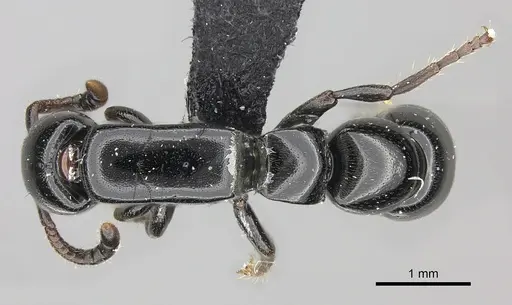
CASENT0496984
View on AntWeb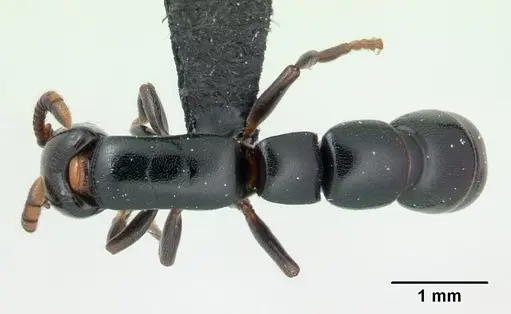
Literature
Loading distribution map...Loading products...