
Simopone dryas
- Sci. Name
- Simopone dryas
- Subfamily
- Dorylinae
- Author
- Bolton & Fisher, 2012
- Distribution
- Found in 0 countries
Introduction
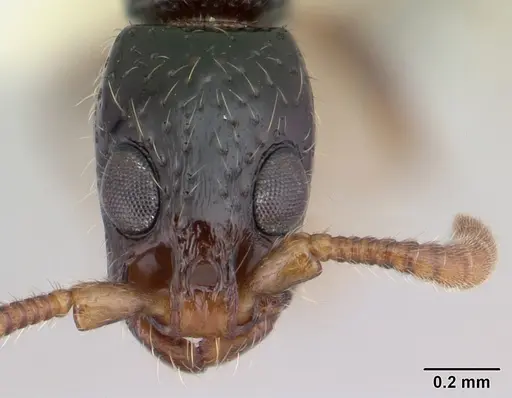
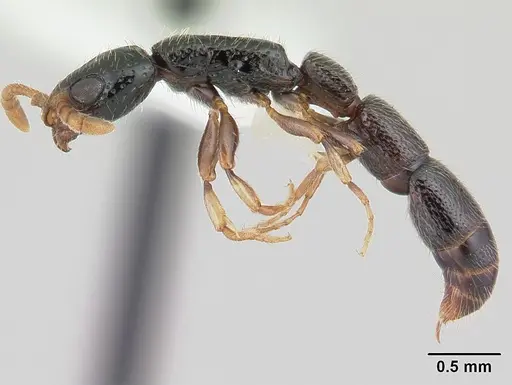
Simopone dryas is a tiny predatory ant from the Dorylinae subfamily, making it a relative of army ants. Workers are very small, exact total body length is unknown, but head length is 0.89mm . They have a distinctive appearance: the head and body are blackish brown to black, while antennae (scapes and funiculi) are dull yellow and legs are yellowish brown . Unusually for the group, its small eyes sit farther forward on the head than in any other member of the schoutedeni species group . This ant is known only from Kenya's Kakamega Forest, at 1600m elevation in equatorial rainforest, where the type specimen was collected from inside a live plant stem . The entire Simopone genus is largely arboreal and rarely collected, so very little is known about their wild behavior . As predatory dorylines, they likely hunt small invertebrates, though exact prey preferences are unconfirmed.
Quick Summary
- Difficulty: Expert
- Origin & Habitat: Kenya, specifically Kakamega Forest at 1600m elevation in equatorial rainforest [1]. Found inside live plant stems [1].
- Colony Type: Unknown colony structure, the Simopone genus is poorly studied and colony organization has not been documented for this species [3].
- Size & Growth:
- Queen: Unconfirmed, queen has not been described for this species
- Worker: Size data unavailable. Head length is 0.89mm but total body length is not recorded in the literature [1].
- Colony: Unknown, no colony size data available
- Growth: Unknown, no development data exists for this species
- Development: Unknown, no direct measurements exist. Based on typical Dorylinae patterns, expect 4-8 weeks at warm temperatures, but this is an estimate. (No published data on development. Doryline ants typically develop relatively quickly compared to some other subfamilies.)
- Antkeeping:
- Temperature: Keep warm around 24-28°C. This species comes from equatorial rainforest at altitude, suggesting they prefer warm but not extremely hot conditions with high humidity.
- Humidity: High humidity required, think damp forest conditions. Keep the nest substrate consistently moist but not waterlogged. The arboreal nesting preference suggests they tolerate some moisture.
- Diapause: Unknown, no data on seasonal requirements. The Kenyan location suggests they may not require true hibernation, but may have seasonal activity patterns.
- Nesting: Arboreal nesting, in captivity, provide narrow tubes or channels that mimic plant stem cavities. A small test tube setup or narrow nest works well. They likely prefer tight, enclosed spaces.
- Behavior: Behavior is poorly documented. As Dorylinae, they are likely predatory on small invertebrates. Their small size and arboreal nature suggest they are shy and not aggressive. Escape prevention is critical due to their tiny size, they can squeeze through standard test tube barriers. Use fine mesh and ensure all connections are sealed.
- Common Issues: tiny size makes escape likely without fine mesh barriers, no published care information means trial and error is required, predatory diet may be difficult to meet in captivity, high humidity requirements can lead to mold if not managed, poorly known species, limited guidance available from other keepers
Appearance and Identification
Simopone dryas workers are tiny ants. Exact total body length hasn't been recorded, but the head length is 0.89mm [1]. The most distinctive feature is their small eyes, which sit farther forward on the head than in any other member of the schoutedeni species group [1]. In full-face view, the outer margins of the eyes just touch the sides of the head. Their coloration is striking: the head and body are blackish brown to black, while the antennae (scapes and funiculi) are dull yellow and the legs are yellowish brown to light brown [1]. The abdomen (AIII) is relatively long and narrow compared to other species in the group [1].
Natural Habitat and Distribution
This species is known only from Kenya, specifically Kakamega Forest at 1600m elevation [1]. The type specimen was collected from a live plant stem in equatorial rainforest [1]. The Simopone genus as a whole is largely arboreal, meaning they live in trees and vegetation rather than on the ground [3]. They are rarely collected, which has made them poorly known in terms of both taxonomy and natural history [3]. The Kakamega Forest location is a mid-altitude equatorial rainforest, suggesting this species prefers warm, humid, shaded conditions.
Taxonomy and Relatives
Simopone dryas belongs to the subfamily Dorylinae, which includes army ants and their specialized predatory relatives [3]. It is placed in the schoutedeni species group, one of several within the genus Simopone [1]. All Simopone species form a monophyletic group, meaning they share a common ancestor and are distinct from other Dorylinae [4]. The genus Simopone contains many poorly known species due to their arboreal habits and rare collection [3]. This species was formally described by Bolton and Fisher in 2012 [1].
Housing and Nest Setup
Based on the natural history of this species, you should provide an arboreal-style setup. The type specimen was found inside a live plant stem, suggesting they prefer tight, enclosed spaces [1]. A small test tube setup works well for founding colonies, but make sure the tube diameter is appropriate for such tiny ants. For established colonies, a small nest with narrow chambers or a naturalistic setup with materials that mimic plant stems would be appropriate. Escape prevention is critical, their tiny size means they can squeeze through standard barriers. Use fine mesh (less than 0.5mm openings) on all openings and check connections regularly.
Feeding and Diet
As a Dorylinae ant, Simopone dryas is likely predatory on small invertebrates, similar to army ants. However, their exact prey preferences are unconfirmed. In captivity, you should offer small live prey such as springtails, fruit flies, and other tiny arthropods. Due to their small size, prey items should be appropriately scaled, essentially micro-prey. Sugar sources may or may not be accepted, offer occasionally but do not rely on them. Given how poorly known this species is, be prepared to experiment with different prey types to see what they accept. [3]
Temperature and Humidity
Keep this species warm, around 24-28°C, based on their equatorial rainforest origin. They come from a high-altitude location in Kenya, so they likely prefer stable warm conditions without major temperature fluctuations. Humidity should be high, think damp forest conditions. Keep the nest substrate consistently moist but avoid waterlogging. The arboreal nesting preference suggests they can tolerate some moisture while also having access to drier areas within the nest. A small water tube connected to the nest can help maintain humidity through evaporation.
Challenges and Considerations
Simopone dryas is an expert-level species to keep primarily because so little is known about their care requirements. There are no published husbandry guides or keeper experiences to draw from. You will essentially be pioneering the captive care of this species. Key challenges include: meeting their likely predatory dietary needs with appropriately sized prey, maintaining the high humidity they require without causing mold problems, preventing escape due to their minute size, and determining their exact temperature preferences through observation. This is a species for experienced antkeepers who enjoy experimentation and don't mind if initial attempts are unsuccessful.
Frequently Asked Questions
How big do Simopone dryas ants get?
Workers are tiny. Total body length hasn't been reported, but head length is 0.89mm [1]. The queen has not been described yet.
What do Simopone dryas ants eat?
As a Dorylinae ant (relative of army ants), they are likely predatory on small invertebrates. Offer tiny live prey like springtails and fruit flies. Exact preferences are unconfirmed due to limited study [3].
Is Simopone dryas good for beginners?
No. This is an expert-level species. They are poorly known with no published care information, their tiny size creates housing and escape challenges, and their likely predatory diet can be difficult to meet.
Do Simopone dryas ants need hibernation?
Unknown. They come from equatorial Kenya, suggesting they may not require true hibernation. However, no data exists on their seasonal requirements.
Can I keep Simopone dryas in a test tube?
Yes, a small test tube setup is appropriate for this tiny species. However, escape prevention must be excellent, use fine mesh and check all connections, as they can squeeze through tiny gaps.
Where is Simopone dryas found?
Only known from Kenya, specifically Kakamega Forest at 1600m elevation in equatorial rainforest [1]. The type was collected from inside a live plant stem.
How fast do Simopone dryas colonies grow?
Unknown, no development data exists for this species. Based on typical Dorylinae patterns, development may take 4-8 weeks from egg to worker at warm temperatures, but this is an estimate.
What temperature should I keep Simopone dryas at?
Keep warm around 24-28°C based on their equatorial rainforest origin. They likely prefer stable, warm, humid conditions.
Are Simopone dryas aggressive?
Unknown. As predatory Dorylinae, they likely hunt prey rather than defend aggressively. Their tiny size suggests they are shy rather than confrontational.
Report an Issue
The current care sheet is based fully on literature. See inconsistencies, or something that's incorrect? Please , it will be resolved after review from an admin. Contributing to the blogs tab also helps providing information, to make us be able to further improve the caresheets. Thank you for your support!
References

This caresheet is licensed under CC BY-SA 4.0 .
Community Blogs
CASENT0178216
View on AntWeb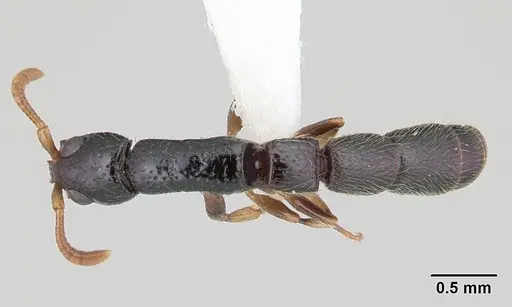
Literature
Loading distribution map...Loading products...