
Simopone conradti
- Sci. Name
- Simopone conradti
- Subfamily
- Dorylinae
- Author
- Emery, 1899
- Distribution
- Found in 2 countries
Introduction
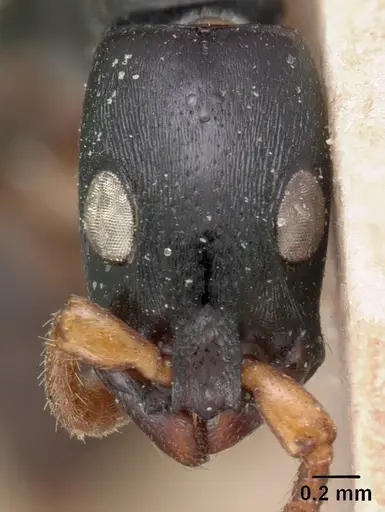
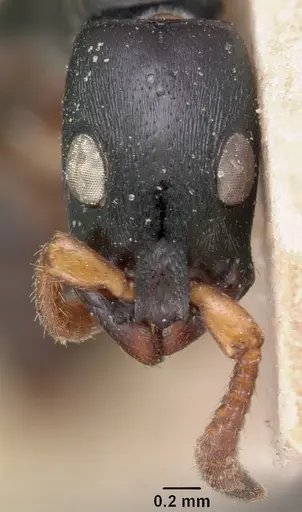
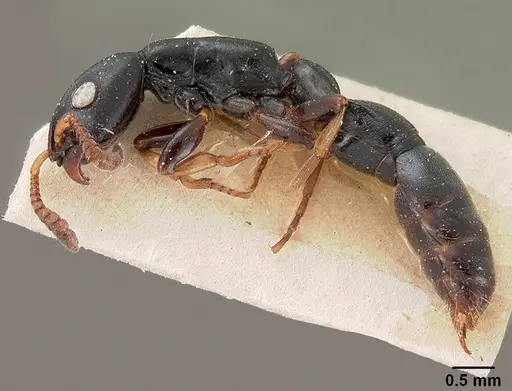
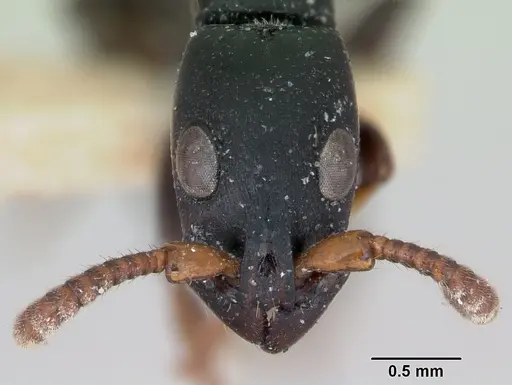
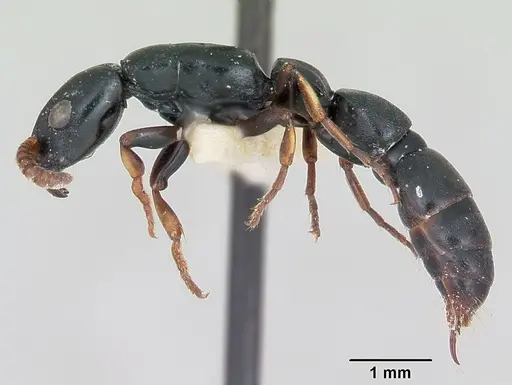
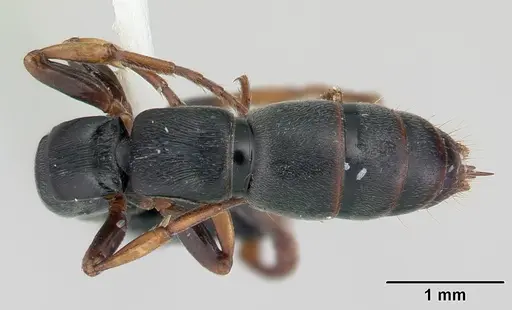
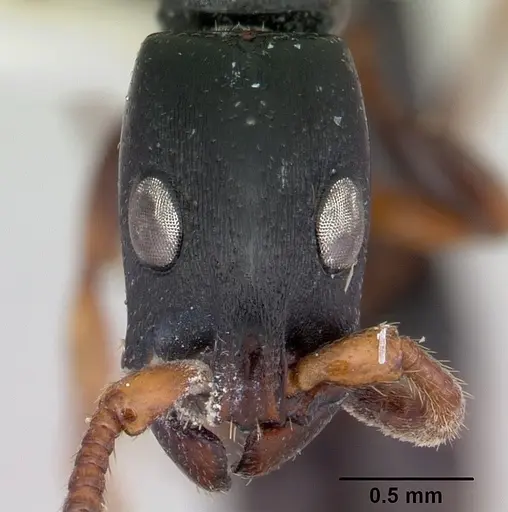
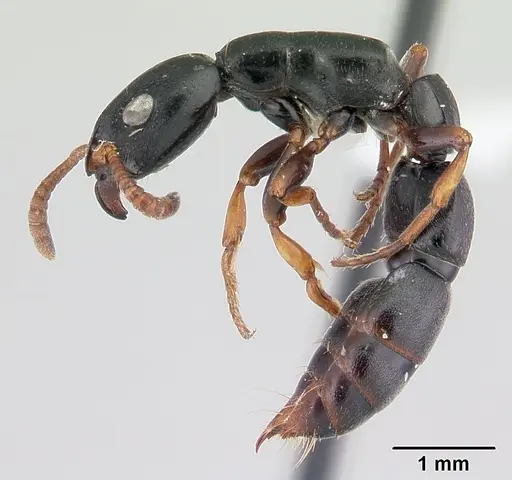
Simopone conradti is a predatory ant belonging to the subfamily Dorylinae (army ants and their relatives). Workers are medium-sized ants measuring about 6.6-8.2 mm in total length, with a distinctive black body and contrasting dull yellow scapes . The species is recognized by a median clypeal prominence and unique sculpture on the abdominal tergites, with almost no dorsal setae . Queens are similar in appearance but shed their wings after mating; their total length is not documented . This species belongs to the emeryi species group and is found across central to east Africa in rainforest habitats . Simopone is a largely arboreal genus that is rarely collected, making this species poorly understood in both taxonomy and natural history .
Quick Summary
- Difficulty: Expert
- Origin & Habitat: Rainforest habitat in the Afrotropical Region, found in Cameroon, Central African Republic, Democratic Republic of Congo, Gabon, Ivory Coast, Kenya, Nigeria, and Uganda at elevations around 375 m [5][1].
- Colony Type: Colony structure is unconfirmed. As a Dorylinae ant, they likely form small colonies with a single queen, but this has not been directly studied [3].
- Size & Growth:
- Queen: Unknown, no total length data available
- Worker: ~6.6-8.2 mm (total length) [1]
- Colony: Unknown, Simopone species are rarely collected and colonies are typically small [3]
- Growth: Unknown
- Development: Unconfirmed, no direct development data exists for this species (Based on related Dorylinae patterns, development likely takes several months but this is entirely estimated)
- Antkeeping:
- Temperature: They come from tropical rainforests [5]. Based on this, keep the nest warm at roughly 24-28°C, but this is an estimate, observe your colony and adjust.
- Humidity: High humidity is needed, use a damp substrate or water tube to keep the nest moist but not waterlogged
- Diapause: Unlikely, being a tropical species, they probably do not require hibernation
- Nesting: Arboreal nesting, they likely nest in tree hollows or under bark [3][4]. Provide vertical space with a Y-tong, plaster, or natural nest setup. A test tube can work as a starting point but offer climbing surfaces.
- Behavior: As a Dorylinae ant, Simopone conradti is predatory and hunts small invertebrates [3][4]. The genus is largely arboreal, so they prefer to forage in elevated spaces [3]. They are rarely encountered, suggesting they are secretive and have small foraging ranges. Escape prevention is important given their small body size, use fine mesh barriers. Aggression toward humans is low, they lack functional stingers and may bite defensively.
- Common Issues: extremely limited biological data makes captive care largely experimental [3], predatory diet requirements may be difficult to meet, need constant supply of small live prey, arboreal nature means they need vertical space and may not thrive in standard horizontal nests, rarely collected in the wild means captive colonies are almost nonexistent, tropical humidity requirements can lead to mold problems if ventilation is poor
Housing and Nest Setup
Simopone conradti is an arboreal species, meaning they naturally live in elevated locations like tree hollows and under bark [3][4]. In captivity, provide a small nest setup with access to vertical space. A small Y-tong, plaster, or natural nest setup works as a starting point. Because they are rarely kept in captivity, there is no established husbandry protocol, expect to experiment. The nest should have small, tight chambers scaled to their tiny body size (around 6-8 mm workers). Include a water tube for humidity but avoid flooding. Place the nest in a warm, humid enclosure to mimic rainforest conditions.
Feeding and Diet
As a Dorylinae ant, Simopone conradti is predatory and hunts small invertebrates [3][4]. In captivity, you will need to provide a constant supply of small live prey such as springtails, fruit flies, and other micro-arthropods. They are unlikely to accept sugar water or honey as their diet consists primarily of protein. Feed small prey items every few days, removing any uneaten prey after 24 hours to prevent mold. The arboreal nature of this species suggests they may hunt in leaf litter and vegetation, so prey should be small enough for their workers to tackle. Do not rely on dead prey, these ants are active hunters.
Temperature and Humidity
They come from African rainforests [5] where conditions are consistently warm and humid. Based on their habitat, keep the nest warm at roughly 24-28°C with high humidity. Use a heating cable on one side of the nest to create a temperature gradient, placing it on top of the nest to avoid evaporating moisture. Maintain humidity through a water tube or damp substrate, but ensure adequate ventilation to prevent mold. Avoid temperature drops below 22°C as this species is adapted to stable tropical conditions. Monitor both temperature and humidity closely, fluctuations can be harmful to these sensitive ants.
Behavior and Temperament
Simopone conradti is a secretive, rarely encountered species in the wild [3][4]. They are arboreal foragers that likely hunt in the canopy and vegetation layer [3]. Workers are small but may show aggressive predatory behavior toward prey. Toward humans, they are not considered dangerous, Dorylinae ants do not have functional stingers but may bite defensively. Their small body size (under 10 mm) means escape prevention is important, use fine mesh on any openings. Colonies are likely small and secretive, so do not expect high activity levels. Patience is essential when keeping rarely-collected species like this.
Acquiring Simopone conradti
This species is extremely rare in the antkeeping hobby. Simopone ants are rarely collected in the wild due to their arboreal, secretive nature [3][4]. You are unlikely to find captive-bred colonies available from suppliers. If you do acquire wild-caught specimens, quarantine them thoroughly as they may carry parasites. Given the lack of captive breeding data, expect significant challenges in establishing a colony. This species is best suited for experienced antkeepers who enjoy the challenge of working with poorly-documented species. Consider connecting with researchers studying African ants if you are serious about keeping this species.
Frequently Asked Questions
Is Simopone conradti suitable for beginners?
No. This is an expert-level species due to the complete lack of captive husbandry data [3], predatory diet requirements, and arboreal nature. There are no established care protocols, you will be experimenting. Choose a more documented species like Lasius, Camponotus, or Messor for your first colony.
What do Simopone conradti ants eat?
They are predatory and eat small live invertebrates [3][4]. Offer springtails, fruit flies, small mealworms, and other micro-arthropods regularly. They are unlikely to accept sugar sources. Dead prey is typically not accepted, they are active hunters.
How big do Simopone conradti colonies get?
Colony size is unknown. Based on the rarity of collection and typical Simopone patterns [3], colonies are likely small, probably under 100 workers. They are rarely encountered in the wild, suggesting their colonies are small and secretive.
What temperature do Simopone conradti need?
Keep them warm at roughly 24-28°C. These are tropical rainforest ants that need stable warmth [5]. Avoid temperatures below 22°C. Use a heating cable on one side of the nest to create a gradient.
Do Simopone conradti need hibernation?
Unlikely. Being a tropical African species, they probably do not require a diapause period. Maintain warm temperatures year-round. This has not been directly studied, so observe your colony for any seasonal changes in activity.
Can I keep Simopone conradti in a test tube?
A test tube can work as a founding setup, but these are arboreal ants that prefer vertical space [3]. Consider a small Y-tong or plaster nest, or a test tube setup with access to an outworld where they can forage vertically. The nest chambers should be small and tight-fitting to their body size.
How long does it take for Simopone conradti to develop from egg to worker?
This is completely unconfirmed. No development data exists for this species. Based on related Dorylinae patterns, expect several months (3-6 months) from egg to worker at optimal temperature, but this is entirely an estimate.
Where does Simopone conradti live in the wild?
They are found in African rainforests across Cameroon, Central African Republic, Democratic Republic of Congo, Gabon, Ivory Coast, Kenya, Nigeria, and Uganda. They are largely arboreal, living in tree hollows and under bark at elevations around 375 m [5][1].
Why is Simopone conradti so rarely kept?
The entire Simopone genus is rarely collected because they are arboreal, secretive, and live in small colonies in tree habitats [3][4]. There is almost no biological data available, making captive care extremely challenging. Captive colonies are essentially nonexistent in the hobby.
Report an Issue
The current care sheet is based fully on literature. See inconsistencies, or something that's incorrect? Please , it will be resolved after review from an admin. Contributing to the blogs tab also helps providing information, to make us be able to further improve the caresheets. Thank you for your support!
References

This caresheet is licensed under CC BY-SA 4.0 .
Community Blogs
CASENT0004508
View on AntWeb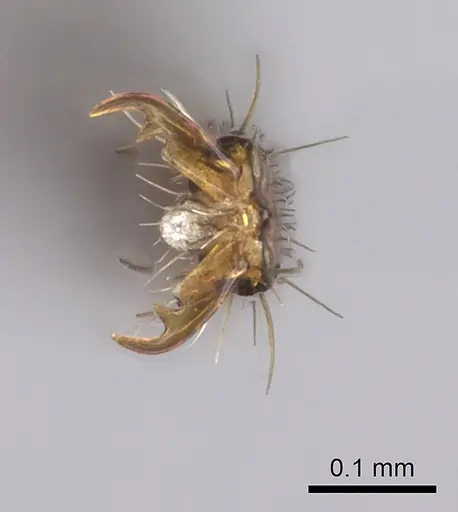
CASENT0102002
View on AntWeb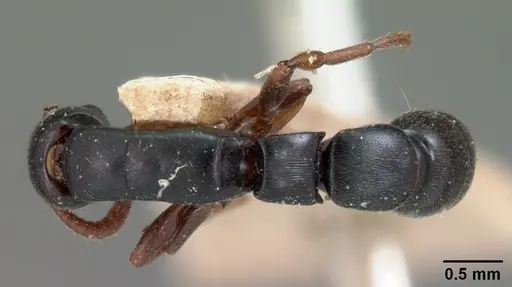
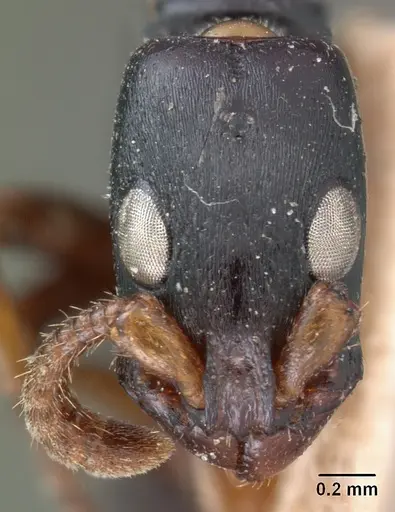
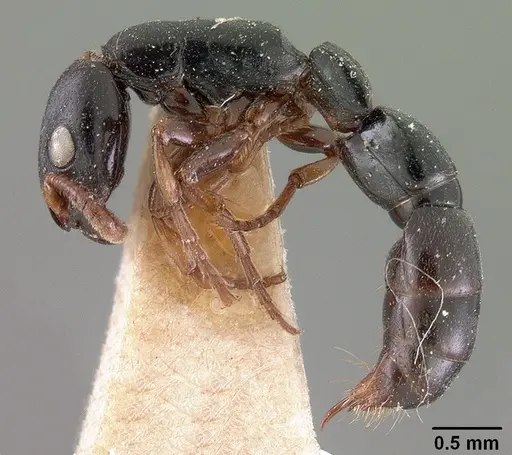
CASENT0102003
View on AntWeb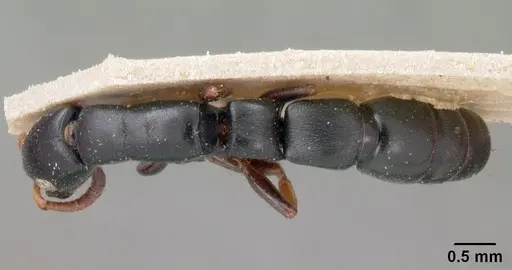
CASENT0173046
View on AntWeb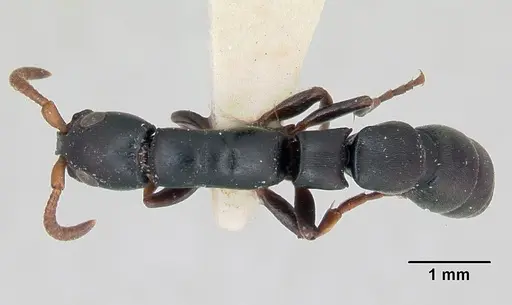
CASENT0178214
View on AntWeb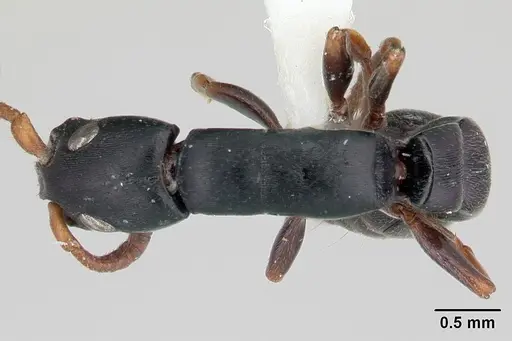
Literature
Loading distribution map...Loading products...