
Simopelta bicolor
- Sci. Name
- Simopelta bicolor
- Tribe
- Ponerini
- Subfamily
- Ponerinae
- Author
- Borgmeier, 1950
- Distribution
- Found in 1 countries
Introduction
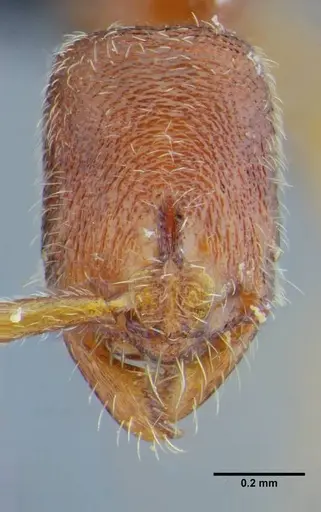
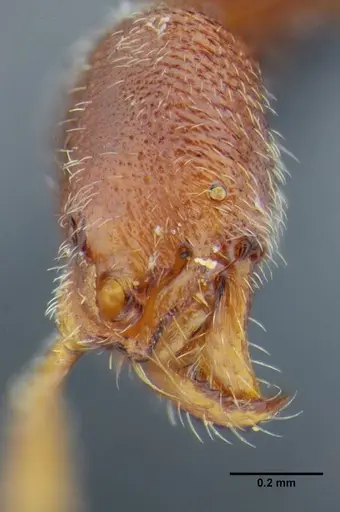
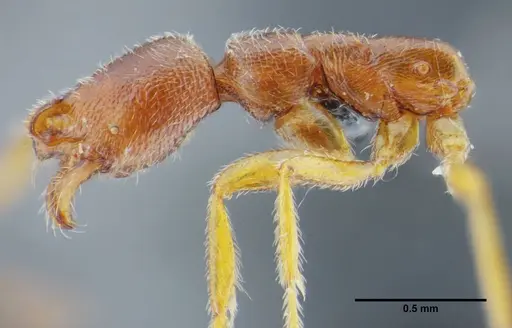
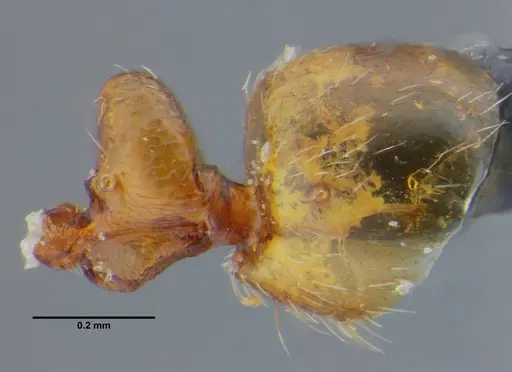
Simopelta bicolor is a small predatory ant species native to Espírito Santo, Brazil. Workers are easily recognized by their bright ferruginous (rusty red) coloration with a contrasting yellow petiole and gaster, along with their unique six-toothed mandibles - the only Simopelta species with six or more teeth, as all others in the genus have only three to five . The mesosoma (middle body section) shows only slight depressions at the body junctions, and the petiole is narrow when viewed from the side . This species is known only from the worker caste, with females and males never documented . Nothing is known about the biology of this species in the wild or in captivity - it has never been kept by antkeepers and no scientific studies exist on its behavior, colony structure, or care requirements .
Quick Summary
- Difficulty: Expert
- Origin & Habitat: Espírito Santo, Brazil, specifically the Santa Teresa region in eastern Brazil [1]. The natural habitat would be tropical forest environments typical of this Brazilian state, though specific nesting preferences are unrecorded [2].
- Colony Type: Unknown, the colony structure (single queen vs multiple queens) has never been studied. No females have ever been collected or described, so nothing is known about how this species forms colonies [1].
- Size & Growth:
- Queen: Unknown, no queens have ever been collected or described [1].
- Worker: Unknown, specific measurements are not provided in available literature [1].
- Colony: Unknown, no colony size data exists for this species [1].
- Growth: Unknown, no development data exists for this species [1].
- Development: Unknown, this species has never been bred in captivity and no development data exists [1]. (No data on any life stage from egg to adult worker exists in scientific literature.)
- Antkeeping:
- Temperature: Unknown, no thermal studies exist. Based on its Brazilian tropical origin, room temperature (20-26°C) is a reasonable starting point, but observe colony behavior for guidance [1].
- Humidity: Unknown, no humidity data exists. The Espírito Santo region is humid tropical, so moderate to high humidity (60-80%) likely suits them, but this is an educated guess rather than confirmed requirement [1].
- Diapause: Unknown, no seasonal data exists. As a tropical species from southeastern Brazil, it may not require hibernation, but this is unconfirmed [1].
- Nesting: Unknown, no natural nesting observations exist. The genus Simopelta typically nests in soil or rotting wood in forest environments. For captivity, a naturalistic setup with moist substrate or a Y-tong/plaster nest would be speculative starting points [1].
- Behavior: Completely unstudied in captivity. Based on genus placement in Ponerinae (a subfamily known for predatory ants with functional stingers), they are likely predatory on small invertebrates and will defend themselves if threatened. Escape risk cannot be assessed as no one has kept this species. Their sting is likely functional given they are Ponerinae, but pain level and effects are completely unknown. This is an entirely experimental species with no established keeping protocols [1].
Species Identification and History
Simopelta bicolor was originally described by Borgmeier in 1950 from workers collected in Santa Teresa, Espírito Santo, Brazil on November 4,1928. The type series consists of 24 syntype workers [3]. The species was originally placed in the genus Simopelta, then moved to Belonopelta by Baroni Urbani in 1975,and finally returned to Simopelta by Bolton in 1995 where it remains today [1]. The most distinctive feature of this species is its six-toothed mandibles, unique among all known Simopelta species which typically have only three to five teeth. Workers are brightly colored with a ferruginous red mesosoma and head, contrasting with a yellow petiole and gaster (abdomen) [1]. This species remains known only from the worker caste, with no queens or males ever collected or described [1].
Why This Species Is Unusual
Simopelta bicolor represents one of the most poorly known ant species in the hobby, literally nothing has been published about its biology in over 70 years since its description. Unlike most ant species kept in captivity, there are no scientific papers on its diet, colony structure, development, behavior, or any aspect of its natural history. This makes it an entirely experimental species for antkeepers. The entire genus Simopelta is poorly studied, with most species known only from original descriptions. The Ponerinae subfamily it belongs to is known for predatory behavior and functional stingers, but even this is inferred rather than confirmed for this specific species [1].
Experimental Keeping Notes
If you attempt to keep Simopelta bicolor, you are essentially conducting the first observations on this species in captivity. Based on its tropical Brazilian origin and genus placement, reasonable starting assumptions include: temperature in the low-to-mid 20s Celsius, moderate to high humidity (60-80%), and a diet of small live prey items typical of Ponerinae ants. However, these are educated guesses only, the actual requirements could be quite different. Document your observations thoroughly if you obtain this species, as any captive data would be scientifically valuable. Use excellent escape prevention regardless, as worker size is unknown but likely small based on genus patterns [1].
Legal and Ethical Considerations
Simopelta bicolor is native to Brazil and has never been documented as established in other countries. If you obtain this species, it should never be released in regions outside its native range (Espírito Santo, Brazil) as it could become invasive or disrupt native ecosystems. The export of Brazilian ant species may also be subject to local wildlife regulations. Ensure any specimens were obtained legally and ethically. Because this species is so poorly known, responsible antkeepers should document and share any successful captive breeding or keeping information with the broader antkeeping community [1][2].
Frequently Asked Questions
Can I keep Simopelta bicolor as a pet ant?
This species has never been kept in captivity, so no established care protocols exist. It would be an entirely experimental endeavor. Only experienced antkeepers with the ability to document and share their observations should attempt this species [1].
What do Simopelta bicolor ants eat?
Unknown, no dietary studies exist. Based on genus placement in Ponerinae, they likely prey on small invertebrates like other Ponerine ants, but this is unconfirmed. If you keep them, start with small live prey like fruit flies or pinhead crickets and observe acceptance [1].
How big do Simopelta bicolor colonies get?
Unknown, no colony size data exists. Most Simopelta species form small to moderate colonies, but S. bicolor could follow different patterns. No one has ever documented a mature colony size [1].
What temperature do Simopelta bicolor ants need?
Unconfirmed. Based on their tropical Brazilian origin, room temperature (20-26°C) is a reasonable starting assumption, but no thermal studies exist. Observe colony activity and adjust based on behavior [1].
Do Simopelta bicolor queens need to hibernate?
Unknown, no seasonal data exists. As a tropical species from southeastern Brazil, they likely do not require hibernation, but this is entirely unconfirmed [1].
How long does it take for Simopelta bicolor eggs to become workers?
Unknown, no development data exists for this species. No one has ever successfully bred them in captivity or documented their development timeline [1].
Are Simopelta bicolor good for beginners?
No. This species has no captive husbandry data whatsoever. It is not recommended for anyone except expert antkeepers willing to document entirely new observations. Even basic requirements are unknown [1].
Can I keep multiple Simopelta bicolor queens together?
Unknown, no colony structure data exists. The number of queens in wild colonies has never been documented. No data exists on whether they are single-queen or multi-queen species [1].
What is the best nest type for Simopelta bicolor?
Unknown, no nesting observations exist. Based on genus patterns, they likely nest in soil or rotting wood. A naturalistic setup with moist substrate or a Y-tong/plaster nest would be speculative starting points [1].
Where does Simopelta bicolor live in the wild?
Only known from Espírito Santo, Brazil, specifically the Santa Teresa region. This is in southeastern Brazil along the Atlantic coast. No other locations have ever been recorded [1][2].
Why is so little known about Simopelta bicolor?
This species is known only from the original 1950 description and has never been collected again since the type series in 1928. No ecological or behavioral studies have ever been published on it. It represents a significant gap in ant biology knowledge [1].
Report an Issue
The current care sheet is based fully on literature. See inconsistencies, or something that's incorrect? Please , it will be resolved after review from an admin. Contributing to the blogs tab also helps providing information, to make us be able to further improve the caresheets. Thank you for your support!
References

This caresheet is licensed under CC BY-SA 4.0 .
Community Blogs
UFV-LABECOL-000373
View on AntWeb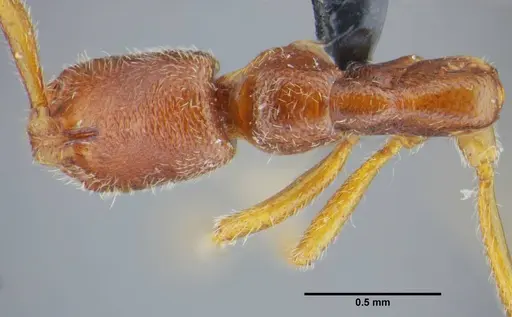
Literature
Loading distribution map...Loading products...