
Sericomyrmex scrobifer
- Sci. Name
- Sericomyrmex scrobifer
- Tribe
- Attini
- Subfamily
- Myrmicinae
- Author
- Forel, 1911
- Distribution
- Found in 2 countries
Introduction
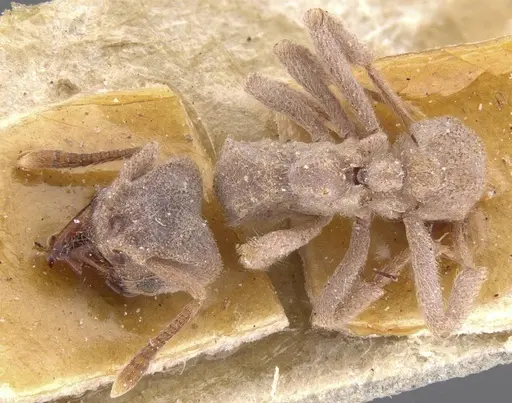
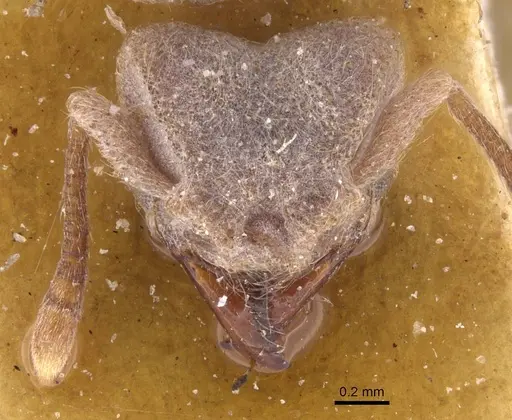
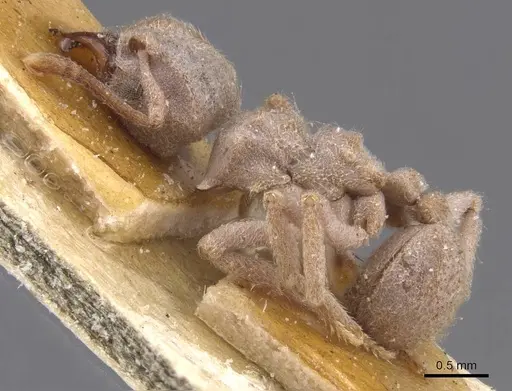
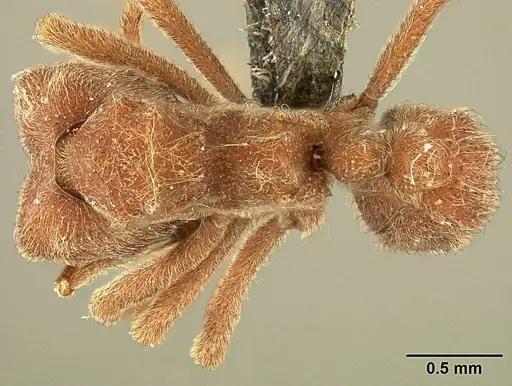
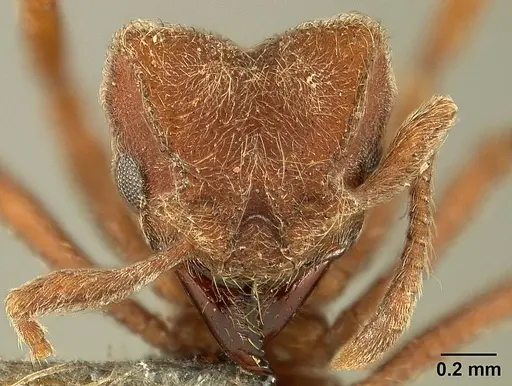
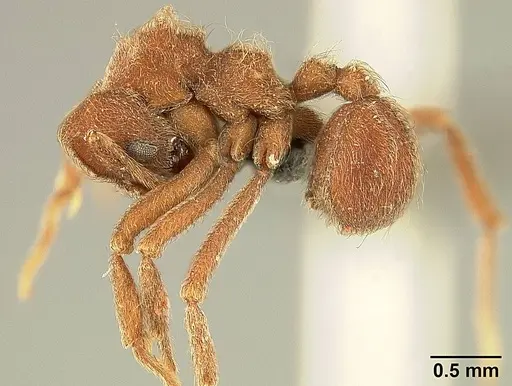
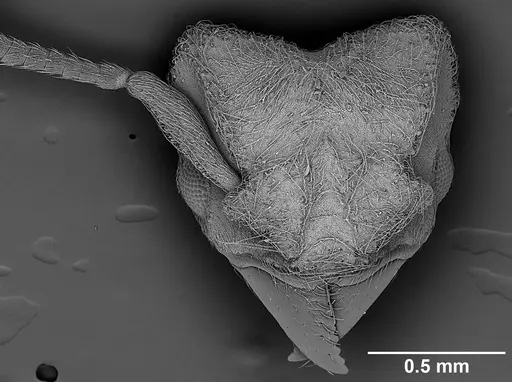
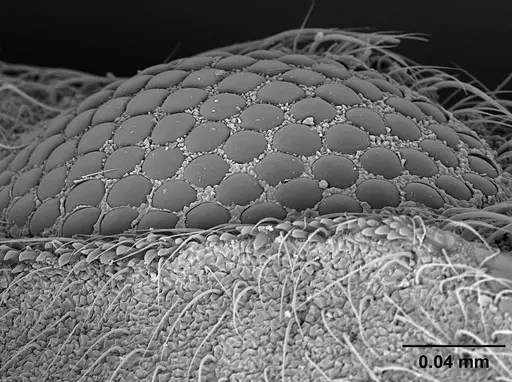
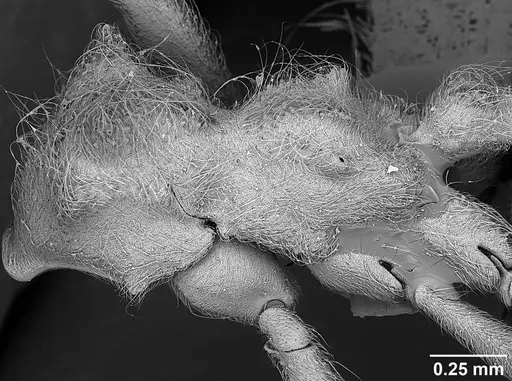
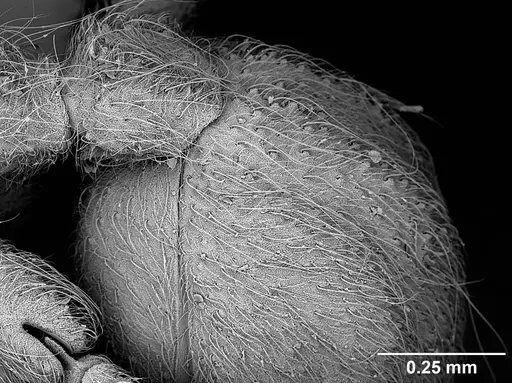
Sericomyrmex scrobifer is a medium-sized fungus-farming ant from the Brazilian and Paraguayan cerrado (savanna) . Workers are distinguished by their large, protruding eyes, wide trapeziform frontal lobes, and four strong carinae on the first gastral tergite . The combination of these features separates it from all other Sericomyrmex species, and its closest relative is Sericomyrmex maravalhas . This ant is a dedicated fungus farmer, it belongs to the Attini tribe and uses 'lower agriculture' to cultivate a specific fungus for food . Unlike most ants, it cannot survive on sugar and insects alone. Its entire colony depends on a healthy fungus garden, making this species difficult to keep in captivity. Workers forage up to 7.2 meters from the nest to collect plant material for the fungus . Nests are underground, reaching 79 cm deep, with 1-7 chambers .
Quick Summary
- Difficulty: Hard
- Origin & Habitat: Brazil and Paraguay, primarily in cerrado vegetation (campo cerrado, cerrado sensu stricto, cerradão) at elevations of 240-910 m (mean 666 m) [1]. A single record also exists from Colombia (Amazon region) [4]. The species is a cerrado specialist, preferring forested areas over open grassland [1].
- Colony Type: Colonies typically contain 1-2 queens, making them facultatively polygyne (able to have one or more queens) [1]. This is unusual among Attini, which are often strictly monogyne.
- Size & Growth:
- Queen: Not documented
- Worker: Body length not reported, only head width (HWe 0.83-1.12 mm) and mesosoma length (WL 1.12-1.40 mm) recorded in literature [2]
- Colony: Unknown, no direct colony size estimates available, nest-mound volume correlates with colony size in related species [1]
- Growth: Unknown, not studied
- Development: Unknown, not documented for this species (Based on related fungus-farming ants, development likely takes several months under warm, stable conditions, but this is unconfirmed.)
- Antkeeping:
- Temperature: Based on cerrado habitat, aim for 24-28°C (warm and stable) [1]. The fungus garden is sensitive to temperature swings.
- Humidity: Keep the substrate consistently moist but not waterlogged, especially the fungus garden. Provide good drainage and a humidity gradient (e.g., moisten one side of the nest). In their natural habitat, humidity varies between wet and dry seasons [1].
- Diapause: Unknown, cerrado winters are mild, so they may only slow activity rather than undergo true diapause. No studies confirm this.
- Nesting: Deep soil nests with chambers up to 79 cm deep and 1-7 chambers [1]. In captivity, use a deep soil-based or plaster formicarium that allows chamber construction. Provide at least 30 cm of substrate depth. A large outworld is needed because foragers travel far [1].
- Behavior: Fungus-farming ants that are not particularly aggressive but will defend their garden. Foragers travel up to 7.2 m from the nest to collect plant material [1]. Workers are small (~4-5 mm inferred), so use fine mesh (0.5 mm or smaller) to prevent escape. They are ground-nesting and prefer to forage in the soil layer.
- Common Issues: Fungus garden collapse is the primary risk, these ants depend entirely on their fungal symbiont, which requires consistent moisture, warmth, and ventilation to survive, Improper nutrition, they cannot survive on typical ant foods (sugar, insects) alone, they need a living fungus culture that must be maintained, Overwatering or drying out, both kill the fungus, which kills the colony, Limited availability of proper substrate and starter fungus culture for this species, most keepers cannot obtain it, Small, slow-growing colonies, losses have a bigger impact because colonies cannot recover quickly
Fungus Farming, The Key to Their Care
Like all Attini, Sericomyrmex scrobifer cultivates a fungus as its primary food source [3]. The ants collect plant material (leaf fragments, flower petals, etc.) and feed it to the fungus. In return, the fungus produces gongylidia, specialized nutrient-filled structures that the ants harvest and eat [5]. This symbiosis is so tight that the ants cannot survive without the fungus.
Keeping this species means keeping the fungus alive. The fungus requires steady warmth (24-28°C), consistently moist (but not waterlogged) conditions, and good ventilation to prevent mold. Any disturbance to the fungus garden, temperature shock, drying out, or flooding, can quickly kill the colony. This is the central challenge of keeping Sericomyrmex scrobifer and is why it is not a beginner species.
Nest Preferences and Housing
In the wild, nests are underground with chambers reaching 79 cm deep [1]. Historical records show 1-7 chambers per colony [1]. The ants prefer forested cerrado (cerradão) over open areas [1].
For captive housing, you need a deep, soil-based setup that allows the ants to dig and build chambers. A naturalistic formicarium with compacted soil (at least 30 cm deep) works well. You can also use a large plaster nest with deep cavities. Avoid shallow setups, these ants need vertical space to replicate their natural nest architecture and to accommodate the fungus garden alongside brood chambers.
The outworld should be spacious (at least 30×20 cm) because foragers travel up to 7.2 m from the nest in the wild [1]. Provide leaf litter or other substrate that mimics the cerrado forest floor.
Temperature and Environmental Conditions
S. scrobifer is a cerrado specialist, so it is adapted to warm conditions with a distinct wet-dry season cycle [1]. Aim for 24-28°C year-round. Avoid sudden temperature changes.
Humidity is critical, not directly for the ants, but for their fungus. The fungus needs constant moisture. Keep the substrate consistently damp but not wet. Water when the top layer begins to dry, but never let it dry out completely. Provide good ventilation to prevent mold while keeping humidity high. A gradient (wetter in one area, drier in another) can help the colony choose the optimal spot for the fungus.
Feeding and Nutrition
This is the most critical aspect of keeping S. scrobifer. Unlike typical ants, they cannot eat standard ant foods (sugar water, honeydew, insects). They depend entirely on their cultivated fungus [3][5]. The ants gather plant material (leaves, flower petals, dead plant matter) and feed it to the fungus. In turn, they harvest gongylidia, protein- and sugar-rich structures produced by the fungus.
To keep a colony, you must maintain a viable fungus culture. This requires a continuous supply of fresh plant material. Suitable options include young leaves of bramble, rose, or oak, as well as non-toxic flower petals. Avoid leaves with high tannin or pesticide residue. Since specific dietary needs for Sericomyrmex fungus are not well-studied, experimentation with different plant matter may be needed. The fungus is sensitive to improper food, wilting leaves or unsuitable species can cause it to die.
Behavior and Colony Dynamics
Wild colonies have 1-2 queens [1]. This suggests the species is facultatively polygyne, established colonies may have one or multiple queens. It is unclear whether new queens found together (pleometrosis) or join existing colonies later.
Foraging is an individual activity. Workers travel up to 7.2 m from the nest to collect plant material for the fungus [1]. They are not aggressive but will sting if the nest is disturbed. As a myrmicine ant, S. scrobifer has a functional sting, though it is not medically significant.
The species is rarely collected, likely due to low population densities [6]. This, combined with its specialized lifestyle, makes colonies hard to obtain and establish in captivity.
Distribution and Habitat
S. scrobifer is known from Brazil and Paraguay [1][2]. A single record also exists from the Colombian Amazon, possibly extending the range [4]. It is a cerrado specialist, found almost exclusively in Brazilian savanna habitats (campo cerrado, cerrado sensu stricto, cerradão) [1]. Within cerrado, it prefers forested areas over open grasslands [1].
Elevation records range from 240 to 910 m above sea level (mean 666 m) [1]. The ancestral range of the scrobifer clade (S. scrobifer and its sister S. maravalhas) is estimated as the Chaco-Brazilian region with 88.5% support [6]. This indicates a long evolutionary history in the savannas of central South America.
Frequently Asked Questions
Can I keep Sericomyrmex scrobifer like other ants?
No. Unlike most ants that eat sugar and insects, S. scrobifer is a fungus-farming ant that requires a living fungus garden to survive. They cannot be sustained on typical ant foods alone [3].
What do Sericomyrmex scrobifer eat?
They eat the gongylidia produced by their cultivated fungus. The ants collect plant material to feed the fungus, and in return harvest these nutrient-rich structures [5]. They cannot eat standard ant foods.
How long does it take for Sericomyrmex scrobifer to develop from egg to worker?
The development timeline has not been documented for this species. Based on related fungus-farming ants, it likely takes several months under warm, stable conditions, but this is unconfirmed.
Are Sericomyrmex scrobifer good for beginners?
No. This is an expert-level species. Their complete dependence on a living fungus garden, the need for specific humidity and temperature conditions, and the difficulty of obtaining starter fungus cultures make them unsuitable for anyone without significant ant-keeping experience.
What temperature do Sericomyrmex scrobifer need?
Based on their cerrado habitat, aim for 24-28°C [1]. The fungus garden requires warm, stable conditions. Avoid temperatures above 30°C or below 20°C.
How big do Sericomyrmex scrobifer colonies get?
Colony size has not been directly documented for this species. Based on the 1-2 queen structure and nest chamber counts (1-7 chambers), colonies are likely small to moderate in size, probably a few hundred workers at most.
Where is Sericomyrmex scrobifer found?
Brazil and Paraguay, primarily in the cerrado (savanna) region [1][2]. There is also a single record from the Colombian Amazon [4]. They prefer forested cerrado (cerradão) habitats at 240-910 m elevation.
Do Sericomyrmex scrobifer need hibernation?
Unknown. The cerrado has mild winters compared to temperate regions, so they may only have reduced activity rather than true hibernation. No diapause studies exist for this species.
Can I keep multiple Sericomyrmex scrobifer queens together?
Wild colonies have been documented with 1-2 queens [1], suggesting that multiple queens can co-exist in an established colony. However, combining unrelated foundress queens has not been studied and is not recommended. Stick to single-queen or naturally polygyne colonies.
What is the best nest type for Sericomyrmex scrobifer?
A deep soil-based or plaster formicarium that mimics their subterranean nests, at least 30 cm deep to allow multiple chambers. In the wild, nests extend 79 cm deep with 1-7 chambers [1]. Shallow nests are inadequate.
Why is my Sericomyrmex scrobifer colony dying?
The most common cause is fungus garden failure. The ants cannot survive without their fungal symbiont. Typically, fungus dies from improper humidity (too dry or too wet), temperature swings, or contaminated plant material. Check moisture levels and temperature of the nest immediately.
Report an Issue
The current care sheet is based fully on literature. See inconsistencies, or something that's incorrect? Please , it will be resolved after review from an admin. Contributing to the blogs tab also helps providing information, to make us be able to further improve the caresheets. Thank you for your support!
References

This caresheet is licensed under CC BY-SA 4.0 .
Community Blogs
Literature
Loading distribution map...Loading products...