
Sericomyrmex saussurei
- Sci. Name
- Sericomyrmex saussurei
- Tribe
- Attini
- Subfamily
- Myrmicinae
- Author
- Emery, 1894
- Distribution
- Found in 8 countries
Introduction
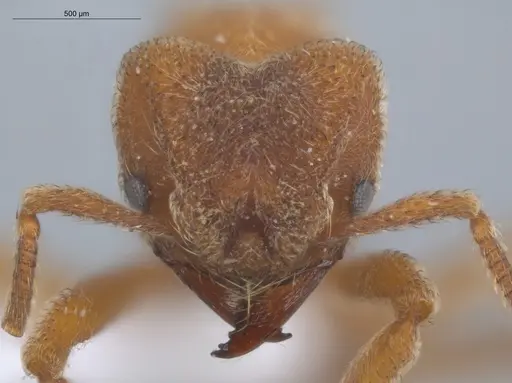
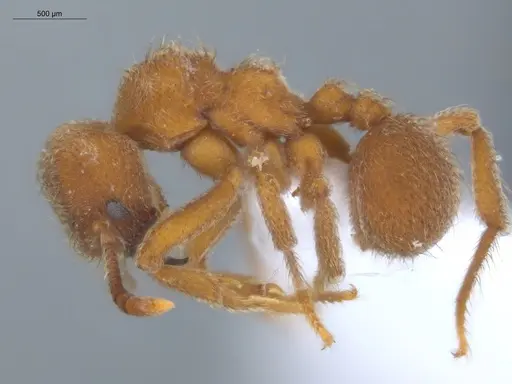
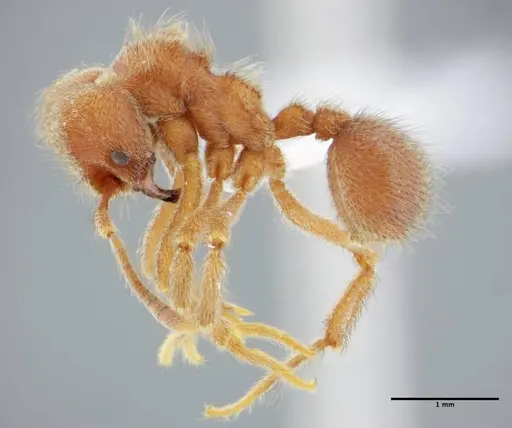
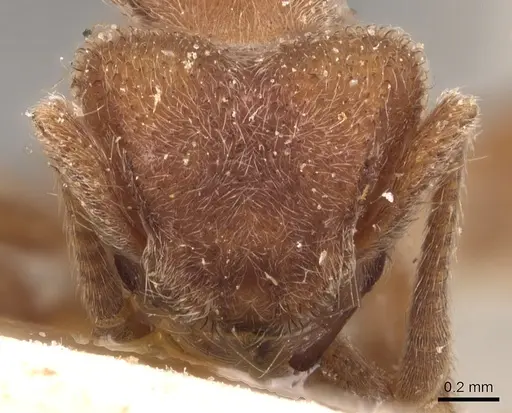
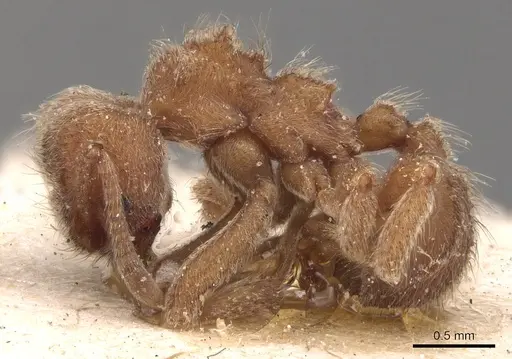
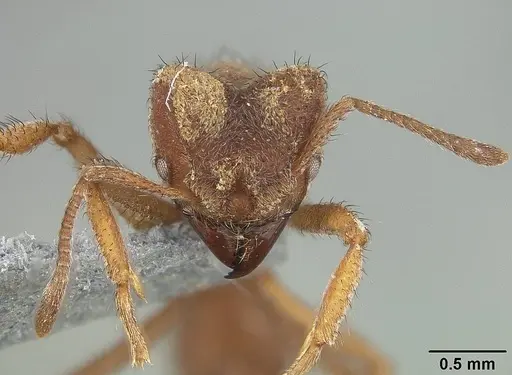
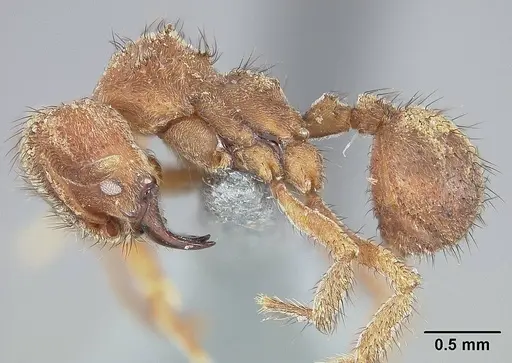
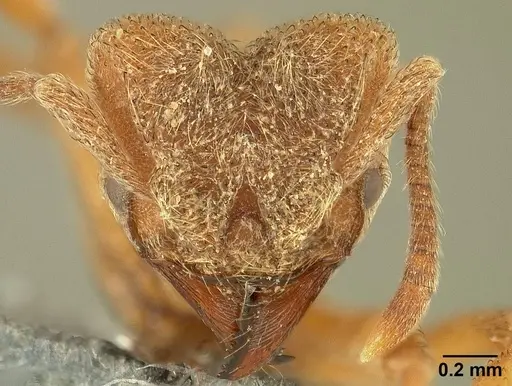
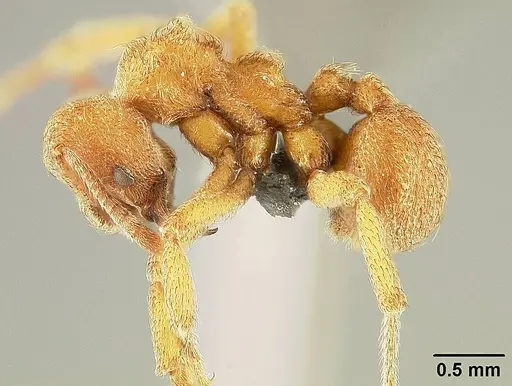
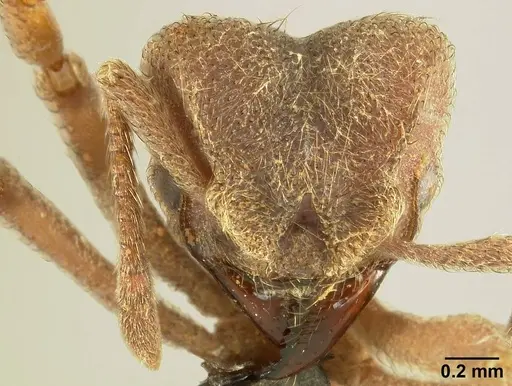
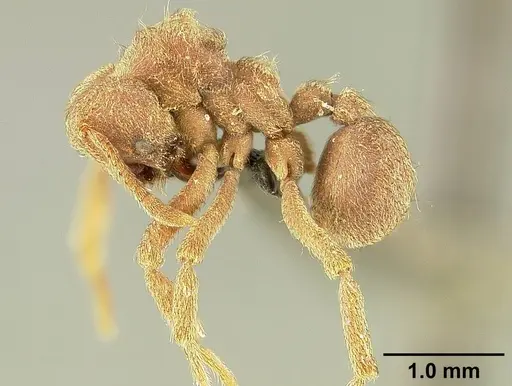
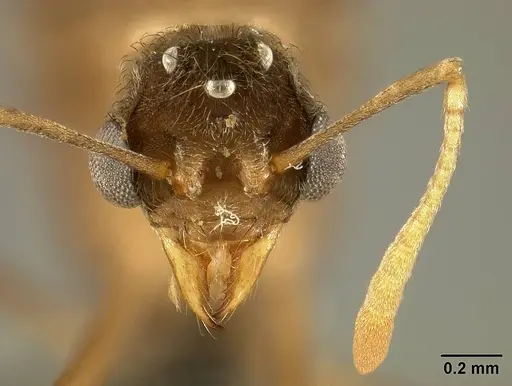
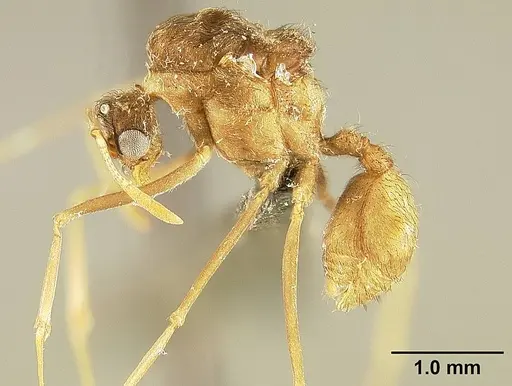
Sericomyrmex saussurei is a medium-sized fungus-farming ant native to northern South America, found across Bolivia, Brazil, Ecuador, French Guiana, Guyana, Peru, Suriname, Trinidad and Tobago, and Venezuela . Workers have a mesosomal length of 1.10-1.64 mm (total body length not directly published) and can be recognized by their distinctive white coating covering the eyes - a trait that is consistent across all known populations . Queens are larger (mesosomal length 2.00-2.16 mm), while males are the smallest (mesosomal length 1.60-1.72 mm) . This species is a fungus farmer in the tribe Attini, meaning it cultivates a fungal garden for food rather than foraging for insects or honeydew. Colonies build elaborate underground nests with soil mound entrances, typically with 5 chambers reaching 31-35 cm deep - the deepest recorded for any Sericomyrmex species . They are primarily nocturnal, with peak foraging activity beginning after sunset and continuing until sunrise . Unlike many ants, they possess a functional stinger but rarely use it.
Quick Summary
- Difficulty: Medium
- Origin & Habitat: Northern South America, found in Bolivia, Brazil, Ecuador, French Guiana, Guyana, Peru, Suriname, Trinidad and Tobago, and Venezuela. Inhabits primary and secondary rainforest, Atlantic forest, gallery forest, cerrado, and cacao plantations at elevations averaging 282 m (range 39-789 m) [2][1].
- Colony Type: Single-queen colonies (monogyne). Nests typically contain one queen with around 1249 workers, and total colony size around 1565 individuals [2].
- Size & Growth:
- Queen: Body size not directly documented. Mesosomal length 2.00-2.16 mm [1]
- Worker: Body size not directly documented. Mesosomal length 1.10-1.64 mm [1]
- Colony: Up to ~1565 individuals including workers, brood, and queen [2]
- Growth: Moderate, estimated based on related fungus-farming ants
- Development: Estimated 6-10 weeks based on typical Attini development patterns (Development times for this specific species have not been documented. Related fungus-farming ants typically take 6-10 weeks from egg to worker at optimal temperatures.)
- Antkeeping:
- Temperature: Keep at 24-28 °C. They are tropical ants from warm, humid forests and prefer stable temperatures in this range [3]. Avoid temperatures below 20 °C as activity is negatively affected by cold [3].
- Humidity: High humidity required, think damp rainforest floor. Keep the nest substrate consistently moist but not waterlogged. These ants live in forest environments with consistently high humidity [2].
- Diapause: No, this is a tropical species that does not hibernate. Maintain warm temperatures year-round [1].
- Nesting: Y-tong (AAC) nests, plaster nests, or soil nests work well. They naturally excavate soil chambers 31-35 cm deep, so they need vertical space for tunneling. Provide a moisture reservoir to maintain humidity. Avoid dry, airy setups.
- Behavior: Generally peaceful and non-aggressive. Workers are relatively small and will defend their colony if threatened, using a functional stinger (rarely used against humans). They are nocturnal foragers, so most activity happens in the evening and night. They create foraging trails that can extend several meters underground and above ground [3]. Escape prevention is important, workers are small enough to slip through standard test tube setups if not properly sealed.
- Common Issues: humidity control is critical, dry conditions will kill the fungal garden they depend on for food, escape prevention matters because small workers can slip through gaps in lids and connections, tropical temperature requirements mean they cannot tolerate cool rooms or air conditioning, colonies are slow-growing compared to many common ant species, requiring patience, fungal garden health is essential, if the fungus dies, the colony will starve
Housing and Nest Setup
Sericomyrmex saussurei needs a setup that accommodates its fungus-farming lifestyle. Y-tong (AAC) nests, plaster nests, or soil nests work well because they let you maintain consistent humidity and provide dark chambers for the fungus garden. In the wild, these ants build nests 31-35 cm deep with 5 chambers averaging 1436 cm³ each [2], so they need vertical space for tunneling. A formicarium with a connected outworld allows for proper foraging trails, these ants can travel up to 3.6 meters from the nest in search of substrate [3]. The outworld should be escape‑proof with a barrier like fluon, as workers are small enough to slip through tiny gaps. Provide a water test tube as a humidity source connected to the nest area.
Feeding and the Fungus Garden
As fungus‑farming ants, Sericomyrmex saussurei cultivates a fungal garden for its primary food source. In captivity, you must maintain a healthy fungus garden, this is the most critical aspect of their care. The ants collect various organic substrates to feed their fungus, including arthropod feces (their primary substrate, accounting for 80% of collected material), vegetable matter, fallen leaves, and plant material [3]. In captivity, you can offer leaf fragments, small pieces of vegetables, or pre‑fermented substrate mixtures. Some keepers use specialized fungus ant food mixes. Avoid feeding them standard ant foods like sugar water or insects alone, they need organic plant material to sustain their fungal crop. Fresh leaf fragments from leguminous plants are particularly appreciated if available [3]. Keep the fungus garden dark and undisturbed.
Temperature and Humidity
These are tropical ants requiring warm, humid conditions. Maintain temperatures between 24-28 °C, research shows their activity is negatively affected by cold and positively by humidity [3]. A heating cable on one side of the nest can create a gentle gradient, but avoid direct heat that could dry out the fungus garden. Humidity should be high (70-85%) with consistently moist substrate. The nest material should never dry out completely. Use a moisture reservoir and check regularly that the substrate feels damp. Poor humidity will cause the fungus garden to die, which will starve the colony. Avoid placing the setup near air conditioning vents or in cool rooms.
Foraging and Activity Patterns
Sericomyrmex saussurei is primarily nocturnal, with peak foraging activity beginning after sunset and continuing until sunrise [3]. Workers create defined foraging trails that can extend several meters, with underground portions up to 2.5 meters long [3]. They maintain these trails by removing soil pellet fragments. In captivity, you'll notice most activity in the evening hours. They are not aggressive and will typically flee rather than attack. However, they are diligent foragers and will collect substrate for their fungus garden throughout the night. Expect slower activity compared to predatory ants, they are focused on substrate collection rather than hunting.
Colony Development
Colonies grow moderately compared to many common ant species. A mature colony in the wild contains approximately 1249 workers plus the queen, with total colony size around 1565 individuals [2]. Founding behavior is unconfirmed for this species, so it is unclear whether the queen founds claustrally or semi‑claustraly. First workers (nanitics) will be smaller than mature workers. Growth rate depends on fungus garden health, a thriving fungus leads to steady worker production. Expect 6-10 months to reach 50 workers from a founding queen, with full maturity taking several years. Patience is essential with this species.
Frequently Asked Questions
Can I keep Sericomyrmex saussurei in a test tube?
Test tubes are not ideal for this species long-term. They require a fungus garden that needs space and humidity control that test tubes cannot provide. Use a Y-tong or plaster formicarium with a moisture chamber instead. Test tubes work only for temporary housing during founding.
How long until first workers in Sericomyrmex saussurei?
Estimated 6-10 weeks from egg to first worker based on typical Attini development patterns, though this has not been directly documented for this species. The queen raises the first workers while cultivating the initial fungus garden.
What do Sericomyrmex saussurei eat?
They are fungus farmers, they cultivate a fungal garden for food. In captivity, provide leaf fragments, vegetable matter, or specialized fungus ant substrate. They do NOT eat typical ant foods like sugar water or insects alone. The fungus garden is their primary food source.
Are Sericomyrmex saussurei good for beginners?
No, they are not recommended for beginners. Their care is more complex than typical ants because they require a healthy fungus garden to survive. They need specific humidity levels, tropical temperatures, and appropriate substrate. They are better suited for antkeepers with some experience keeping fungus-farming species.
Do Sericomyrmex saussurei need hibernation?
No, they do not hibernate. This is a tropical species from northern South America that requires warm temperatures year-round. Maintain temperatures between 24-28 °C consistently. Cold temperatures will reduce activity and can harm the colony.
How big do Sericomyrmex saussurei colonies get?
Wild colonies reach approximately 1249 workers with a total of around 1565 individuals including the queen [2]. In captivity, colonies of similar size are achievable with proper care over several years.
Why is my Sericomyrmex saussurei colony dying?
The most likely cause is fungus garden death, this is fatal for the colony. Check humidity (too dry kills the fungus), temperature (too cold reduces activity and health), and substrate quality. Also verify they have appropriate organic material to maintain their fungal crop. Poor nutrition from lacking substrate will cause the fungus to decline.
Can I keep multiple Sericomyrmex saussurei queens together?
No, this species is monogyne, colonies have a single queen [2]. Combining unrelated queens is not recommended and would likely result in fighting. Only introduce a queen to an established colony if you are attempting pleometrosis (multiple queen founding), which has not been documented for this species.
When should I move Sericomyrmex saussurei to a formicarium?
Move them when the colony reaches around 50-100 workers and the test tube or founding setup becomes cramped. Ensure the new setup has proper humidity control and space for the fungus garden to expand. They need vertical space for tunneling as they would in their natural deep nests.
Report an Issue
The current care sheet is based fully on literature. See inconsistencies, or something that's incorrect? Please , it will be resolved after review from an admin. Contributing to the blogs tab also helps providing information, to make us be able to further improve the caresheets. Thank you for your support!
References

This caresheet is licensed under CC BY-SA 4.0 .
Community Blogs
CASENT0006163
View on AntWeb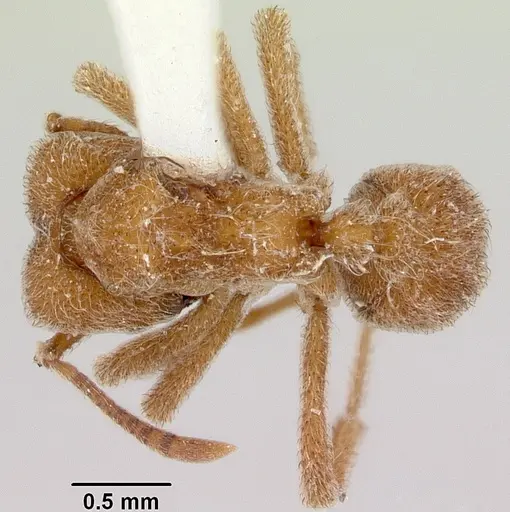
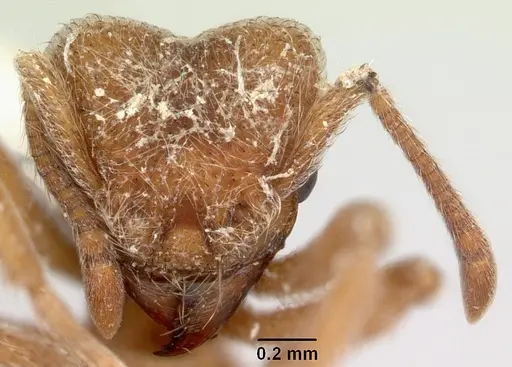
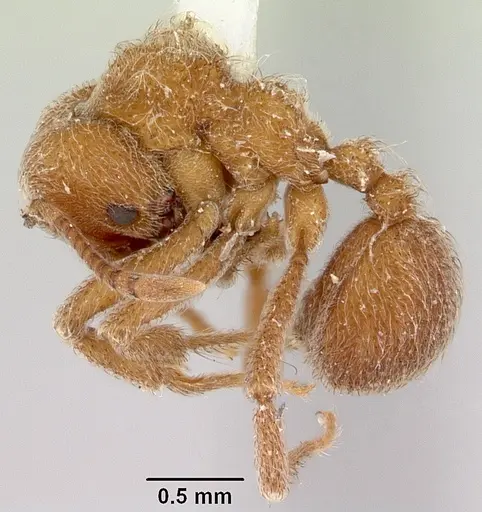
ECOFOG-KR20-0030-11
View on AntWeb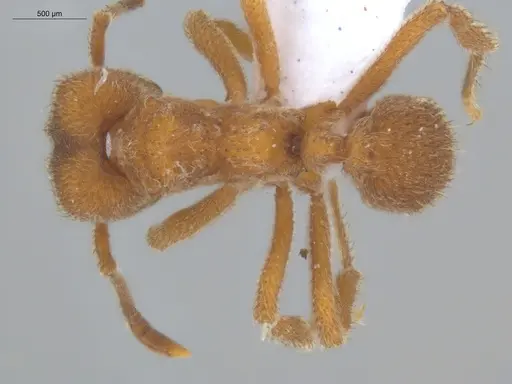
UFV-LABECOL-000272
View on AntWeb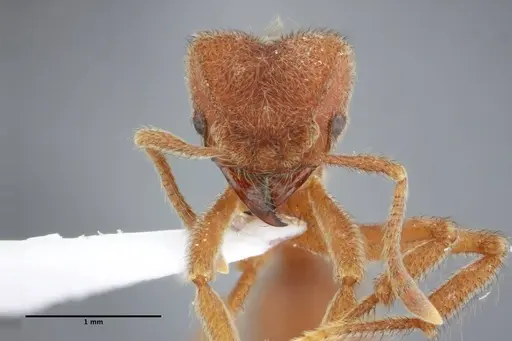
USNMENT00445513
View on AntWeb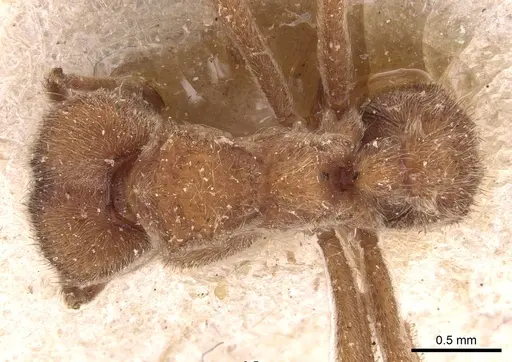
USNMENT01124297
View on AntWeb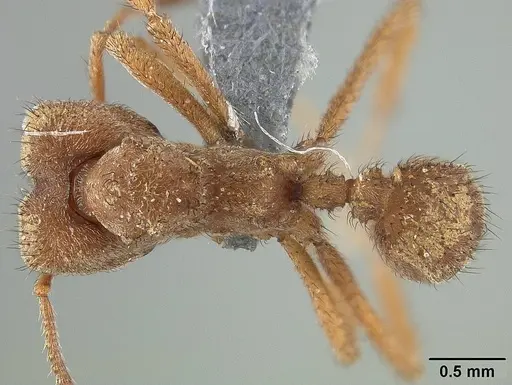
USNMENT01125217
View on AntWeb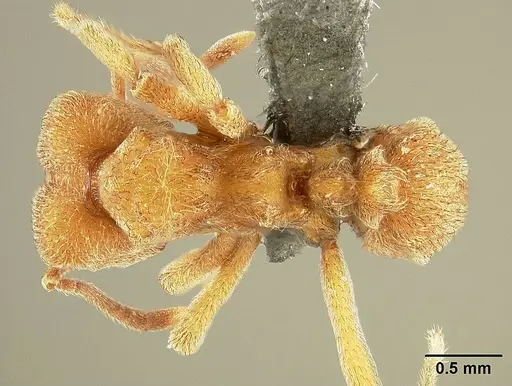
USNMENT01125221
View on AntWeb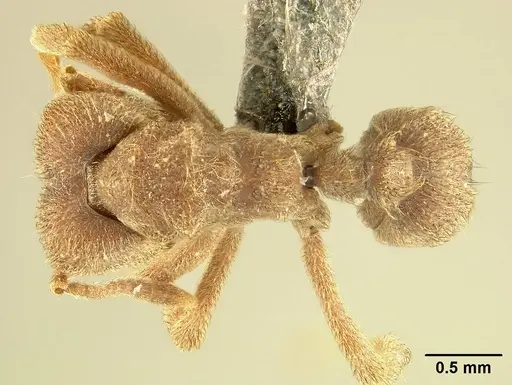
USNMENT01125514
View on AntWeb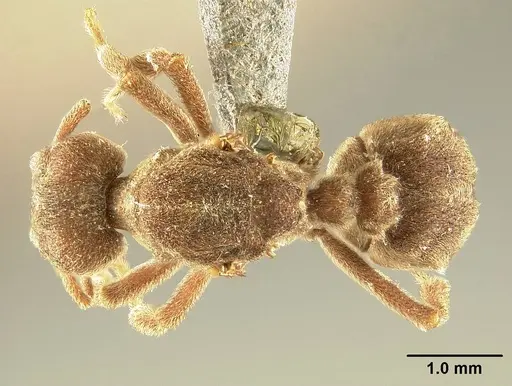
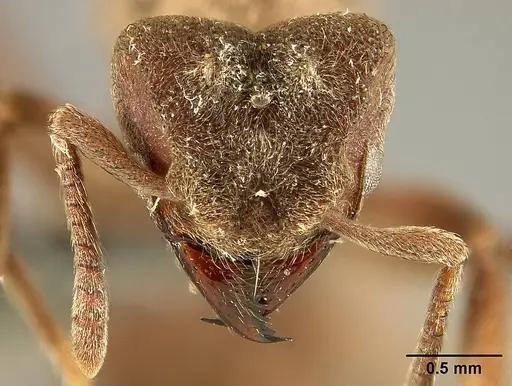
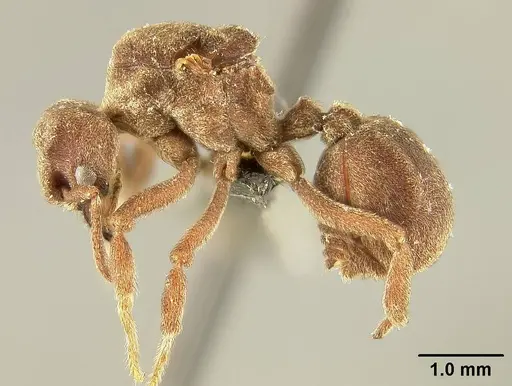
USNMENT01125515
View on AntWeb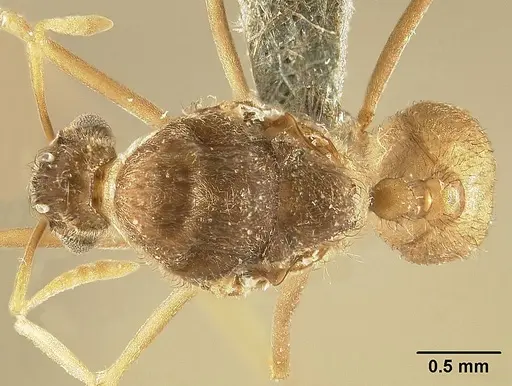
USNMENT01126236
View on AntWeb
USNMENT01126237
View on AntWeb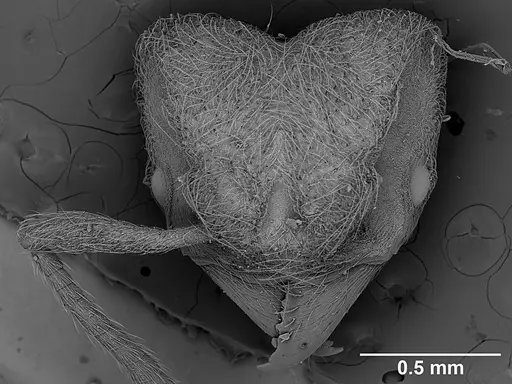
Literature
Loading distribution map...Loading products...