
Royidris peregrina
- Sci. Name
- Royidris peregrina
- Tribe
- Crematogastrini
- Subfamily
- Myrmicinae
- Author
- Bolton & Fisher, 2014
- Distribution
- Found in 1 countries
Introduction
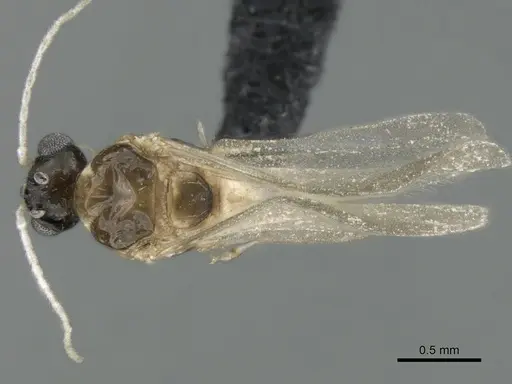
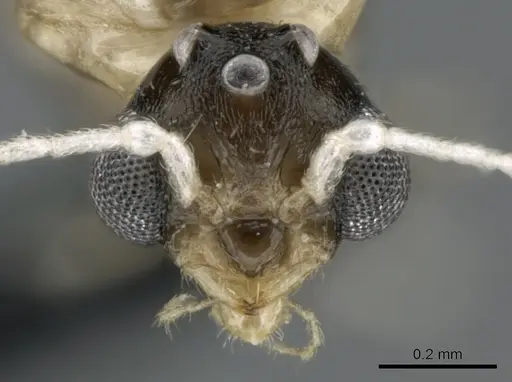
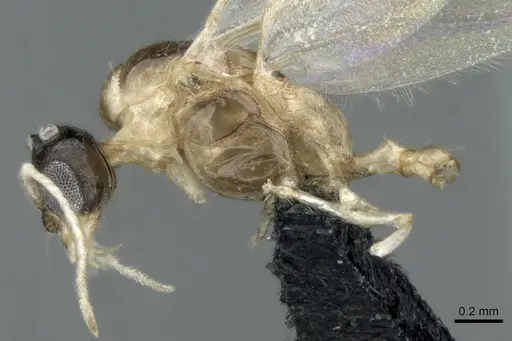
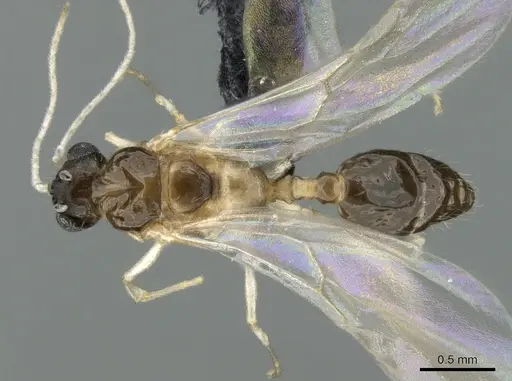
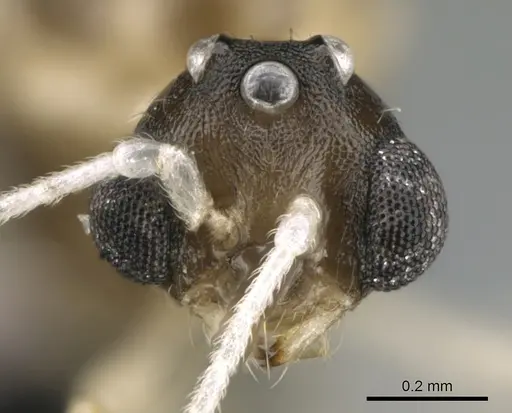
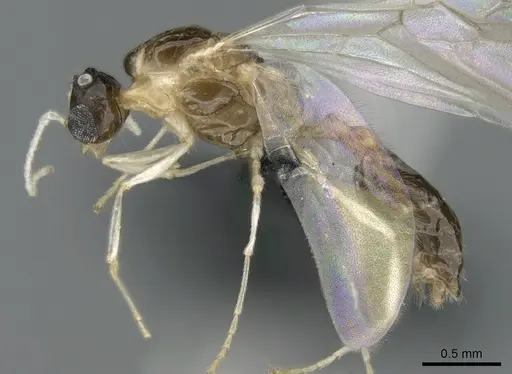
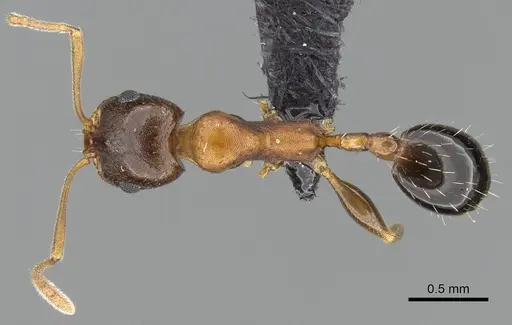
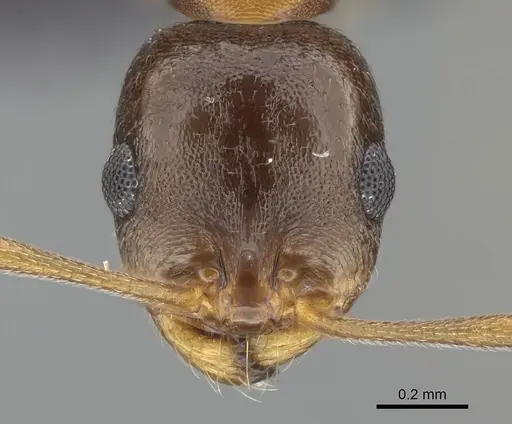
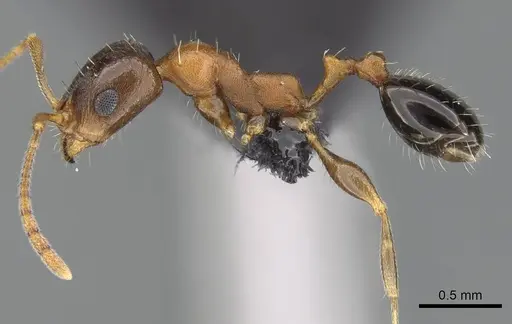
Royidris peregrina is a tiny Myrmicine ant endemic to Madagascar, with workers 2.6-3.3mm and queens 5.5mm . Workers have a 4-segmented antennal club, relatively long scapes that extend past the back of the head, and a narrow postpetiole. Their color varies - the mesosoma ranges from yellowish brown to orange-brown to medium brown, the head is usually darker, and the gaster is always much darker, appearing very dark brown to black . The first gastral tergite is glassy smooth, lacking the fine surface texture found in related species . This species was discovered running on barren rocks in the Makay Mountains at 500m elevation, but also occurs in savannah shrubland and burned savannah . As a recently described species (2014), almost nothing is known about its captive care. The genus Royidris contains several poorly studied Madagascar endemics.
Quick Summary
- Difficulty: Expert
- Origin & Habitat: Endemic to Madagascar, found in the Makay Mountains at 500m elevation on barren rocks with sparse vegetation, also recorded from savannah shrubland and burned savannah [1][2]
- Colony Type: Unknown, colony structure has not been documented in any scientific literature.
- Size & Growth:
- Queen: 5.5mm [1], from limited measurements (TL).
- Worker: 2.6-3.3mm [1]
- Colony: Unknown, no colony size data exists.
- Growth: Unknown
- Development: Unknown, no development data exists. (Related Myrmicinae in Madagascar typically take 4-8 weeks at tropical temperatures, but this is an estimate with low confidence.)
- Antkeeping:
- Temperature: Likely 22-28°C based on Madagascar's tropical climate, no direct data exists. Start in mid-range and observe colony activity [1].
- Humidity: Adapted to drier rock habitats, aim for moderate humidity (50-70%) with some dry areas. Avoid overly damp conditions [1].
- Diapause: Unknown, Madagascar has mild winters, true diapause may not be needed, but reduced activity in cooler months is possible.
- Nesting: Natural habitat suggests rock-dwelling preferences. Likely nests in small crevices or under stones. Use a small test tube setup or Y-tong nest with narrow chambers. Provide both dry and slightly moist areas.
- Behavior: No specific behavioral studies exist. As a Myrmicine ant (tribe Crematogastrini), it has a modified flattened stinger used to smear venom, not pierce, negligible to humans. Given its rock-surface foraging lifestyle, it is probably relatively docile. Escape prevention is critical due to its tiny size, they can squeeze through standard barriers. Monitor for stress responses.
- Common Issues: very small size (2.6-3.3mm workers) means escape prevention must be excellent, use fine mesh barriers [1]., no established captive husbandry guidelines exist, experimental care required., colony structure unknown, unclear whether single or multiple queens can be kept., development timeline unknown, hard to assess if colony is progressing normally., limited availability, rarely collected or available in the antkeeping trade.
Housing and Nest Setup
This species finds its home on barren rocks in Madagascar, so they likely prefer drier conditions than typical forest ants [1]. A small test tube with a water reservoir and cotton barrier works well for founding, it creates a moisture gradient. For established colonies, use a small Y-tong (AAC) nest with narrow chambers scaled to the tiny 2.6-3.3mm workers [1]. The nest should allow some dry areas while maintaining moderate humidity. Avoid overly wet conditions, these ants come from relatively arid rock habitats [1]. Add a small outworld for foraging. Because of their tiny size, use extra-fine mesh on all openings, standard test tube barriers may not be enough.
Feeding and Diet
No dietary studies exist for Royidris peregrina [1]. Based on its rock-dwelling foraging and related Myrmicinae, it likely scavenges on small insects and may tend aphids for honeydew. In captivity, offer tiny protein sources like fruit flies, pinhead crickets, or small mealworms. Sugar water or honey can be given occasionally. Prey should be sized to the workers (2.6-3.3mm) [1]. Feed small amounts and remove uneaten food to prevent mold. Their small size means even tiny prey is a substantial meal.
Temperature and Seasonal Care
No temperature preference data exists. Since this ant is endemic to Madagascar's tropical climate, aim for 22-28°C [1]. The Makay Mountains location at 500m elevation suggests they tolerate some variation. Start around 24-26°C and watch colony behavior: clustering indicates they want warmth, scattered activity means they prefer cooler. Madagascar's winters are mild, so true diapause may not be needed. You might see reduced activity in cooler months, this is normal, cut back feeding during that time. Avoid temperatures below 18°C and sudden fluctuations.
Colony Establishment
Since Royidris peregrina was only described in 2014,no captive breeding protocols exist [1]. If you get a founding queen, treat her as claustral (she seals herself in and lives on stored fat), this is typical for Myrmicinae but unconfirmed for this species [1]. Provide a quiet, dark spot and avoid disturbing her. Expect 4-8 weeks for first workers based on related species (a rough estimate). Once workers appear, introduce tiny protein foods. Colony growth will likely be slow given their small worker size. Do not combine unrelated queens, pleometrosis has not been documented.
Handling and Temperament
No specific temperament studies exist for this species [1]. Their small size and rock-surface foraging suggest they are probably docile. As Myrmicinae (tribe Crematogastrini), they have a modified flattened stinger used to smear venom rather than pierce, negligible to humans at their tiny size. They are not considered dangerous. The main concern is their size: they can escape through standard barriers and are easily lost or crushed. Handle setups with extreme care. Move slowly and avoid vibrations when observing. Their small size also means they dry out quickly, so maintain appropriate humidity.
Frequently Asked Questions
How long does it take for Royidris peregrina to go from egg to worker?
The development timeline has not been scientifically documented for this species. Based on related Madagascar Myrmicinae, estimate 4-8 weeks at 24-28°C, but this is a rough guess with low confidence.
What size colony does Royidris peregrina reach?
Maximum colony size is unknown, no scientific data exists [1]. Given their tiny 2.6-3.3mm worker size, colonies are likely under 500 workers at maturity, but this is speculative.
Can I keep multiple Royidris peregrina queens together?
Unknown, colony structure has not been documented. Do not attempt to combine unrelated foundresses, as this could result in queen aggression and colony loss.
Do Royidris peregrina ants sting?
They belong to Myrmicinae (tribe Crematogastrini) and have a modified flattened stinger used to smear venom rather than pierce. At their tiny 2.6-3.3mm size, this is negligible to humans, not dangerous.
What temperature should I keep Royidris peregrina at?
No specific data exists. Based on their Madagascar origin, aim for 22-28°C, start around 24-26°C and adjust based on colony behavior. Where workers cluster indicates their preference [1].
Are Royidris peregrina good for beginners?
No, not recommended for beginners. This species was only described in 2014,has no established husbandry protocols, and almost nothing is known about its care. It requires experimental care with uncertain outcomes. Choose a well-documented species like Lasius niger or Camponotus for your first ant [1].
How often should I feed Royidris peregrina?
No species-specific data exists. For tiny Myrmicinae, offer small prey items every 2-3 days for established colonies. Remove uneaten food promptly. Provide a constant sugar source (sugar water or honey) if accepted. Adjust frequency based on consumption.
Why is my Royidris peregrina colony not growing?
Without established care guidelines, causes are hard to pinpoint. Common possibilities: temperature too low (below 20°C), wrong humidity (too wet or dry), insufficient protein, or disturbance stress. Review basic parameters and change one at a time. This species may naturally grow slowly given its tiny worker size.
Do Royidris peregrina need hibernation?
Unknown, no scientific data exists on overwintering requirements. Madagascar has mild winters, so true diapause may not be needed. You may see reduced activity in winter, this is normal, reduce feeding while keeping temperatures above 18°C.
How do I prevent Royidris peregrina from escaping?
Excellent escape prevention is critical due to their tiny 2.6-3.3mm size [1]. Standard test tube cotton barriers may not be enough. Use fine mesh (0.5mm or smaller) on all openings, ensure all connections are tight, and check setups frequently. Even tiny gaps that would not concern keepers of larger species can let these ants escape.
Report an Issue
The current care sheet is based fully on literature. See inconsistencies, or something that's incorrect? Please , it will be resolved after review from an admin. Contributing to the blogs tab also helps providing information, to make us be able to further improve the caresheets. Thank you for your support!
References

This caresheet is licensed under CC BY-SA 4.0 .
Community Blogs
Literature
Loading distribution map...Loading products...