
Romblonella scrobifera
- Sci. Name
- Romblonella scrobifera
- Tribe
- Crematogastrini
- Subfamily
- Myrmicinae
- Author
- Emery, 1897
- Distribution
- Found in 1 countries
Introduction
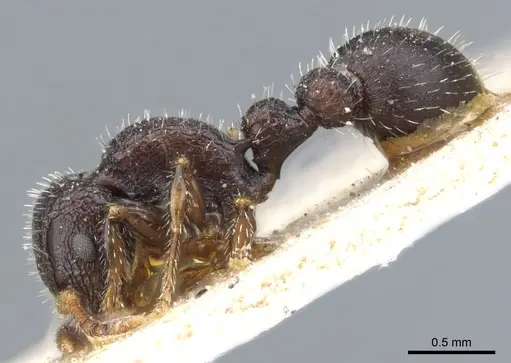
Romblonella scrobifera is a small ant species originally described as Tetramorium scrobiferum from New Guinea in 1897,before being reclassified into the genus Romblonella in 1956 . It is part of the subfamily Myrmicinae and tribe Crematogastrini. Like other members of this tribe, it is believed to use a smear defense mechanism, smearing venom onto enemies with a flattened stinger. The species is distributed across the southwestern Pacific, with records from New Guinea, the Solomon Islands, and Fiji (where a subspecies was historically recognized) . It belongs to an Indo-Pacific clade related to Paratopula . The biology and captive husbandry of this species are almost entirely undocumented, making it a challenging species for antkeepers.
Quick Summary
- Difficulty: Expert
- Origin & Habitat: Tropical islands of the southwestern Pacific: New Guinea, Solomon Islands (Three Sisters, Santa Anna), and Fiji (Lau group) [2][3]. Natural habitat is not described in the available literature.
- Colony Type: Unknown. Colony structure (number of queens, social organization) has not been documented.
- Size & Growth:
- Queen: Size data unavailable.
- Worker: Size data unavailable.
- Colony: Unknown.
- Growth: Unknown
- Development: Unconfirmed (Development timeline has not been studied. No direct observations exist in the literature.)
- Antkeeping:
- Temperature: Likely requires warm conditions based on tropical Pacific distribution. An estimate: aim for 24-28°C and adjust based on colony behavior.
- Humidity: Based on its tropical origin, likely requires high humidity. Keep substrate consistently moist but not waterlogged. This is inferred from habitat.
- Diapause: Unlikely to require true diapause given the tropical distribution. Expect year-round activity.
- Nesting: Unknown. Nesting preferences are not documented. Based on related myrmicine ants, a naturalistic setup with soil or rotting wood may be suitable.
- Behavior: Behavior is undocumented. The species likely uses a smear defense mechanism (typical of Crematogastrini). Temperament is unknown. As workers are small, ensure good escape prevention.
- Common Issues: complete lack of documented care information makes husbandry highly experimental, wild-caught colonies may carry undiagnosed parasites or diseases, very limited availability in the hobby, few resources exist for troubleshooting
Distribution and Habitat
Romblonella scrobifera is recorded from New Guinea (type locality), the Solomon Islands (Three Sisters, Santa Anna), and Fiji [3][2]. In Fiji, the population was historically described as the subspecies Romblonella scrobifera liogaster, though this designation has since been truncated [2]. The species is part of the Indo-Pacific radiation within the tribe Crematogastrini [4][5]. Natural habitat preferences have not been described in the literature.
Taxonomy and Identification
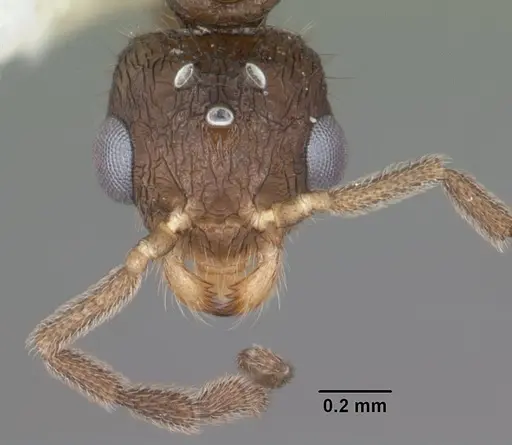
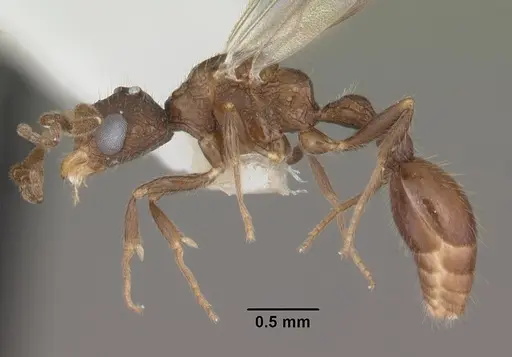
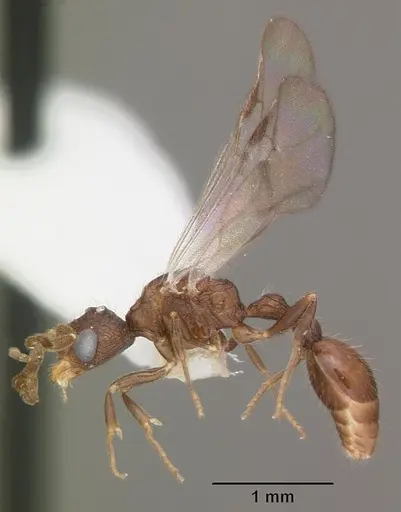
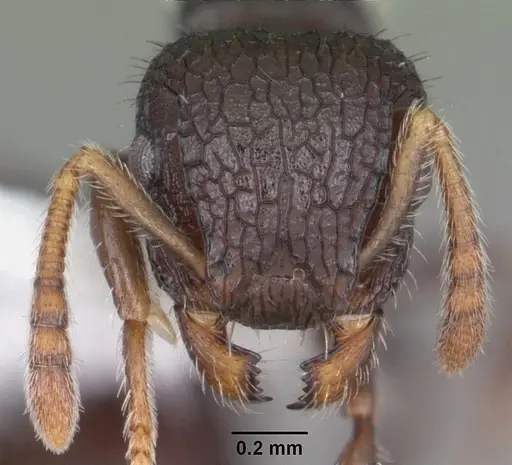
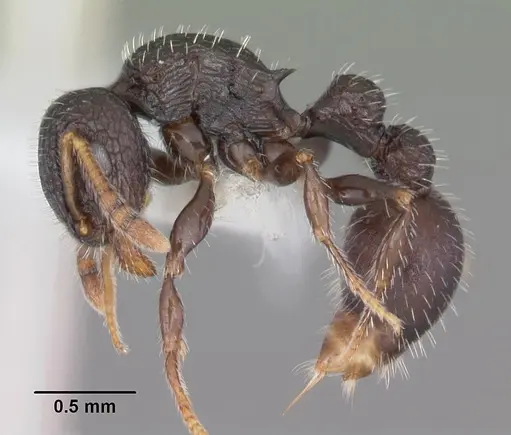
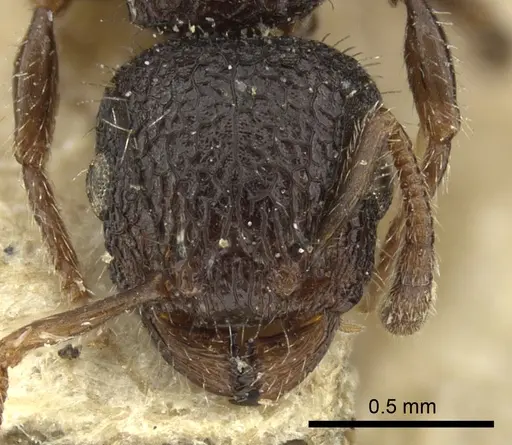
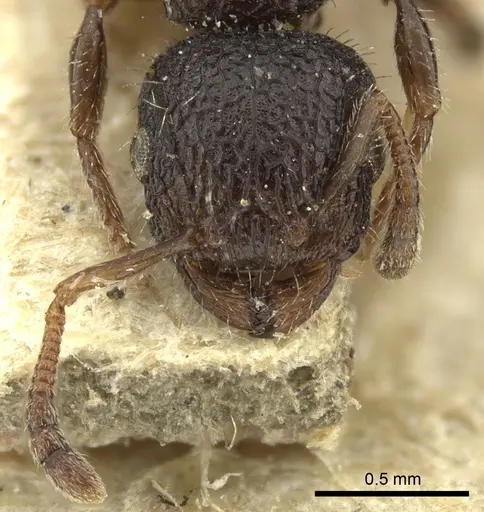
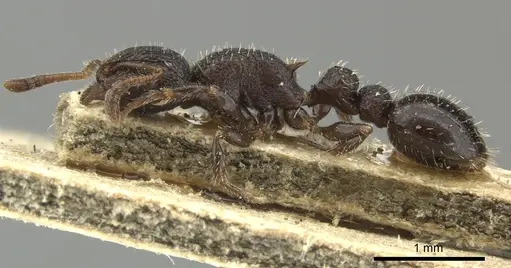
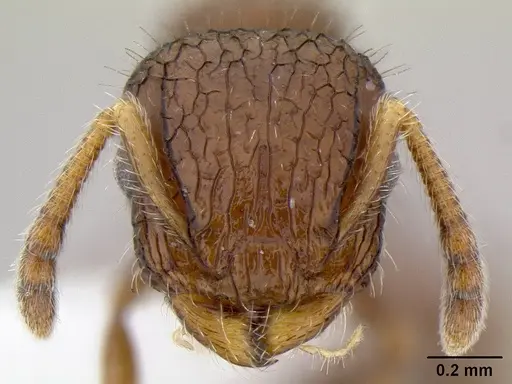
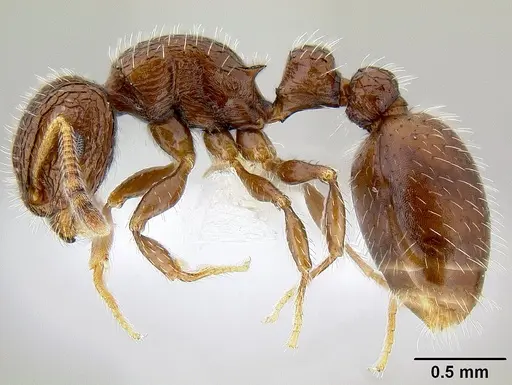
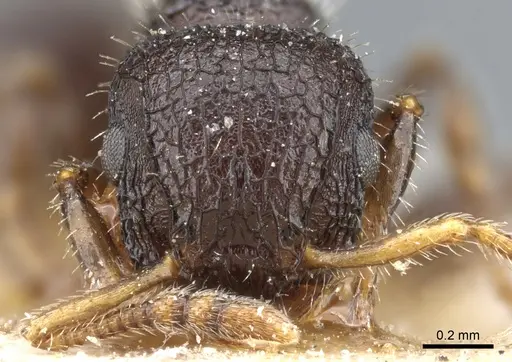
Originally described by Emery in 1897 as Romblonella scrobifera, the species was transferred to Romblonella by Smith in 1956 [1]. Workers of the genus Romblonella are characterized by a longitudinally carinate dorsum on the mesosoma (meaning the upper body has ridges running front to back) and a median clypeus lacking a well-developed median carina [1]. Identification requires careful examination of these features, consultation with taxonomic experts may be needed.
Care Recommendations
No captive care information exists for this species. All recommendations are estimates based on its tropical distribution. Provide warm, stable temperatures (approximately 24-28°C) and high humidity. A naturalistic setup with a Y-tong, plaster, or soil nest is advisable. Feed sugar sources (e.g., honey water) and small protein items (e.g., fruit flies). Note that specific preferences are unknown, so monitor the colony closely and adjust as needed. This species is extremely rare in the hobby, successful keeping will require careful observation and flexibility.
Related Species and Context
Romblonella scrobifera belongs to tribe Crematogastrini within Myrmicinae. The genus Romblonella includes several other species distributed across Pacific islands and Southeast Asia, for example, Romblonella longinoi was described from Sabah, Malaysia in 2016 [1]. The original placement in Tetramorium does not necessarily imply shared ecology, but it provides a general taxonomic context. No specific comparative biology has been studied for this species.
Frequently Asked Questions
How do I keep Romblonella scrobifera ants?
Care information is not documented. Provide warm temperatures (around 24-28°C) and high humidity. Use a naturalistic setup with a Y-tong or plaster nest. This is an estimate, monitor your colony closely and adapt as needed.
What do Romblonella scrobifera ants eat?
Specific diet unknown. Based on related myrmicine ants, offer sugar sources (honey water) and small protein items (fruit flies, small crickets). Observe what your colony prefers.
How big do Romblonella scrobifera colonies get?
Colony size is undocumented. No reliable estimates exist in the literature.
Where is Romblonella scrobifera found?
This species is found in New Guinea, the Solomon Islands, and Fiji [3][2].
Is Romblonella scrobifera good for beginners?
No. This species is extremely rare in the hobby and has no documented care protocols. Even experienced keepers will face significant challenges.
Does Romblonella scrobifera need hibernation?
True diapause is unlikely given its tropical distribution. Expect year-round activity with no cold rest period.
What temperature should I keep Romblonella scrobifera at?
Based on its tropical Pacific habitat, aim for 24-28°C. This is an estimate, adjust if workers show signs of stress.
Can I keep multiple Romblonella scrobifera queens together?
Colony structure is unconfirmed. Do not attempt to combine queens without established protocols.
How long does it take for Romblonella scrobifera to develop from egg to worker?
Development timeline is unconfirmed. No studies exist. An estimate of 4-8 weeks at warm temperatures is speculative.
Is Romblonella scrobifera aggressive?
Temperament is not documented. Based on its tribe, it likely uses a smear defense, but aggression levels are unknown.
What makes Romblonella scrobifera different from other ants?
It is a poorly studied Pacific island species with a scattered distribution. Its taxonomic history (originally described as Tetramorium) and rarity make it of interest to specialized collectors.
Where can I get Romblonella scrobifera ants?
This species is extremely rare in the hobby and not commercially available. Any acquisition would likely require wild collection from its native range, which involves legal and ethical considerations.
Report an Issue
The current care sheet is based fully on literature. See inconsistencies, or something that's incorrect? Please , it will be resolved after review from an admin. Contributing to the blogs tab also helps providing information, to make us be able to further improve the caresheets. Thank you for your support!
References

This caresheet is licensed under CC BY-SA 4.0 .
Community Blogs
CASENT0010806
View on AntWeb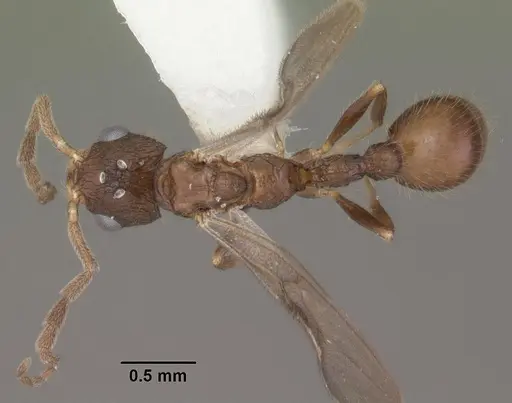
CASENT0010935
View on AntWeb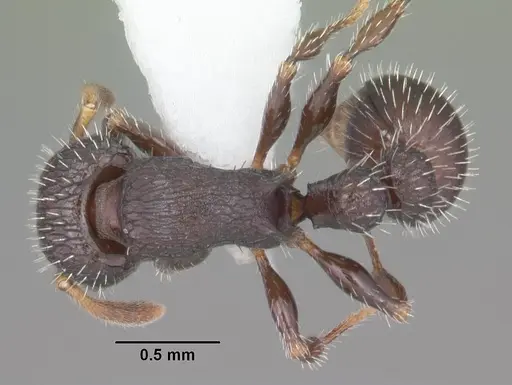
CASENT0013155
View on AntWeb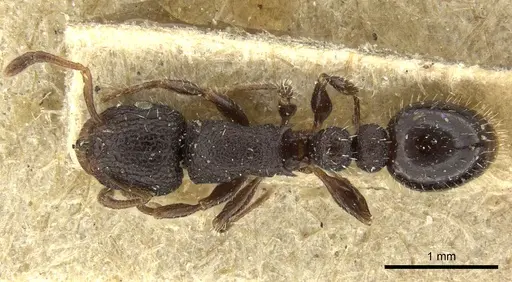
CASENT0106224
View on AntWeb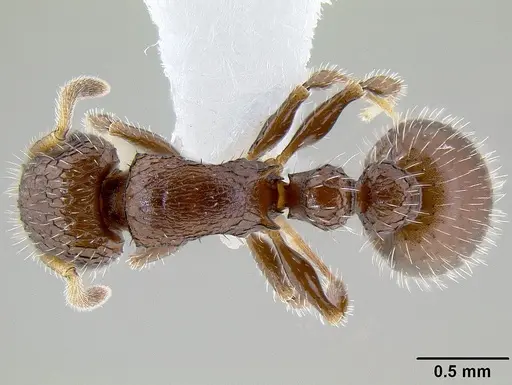
CASENT0904851
View on AntWeb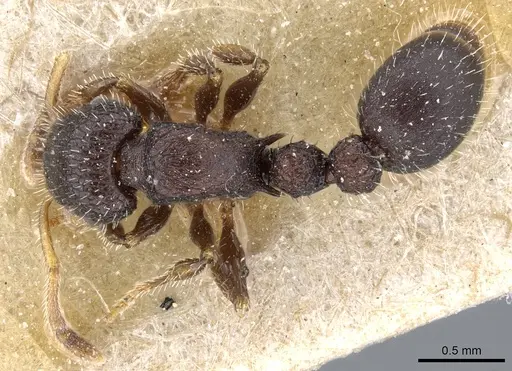
Literature
Loading distribution map...Loading products...